Silky shark tracking study exposes limits of marine protected areas
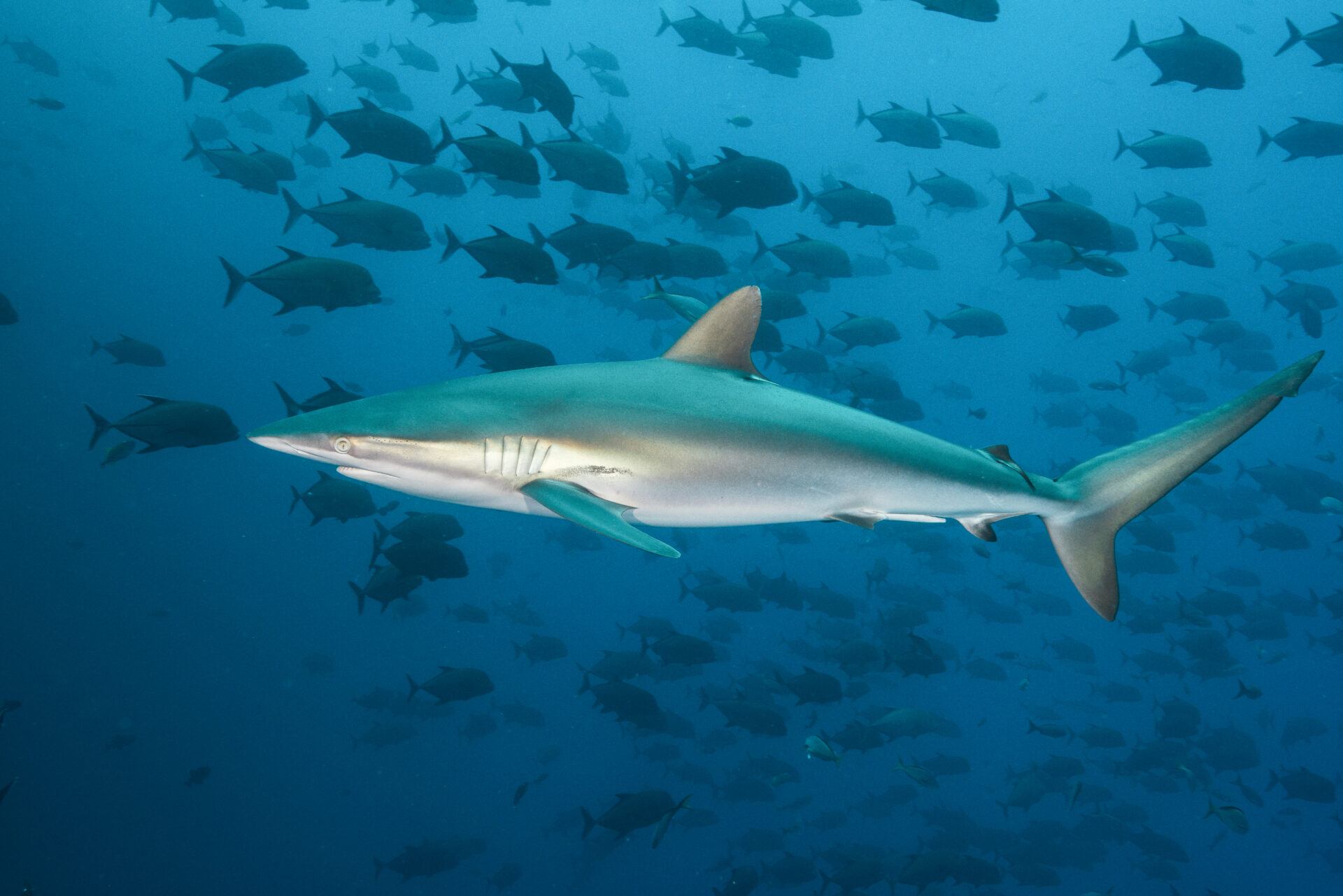
New tracking data shows that silky sharks spend near half their time in waters which remain unprotected. Researchers say that this points to the need for expanded Marine Protection Areas and greater accountability from fisheries.
Despite the expansion of marine protected areas (MPAs) in the Eastern Tropical Pacific, new research suggests that silky sharks remain vulnerable to fishing, as they spend nearly half their time in waters which remain unprotected.
Silky sharks are found across the planet’s tropical oceans, and are known to be one of the ocean’s greatest nomads – in 2021 researchers found one silky shark to have travelled a record-breaking 27,666 kilometres in less than two years.
As the second most commonly traded species in the global fin trade they are widely overfished.
Silky shark populations have declined by 47–54% in the last 30-40 years and they are now classified as ‘Vulnerable’ on the IUCN Red List of Threatened Species.
To better protect this endangered shark species, the international study tracked how silky sharks were using the network of MPAs in the Eastern Tropical Pacific.
Between 2010 and 2023, 53 MPAs were created in the Central and South American Pacific region, covering over 2.5 million km2 and making up 90% of the region’s MPA network. In 2021, at COP26, the governments of Panama, Ecuador, Colombia, and Costa Rica agreed to jointly create additional large MPAs.
The study was carried out by the Guy Harvey Research Institute, Save Our Seas Foundation Shark Research Center, Charles Darwin Foundation, and the Galapagos National Park Directorate.
They tagged a total of 40 silky sharks, and tracked their movements by satellite technology over the course of nearly two years.
Dr. Mahmood Shivji, co-author of the study, says the research reveals both positive and concerning discoveries regarding the effectiveness of the current MPAs in the region, finding that the sharks on average spent nearly 47% of their time in the Galapagos Marine Reserve.

In other news


However, outside of this, these nomadic species spent the majority of their time venturing west and northwest outside of the MPAs – where their paths overlapped with fisheries.
Consequently, the endangered species ended up spending a lot of time in waters where a huge amount of industrial purse-seine and longline fishing occurs – rather than in the safe MPAs which are largely situated to the east of the Galapagos reserve.
These recently established MPAs were designed to protect areas thought to be a movement corridor of large pelagic species, like sharks.
“These preferentially directional migrations point strongly to the wisdom of expanding MPAs to the west and northwest of the Galapagos to improve protection of this overfished species,” added Dr Shivji.
Dr Jeremy Vaudo from the Save Our Seas Foundation Shark Research Centre said that he hopes those managing fisheries will realise the important role they play in the long-term survival of these wide-ranging species.
“Marine protected areas are just a piece of the puzzle. We still need scientifically based catch limits, bycatch mitigation, improved catch reporting and effective enforcement of regulations – and they all fall on fisheries management at national and international levels,” he added.


"*" indicates required fields
Printed editions
Current issue
Back issues


Enjoy so much more from Oceanographic Magazine by becoming a subscriber.
A range of subscription options are available.
