Study finds sperm whales help each other give birth
Scientists document a rare sperm whale birth off Dominica, revealing cooperative care among females, including non-kin, offering new insights into whale social bonds, communication, and the evolution of caregiving behaviours.
Project CETI (Cetacean Translation Initiative) has released two landmark scientific papers detailing what researchers describe as the most comprehensive record of a sperm whale birth ever captured – and the first quantitative evidence of cooperative birth assistance among non-primates.
Published in Science and Scientific Reports, the studies draw on more than six hours of underwater acoustic recordings and aerial drone footage collected on 8 July 2023 in waters off Dominica.
The region has been the focus of over two decades of continuous research into sperm whale social structures.
The footage reveals an entire social unit of sperm whales – spanning both related and unrelated females – actively participating in the labour, delivery, and immediate care of a newborn calf. Researchers observed individuals from two matrilines, including grandmothers, mothers, sisters, and daughters, coordinating their movements to support the birthing mother.
According to the research team, this included ‘synchronised lifting behaviours’, physical stabilisation, and ‘shared caregiving’ – all of which are actions rarely documented in marine mammals and never before recorded in such detail.
Observations of cetacean births in the wild remain exceptionally rare, documented in fewer than 10% of species. The Science paper, titled “Cooperation by non-kin during birth underpins sperm whale social complexity,” combines high-resolution drone imaging, computer vision, multi-scale network analysis, and a purpose-built analytical software tool.
These methods were integrated with long-term observational data from the same whale unit to quantify patterns of coordinated care.

In other news




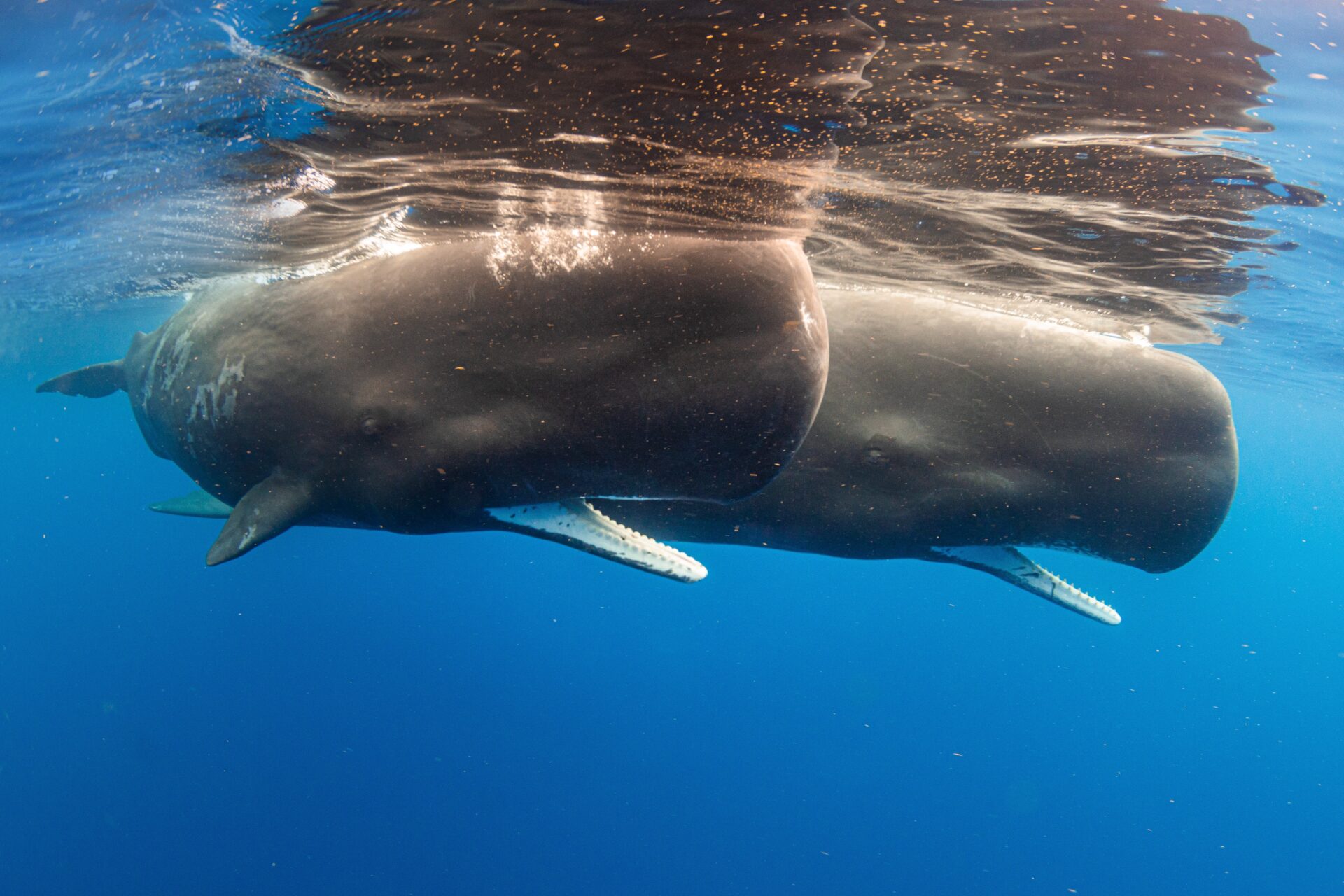
The findings provide the first quantitative evidence that both kin and non-kin individuals assist during birth, with unrelated females taking active roles in supporting the mother and calf. Such behaviour had previously been confirmed only in humans and a limited number of other primates.
Meanwhile, a companion paper in Scientific Reports, “Description of a collaborative sperm whale birth and shifts in coda vocal styles during key events,” offers a detailed, moment-by-moment reconstruction of the birth. It situates the event within broader knowledge of cetacean communication, behaviour, and evolution.
Acoustic analysis revealed distinct shifts in vocal patterns during key stages of the birth, including the emergence of vowel-like structures. Researchers say this adds a new layer to ongoing efforts to decode sperm whale communication.
Taken together, the studies suggest that cooperative caregiving during birth may be an ancient evolutionary trait. Phylogenetic analysis indicates that behaviours such as the collective lifting of newborns could predate the most recent common ancestor of toothed whales by more than 36 million years.
The researchers propose that such cooperation plays a crucial role in reinforcing social bonds within sperm whale societies. By assisting both relatives and unrelated individuals, whales may establish reciprocal relationships that underpin long-term group cohesion and survival.
“These findings fundamentally reshape how we understand whale society,” said David Gruber, National Geographic Explorer, Founder and President of Project CETI and Distinguished Professor of Biology at the City University of New York. “What we’re seeing is deeply coordinated social care during one of the most vulnerable moments of life.”
Dr. Diana Reiss, Professor in the Animal Behaviour and Conservation Program in the Department of Psychology at Hunter College, CUNY, highlighted the importance of long-term study. “This work speaks to the fact that longitudinal studies are critical. When you’re as familiar with the individual animals, like the CETI team is with this unit of whales, the trust these whales have with their team is unique. I’m not sure this unit would tolerate observers being so close in any other instance.”
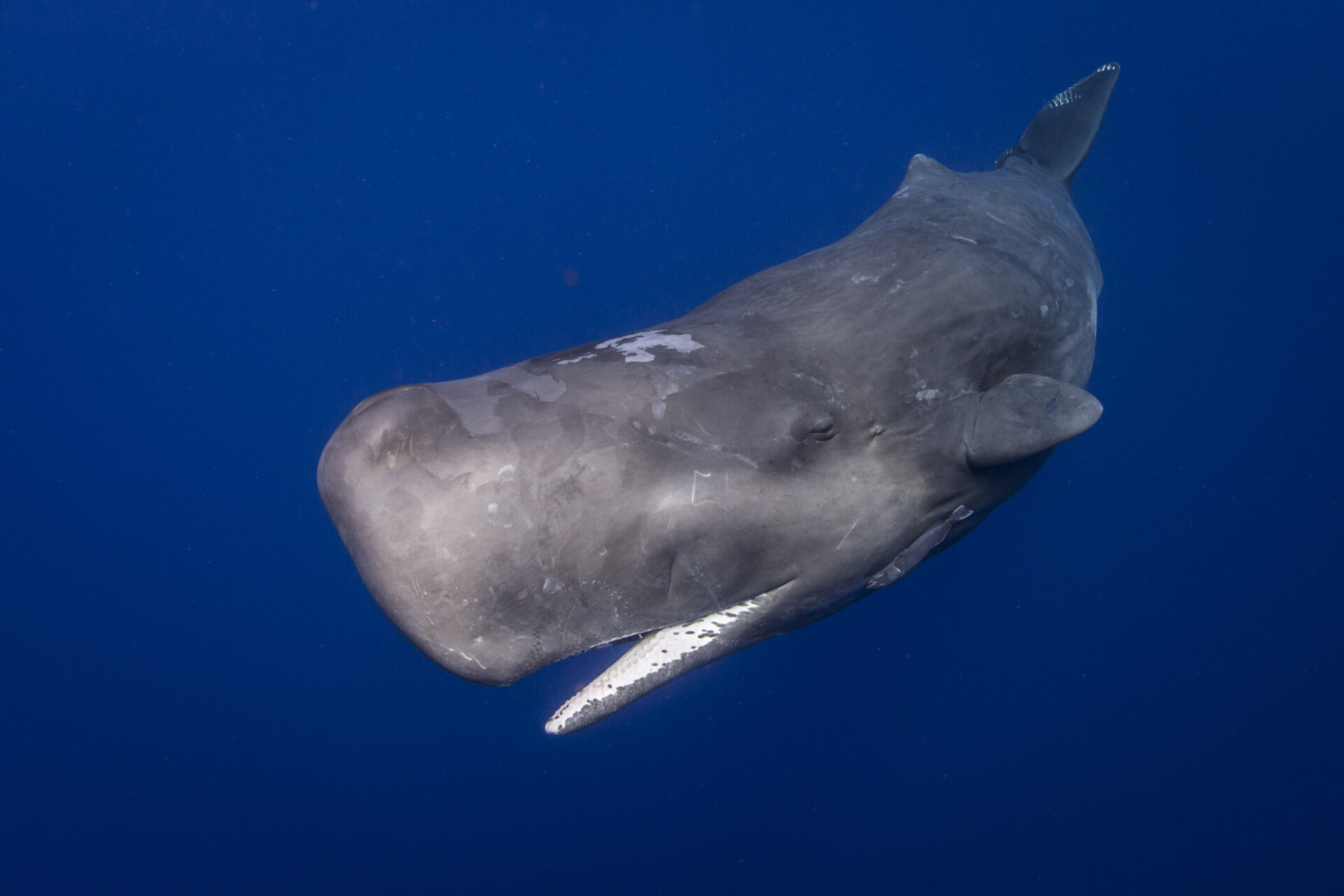
The research builds on decades of fieldwork led by Shane Gero, whose team has tracked the focal whale family since 2005. The mother – known as Rounder from Unit A – was observed giving birth alongside her own mother, Lady Oracle, and her daughter, Accra, capturing three generations participating in the event.
“This is the most detailed window we’ve ever had into one of the most important moments in a whale’s life,” said Shane Gero, Biology Lead for Project CETI, Scientist in Residence at Carleton University, and National Geographic Explorer.
“Because this family unit has been studied for decades, we could see what the grandmother was doing, how the new big sister acted, and how each helped mom and newborn, placing this rare birth within a deep social and behavioural context.”
Members of CETI’s interdisciplinary team – including specialists in machine learning, engineering, and marine biology – were present during the observation, combining real-time field notes with advanced analytical tools.
Researchers say the findings place sperm whale social behaviour in a broader comparative context alongside terrestrial mammals, including humans, and raise new questions about the cognitive and communicative capacities required to coordinate such complex interactions.
The work also builds on previous CETI research identifying sophisticated features in sperm whale communication systems, including a phonetic alphabet and vowel- and diphthong-like patterns embedded within their codas.
Together, the studies offer new insight into the depth of social complexity in sperm whales – suggesting that cooperation, communication, and caregiving are central to the fabric of their society.


"*" indicates required fields
Printed editions
Current issue
Back issues


Enjoy so much more from Oceanographic Magazine by becoming a subscriber.
A range of subscription options are available.
