Warming oceans drive humpbacks into fishing gear
As climate change shrinks cold-water feeding grounds, humpback whales are being pushed closer to shore and into the path of crab traps and gillnets
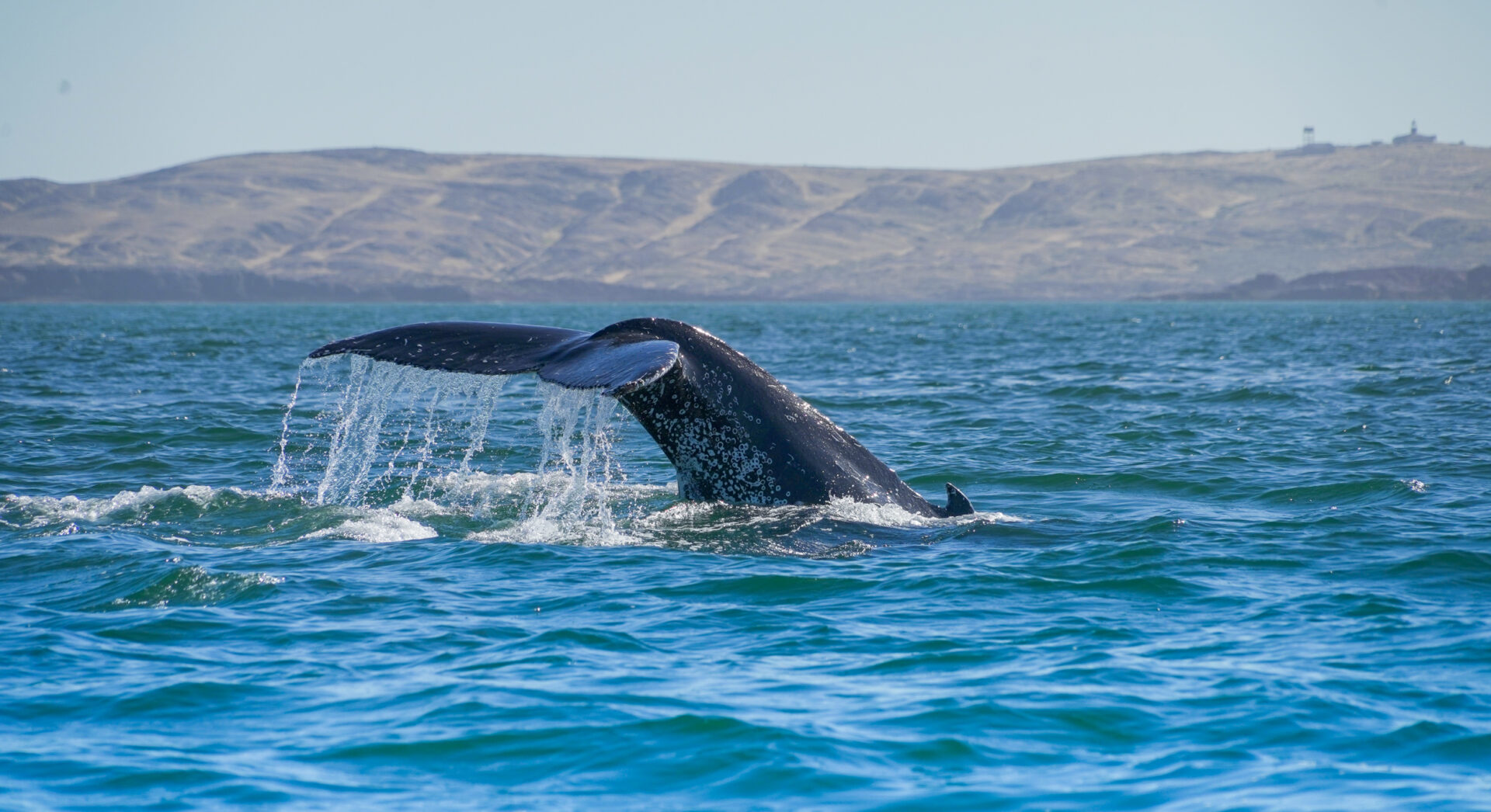
Climate-driven changes to ocean conditions are increasing the risk of humpback whales becoming entangled in fishing gear along the US west coast, according to new research in PLOS Climate.
Fishing gear, like gillnets and traps, can entangle whales – injuring and killing them. Formal reports show an overall increase in entanglements: in 2014, there were fewer than 10 annual reported incidents involving humpbacks, but that number rose to 31 in 2024.
Scientists have previously struggled to determine what is driving this. Entanglements are notoriously difficult to monitor, and humpback whale populations have rebounded following the end of commercial whaling, providing simply a greater number of whales who could be susceptible to entanglement.
But this new study suggests that population growth alone does not explain the trend.
Humpback whales feed on the US west coast, near California and Oregon, on schools of anchovies, sardines and krill – prey that is reliant on cool, nutrient rich water that is drawn up from the deep ocean through coastal upwelling.
However, rising ocean temperatures and recurring marine heatwaves are disrupting that system.
When warm surface waters suppress upwelling, offshore krill populations decline sharply. The whales’ preferred cool-water feeding habitat subsequently shrinks in a process known as “habitat compression.” This in turn forces them into a smaller area closer to shore.

In other news

To quantify this shift, researchers used a metric called the Habitat Compression Index, which measures the availability of cool-water habitat over time. They found that years with reduced cool-water area were associated with higher numbers of reported humpback entanglements.
The pattern was particularly striking during the major marine heatwaves of 2015 and 2016, when more than 40 humpback entanglements were confirmed – a record at the time.
This suggests, warming waters force humpback whales toward the coastline in search of schooling fish like anchovies and sardines. This shoreward shift also places the whales directly in the path of hazardous fishing operations and stationary Dungeness crab gear.
Importantly, the researchers said the Habitat Compression Index can predict ocean conditions up to a year in advance. That forecasting ability could provide fisheries managers with an early warning system, allowing them to adjust fishing seasons or reduce trap numbers during high-risk years.
This includes measures like changing the fishing season timing, and changing the limits on trap numbers.
“Forecasting provides an early warning system,” they said, “monitoring thermal habitat accumulation during winter and spring enables managers to make strategic decisions regarding seasonal fishing activity and mitigation effort.”
California-based Marine Scientist Geoff Shester from Oceana has worked extensively on whale entanglements science and policy. He told us: “This research represents a cutting-edge tool that will help tackle the complex problem of avoiding whale entanglements in fishing gear. It is also further evidence that the increase in whale entanglements off the United States’ West Coast is in part driven by climate change, which has resulted in greater overlap between whale feeding areas and fisheries.”
“We look forward to working with fishery managers in the United States and Canada on both coasts to utilise this new science. Integrating it with new approaches like whale-safe fishing gear and improved fishery management measures will lead to better outcomes for whales and people alike,” he added.


"*" indicates required fields
Printed editions
Current issue
Back issues

Enjoy so much more from Oceanographic Magazine by becoming a subscriber.
A range of subscription options are available.
