Global protections reached for sharks, eels and migratory species
Over 130 nations agreed landmark protections for migratory species at CMS CoP15, boosting safeguards for sharks, eels and marine habitats as scientists warn of accelerating global wildlife declines.
In the heart of the Pantanal – one of the world’s great wetland ecosystems, and prime jaguar territory – more than 130 governments last week concluded a week of negotiations that conservationists are calling a landmark moment for the planet’s migratory wildlife.
The 15th Conference of the Parties to the Convention on Migratory Species (CMS CoP15), held in Campo Grande, Brazil, under the theme Connecting Nature to Sustain Life, produced a raft of new protections for species ranging from hammerhead sharks to the critically endangered European eel – alongside the acknowledgement that the window for action is narrowing fast.
The scale of the crisis facing migratory species was laid bare in the latest CMS status report, cited by WWF marine expert Simone Niedermüller, who attended the conference on behalf of WWF Mediterranean.
“Almost half of all listed migratory species populations are in decline globally. One in four species is even acutely threatened – and among migratory fish, that figure rises to a staggering 97%,” said Niedermüller.
For marine species in particular, the outcomes of CoP15 represent what WWF Mediterranean described as a “significant step forward” – encompassing bycatch reduction commitments, enhanced protection for seamounts and deep-sea habitats, new action plans for threatened species, and a landmark decision requiring nations to incorporate critical marine habitat designations into their national biodiversity strategies.
Among the most consequential outcomes were a series of new and upgraded species listings. Several shark species that have suffered severe population declines from overexploitation received Appendix I status – the convention’s highest level of protection, requiring strict prohibition on take and coordinated conservation action across migratory ranges.
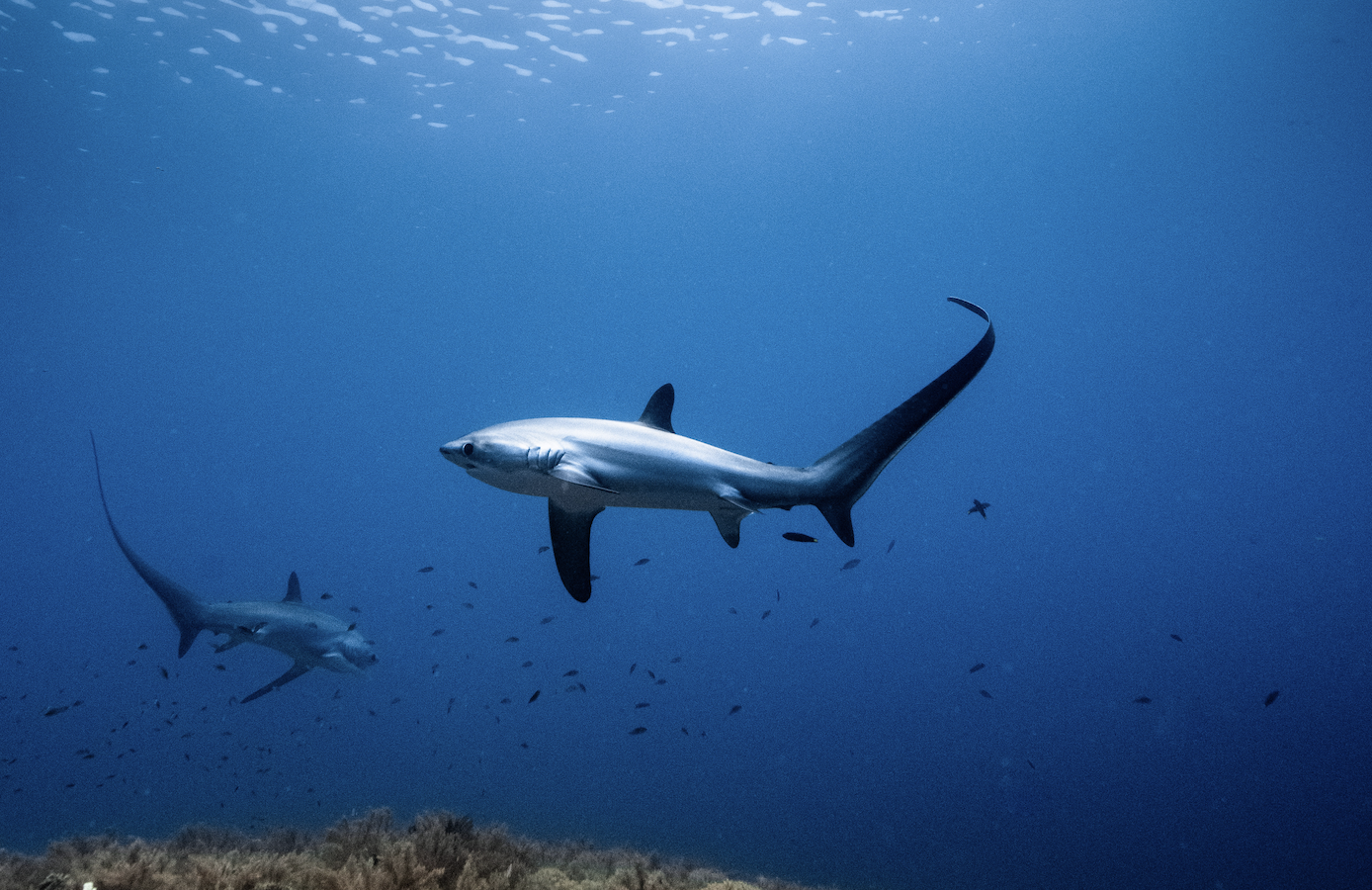
Key new species listings include three species of thresher shark (Alopias pelagicus, A. superciliosus, and A. vulpinus) which were moved to Appendix I; great scalloped and hammerhead sharks, which were also moved to Appendix I; and the giant otter which was moved to Appendix I and II. Meanwhile, the spotted sorubim catfish and the Patagonian narrownose smoothhound shark were moved to Appendix II.
New transboundary action plans were also adopted for the critically endangered European eel and the tope shark – two species for which the prospect of extinction is no longer a distant possibility. Concerted action programmes were advanced for sand tiger sharks and manta rays, the latter co-proposed by the Wildlife Conservation Society.
For the Mediterranean – a globally significant corridor for sharks, marine mammals, sea turtles and migratory fish – the CoP15 outcomes carry particular weight. The basin acts as a critical staging ground for species whose lives play out across hemispheres, and whose survival depends on the kind of coordinated, cross-border governance that CMS is designed to deliver.
“Marine migratory species require urgent, coordinated, transboundary and science-based action. By reinforcing commitments on bycatch reduction, mitigating impacts of offshore energy, tackling marine pollution, and safeguarding critical flyways and migration corridors, the decisions emerging from this CMS CoP15 provide a crucial boost to marine conservation efforts,” Niedermüller added.

In other news
A decision with far-reaching implications for spatial planning requires that Important Shark and Ray Areas (ISRAs), Important Marine Mammal Areas (IMMAs), Important Marine Turtle Areas (IMTAs) and Key Biodiversity Areas (KBAs) must now be taken into account by parties in their national conservation strategies, spatial planning processes, and reporting obligations – including within their National Biodiversity Strategies and Action Plans. The same decision calls for strengthened data sharing between Regional Fisheries Management Organisations, a long-standing gap in the governance of migratory marine species.
WWF Mediterranean and the Angel Shark Project used the conference to launch a new toolkit for angel shark conservation, designed to standardise approaches and deepen transboundary collaboration for a species whose migratory range pays no heed to national borders.
Beyond the individual listings and action plans, conservation leaders pointed to something harder to quantify but equally important: the signal sent by more than 130 governments choosing to act together.
Susan Liberman, Vice President for International Policy at the Wildlife Conservation Society, said: “The decisions adopted here reflect the power of science-based policy and international cooperation. Now, governments must act on these commitments to secure real conservation outcomes on the ground and in the water.”
Progress was also recorded for freshwater biodiversity, with a new Regional Action Plan for Amazonian migratory catfish and new scientific findings suggesting that hundreds of freshwater fish species may qualify for CMS protection – a finding that points to a significant expansion of the convention’s scope in the years ahead.
CoP15 now sets the stage for the UN Biodiversity Conference (CBD CoP17), scheduled for October next year, where the commitments made in Campo Grande will be measured against the targets of the Kunming-Montreal Global Biodiversity Framework.
For the ocean’s migratory species – the sharks, the eels, the rays, the turtles crossing thousands of miles of open water – the decisions taken this week in the Pantanal may yet prove to be the moment the tide began to turn.


"*" indicates required fields
Printed editions
Current issue
Back issues
Enjoy so much more from Oceanographic Magazine by becoming a subscriber.
A range of subscription options are available.
