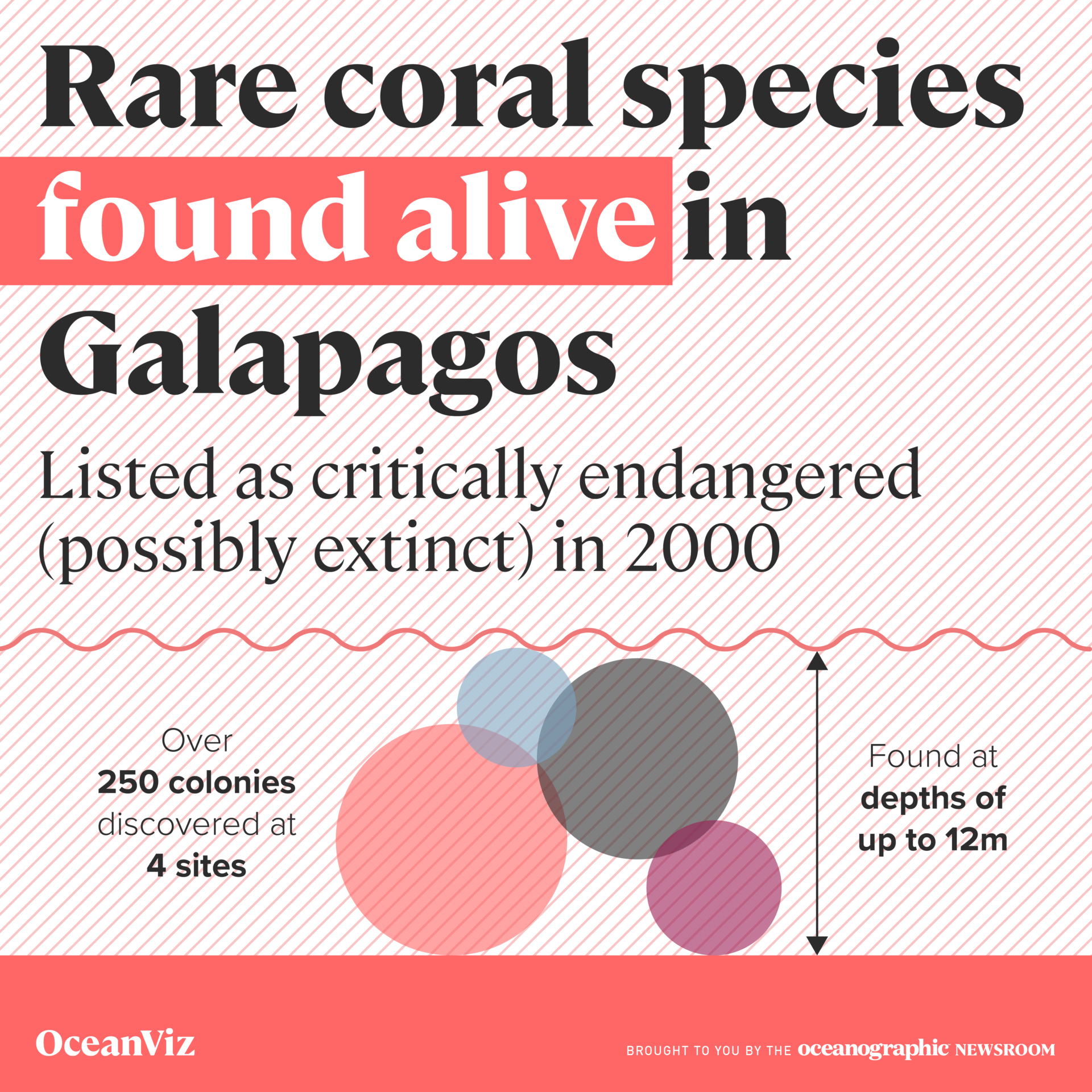


A rare and solitary coral species thought to be lost for a generation has been found alive and clinging on to the underwater cliffs of four sites across the Galapagos, offering scientists and environmental conservationists a rare glimmer of resilience within a warming ocean. Listed as ‘Critically Endangered’ (possibly extinct) after its last official record in 2000, the species – Rhizopsammia weelingtoni – has now been documented across the islands of Isabela and Fernandina. The discovery was made by a scientific team from the Charles Darwin Foundation and the Californian Academy of Sciences in collaboration with the Galapagos National Park Directorate, during a series of targeted dives back in January 2024. Researchers encountered more than 100 colonies on a ledge south of Isabela Islands’ Tagus Cove at around 12 metres deep, followed by additional colonies at Punta Vicente Roca, Playa Tortuga Negra, and – most astonishing – Cabo Douglas on Fernandina where the coral had never been reported before.
Altogether, surveys logged over 250 living colonies, revealing two colour morphs – black-purple and red-black corallites – that match museum specimens collected in the 1970s.

More than a magazine subscription
Not yet a subscriber?
Join todayBy signing in or creating an account, you agree with out Terms & conditions and Privacy statement
