Rediscovered coral is a glimmer of resilience for the Galapagos
Listed as 'Critically Endangered' (and possibly extinct) after it was last officially recorded in 2000, the species - Rhizopsammia weelingtoni - has now been documented across the islands of Isabela and Fernandina in the Galapagos.

A rare and solitary coral species thought to be lost for a generation has been found alive and clinging on to the underwater cliffs of four sites across the Galapagos, offering scientists and environmental conservationists a rare glimmer of resilience within a warming ocean.
Listed as ‘Critically Endangered’ (possibly extinct) after its last official record in 2000, the species – Rhizopsammia weelingtoni – has now been documented across the islands of Isabela and Fernandina.
The discovery was made by a scientific team from the Charles Darwin Foundation and the Californian Academy of Sciences in collaboration with the Galapagos National Park Directorate, during a series of targeted dives back in January 2024.
Researchers encountered more than 100 colonies on a ledge south of Isabela Islands’ Tagus Cove at around 12 metres deep, followed by additional colonies at Punta Vicente Roca, Playa Tortuga Negra, and – most astonishing – Cabo Douglas on Fernandina where the coral had never been reported before.
Altogether, surveys logged over 250 living colonies, revealing two colour morphs – black-purple and red-black corallites – that match museum specimens collected in the 1970s.
Dr Inti Keith, principal investigator for Charles Darwin Foundation’s marine and lead author of the study, said: “Finding R. wellingtoni after 24 years raises important questions about how the coral survived past environmental pressures, such as severe 1982-1983 El Niño, suggesting it might have found refuge in deeper, cooler habitats before re-emerging during recent cooler La Niña conditions.
“It also proves that even the most vulnerable species can persist if we protect the right habitats – yet its tiny, scattered colonies remind us just how close we came to losing it forever and the critical need for proactive management strategies.”
Also known as Wellington’s Solitary Coral after Ferard M. Wellington who first collected specimens, the species is endemic to the Galapagos Islands. It typically inhabits relatively cool waters around Galapagos, with average annual temperatures between 15-26°C, benefitting from cooler upwelling conditions that provide thermal refuges.
Corallites range from approximately 3 to 6mm in diameter, making individual colonies quite small (generally less than 1cm wide) and easily overlooked.
In other news

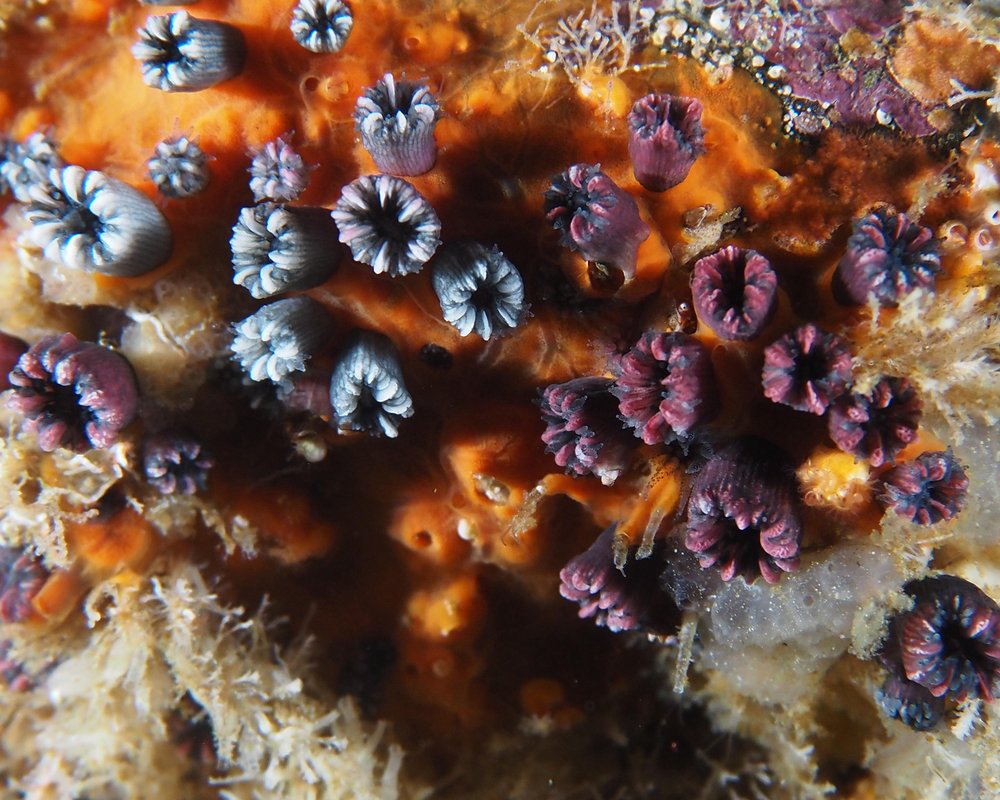
“Finding something that was previously thought to be extinct is one of the most exciting discoveries a biologist can make,” said Terry Gosliner, PhD, Academy Curator of Invertebrate Zoology and Geology and study co-author.
“In just one dive, we found more than 100 colonies of R. wellingtoni on a healthy, biologically diverse coral reef, many of which were dotted with budding polyps, signalling active reproduction.
“This is huge: evidence that the species isn’t merely clinging to survival, but thriving at multiple localities and depths. This discovery is a hopeful example of resilience amid rising ocean temperatures, and a poignant reminder of what can be gained from continued conservation and coral reef monitoring in biodiversity hotspots like the Galapagos.”
CDF’s subtidal ecological monitoring work as part of its Marine Biodiversity programme – which has systematically monitored 64 reef sites since 2004 – provided the framework and expertise needed to recognise and identify this rare coral, despite its small size and cryptic habitat.
The work also demonstrates that cooler La Niña conditions may have offered a short reprieve from thermal stress, allowing the coral to re‑emerge in shallower water.
Dr Maria Jose Barragan Paladines, Science Director of the Charles Darwin Foundation, added: “This discovery validates decades of investment in Galapagos science and is a perfect example of our work to continue to uncover and understand the unique biodiversity of the archipelago and their resilience to external threats.”
Genetic analyses under way at the California Academy of Sciences will provide critical insights for conservation strategies by determining how closely these populations are related and how effectively they might repopulate areas affected by environmental disturbances.
The finding removes R. wellingtoni from the edge of extinction and safeguards a unique evolutionary lineage endemic to the archipelago. As a solitary coral highly sensitive to temperature spikes, its presence (or absence) also offers an early-warning system for future marine heatwaves. Finally, data from the expedition feed directly into Galapagos zoning plans, IUCN Red List reassessments and Ecuador’s national climate-adaptation roadmap.
Jennifer Suarez, Director of Ecosystems at the Galapagos National Park Directorate, said: “This discovery reminds us how important it is to continually monitor our marine ecosystems. Despite the impacts of climate change, nature demonstrates its capacity for resilience.
“From the Galapagos National Park, we will keep intensifying our conservation efforts to safeguard these unique habitats.”
The research was published earlier this week in the journal Marine Biology and funded by the Paul M. Angell Family Foundation, Lindblad, National Geographic Fund for Conservation, and Amy Blackwell.


"*" indicates required fields
Printed editions
Current issue
Back issues
Enjoy so much more from Oceanographic Magazine by becoming a subscriber.
A range of subscription options are available.
