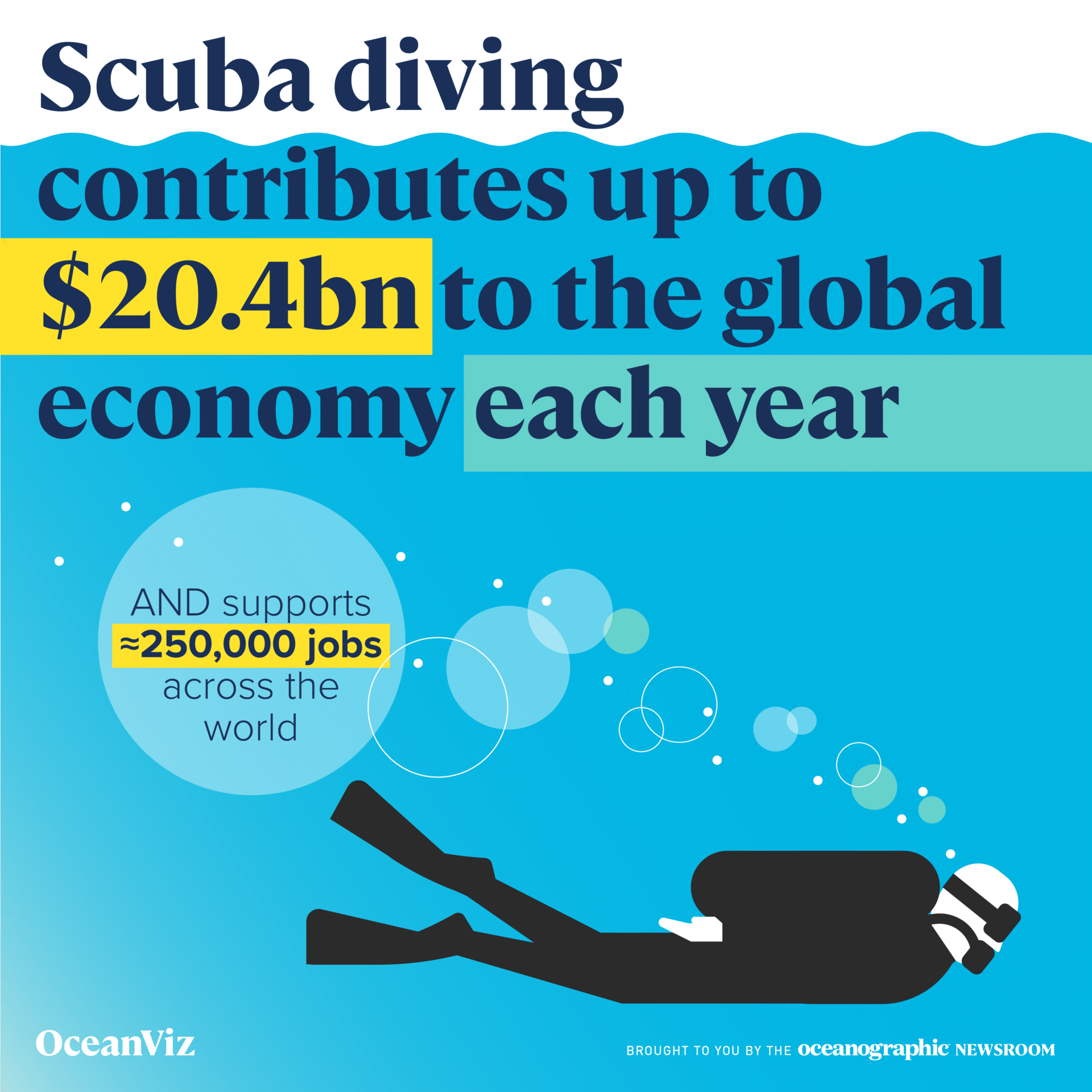


Scientists suggest that unlike mass tourism operations that can harm local communities and marine environments, dive tourism - when managed well - can be economically viable, socially equitable, and environmentally sustainable. The new international study - published in the journal Cell Reports Sustainability – has been co-authored by researchers from UC San Diego’s Scripps Institution of Oceanography alongside those from the University of British Colombia to provide the first comprehensive estimate of the diving industry’s worldwide economic impact.
The study was carried out as part of a project called Atlas Aquatica and its overarching ambition to reveal the economic value of the diving industry while helping to organise the diving sector to have a political voice for conservation.
“Scuba diving is pretty unique because it makes you spend time underwater,” said Fabio Favoretto, who co-authored the study as coordinator of Atlas Aquatica and as a postdoctoral researcher at Scripps. “You can sail or surf above a dead ocean, but scuba divers notice if there are no fish – it’s really an activity that is dependent on the health of the system.

More than a magazine subscription
Not yet a subscriber?
Join todayBy signing in or creating an account, you agree with out Terms & conditions and Privacy statement
