Scuba diving industry's $20bn a year is a marine protection ally
Scientists suggest that unlike mass tourism operations that can harm local communities and marine environments, dive tourism - when managed well - can be economically viable, socially equitable, and environmentally sustainable.

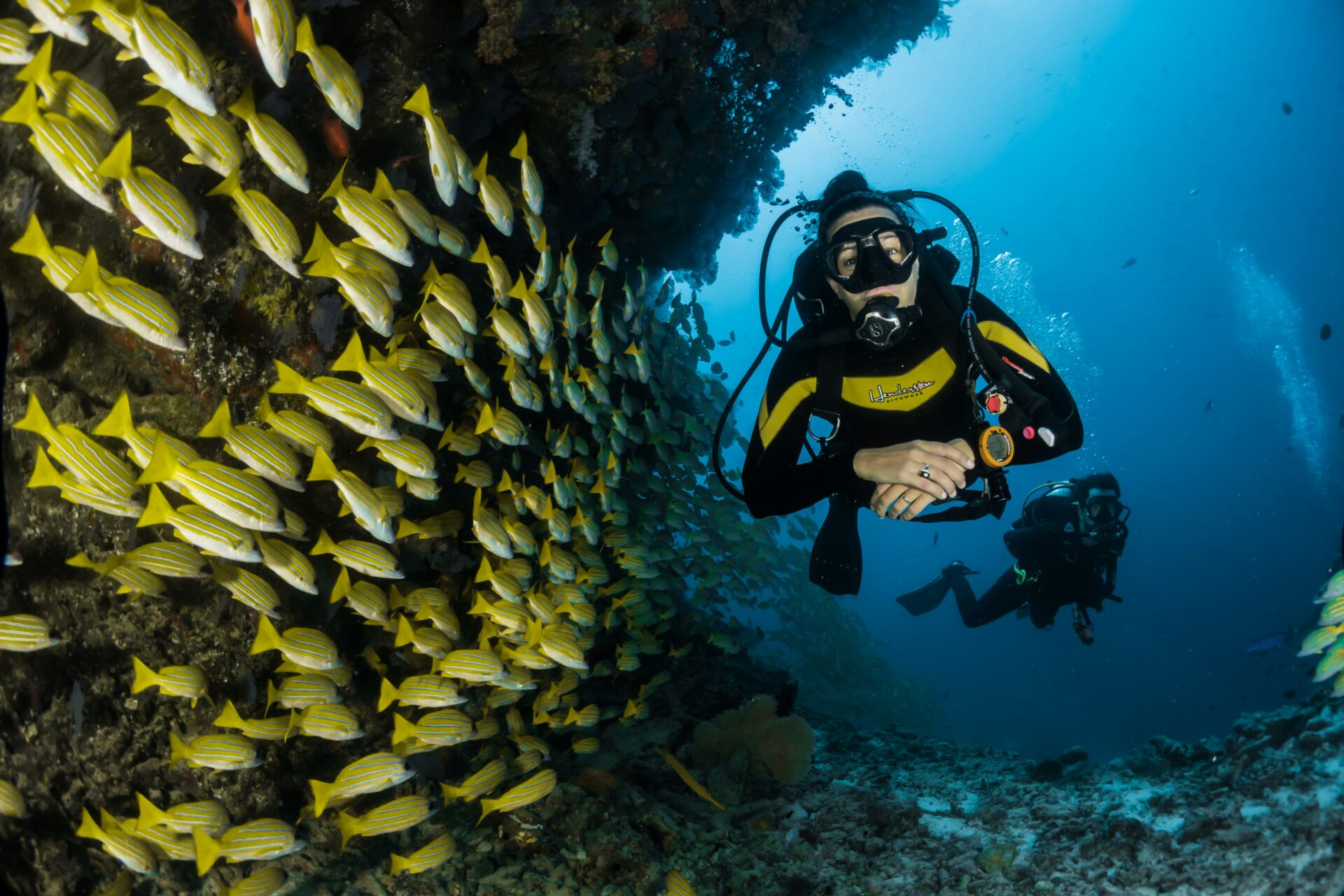
A new international study estimates that scuba diving contributes up to $20.4bn to the global economy each year, supporting almost a quarter of a million jobs across the world and offering “an economic incentive” for marine conservation.
The research – published today in the journal Cell Reports Sustainability – has been co-authored by researchers from UC San Diego’s Scripps Institution of Oceanography alongside those from the University of British Colombia to provide the first comprehensive estimate of the diving industry’s worldwide economic impact.
The study was carried out as part of a project called Atlas Aquatica and its overarching ambition to reveal the economic value of the diving industry while helping to organise the diving sector to have a political voice for conservation.
“Scuba diving is pretty unique because it makes you spend time underwater,” said Fabio Favoretto, who co-authored the study as coordinator of Atlas Aquatica and as a postdoctoral researcher at Scripps. “You can sail or surf above a dead ocean, but scuba divers notice if there are no fish – it’s really an activity that is dependent on the health of the system.
“That’s a positive for conservation because it makes divers allies.”
Prior research has suggested that increased ocean conservation could increase dive revenue by attracting more divers who are willing to pay higher prices to encounter more diverse and numerous sea life afforded by the added protections. Scuba divers’ preference for marine protected areas (MPAs) is also supported by data showing that roughly 70% of all marine dives currently occur within MPAs.
While ocean-based tourism is recognised as an economic force, the specific contribution of scuba diving at the global scale remained unknown until now. This absence of economic data made it challenging for ocean advocates to concretely cite scuba’s economic benefits to argue for conservation policies.
When Octavio Aburto-Oropeza – a marine biologist at Scripps Oceanography and co-autor of the study – first started studying the economic impact of diving in 2019, he was focused on Mexico. In a study published in 2021, he and his co-authors found that dive tourism in Mexico generated $725 million annually, nearly as much as the entire fishing industry.
The current study now expands that 2021 finding to the entire globe.
In other news


To uncover the global economic impact of marine dive tourism and its contribution to ocean conservation and local communities, researchers compiled a list of more than 11,500 diver operators across 170 countries using data from Google Maps and PADI, validating their database with local experts.
This was followed by an online survey that netted responses from 425 businesses across 81 countries. Andrés Cisneros-Montemayor of Simon Fraser University who led the study’s economic analysis, used the survey responses to calculate the money spent directly on diving activities and indirect spending such as hotels, food, and transport by between nine and fourteen million annual recreational divers worldwide.
The analysis revealed that direct spending on diving activities generates between $900 million and $3.2 billion each year, and between $8.5 and $20.4 billion when including indirect spending on accommodations and local services.
The survey also revealed dive operators’ deep concern about environmental degradation, with most reporting negative changes at their dive sites over the past decade.
“We show that diving generates a lot of income, and it does this without degrading the environment like extractive industries such as fishing or mining,” said Aburto-Oropeza. “We hope that showing the scale of the economic impact from this study will encourage policies that invest in diving by increasing marine protections.”
It positions dive tourism as a model for the Blue Economy – showing how coastal communities can prosper while protecting their marine resources.
“Unlike mass tourism operations that can harm local communities and marine environments, dive tourism – when managed well – can be economically viable, socially equitable, and environmentally sustainable,” said Anna Schuhbauer, lead study author and fisheries scientist at the University of British Columbia. “With a vested interest in healthy ecosystems and abundant marine life, dive operators are natural allies in conservation efforts.”
It’s now been recommended – off the back of the study – that standardised monitoring systems are established across the diving industry, formally including dive operators in marine management decisions and recognising ecotourism as a central rather than peripheral component of sustainable ocean-based or ‘blue’ economies.
Aburto-Oropeza and his collaborators are also supporting diver operators’ efforts to organise into cooperatives with a unified political voice through the Atlas Aquatica initiative. The platform is already suporting early pilot dive operator cooperatives in Mexico and Italy.


"*" indicates required fields
Printed editions
Current issue
Back issues
Enjoy so much more from Oceanographic Magazine by becoming a subscriber.
A range of subscription options are available.
