Brianna Fruean: We must let the ocean save us
Brianna Fruean is a Samoan environmental advocate, a member of the Council of Elders for Pacific Climate Warriors and a pivotal youth voice in climate diplomacy. Here, she writes about Indigenous communities' innate connection to the ocean, and the central place their wisdom must hold in the fight to protect it.
It’s 2001, I am three years old.
All my grandfather’s bedtime stories revolve around the ocean. Our two lives are connected by the ocean we both share, generations apart. I do not know of a life without the ocean. Its voice has always been there beside me, a constant comforting whisper, sometimes an assertive roar. The ocean imbues other sounds I hear too; the songs my community sings and the stories my family members unravel for me. These come from a culture in direct conversation with the ocean, a culture that has grown like a reef over generations. Our songs and stories leave the taste of salt in our throats. I am three years old. Already I know that the ocean lives within me as well as beside me.
When I think about my connection to the ocean, it sometimes feels too expansive to fathom. The ocean is foundational to who I am and where I came from. In Samoa, where I grew up, our relationship with the ocean is one of reciprocity. A fisher will throw the first fish they catch back into the sea as a sign of respect. We don’t live alongside the ocean. We live because of it, and that acknowledgement informs our entire way of being.
This essential connection to the ocean is not unique to my community. It is a thread that binds Indigenous coastal communities across the world. Generation upon generation of us have lived in careful symbiosis with our maritime neighbour. Everything in our cultures starts and ends with the ocean: the food we eat, the stories we tell each other, the songs we compose, the art we make, the system we use to mark time and the way we preserve memories. From the Haida of Haida Gwaii – stewards over some of the most biologically productive waters on Earth for 13,000 years – to the Orang Laut, once the maritime guardians of the Strait of Malacca, our communities are connected by an innate understanding. To us, the ocean is far more than a resource. It is a companion deserving of love and respect. It gives us so much, and we understand that we must give back in return.
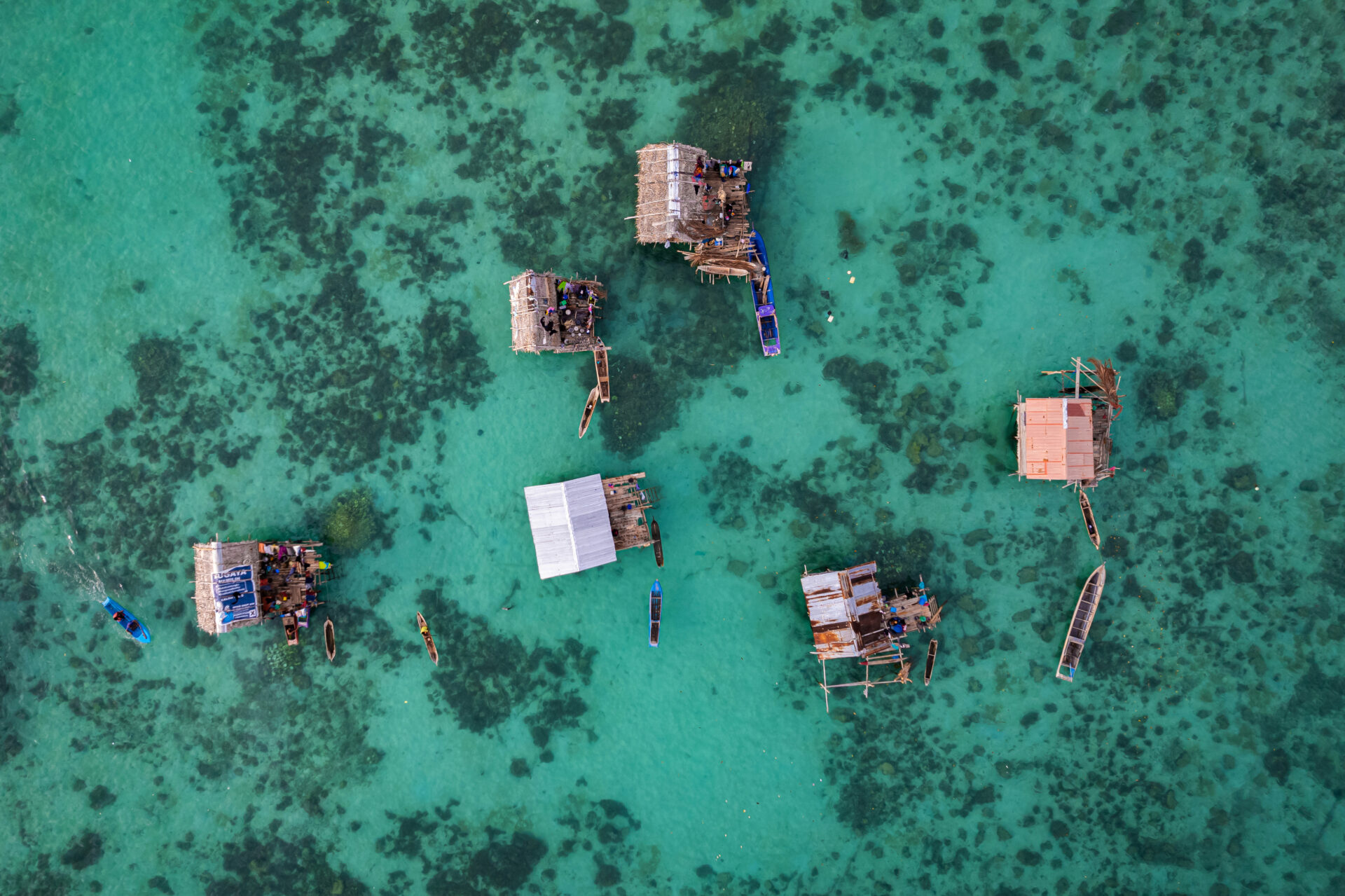
To live with the ocean inside you is not just a spiritual truth. In many communities, the ocean has shaped physical bodies as an evolutionary sculptor. The Sama-Bajau, a nomadic ethnic group who traverse the waters between the Philippines, Malaysia and Indonesia, have genetically adapted to life in the water: their spleens are significantly larger than average, allowing them to boost oxygen levels during dives. They can navigate to depths of 30 to 40 metres and hold their breath for up to 13 minutes, and many spend up to five hours a day underwater. Their bodies have evolved alongside the ocean. It is more than a way of life. It is their lifeforce.
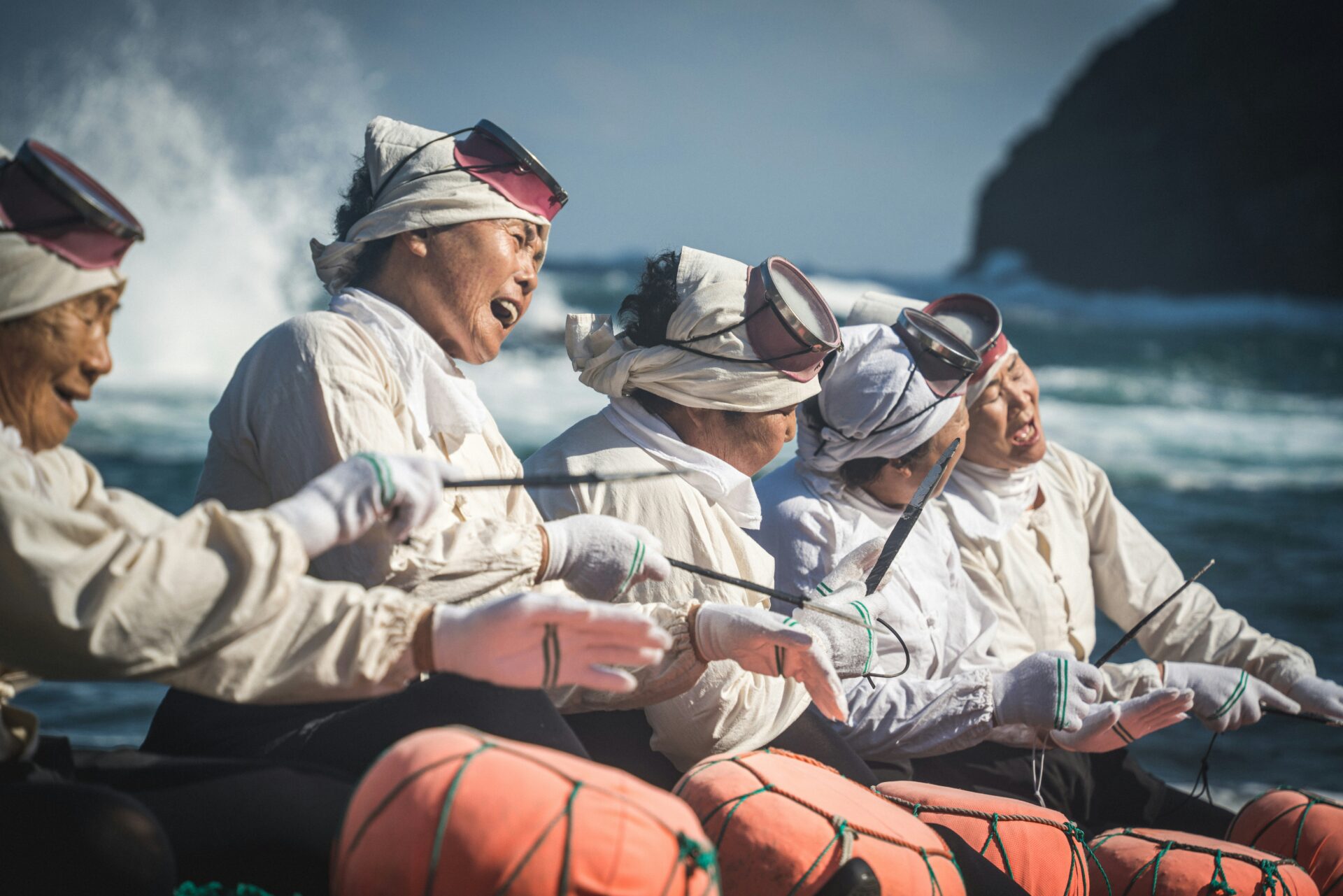
When I first learned about the Haenyeo – the ‘sea women’ free divers of Jeju island in Korea – I was struck by the way their experience encapsulates what it means to exist in a culture at one with the ocean. This is a community of women whose heritage and livelihoods are built on submerging oneself entirely in the waves. From this solo communing with the ocean grows a broader collective experience in the form of conversations and stories around the bulteok fire, in the form of meals cooked using seafood plucked from the depths by hand, in the form of a way of life passed down from generation to generation. The sea moulds us and our communities. As it changes, so do we.

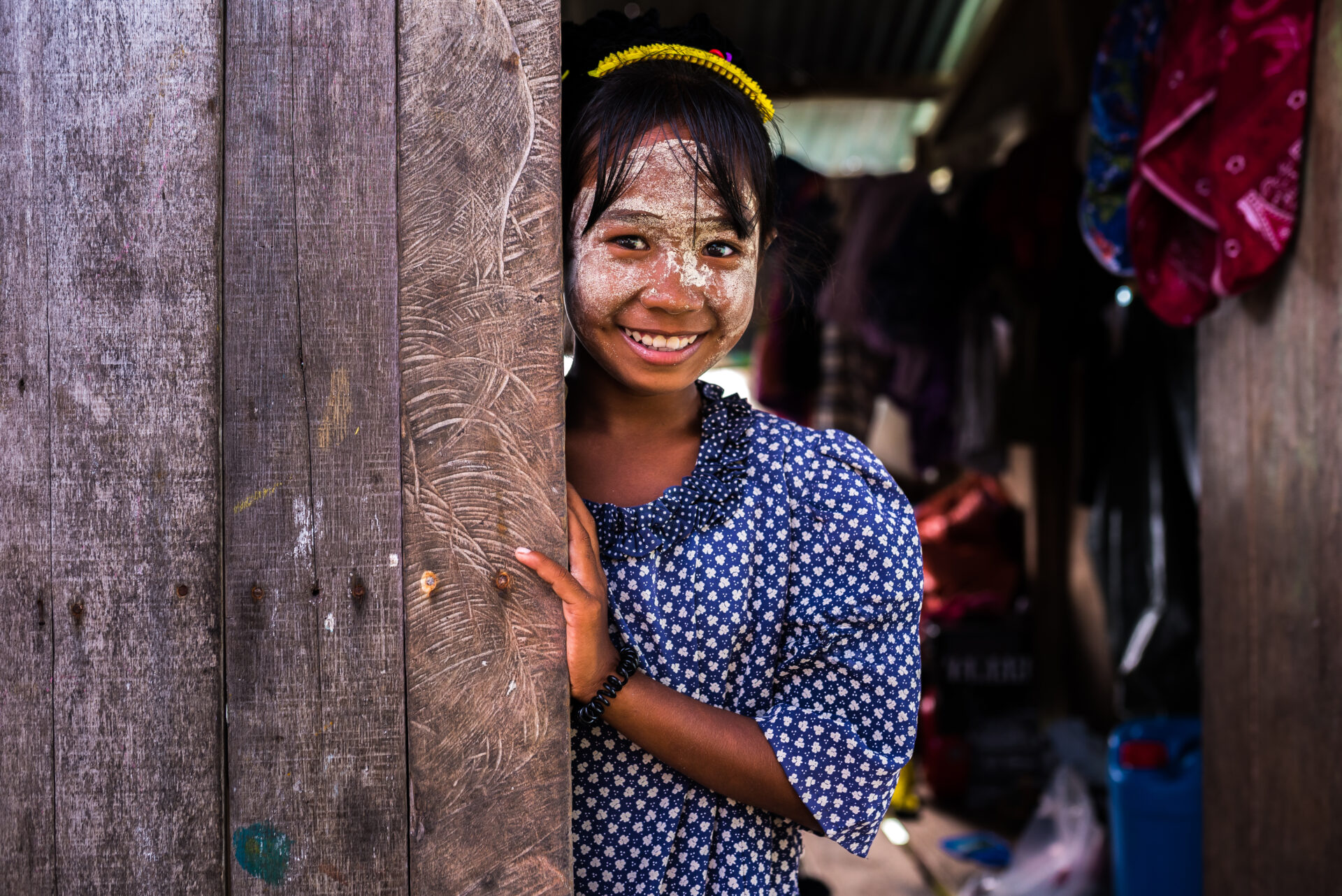
It is 2005, I am seven years old
The reefs are changing. The corals are sick, and the fish are disappearing further into the depths of the deep ocean. People on our island talk about the distances they must cover to ensure a decent catch. Distances that not all our village canoes and boats can reach. The places they have fished for generations are now defined by scarcity. Fisherfolk speak of wishing they had bigger boats so they can keep up with the changing tides. I am seven years old. I am starting to understand that what I thought was constant is actually in flux.
Indigenous communities do not operate in a vacuum. Even if some commit to voluntary isolation – like the Sentinelese, an uncontacted hunter-gatherer tribe inhabiting North Sentinel Island in the Bay of Bengal. The ocean carries the marks of human impact to every land it touches. Cultures that have grown up around the ocean are now being eroded, often due to the decisions that we had no hand in making.
The traditional Western world view of ‘land versus sea’ is one of disconnect. The ocean is treated as a resource to be mined, a territory to be conquered, an economic benefit to be exploited or a threat to be managed. The result is the gradual degradation of ecosystems and livelihoods, as the ocean is pillaged beyond recognition. In my lifetime we have seen ocean warming rates more than double. We have seen the death of 14 per cent of corals. We have surpassed 500 dead zones: areas where oxygen levels are too low to support most marine life.
These impacts have had devastating implications for Indigenous coastal communities like my own, with lives and livelihoods now threatened due to dwindling fish populations, more frequent extreme weather events and the insidious threat of sealevel rise. The destruction of sacred sites, the salinisation of essential farmland and the forced migration to higher land is threatening to erase entire cultures – and with them the knowledge that has been essential to our collective survival for millennia. What we choose to learn from this scenario will determine whether or not we can survive into the future.
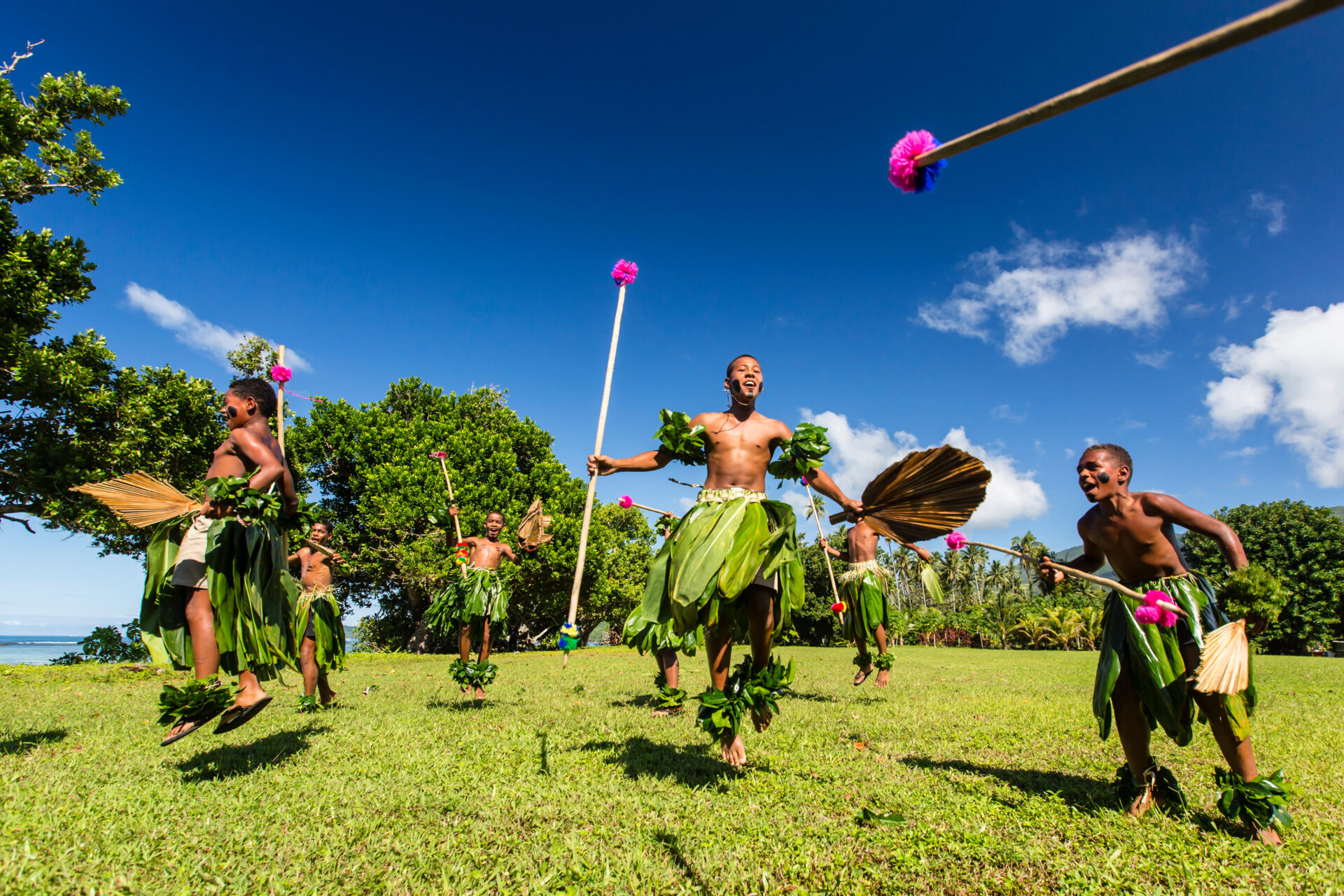
It is 2009, I am 11 years old.
I am now old enough to understand that while my home is an island, it is not separate from the rest of the world. I am old enough to grasp that my culture and heritage is far deeper than it is wide. That there are outside forces being carried on the tides towards me, threatening to erase all I have known. I am old enough to fight back. I arm myself with knowledge. I surround myself with community warriors who have the ocean inside them like I do. I am eleven years old, and I am a climate activist.
It is not a mark of ego to say that the world needs Indigenous activists. On the contrary, it is ego that has led us to where we are today, on this precipice. We dared to think that we could master Mother Nature. We dared to think that the ocean would surrender to us. We are learning that neither is true.
Indigenous communities are not resistant to change. We have lived through geological and climatological shifts before, to the extent that these events are embedded within our culture. Take the Aboriginal Australians, whose oral tradition contains stories that describe sea-level rise from 7,000 to 18,000 years ago. Life-altering changes in coastal morphology are communicated in metaphors: the scraping of a magical kangaroo bone creating a hollow, allowing the water in.
T hen there are the Inuit people of the circumpolar Arctic who know sea ice better than any climate scientist and hold innate knowledge: no change in thickness, freezing and movement, however small, goes unnoticed. And the Moken of the Mergui Archipelago in Burma and Thailand, whose oral tradition famously guided them away from the 2004 tsunami before the wave arrived, reading signs in the sea’s behaviour that no instrument or technology had detected.
We know our environment. We know its fluctuations. But somewhere along the way, the signal has become disrupted. Our traditions are being compromised. We are witnessing change on a scale we have never seen before. We worry we will not survive.
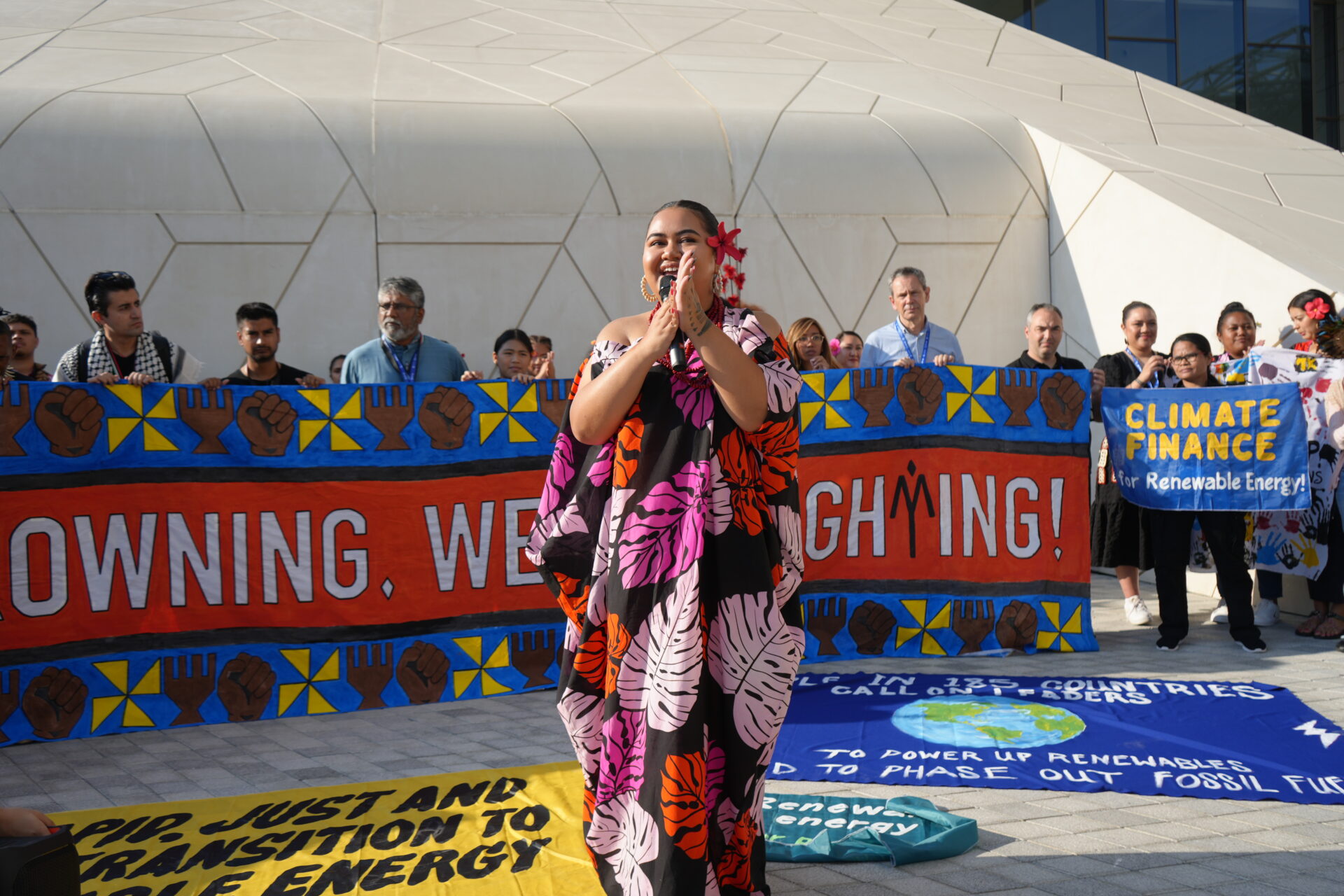
It is 2021, I am 23 years old.
I am addressing a room full of world leaders at the COP26 climate conference in Glasgow. ‘A sea of suits’ is how some people might describe it, though this is not the kind of sea I am used to. I do not know its currents, cannot guess what is under its surface. I cannot assume that the tide will change. But I am here to try. I am 23 years old, and I am speaking up for my community on the world stage.
I came of age in a time of flux. I was brought up on traditions that have lasted centuries. I have grown old enough to see some of these traditions wane. I refuse to see them die. My experience gives me the clarity to recognise that without Indigenous wisdom, we are lost. For generations my people have known that the ocean cannot be exploited. The rest of the world is only just catching up.
Governments across the world have made a commitment to protect at least 30 per cent of the ocean by 2030 through designating, implementing and enforcing effective marine protection measures. It’s not enough, but it’s a start. One thing is crystal clear though: these commitments will fail if Indigenous People and local communities are not central to protection efforts, whether in national waters or in areas beyond national jurisdiction. T his is not about saving the ocean. That very concept is a fallacy. It perpetuates the idea that we and the ocean are two separate entities. It ignores the fact that we rely on the ocean for our very existence. Indigenous communities know that we cannot save the ocean. We must instead allow it to save us.
The Western world has prioritised extraction, and it has taken us to the brink. It is time to return to traditional ways of existing in harmony with our environment. Somewhere along the way, we stopped respecting the ocean: what it gives us but also what it can take away. We may have become uncoupled from our heritage, but it is not too late to restore the connection.
There is so much that decision makers can learn from the Indigenous experience, so much knowledge to be applied. They just need to listen to Indigenous communities, yes. But also to the ocean. Just as humans have done for thousands of years. By listening to the ocean – its currents, its ice, its species, its ecosystems – we can understand its needs, and take concrete steps towards repairing the damage we have done. If we get it right, the rewards will be immeasurable.
It is 2026, I am 27 years old.
I am in Samoa, by the ocean we’re trying to protect. I am an activist. I was raised by my community. I was raised by the ocean. I will do everything I can to give back what it gave me.
Printed editions
Current issue
Back issues
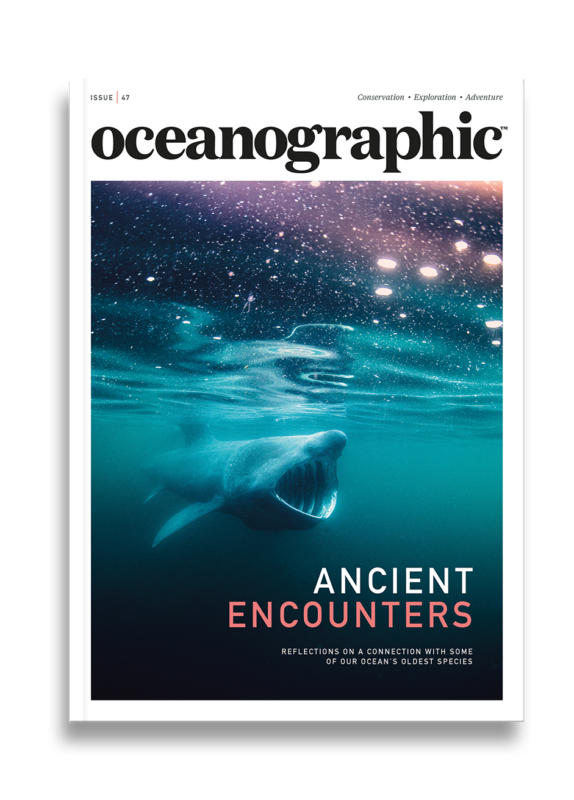
Enjoy so much more from Oceanographic Magazine by becoming a subscriber.
A range of subscription options are available.
