Devil Rays of the Azores: The fight to save a critically endangered species
In October 2025, the International Union for Conservation of Nature (IUCN) uplisted all three oceanic devil ray species, including the Sicklefin, to Critically Endangered, the final category before extinction in the wild. Let that last sentence sink in a little.
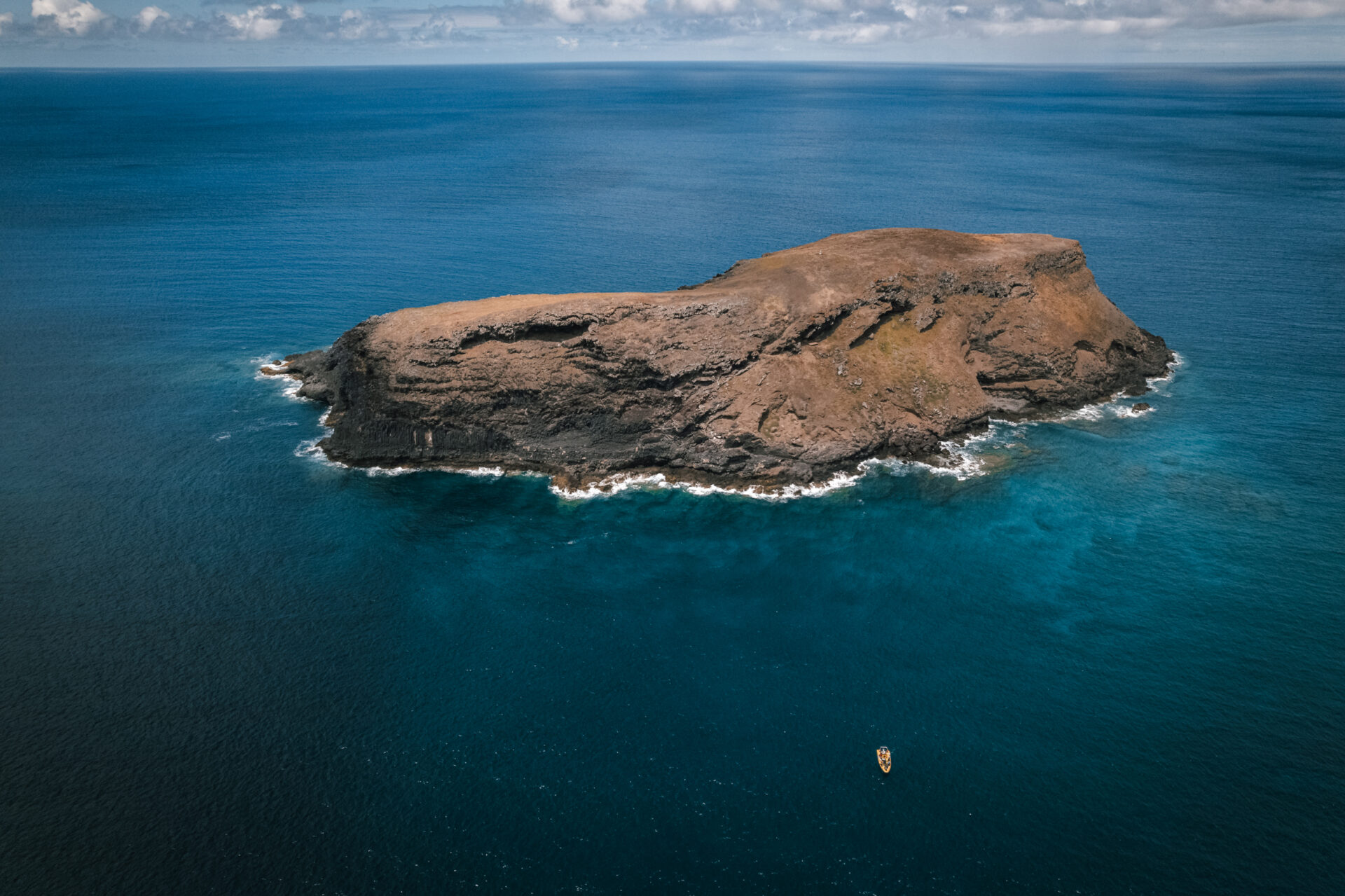
In the middle of the Atlantic Ocean, off the southern coast of Santa Maria in the Azores, lies a small seamount named Ambrosio. When you witness the diversity of marine life that visits this seamount, it doesn’t surprise you that its namesake translates to divine in Portuguese. Invisible on the surface of a map, its presence is betrayed only by the occasional dive boat bobbing at the surface, waiting for its divers to resurface from the spectacle that unfolds below.
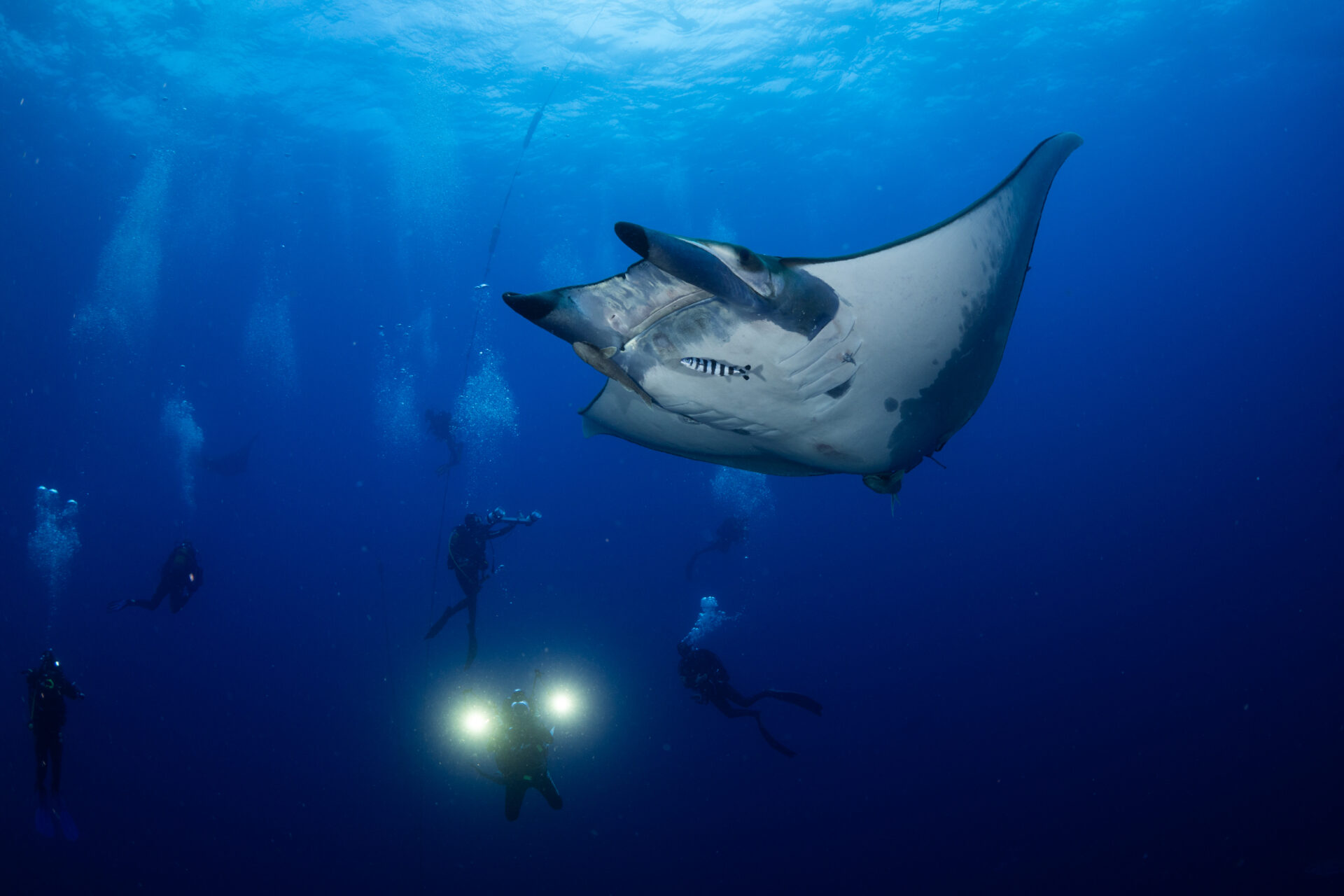
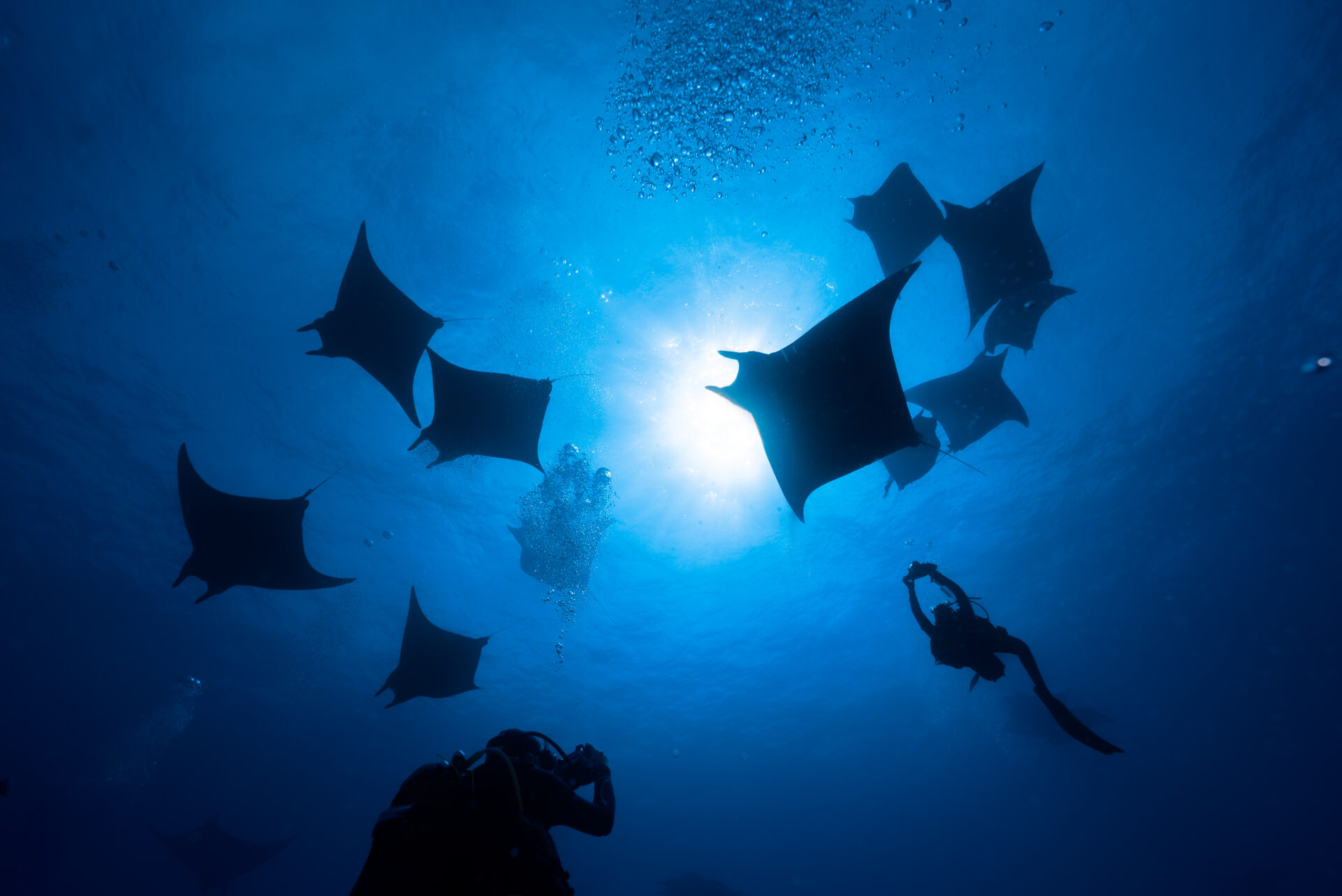
Descend into the Azorean waters in summer, and you might be fortunate enough to witness a rare spectacle: groups of Sicklefin Devil Rays (Mobula tarapacana) swimming together in stunning synchrony, sometimes numbering more than 50 individuals.
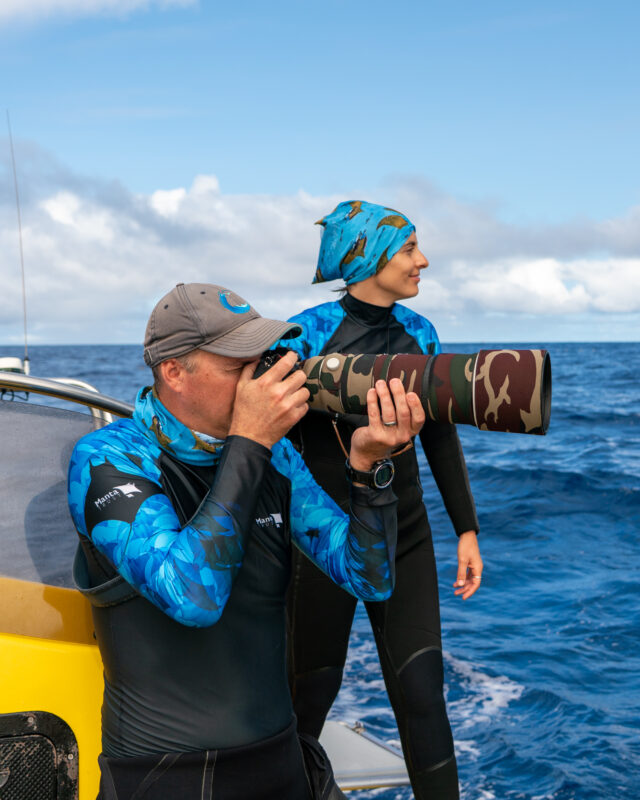
It was their olive-gold colouration and the remarkable grey-and-white patterns on their bellies, each as distinct as a fingerprint, that first caught the trained eye of marine biologist Ana Filipa “Pipa” Sobral. Founder of Manta Catalog Azores, she has spent more than a decade documenting these enigmatic rays, piecing together the hidden lives of a species so elusive that science is only just beginning to understand it.
For a few months each year, from June to early October, Ambrosio becomes one of the only places on Earth where divers can reliably encounter groups of Sicklefins. “Very few sites worldwide provide such encounters,” Pipa explains. Unlike the more familiar manta rays, devil rays are notoriously shy – yet here, they are curious. They approach divers, circle slowly, and sometimes hold eye contact, while manoeuvring with the cephalic fins at the front of their face to maintain their position in the water.
Each encounter with these otherworldly creatures is an increasingly rare privilege and a stark reminder of what could soon be lost.


Pipa’s research began with a simple observation: each Sicklefin Devil Ray bears a unique belly pattern. No other devil ray species has this trait (though all three manta species do), and the discovery allowed her to develop a photographic ID database that now forms the backbone of Manta Catalog Azores, with 339 identified individuals to date. Some rays return year after year, revealing patterns in migration, reproductive cycles, and site fidelity that no one had documented before.
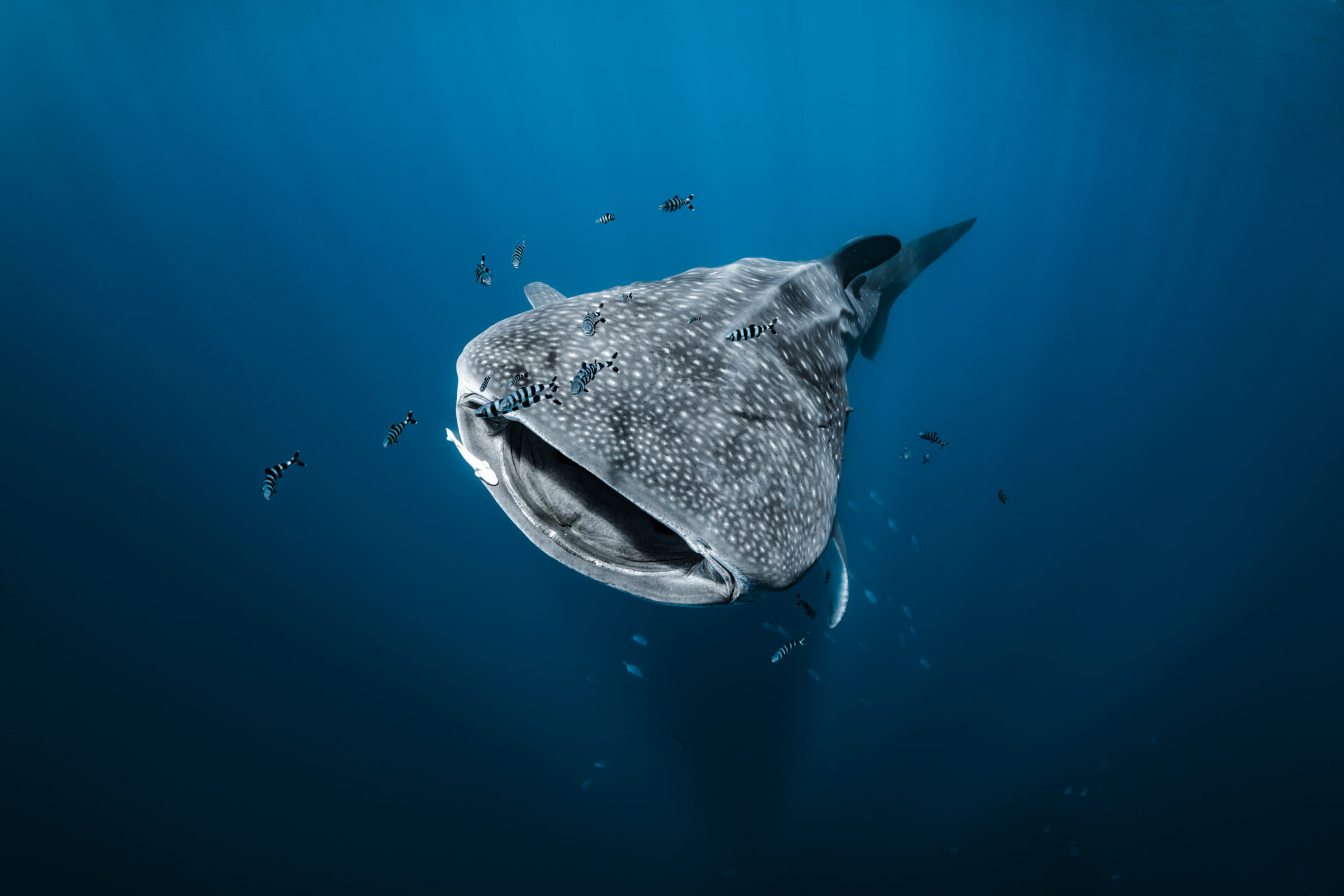
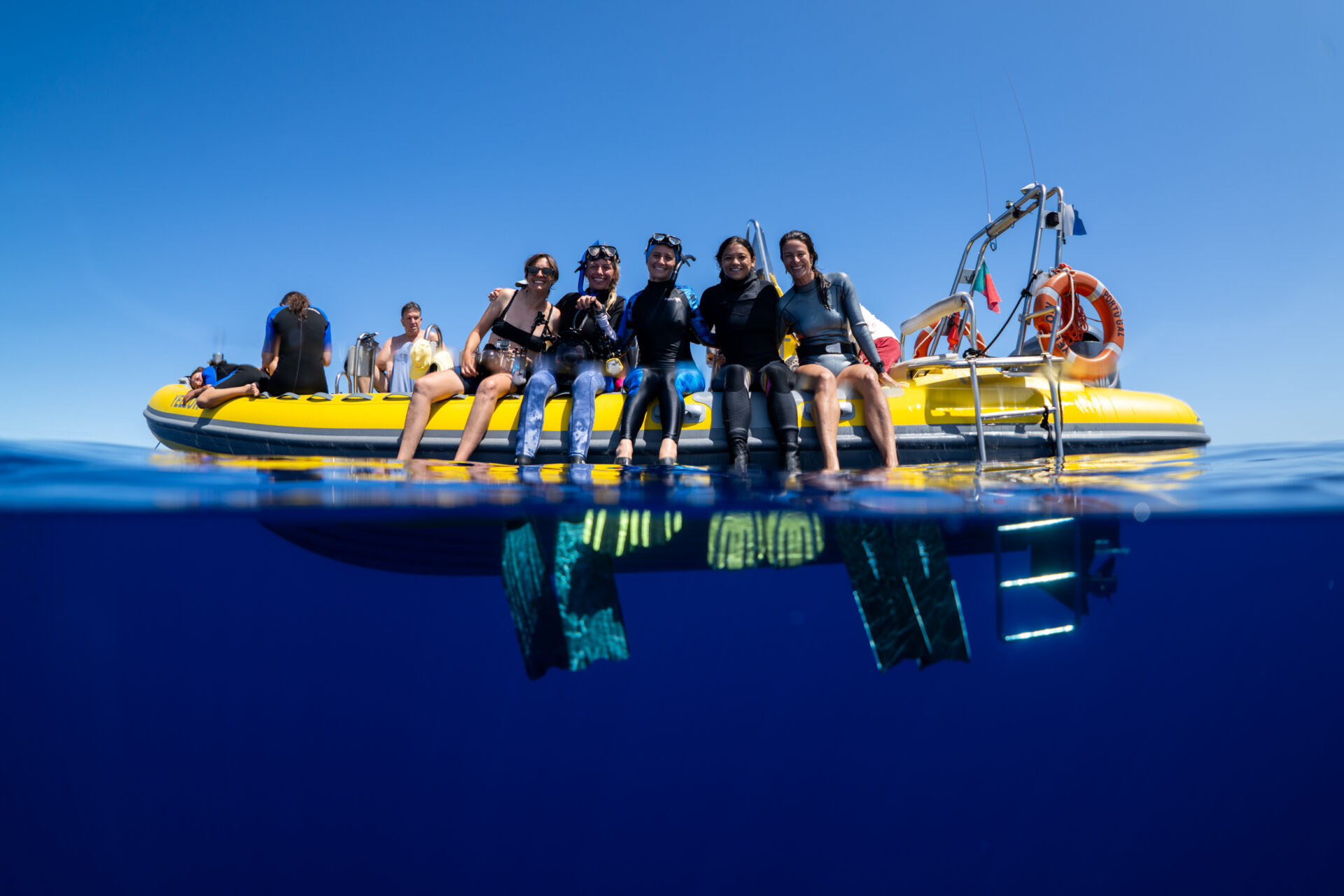
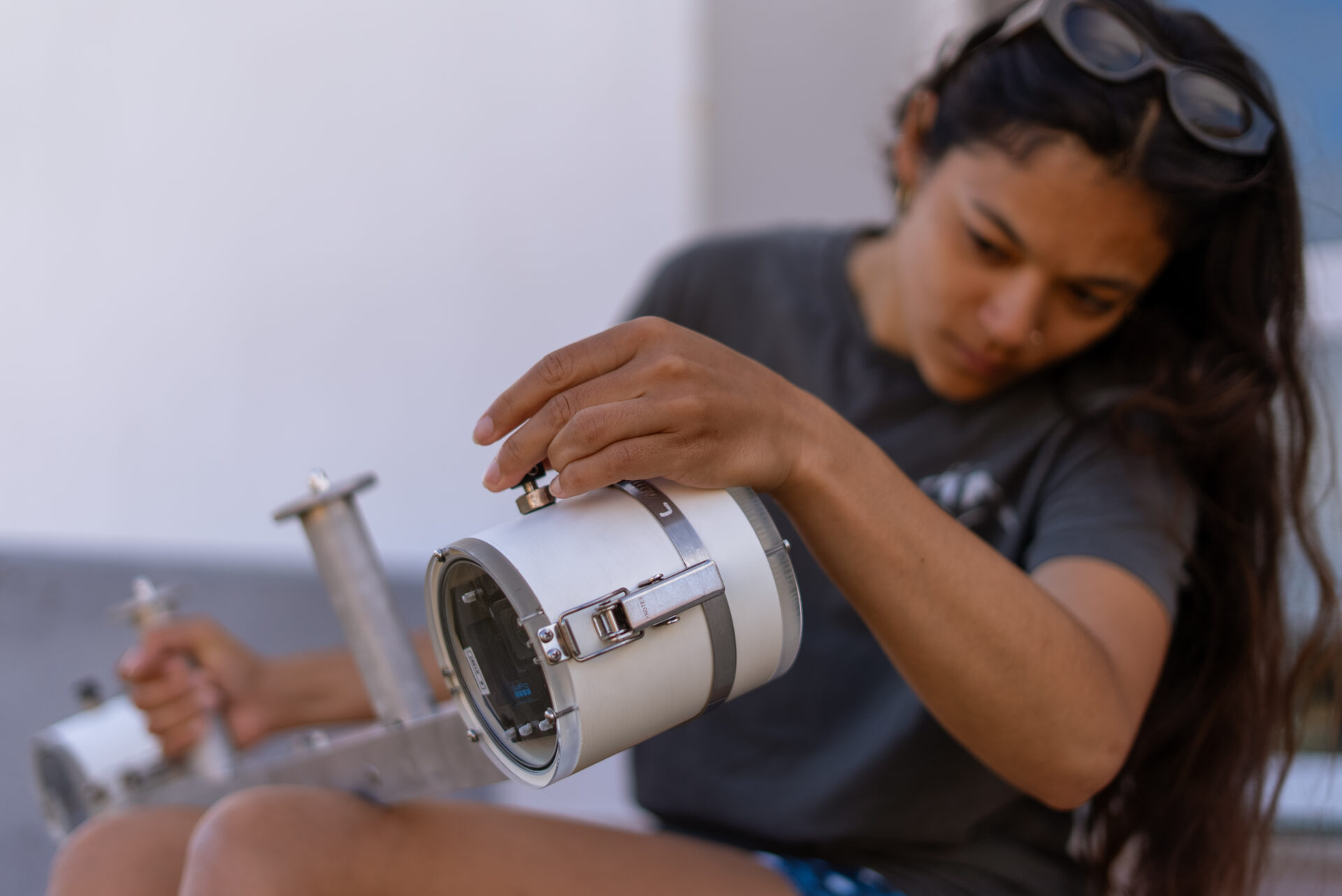
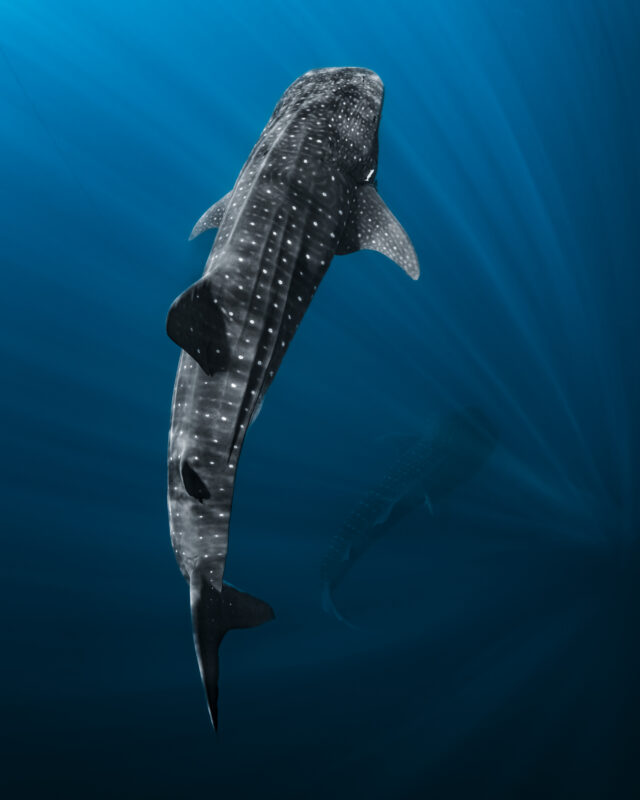
A 2025 research expedition, supported by the Manta Trust and Carl F. Bucherer, brought this work into sharper focus. Over multiple dives, the expedition team encountered 160 Sicklefin Devil Rays, including many pregnant females, and added 55 new individuals to the photo-ID database. The team also recorded size and wingspan measurements using Stereo-Video-Photogrammetry technology and noted other megafauna such as dolphins and whale sharks sharing the seamount, reinforcing the idea that Ambrosio is a significant biodiversity hotspot.
“Each dive reinforces how important Ambrosio is,” Sobral says. “It’s not just a meeting point for Sicklefins. It’s crucial for understanding their population, behaviour, and reproductive biology.” Yet, for all that is known, gaps remain: why this seamount? Where do the juveniles go? How often do females reproduce? Pipa stresses that every new piece of data is essential for global protection.
That urgency has only intensified. In October 2025, the International Union for Conservation of Nature (IUCN) uplisted all three oceanic devil ray species, including the Sicklefin, to Critically Endangered, the final category before extinction in the wild. Let that last sentence sink in a little. Across the Indian, Pacific, and Atlantic Oceans, populations have plummeted due to targeted fishing, unreported bycatch, and international demand for meat and gill plates. With a reproductive rate of just one pup every few years, and a maturity age of around a decade, recovery is painfully slow.
“The uplisting is a glaring reminder that current protections aren’t enough,” Pipa says. “Here in the Azores, we can influence what happens locally, but these animals cross international boundaries. What happens outside our waters can undo years of conservation in an instant.”
In November 2025, that global vulnerability was finally met with decisive action. At CITES CoP20 – the 20th Conference of the Parties to CITES, where governments decide how international wildlife trade is regulated – delegates voted by consensus to uplist all manta and devil rays to Appendix I. This grants the highest level of international protection and bans all international commercial trade in their products. The decision marked an unprecedented moment of global unity and closed a major loophole that had allowed continued exploitation under previous trade regulations.
For researchers like Sobral, the outcome validated years of painstaking fieldwork. “Every data point helps fill a gap in a species we still know so little about,” she says. “Appendix I protection is essential – without it, we risk losing these animals before we ever understand their full life history.”
Tourism and local engagement remain essential in this work. Santa Maria is increasingly embracing responsible devil ray encounters, guided by Pipa and her team. Photographs submitted by divers supplement the catalogue, expanding its reach far beyond what a single research team could achieve. Education initiatives, including community workshops and guidelines for in-water encounters that do not negatively impact the rays, are helping to shape a sustainable tourism model that benefits both the rays and the local community.
“The code of conduct we’re developing ensures that interactions remain safe for both animals and divers,” Pipa says. “It’s about mutual respect and ensuring that tourism supports conservation, not threatens it.”
Yet for all their grace, Sicklefin Devil Rays remain extremely vulnerable. Although pregnant females dominate the summer aggregations, juveniles are never seen at Ambrosio, raising concerns about nursery grounds and survival rates elsewhere. Each identified individual represents a critical piece of the conservation puzzle. Long-term monitoring and genetic studies are beginning to reveal patterns of connectivity across the Atlantic, informing protections that must extend far beyond Portuguese waters.
“The rays themselves are remarkable,” Pipa reflects. “Their intelligence and curiosity stay with you. When they choose to approach, it leaves an impression – and it reminds you what’s at stake.”
The Appendix I listing is historic, but it is only the beginning. Its success now depends on enforcement, national legislation, and continued investment in research and community-led conservation. For places like the Azores, where one of the last relatively stable aggregations persists, the decision offers a rare opportunity: to ensure science, protection, and sustainable tourism move forward together.
In the waters off Santa Maria, the rays continue their vulnerable migrations to and from Ambrosio, still exposed to threats in the open ocean, and their lives dependent on choices made far from their migratory routes. Whether this extraordinary seasonal gathering endures will depend not on what we discover next, but on how effectively the world turns protection into action.
For Ana Sobral, the path forward remains unambiguous: multiply scientific efforts, strengthen protections at every level, and ensure the world understands what stands to be lost. The future of the Sicklefin Devil Ray now depends on how quickly this protection on paper is matched by meaningful action on the ground.

Printed editions
Current issue
Back issues


Enjoy so much more from Oceanographic Magazine by becoming a subscriber.
A range of subscription options are available.
