Hope from hardship: Ocean Conservation Photographer of the Year, Sirachai Arunrugstichai
Sirachai “Shin” Arunrugstichai is a Thai photojournalist and marine biologist focused on marine conservation and humanity’s complex relationship with the ocean. It was his image of an Indo-Pacific leopard shark embryo that sparked a sense of hope among judges this year.
Sirachai “Shin” Arunrugstichai is a Thai photojournalist and marine biologist focused on marine conservation and humanity’s complex relationship with the ocean. An Associate Fellow of the International League of Conservation Photographers, a National Geographic Explorer and a Vital Impacts’ Sylvia Earle Grant recipient, Shin’s work spans from environmental crises to social issues.
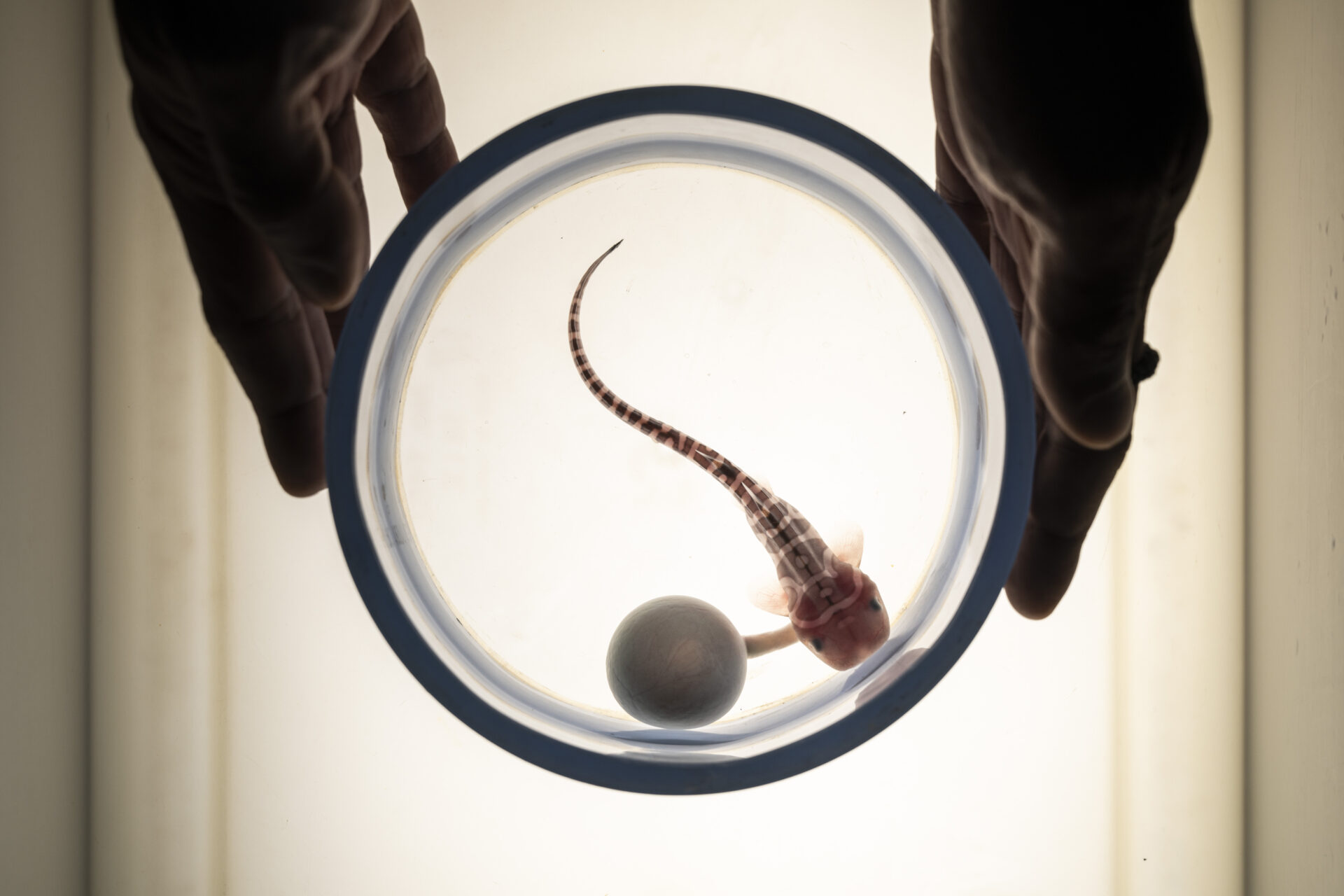
It was his image of an aquarist holding a glass jar with an early-stage embryo of an Indo-Pacific Leopard shark – part of a rearing experiment at Aquaria Phuket, one of Thailand’s largest private aquariums – that earned him first place in the Ocean Photographer of the Year 2025 Conservation (Hope) category.
“Since 2023, the aquarium’s staff-driven breeding program has produced over 40 pups of this Endangered species, listed on the IUCN Red List,” said Arunrugstichai of the image. “Aquaria Phuket now works with the Department of Marine and Coastal Resources, ReShark, WildAid, Ocean Blue Tree, and private partners on the StAR (Stegostoma tigrinum Augmentation and Recovery) Project Thailand, reintroducing these sharks to the wild, beginning August 2025.”
Oceanographic Magazine catches up with Arunrugstichai to learn more about his career in award-winning photojournalism, the story behind this year’s winning photograph, and what gives him hope for the ocean…
Oceanographic Magazine: Shin, I’ve been looking forward to connecting with you for a long time, knowing you as one of our Columnists and a regular name to appear in the Ocean Photographer of the Year. Congratulations on your win in this year’s Conservation (Hope) category.
Sirachai Arunrugstichai: Thank you, Rob and it’s great to meet you and to be talking with Oceanographic Magazine again.
OM: Let’s start by getting to know you. We’re obviously fans of your work in photojournalism and the stories you manage to get close to and bring home, it’s a constant source of inspiration – not to mention content… So, how did this all begin for you?
Sirachai Arunrugstichai: Well, where do I begin? I have just been interested in marine life since I was very young. As kids, we loved fish. We always wanted to go to the sea. We might see some dead fish and pick up those fish to bring back home, just to collect. I love sharks. I remember growing up and asking my parents to buy the sharks in a local fish market, just to bring them home, keep them in the freezer and look at them. Maybe I was a bit of a weird kid… but I had this fascination with life in the ocean.
I got to watch lots of documentaries and I started looking at pictures in the magazine – it all just kept building my interest in marine life. But I never thought I’d actually become a marine biologist. In Thailand, to make a living in science, you probably need to be an engineer or become a doctor. There was never really much opportunity in other aspects of science. I started to study a biomedical degree for a few years, and through this I started to gain access to environmental field trips with my professors. I had already learned to scuba dive and was a part of a regular diving club.
One day I asked myself what kind of life I wanted to have. Would I want to be in a hospital all day? Or working out in the field? It was then that I changed my career path to environmental science. I did my thesis on coral reef restoration and I went to live and work on an island for a few years, working with local communities on coral reef restoration projects.
It was at this point that I started to get into photography – as a way of keeping in touch with friends. I wanted to document and share what I was doing; teaching kids scuba diving, collecting data on the coral reef and making artificial reefs – letting people know what I was doing and where I had disappeared to.
I found photography to be fun.
Other features

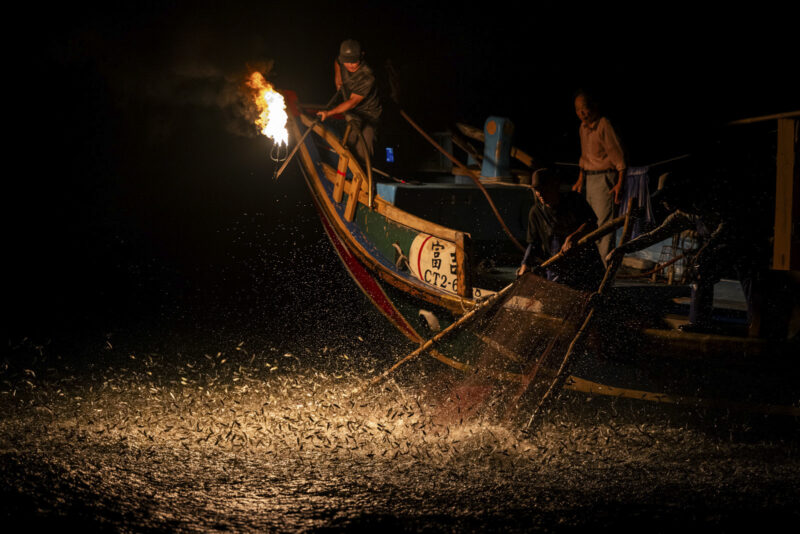
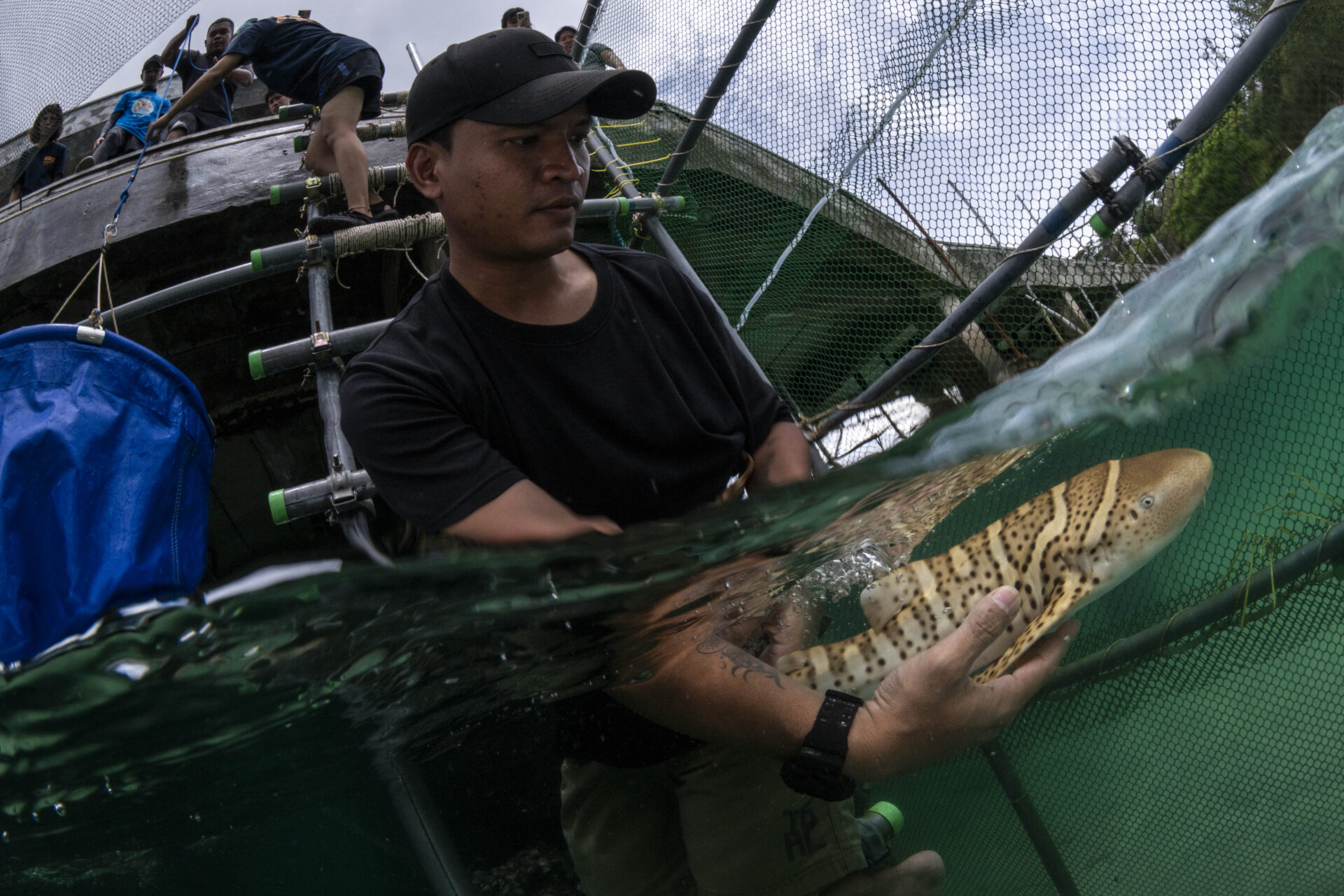
OM: Was there a moment or a turning point when photography started to take over?
Sirachai Arunrugstichai: It was when I did my Masters. I got a scholarship to do my Masters on shark fisheries. Some of my earlier photography – from the time spent on coral reef projects – was placed in some National Geographic Thailand competitions and they asked me what I had been doing with my life. At that time, I was just going to fish markets and counting sharks, identifying them, and measuring them for my Masters. The Editor at National Geographic Thailand took interest in this research and wanted me to learn more. They told me, if the photography is strong enough, they might be able to run with the story. That was pretty much my first step into journalism.
OM: Very cool, and you’ve never really looked back have you? I mean, from here you have been recruited by Getty and had work placed with the Washington Post. When did you realise the kind of impact you could have through your photography and storytelling?
Sirachai Arunrugstichai: I think it really started when I read a piece written by the photographer, Thomas P. Peschak. He offered some great advice to budding photographers. I was really taken with the concept of conservation photography and deeply inspired by his work.
The power of photography gradually became all the clearer to me. There are now cases where my photography has contributed to changes in policy or the creation of new Marine Protected Areas around the local region. So, my experience of how photography can have this sweeping impact is what really keeps me going.
OM: Wow, I love that. Can you give us a bit more detail in that case on how your photography had that effect?
Sirachai Arunrugstichai: Of course, but it’s important to remember that photography is just one small piece of a whole network or community of people coming together to make that change, particularly when it comes to policy change. It takes local communities, scientists, the law makers all to come together on a subject. But, one example would be the photograph I took of dugong in around 2019. This dugong was often becoming stranded on a beach and losing its mother, so it was being taken care of by the Marine and Coastal Resources of Thailand, who I work really close with.
The dugong were being raised in the natural seagrass beds out of captivity and they were forming these really close bonds with the team of caretakers there. I was there taking photos, and they got out. People were finally able to see the work of these dugong caretakers and fall in love with the animals themselves.
Thai people love cute things, so these baby dugongs became known around the country. We now have a 24-hour livestream of the work we do with the dugongs, that’s how much they love them. Sadly, as one of the baby dugongs got older, it became sick and it died. When they performed the necropsy, they found all this plastic inside its stomach. This became such big news that even Leonardo DiCaprio shared it on his Instagram account.
The death of this dugong led to a whole national plan for dugong conservation with major upgrades and protections that led to the establishment of a new Marine Protected Area to cover the entire area that the dugongs live. There was also a major plan to ban single-use plastic, but it all got derailed by Covid and never picked back up again.


OM: Being journalists, we share an affinity for telling the right stories. So, at the risk of talking a lot of ‘shop’ here, can you tell us what it is about a story of a subject that captures your imagination?
Sirachai Arunrugstichai: Oh, I don’t really think much about it, I usually just ask myself: has it been covered before and how urgently should people know about this? Is there a momentum or a movement behind this that makes this the right time to tell the story? I think the important thing to ask is ‘why do this story now?’
One of the secrets for me is that I am still active within the science community, so that’s where I can get some intel on what kind of new research is coming up. For me, it’s all about staying informed, reading, and learning.
I don’t overthink the photography side of it. I just focus more on the story and how that story is best being told. Sometimes, I have a personal project that has captivated me and I know it’s not urgent but it’s a concept that has got stuck in my head. I’ll work on it and just see where it’s going…
What photography is good for is as an excuse to get you going out into the world and exploring it. I don’t really think too much about the final output.
OM: Has there ever been a story that you’ve been on that surprised you or, at least, impacted you in a way that took you by surprise?
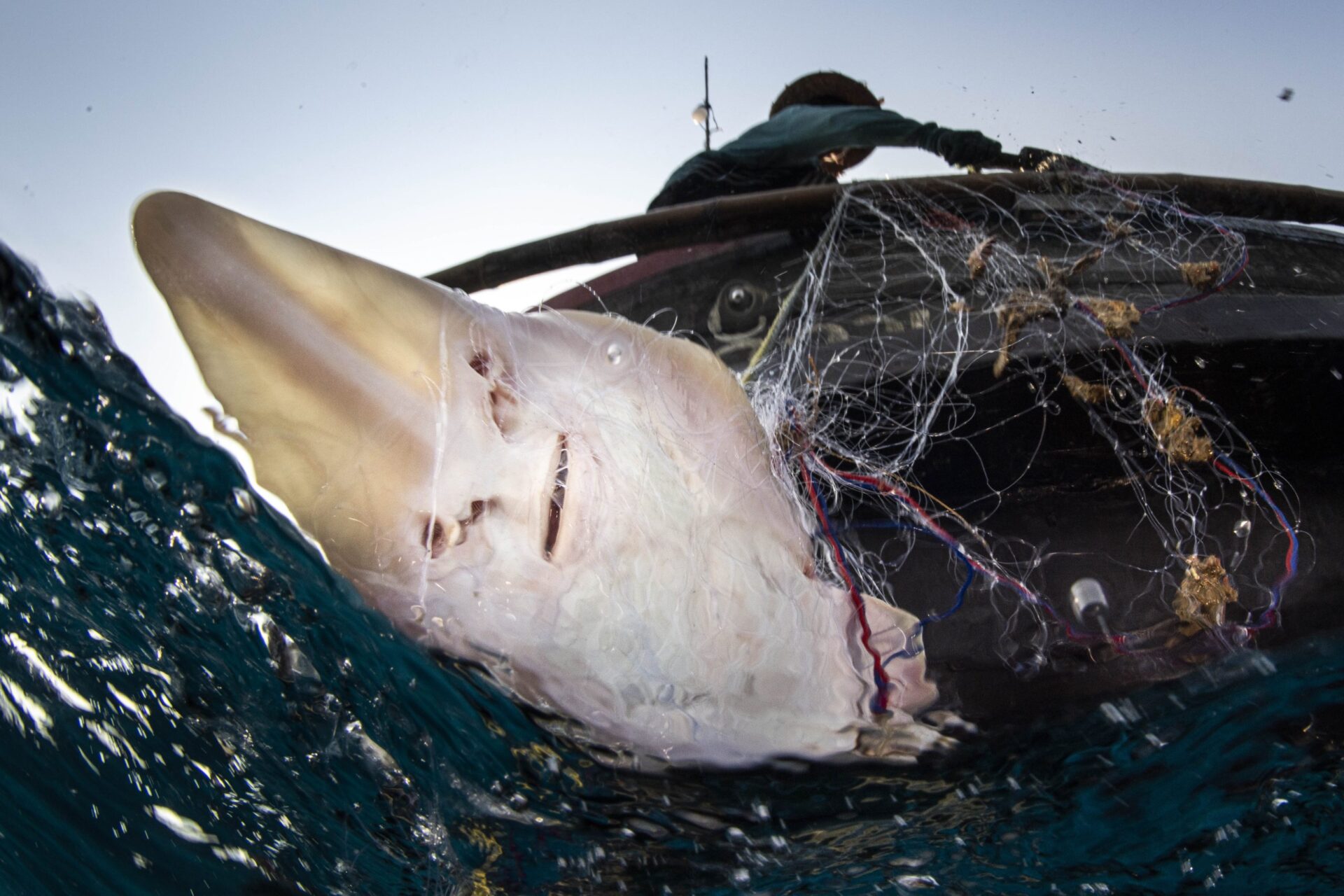
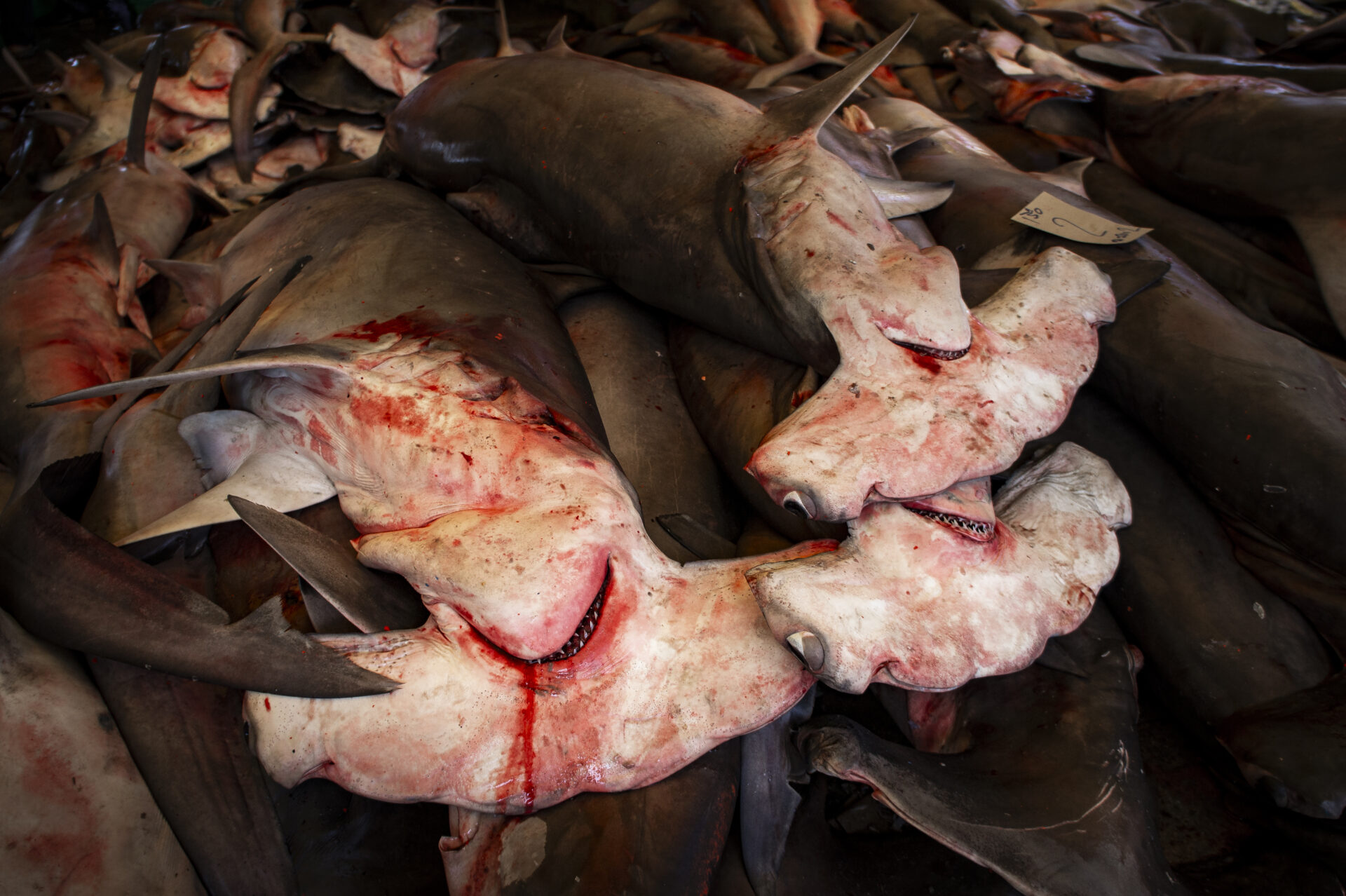
Sirachai Arunrugstichai: Yes, lots. There have been many stories that have shocked me and left me very emotional. I have photographed many dead animals in many different circumstances – such as those at the shark and ray factories… I actually thought I would have more negative feelings towards the people working these shark factories. But actually, as well as feeling sad for the sharks and the rays, I felt this sadness for the people too. I felt their hardship. They are trying to make a living. It was quite the journey learning about their lives, and it left me feeling this enormous empathy.
It’s definitely something that has changed my perspective on these issues. We know that our waters are heavily overfished, but when I talk about policies I always make sure I point out the economic factors that are driving people towards these jobs and practices.
On an emotional level, it might be the story I covered on Covid that impacted me the most. It was during the pandemic when the mall was being used as a makeshift crematorium; bodies were stacked inside refrigerator containers and there were just so many bags of these bones, people without any relatives with them.
Yeah, those kinds of things affect you. Day-to-day, you don’t really feel it. But you when you’re staying alone and have moments of silence, it gets you.
OM: I can imagine, Shin. Thank you for sharing that with us. What I love about your ocean storytelling is the human element you bring with it; you’re not pointing the finger to say something is wrong and ‘you’re the bad guy’- you’re helping to lift a veil on the real problem. As you say, people are trying to make a living, they’re not waking up intent on destroying the ocean – that’s the symptom of a system that is broken.
Sirachai Arunrugstichai: Thank you, Rob – that’s exactly it. We can’t have the right conversations if all we’re doing all the time is pointing the finger of blame. Because it’s usually not being pointed at the people that can address the overarching, bigger problem.

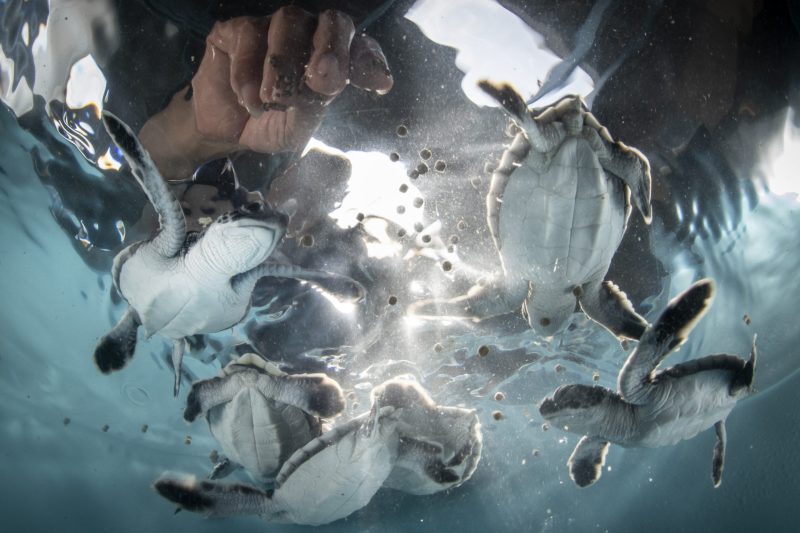

OM: Should we talk about your win in this year’s Ocean Photographer of the Year? Congratulations on your success in the Conservation (Hope) category. What does it mean to you?
Sirachai Arunrugstichai: I am obviously very happy for the win. For me, though – it’s more about the impact. It’s the platform this offers for being able to take this story further and sharing this wider with people to help with the awareness around the ocean. When I enter these competitions, that is what matters for me, it’s not about the win itself, it’s about sharing the story around the world.
OM: Well, hopefully you can take some pride in the idea that your winning image really has been seen around the world. And I don’t know if the name Laurent Ballesta means anything to you… ?
Sirachai Arunrugstichai: Oh, he’s a crazy guy! My friends and I – we love him. He’s a crazy guy!
OM: Well, he was one of the judges this year. So he was among those that picked your shot as winner for this category…
Sirachai Arunrugstichai: Oh, wow… that’s really cool!
OM: I was going to ask about the story behind your winning photograph… What gives you hope for the ocean and the environment?
Sirachai Arunrugstichai: So, to answer this I may need to tell you more about the photograph itself. I didn’t really plan to take that photo to be honest. It was a year ago that I heard from a friend who once worked at an aquarium. He told me about one guy who was trying to breed that species of shark – Indo-Pacific leopard sharks – and that he was already in the process of producing the eggs. I asked if I could go there to get some pictures. At the same time, the group ReShark were researching the species for a project on leopard sharks in Thailand, planning to bring some eggs to release in waters off Thailand and recover the population.
I told them that I knew just the guy who was breeding leopard sharks. It took a while for all the parties to come together, but they eventually did.
So actually, yesterday I just photographed the first release of these sharks in the wild. I’ve literally just flown back. It’s exactly a story like this that keeps me hopeful. The people around me, the communities, the stakeholders that I get to connect with and to each other. We feel the sense of place, the shared purpose, and the shared goal that we want to see something happen here.

OM: One of the questions I’ve been asking winners of various other categories in the Ocean Photographer of the Year is about social media. Has it positively or negatively impacted photography, conservation, and awareness of the issue the ocean faces?
Sirachai Arunrugstichai: I think Instagram has so much potential but.. Let’s say the algorithm right now, it doesn’t really favour my kind of work or narrative photography. For my niche, exposing shark factories for example – it doesn’t perform well. And I accept that. And the way I write my stuff, I love to write in a more reportage style. That is where my background is, so again – it’s not something that really translates to social media all that well.
OM: I get that, too. It’s a bit of a different line that you walk, Shin – and there’s a lot of respect for that. Also, to reassure you, you don’t sound like you were too much of a weird kid. I also had a fascination with the seafood market (we call them fishmongers) when I was a kid. It was a place where you got to see all these otherworldly creatures… It was an easy bit of entertainment for my parents, I think.
Sirachai Arunrugstichai: Haha, yes – I used to love a fish market. I would see a crazy fish and ask my mum to buy it and take it home, even though she didn’t know how to cook it. But that was long in the past. Later on, with the impact from industrial fishing, there is now less and less diversity in the fish being shown in the fish market.
OM: It’s a sad reflection on the state of affairs right now, isn’t it? Thanks so much, Shin.

Printed editions
Current issue
Back issues
Enjoy so much more from Oceanographic Magazine by becoming a subscriber.
A range of subscription options are available.
