Dr Jyotika Virmani: I fell into the ocean from space
Physical oceanographer and executive director of the Schmidt Ocean Institute Dr Jyotika Virmani interrogates why space, not the ocean, has captured the romanticised attention of the masses – and suggests democratising the Innerview could spark a New Age of Ocean Enlightenment.
As a child growing up near Jodrell Bank, the world’s largest radio telescope at the time, it felt like the universe was right on my doorstep. I was always looking out to the stars, spending countless hours in the back garden with my telescope, dreaming of what it was like out there. My imagination was fuelled by science fiction shows about the adventures of space and time travellers, alien species and strange new planets. Inspired, I started my journey in physics with my heart set on the stars, fully intending to become an astrophysicist. But somewhere along the path, a course in atmospheric physics pulled my gaze downward and I found myself captivated by the power and beauty of the forces of our own planet – the systems that shape weather and climate.
Our weather is the ultimate universal experience; it touches every soul on this planet, regardless of their position in society, regardless of their society. For the first time I saw this entire connected global system – a delicate and intricate dance of heat and water between the sky, the sea and the land – fuelled by our nearest star, the Sun. Understanding our planet on a scale I’d never realised before changed my trajectory. And that’s how I found my way to the ocean.
Space and ocean are antithetically linked, they are the bookends of our human experience: extreme, alien environments that hold a fascination for scientists and artists, engineers and storytellers. Both are environments that, without the grace of technology, we simply cannot explore. Yet, through human ingenuity, we can breathe in a vacuum and in water, survive in zero gravity and under crushing pressures, explore the darkness of realms above and below. We have begun to peel back the veil on wonders that were hidden from us for eons, finding discoveries that challenge everything we thought we knew about ourselves.
But why does the silence of the stars seem to echo so much louder in our collective heart than the song of the sea? It’s a question that haunts both ocean professionals and enthusiasts alike. For a long time, the two were equals in our human imagination but something shifted in the mid-20th century when space, although physically inaccessible for the majority, became more appealing than the ocean. An oft given reason is the space race of the era, which triggered greater funding for space exploration and immense fodder for storytelling. Added to this, space is generally considered to be more visible; we look up and see a billion stars in an infinite canvas of twinkling possibilities. Conversely, the ocean remains psychologically distant from the human mind, only accessible to those fortunate enough to be within proximity.
Even then, to most, it is a flat blue horizon, its heart beating in a darkness we cannot see from our vantage point – the undersea world of alien landscapes and creatures that lie beneath remain inconspicuous. I believe that narrative can change and, through technology, we can inspire the public with the beautiful unknowns of the ocean.




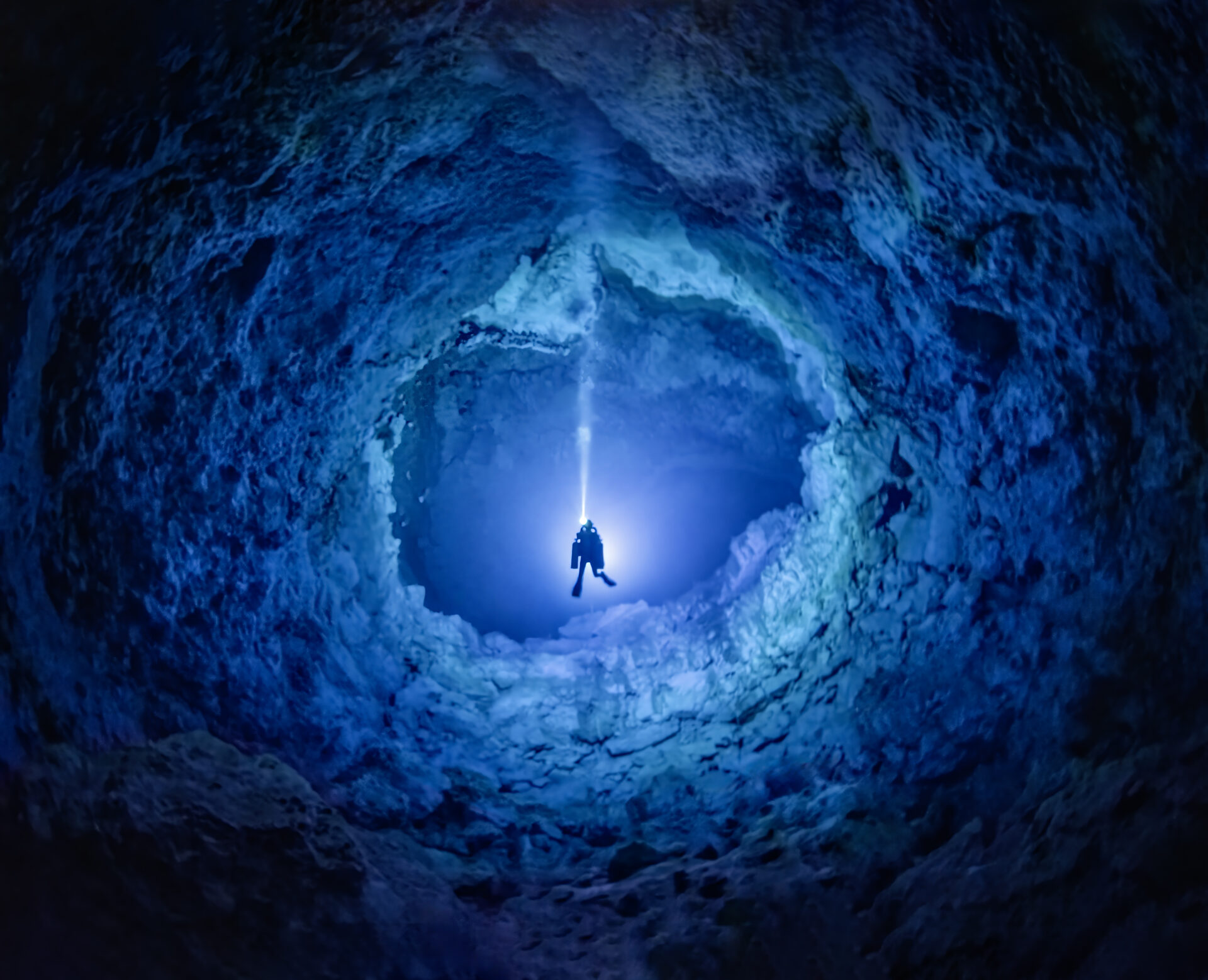
How we conceive of both the ocean and space is defined by how we speak about these two frontiers. Despite their many similarities, there are many distinct differences which lie at the doorstep of the stories we tell.
A tale of the future versus the past. Space stories are almost always embedded in the possibility of finding new life and seeking new planets. These stories are about what’s next, a forward-looking promise of a brighter, more expansive tomorrow. Ocean stories tend to look backward; even our most captivating tales of shipwrecks and sea monsters are relics of the past. While space is a playground for our potential, the ocean stirs the mind as a romantic memory. Popular culture dresses space in the sleek, shimmering tools of the future, sparking our imagination with technology that eventually inspires realworld innovation. But we often see the ocean through the tools of yesterday: sailing masts and brass sextants. We have creatively anchored the sea to the archive, missing the futuristic spark that tells us the deep sea is where our next great chapter will be written.
A tale of wonder versus the mundane. We talk about the magic of alien worlds, yet we talk about the ocean as a mere resource – how many people can it feed? We’ve traded the mystery of the abyss for the ledger of a grocery store. Not all traditions made this trade. Many Indigenous communities never separated wonder from stewardship: for them, the ocean has always been both a source of awe and a responsibility, neither reduced to resource nor elevated to abstraction.
For many, however – those who did not grow up with the ocean inside them – that connection has been severed. The stories that have shaped our collective relationship with the sea have too often been told from the shore, by those for whom the ocean was a horizon rather than a home. Ocean stories have become a heavy burden of “we are killing what we love.” It is hard to stay inspired and take action when you are constantly told you are the villain. Space asks nothing of us but our curiosity; it invites us to dream without the weight of a chore.
If there is a call to action, it’s an invitation to imagine. The ocean often comes with a “to-do” list. We ask people to change their lives or clean up beaches, turning a source of inspiration into a sense of duty which people either don’t have the means or inclination to uphold because they aren’t aware of the ocean as a part of their daily lives.
A tale of triumph versus the impossible. Space gives us a ‘Hero’s Journey’ storyline to follow through focused missions, like Artemis II, that allow us to grasp the true scale of the achievement. These stories are in a format we understand: a beginning, middle and end. These are tales of the soaring triumph of the human spirit – a collective leap of exploration that unites us all – amplified because the space community speaks with a unified choir, cross promoting every giant leap and discovery so the whole world hears the same song. The ocean, however, is a battlefield of competing interests: of all-encompassing concepts like conservation, and abstract risks like plastic outweighing fish. For many, these feel too vast to touch, with no end in sight. We’ve traded the thrill of a specific, daring quest for the overwhelming and exhausting scales of a global idea.
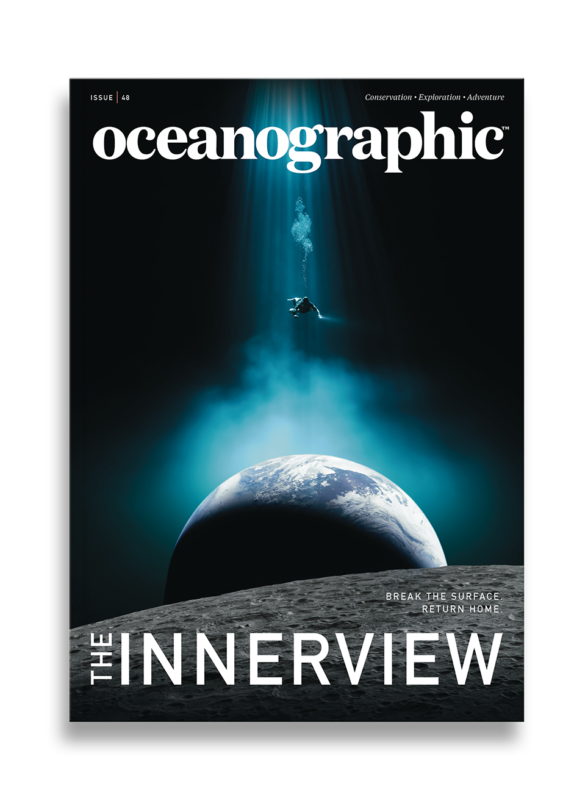
Exploring the unknown, whether it be space or ocean, is bigger than any one person. For those who are embedded in either, there is a fundamental respect that there is something much larger than us. In the case of the ocean, it keeps us alive and alters our perspective of what is important – the Innerview. It is worth pausing here to acknowledge that this perspective – of the ocean as something larger than us, something we belong to rather than control – is not new. Indigenous and coastal communities around the world have held this understanding for millennia.
From the Haenyeo of Jeju, whose entire way of life is built on entering the ocean with respect and reciprocity, to the Polynesian navigators who read the sea as a living relationship rather than a surface to be crossed, to the Sama-Bajau whose very bodies have evolved alongside the water. The Innerview is not something these communities need to be given. It is something they have always known. The democratisation of the Innerview, then, is not only about bringing technology and stories to new audiences, it is also about listening to the voices that have carried this wisdom across generations, and ensuring they are at the centre of the conversation. Our challenge, therefore, is how do we bring the Innerview to everyone, regardless of their location? There are at least two ways.
First, we need to inspire. By sharing the wonder, the mystery, and the beauty of the ocean, we can remind the world that this isn’t just a system to be managed or a crisis to be solved – it is also a magnificent, glowing, living mystery that defines who we are.
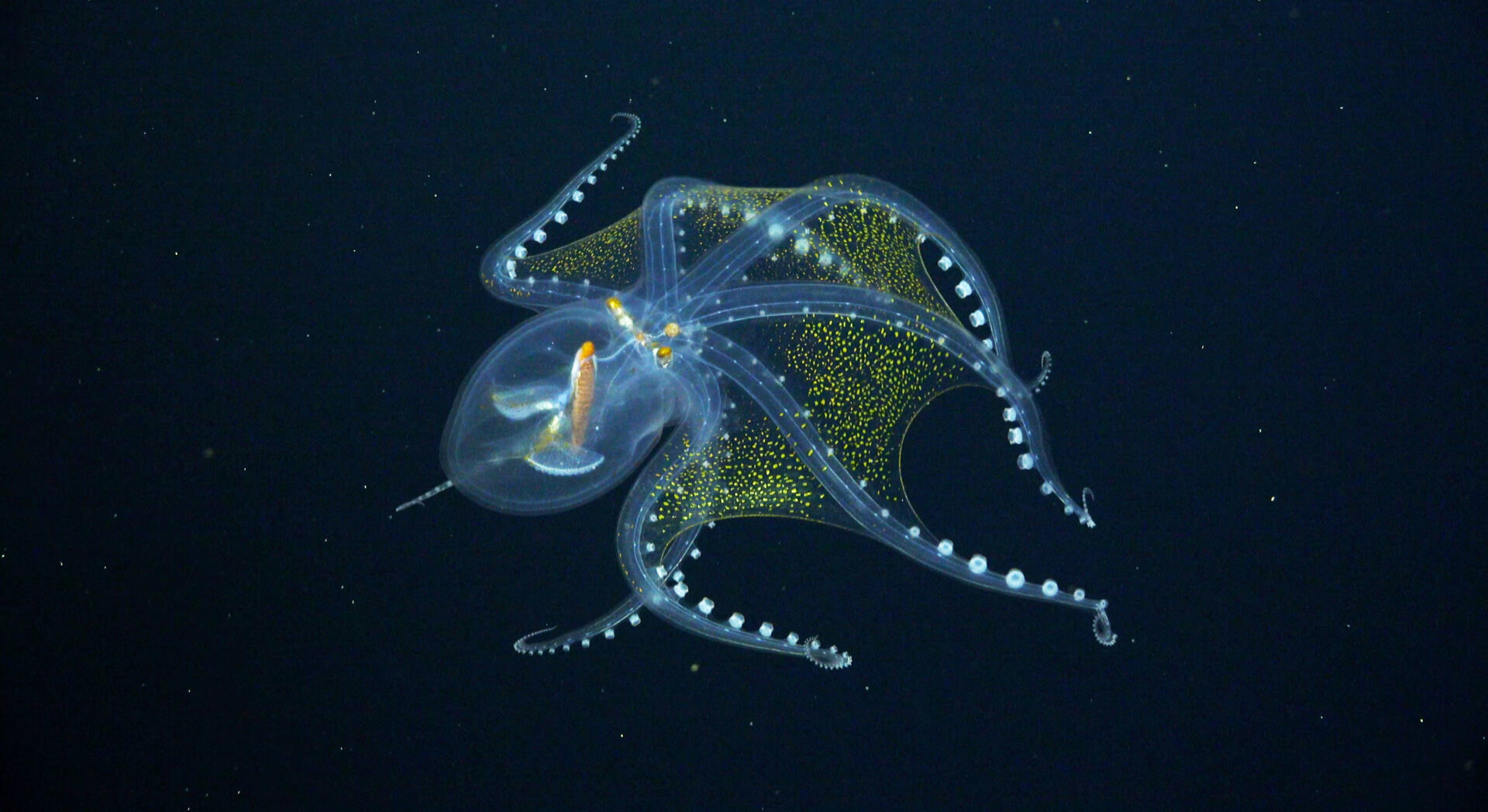
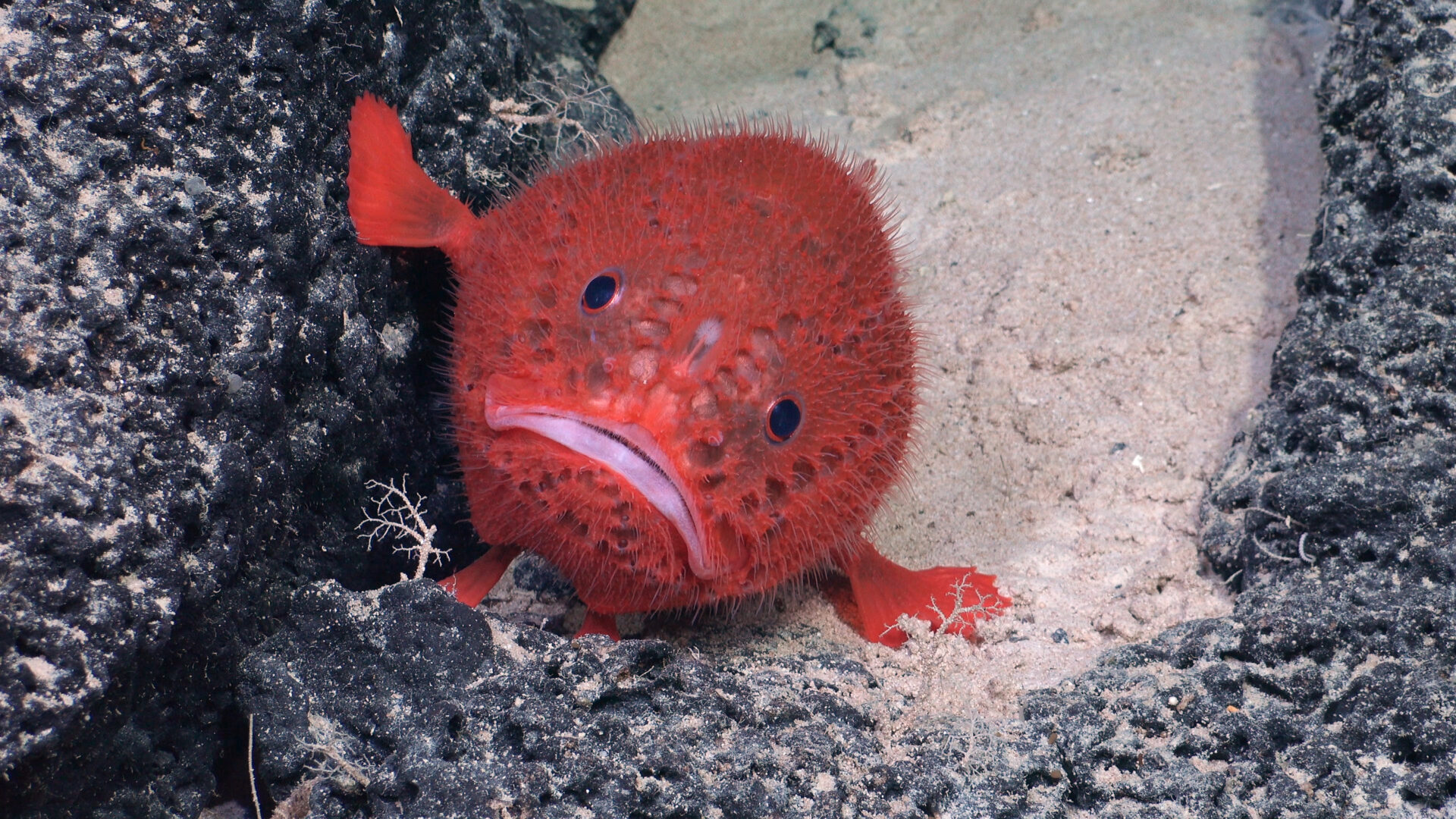
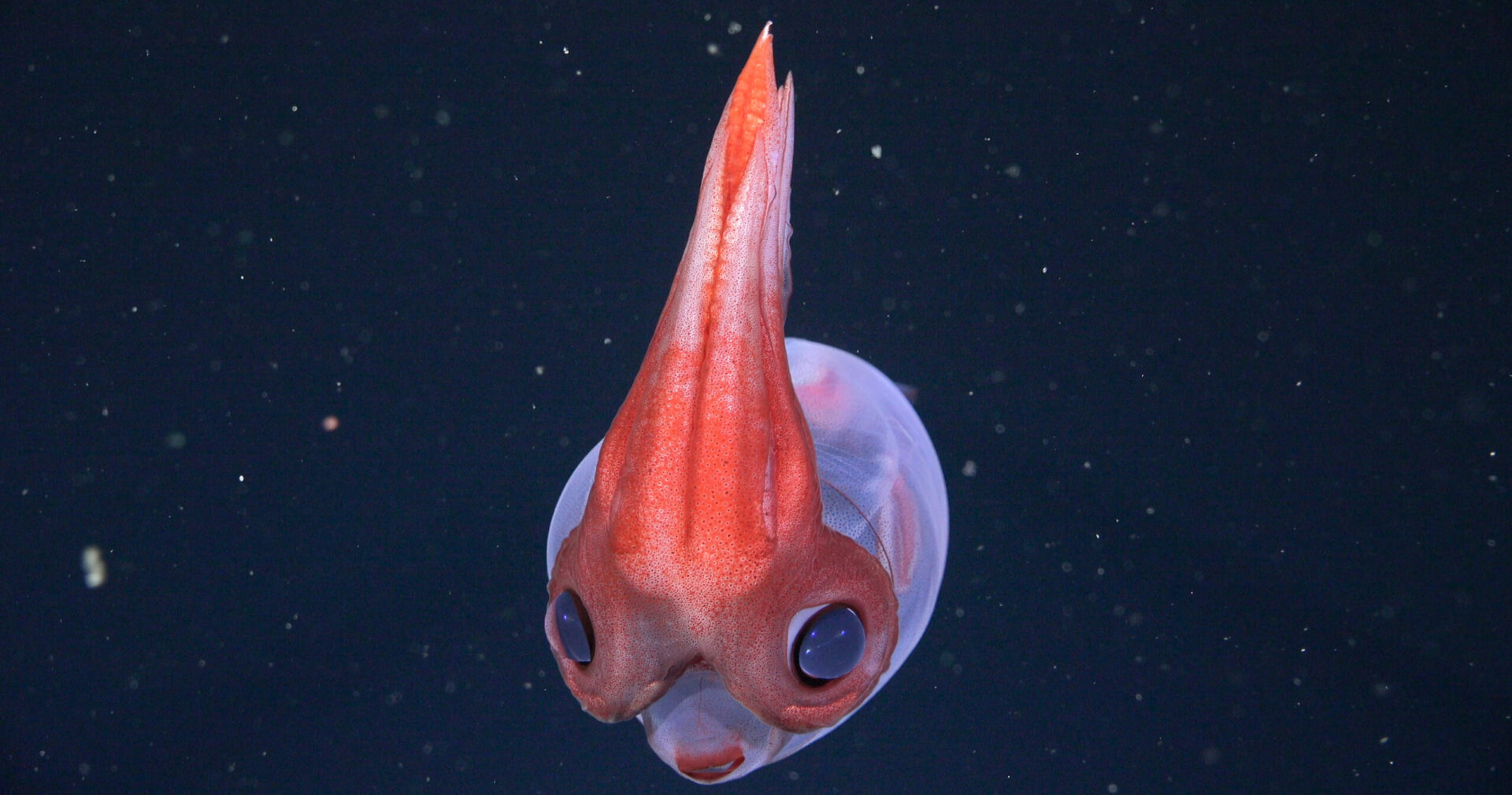
We are fortunate to live in an age where technology gives us an incredible ability to change minds. We can get incredible, high resolution imagery from the deep sea; anyone watching will see the strange and magical creatures of the ocean. A newborn baby octopus, a juvenile colossal squid in the deep, the longest known sea creature – a 45 metre siphonophore – floating in an ethereal blue ocean, a one-centimetre orange pygmy seahorse camouflaged among the coral, a glass octopus in the mid-water, a cute chauconocops on the seafloor with a body that looks like a basketball. These non-humanoid lifeforms that live on this planet call it home just as we do. Although we perceive their home as vast and mostly dark, these creatures communicate with each other: they bioluminesce, they conduct electricity, they can hear each other over great distances. Their home has grand canyons, sea mounts, volcanoes, waterfalls, two-mile-tall cliffs, and undersea beaches with waves lapping at the shore – landscapes you would see in the science fiction stories on other planets. Stories of our fellow aliens and their vast habitats, not fiction but reality, can spark the imagination of millions to follow along as we boldly explore the remote and unknown parts of our own planet. Mixed reality technology is another way of taking people from the living rooms to the ocean, changing minds.
Then we need to meet people where they are. Using this imagery and the storytelling to connect with cultural interests through art, fashion, music, theatre, sports, literature, food and many other avenues. To achieve this, we can partner with experts in those industries: artists and galleries, fashion designers and retailers, actors, musicians and concert organisers, sport management, publishers, restaurateurs. Listening and working with their expertise to ensure the ocean is woven into the fabric of our culture and everyday life. Creating a subtle drumbeat that raises the ocean in the collective consciousness.
It is time to turn the tide. For the sake of the planet, and for the sake of our own sense of wonder, we need to embark on a quest to make the world fall in love with the blue depths all over again. And perhaps, by bringing the Innerview to everyone, we will ignite a spark of scientific curiosity. Just as I was inspired as a child by space. The Renaissance is here – it’s the New Age of Ocean Enlightenment.

Printed editions
Current issue
Back issues
Enjoy so much more from Oceanographic Magazine by becoming a subscriber.
A range of subscription options are available.
