Grunion lore: And the fish ran away with the moon
For Dr Karen Martin, a professor at Pepperdine University, Malibu the tale of Californian grunion is more than the fish that dances in the moonlight, but a reflection of our evolving values with conservation and even the smallest - quirkiest - pockets of life in the ocean.
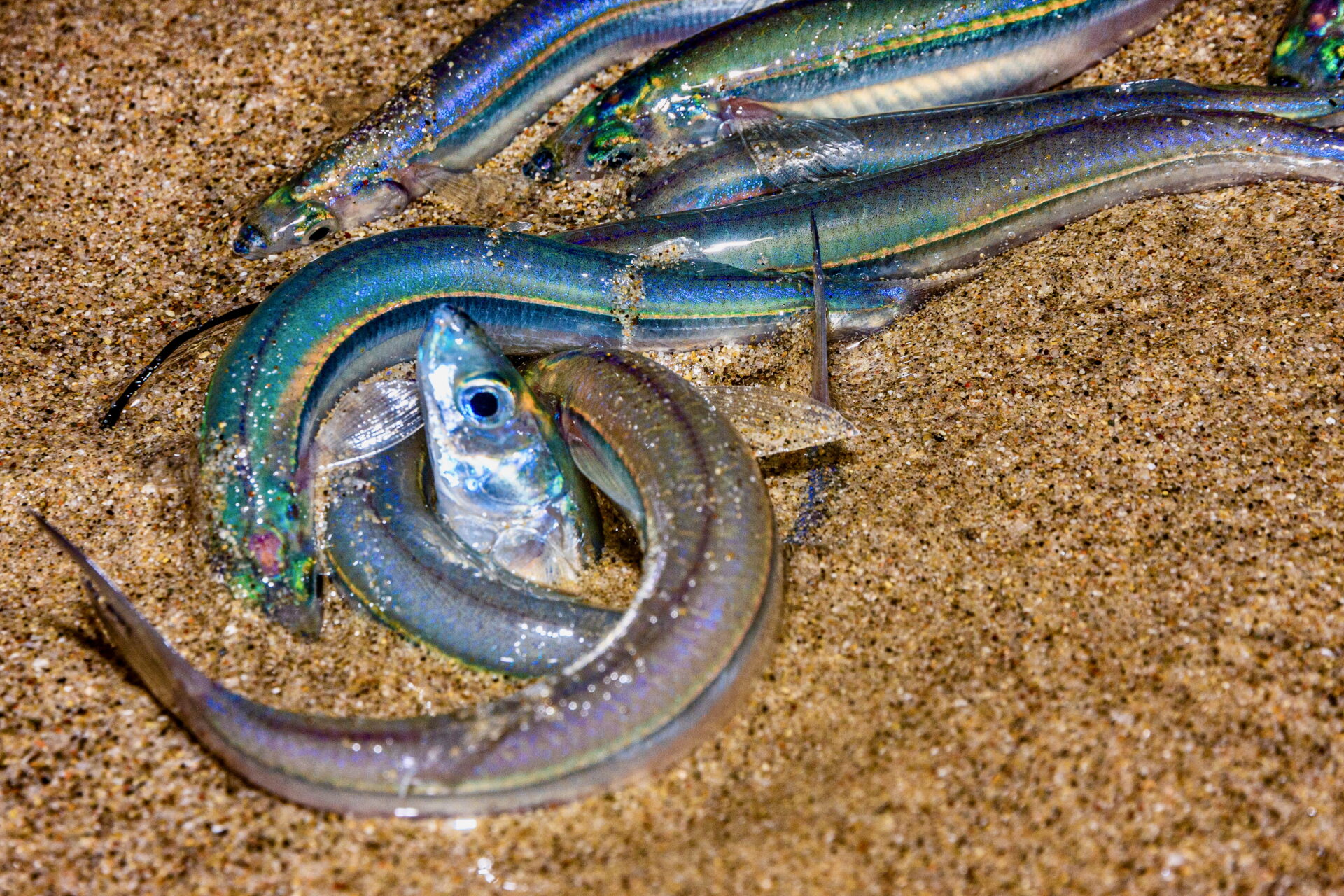
California grunion, Leuresthes tenuis is a small marine fish with a population so small that it has never supported a commercial fishery. But that doesn’t mean it’s of no value to humans, because this is a fish with a remarkable life history.
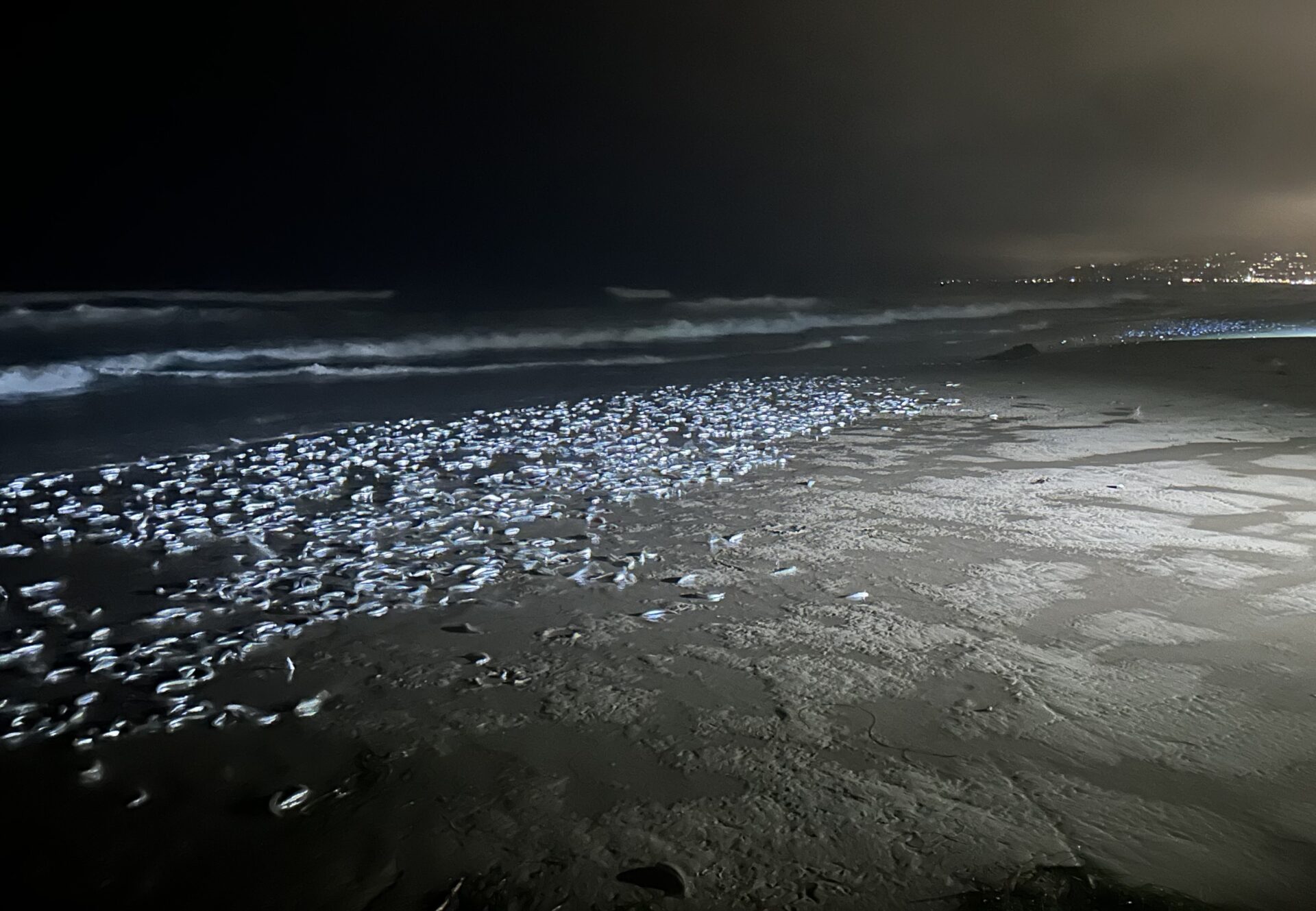
If you’re lucky and nature cooperates, you can see these small silvery fish emerge from the waves off a number of California beaches the night following a new or full moon. On some nights, no fish appear, but on others, they number in the tens of thousands, mirroring the stars in the night sky.
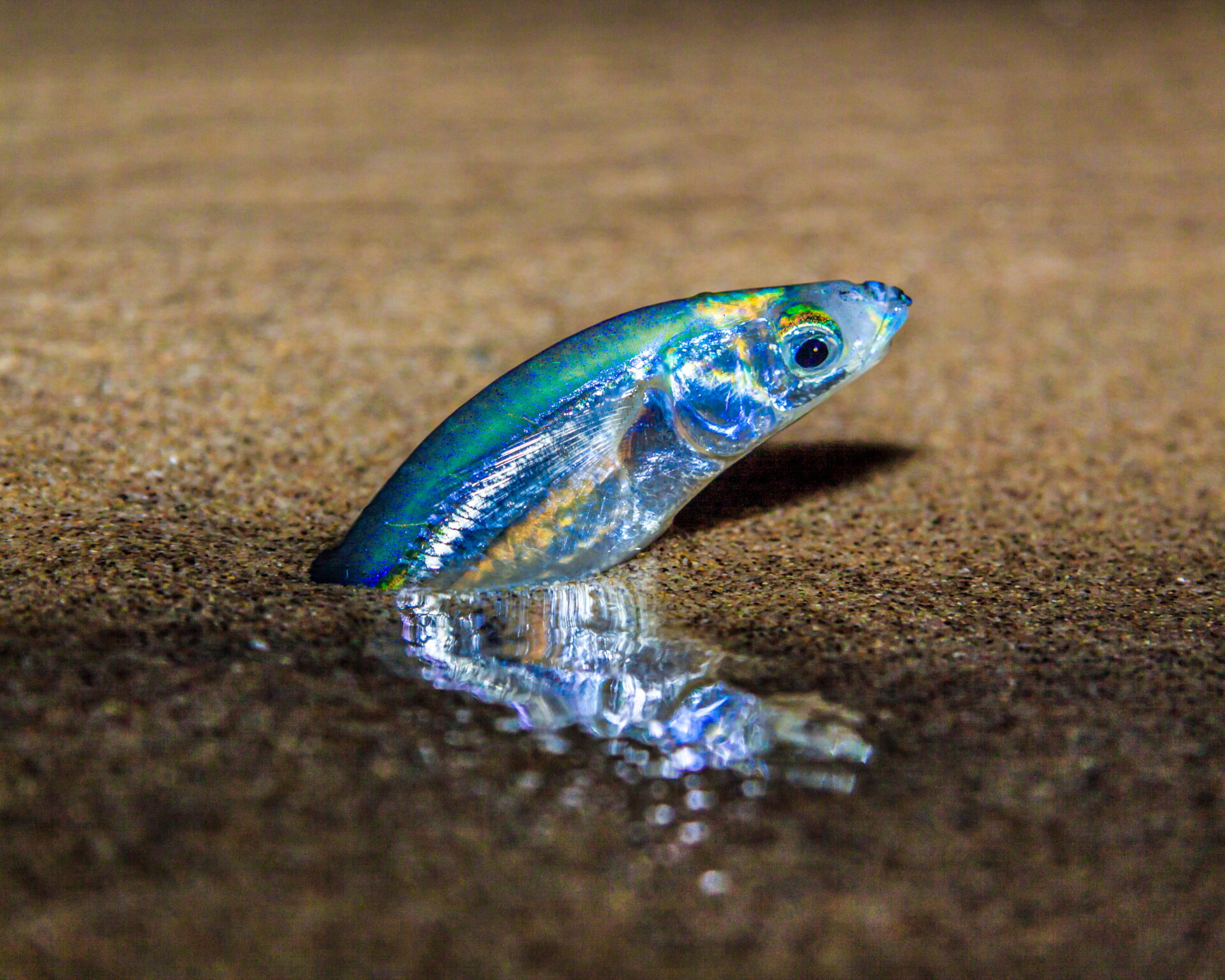
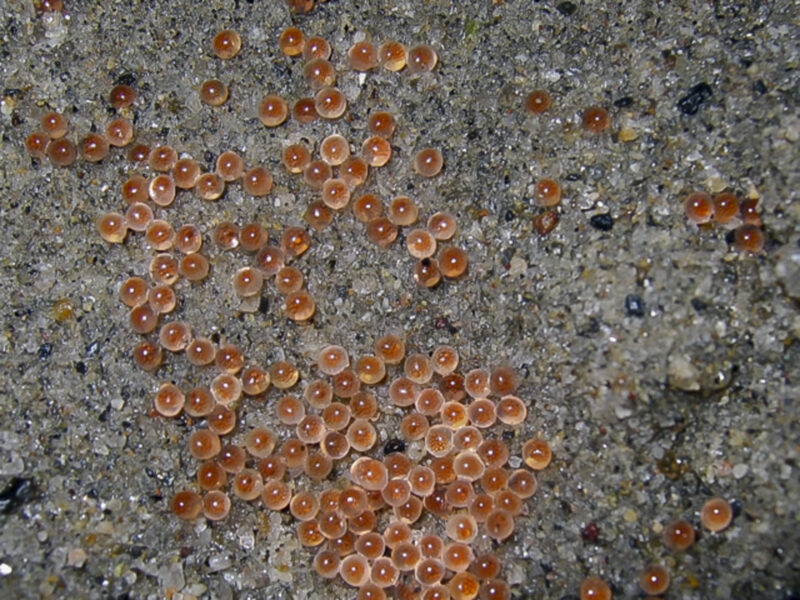
During these moonlit spawning runs, California grunion scurry about out of water to find one another. When they do, females dig tail first to lay their eggs under a few inches of sand, while males curl around them, releasing milt. Grunion eggs remain buried on the beach, out of water, as the adults return to the sea. Eggs incubate buried under a blanket of warm sand until the high tide of the next new or full moon washes them out to hatch in the ocean.
Grunion runs are part of California lore and culture. Grunion spawning runs can be forecast by the tides; California’s Department of Fish and Wildlife (CDFW) publishes an annual schedule. On many nights, people line the shores of California’s beaches, waiting for grunion. Families bring children to hunt them on the beach because it’s fun, and of course, children don’t need a fishing license.
In the early 20th Century, families would capture hundreds of these vulnerable fish on shore with nets, bed sheets, and make-shift traps. To protect grunion from over-harvest, regulations for recreational fishing were initiated by CDFW in 1927, marking quite an early example of conservation.
No gear is ever permitted for grunion; only bare hands can be used to legally catch these fish out of water, to give them a sporting chance. Those 16 years and older need a fishing license. Closed Season, with no take from April to June, protected peak grunion spawning times. (This was shortened to April and May in 1949, when beach culture was very different from today.)
But no limit and no catch reports were required for California grunion, unlike for other game fish. With no gear or boat needed, anyone and everyone can chase after a California grunion on a beach, no matter their prior experience with wildlife. And, since grunion runs always occur at night, enforcement of license requirements and gear restrictions is inconsistent.

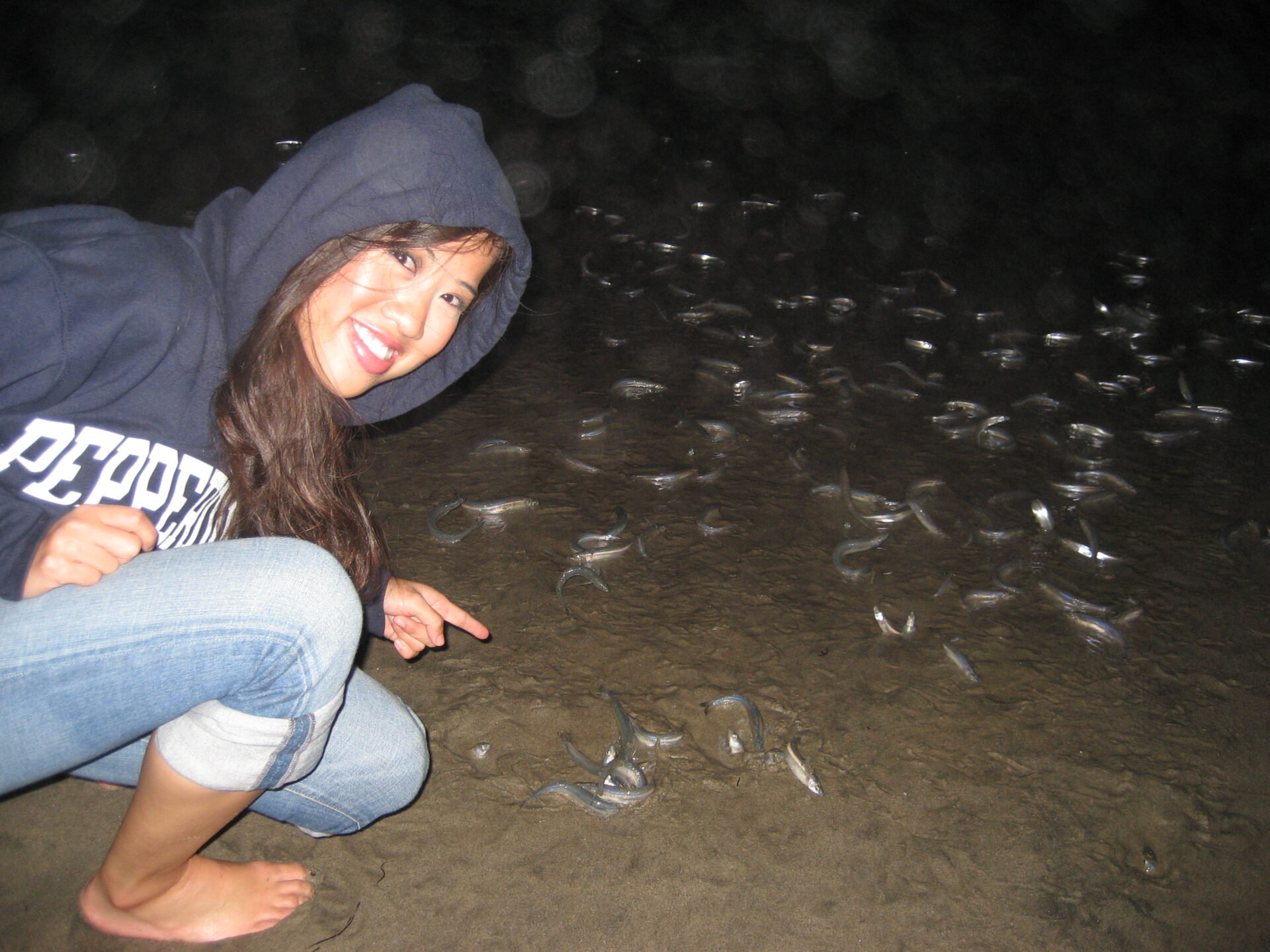
Sometimes during Open Season, there were more people on shore than fish, and every fish that approached the shore was taken. Hundreds hunted the grunion, some unaware of the regulations. People raced around in the dark, yelling and splashing into the water, stepping on fish, and creating an untenable situation for the critical reproduction of this native, endemic species. People using gear or even bare-handed could take hundreds of fish in a night.
As an additional threat, California has one of the most highly developed and urbanised coasts in the world. California grunion face numerous adverse impacts on their reproductive beaches, including habitat loss, higher temperatures, coastal development, sea level rise, and marine pollution, including oil spills, along with recreational fishing.
Two decades ago, some San Diego residents became concerned about the effects beach maintenance may have on the grunion population. Large tractors cleaned the beach by raking the sand and removing whatever turned up. This had the potential to destroy any buried grunion eggs, preventing reproduction. A preliminary study found very few California grunion spawning on the beaches of San Diego.
Monitoring for California grunion is difficult because this elusive fish avoids nets and does not take a hook for fishing, since it eats plankton. Very little historical data of any kind exists for this species. The only time they can be reliably seen is during spawning runs, but these only occur at night and are highly variable across different nights and beaches.
The large numbers of fish crowded together during a spawning run give the impression of abundance, but that isn’t the case. In reality, their numbers are minuscule, a fraction of similarly-sized sardines and anchovies.
No one scientist or even a team could cover the different beaches and the number of nights we needed to monitor for the City of San Diego. Web cameras were not available, and in any case, it is dark during runs. My colleagues and I decided to ask for volunteers.
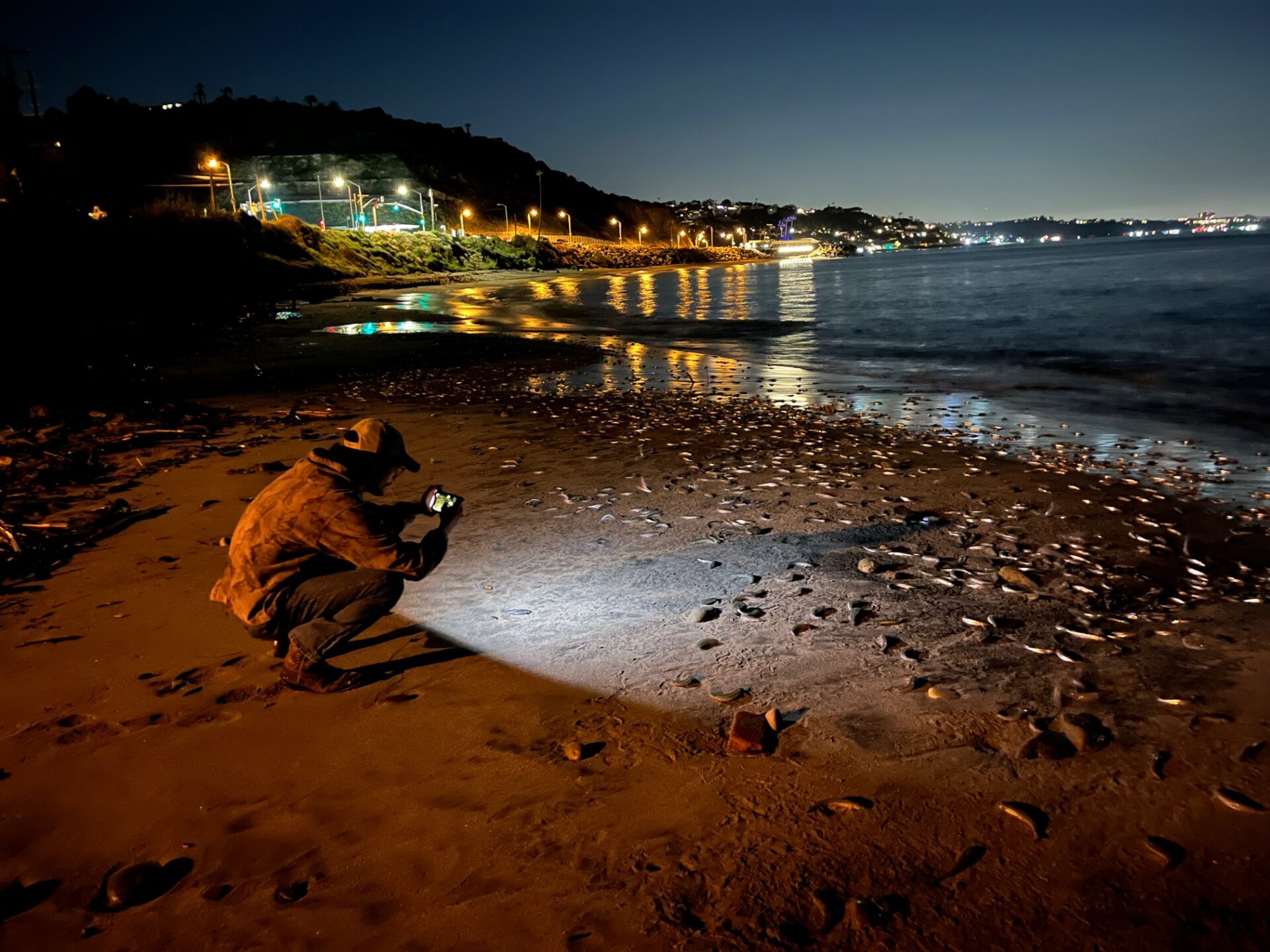
With the help of many organizations, including Project Pacific and the Birch Aquarium at Scripps, we asked people to learn how to observe grunion runs. To my surprise, hundreds of people responded. We held evening workshops to show photos and videos in presentations, and listed the locations and nights involved. We demonstrated how to report data through an online portal, back in the early 2000’s when this was quite unusual.
Our volunteers, whom we called Grunion Greeters, signed up to spend hours on dark, quiet beaches waiting for this mysterious marine fish that might or might not show up. Fortunately for all of us, they found at least a few Grunion on all of San Diego’s oceanfront beaches. Our concurrent study showed that beach raking was indeed deadly to grunion eggs hidden under the sand. The Grunion Greeter effort led to a better understanding of the grunion population in San Diego and to the development of new protocols for beach maintenance.
The community response was so great, and the quality of the data so high, that the programme grew to multiple locations, along the entire habitat range of this endemic species. With major funding from the US National Marine Fisheries Service and the US National Fish and Wildlife Foundation, and cooperation with many environmental groups, educational institutions, and aquariums, more than 5000 participants have provided observations of California grunion runs for over two decades.
We found that many beaches along southern California’s coast hold grunion runs. With the help of Grunion Greeters in San Francisco Bay, we confirmed a habitat range extension much farther north than any previously known spawning population. Subsequently, an even more northward population was observed.
With the Grunion Greeters, we now have the first and only long-term dataset for California grunion. Peer-reviewed data over two decades indicate that the spawning runs have declined across much of the habitat range. Beaches with consistent, strong runs in the past now rarely hold large runs.
Thanks to data from the Grunion Greeters, our request for increased protection of this unique native fish to the California Fish and Game Commission was successful. New fishing regulations return the Closed Season to its former duration between April and June, and set a reasonable limit on catch for Open Season.
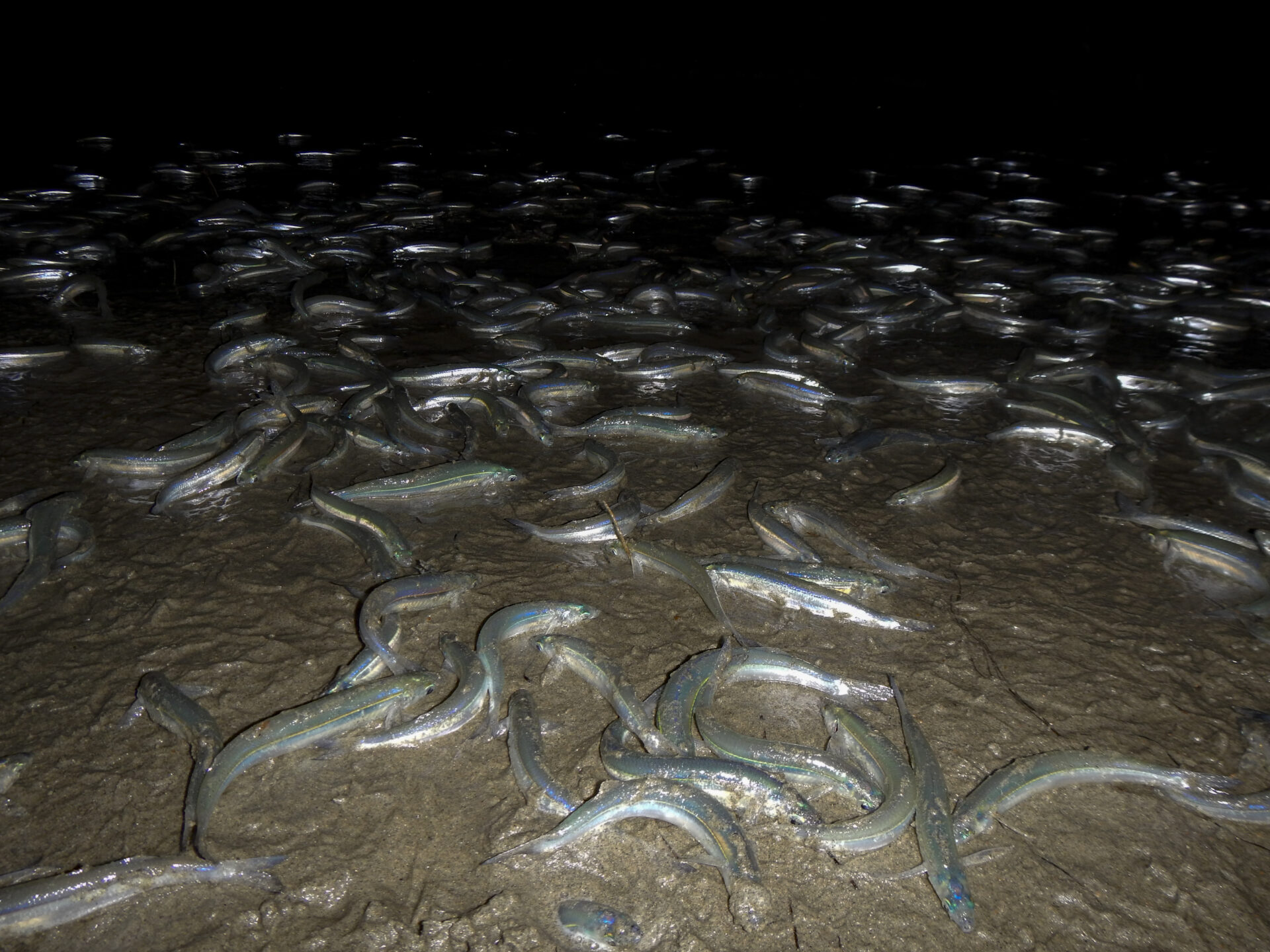
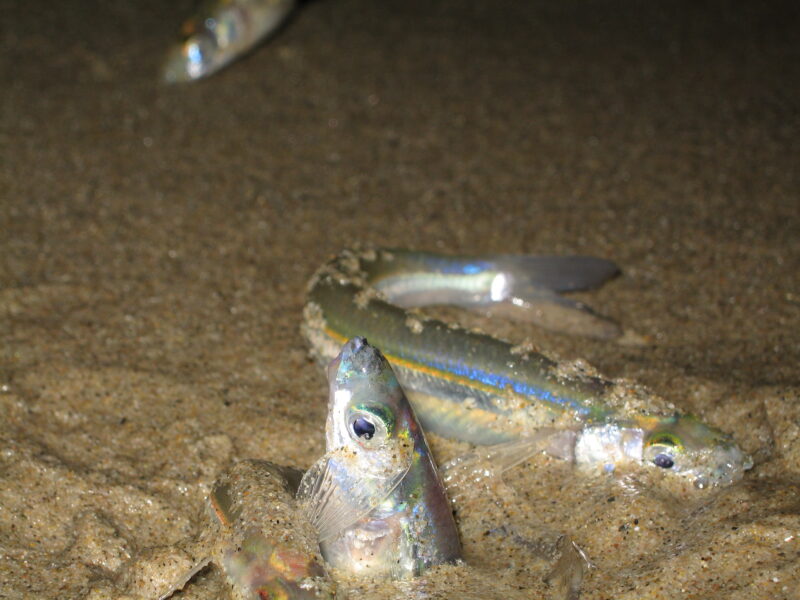
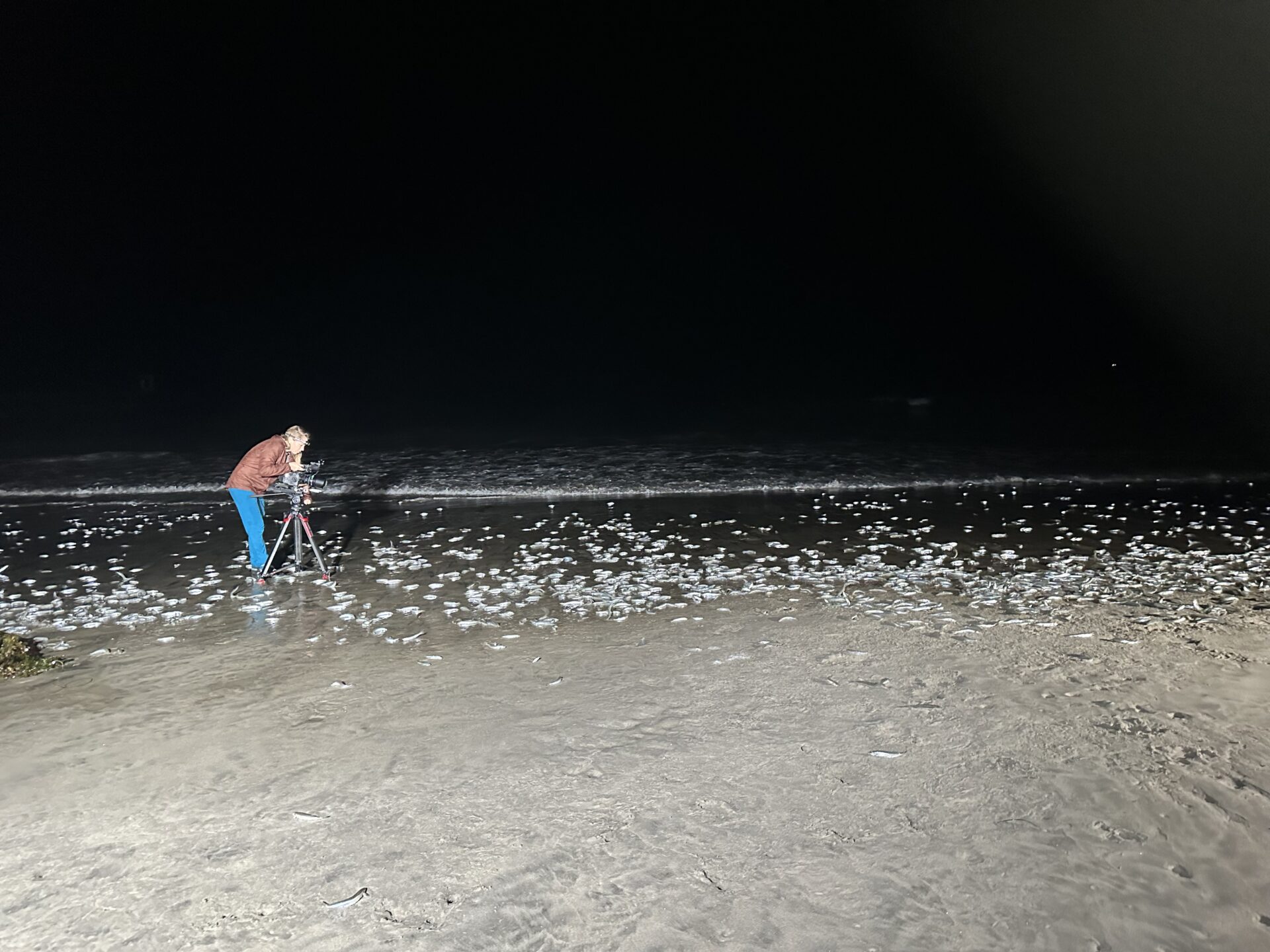
California grunion, like many species, can be enjoyed as watchable wildlife. Public programs for California grunion spawning runs attract thousands of people every year in southern California. These are held during the closed season, for observation only.
Of course, California grunion have additional environmental value beyond the entertainment of humans with their antics. As forage fish, they provide sustenance to halibut, sharks, pelicans, and other marine mammals and seabirds, key parts of the marine food web. Their spawning runs are indicators of healthy beach ecosystems for California Marine Protected Areas. And as their habitat expands northward, they help us understand the effects of a warming Earth on vulnerable species.
At one time, the sport of birding meant going out to shoot birds. Today, birders aim binoculars instead of rifles. Trout anglers enjoy a great day fishing, even when they release all that they catch. Whale watching now contributes more to the global economy than whaling. In example after example, sustainable wildlife experiences satisfy both recreation and conservation.
Increasing protection for a native species sends a conservation message to the public that wildlife resources are finite and that they have cultural and recreational value beyond consumption. Their value as a cultural touchstone involves far more members of the public than their take by hunters and anglers.
The story of the California grunion is more than a tale of a quirky fish that dances in the moonlight; it’s a reflection of how our values are evolving. As we face the urgent realities of climate change, habitat loss, and biodiversity decline, we’re learning that wildlife doesn’t need to be hunted, caught, or consumed to be meaningful.
Sometimes, the most powerful connection comes from simply watching and protecting. In choosing to observe rather than exploit, we honour a deeper respect for nature and recognise that the joy of wildlife lies not in possession but in its presence.
The grunion still come to our shores. The question is: how will we choose to greet them?

Printed editions
Current issue
Back issues




Enjoy so much more from Oceanographic Magazine by becoming a subscriber.
A range of subscription options are available.
