Seeking coelacanths: Measuring time with our ancestry
In 2010, Laurent Ballesta came face-to-face with 70 million years of forgotten history as the first person to photograph a living coelacanth. Fifteen years on, Alexis Chappuis became the first to document the Indonesian species. The common thread between them? Time, history, and Blancpain.
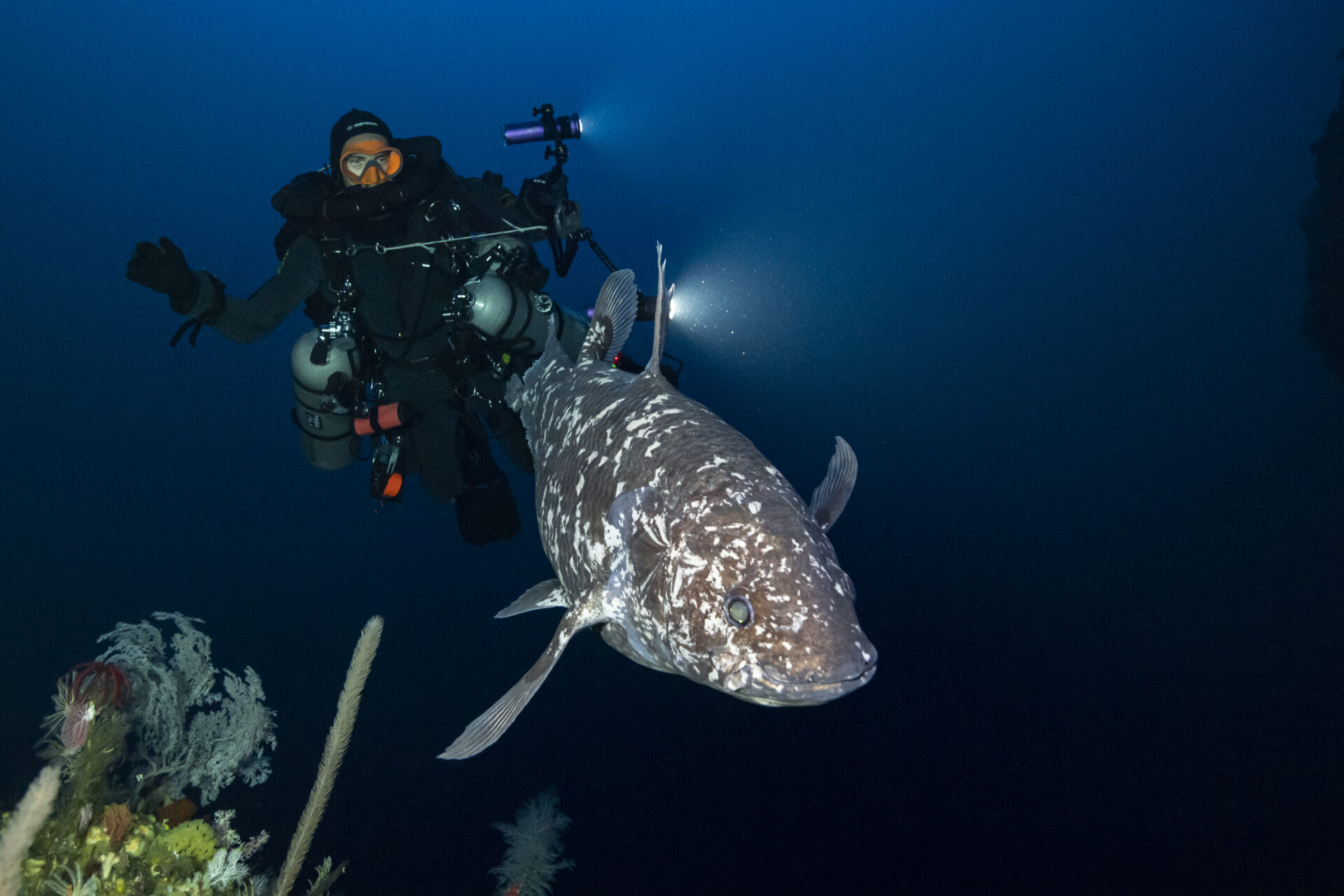
At 120 metres below the surface off the coast of South Africa and the biggest challenge facing the founder and leader of Gombessa Expeditions and celebrated underwater photographer, Laurent Ballesta is “remaining indifferent.” And when staring into the eyes of 70 million years of history once thought to be extinct, that’s a lot easier said than done.
It was the moment that really brought the prehistoric back to the surface. Face-to-face with a coelacanth in an “underwater world just two minutes from the surface”, it’s here where time starts to operate differently.
“There is nothing like deep diving to measure how precious time is,” says Ballesta, speaking in an exclusive new documentary, produced by Blancpain to bridge the 15 years between the rediscovery of the coelacanth in those South African waters (the Latimeria chalumnae) and the first expedition to capture in-situ images of its Indonesian relative, the Latimeria menadoensis.
Perhaps that’s the thing about observing the past? Time takes on new meaning.
Once believed to have vanished 70 million years ago, the coelacanth – one of the ocean’s most enigmatic creatures, with a poise rooted in prehistory – was actually rediscovered in 1938. It wasn’t until 2010 however – some 68 years later – that the first photographs of living coelacanths were brought back to the surface, for the world to admire.
The man behind the lens back then was none other than Ballesta, helped to be put there by expedition partner, Blancpain whose long-standing commitment to ocean exploration has placed both it and its ambassadors at the forefront of some of the most groundbreaking and pioneering adventures beneath the waves.
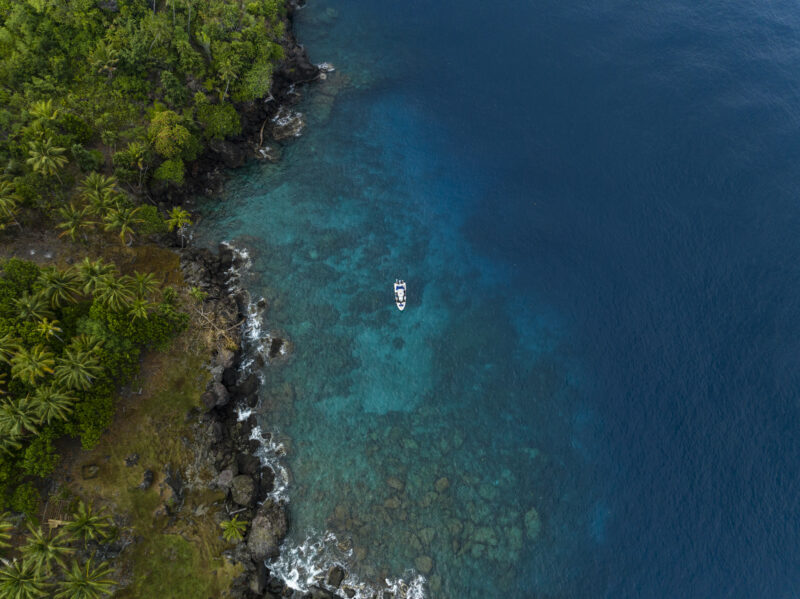
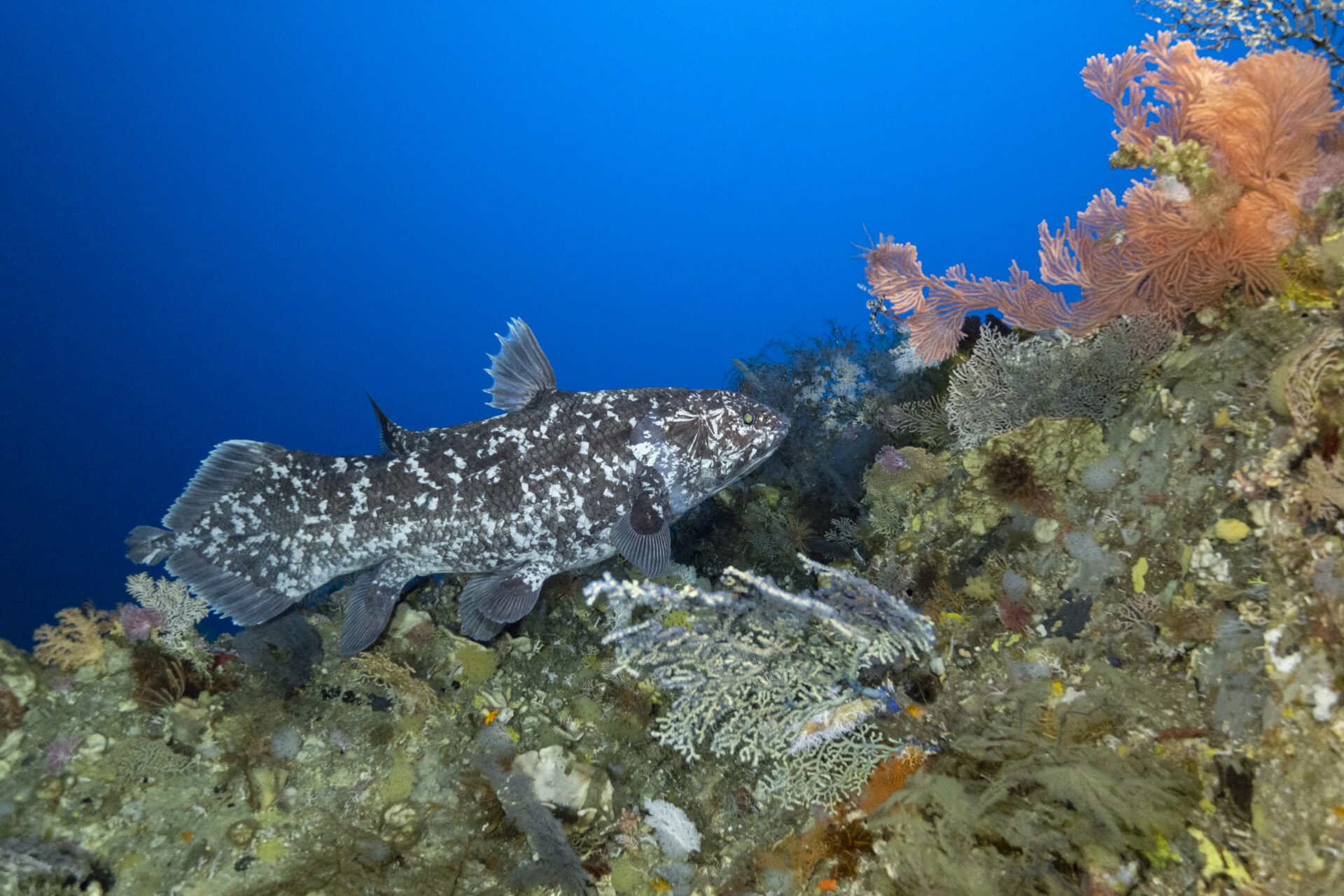
It was something more than fortuitous then, that almost 15 years later, Blancpain found itself behind the expedition – led by Alexis Chappis, leader of UNSEEN Expeditions, to capture the first images of the Indonesian coelacanth in the Maluku archipelago – at a depth of 145 metres.
Other features
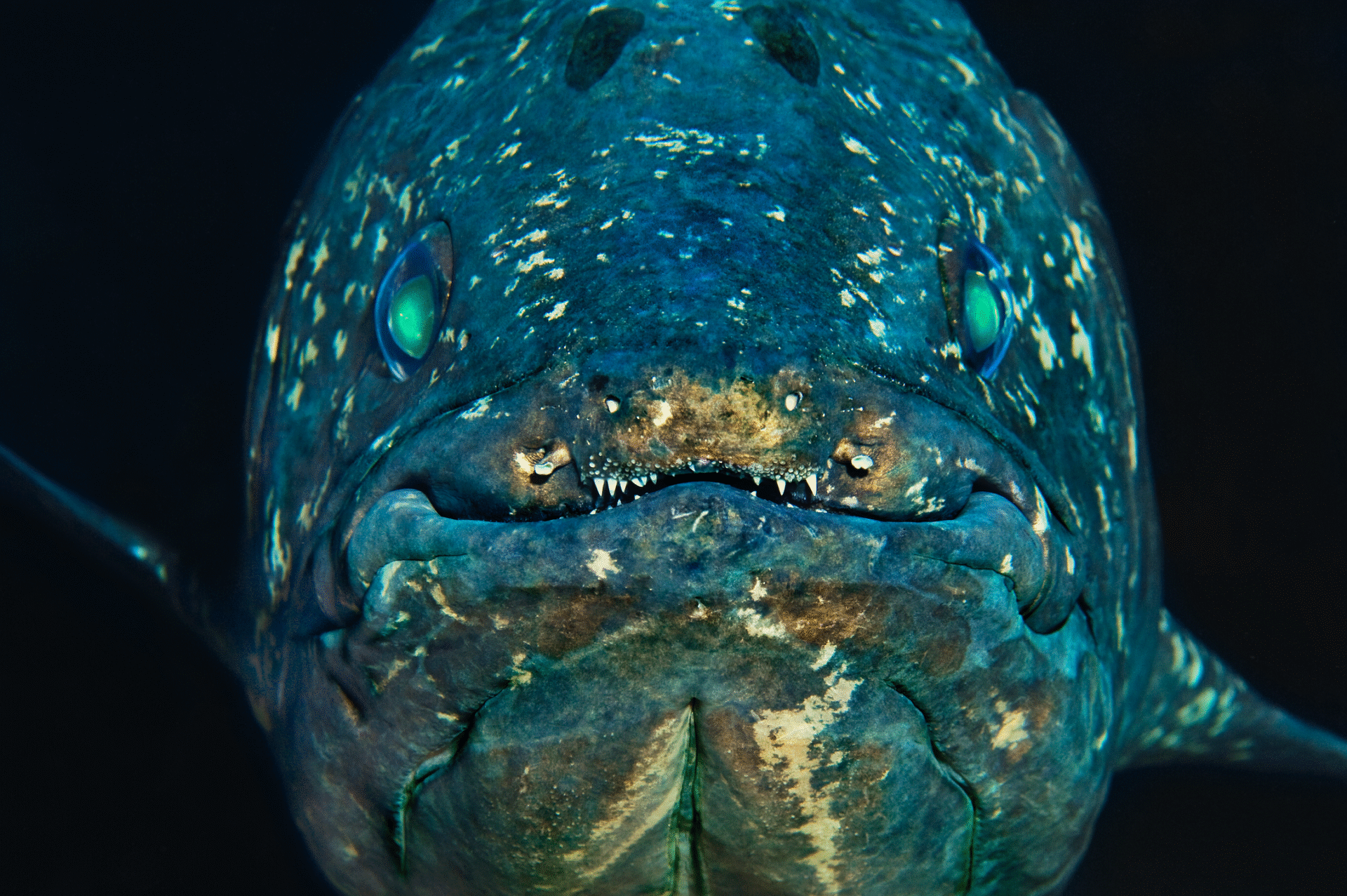
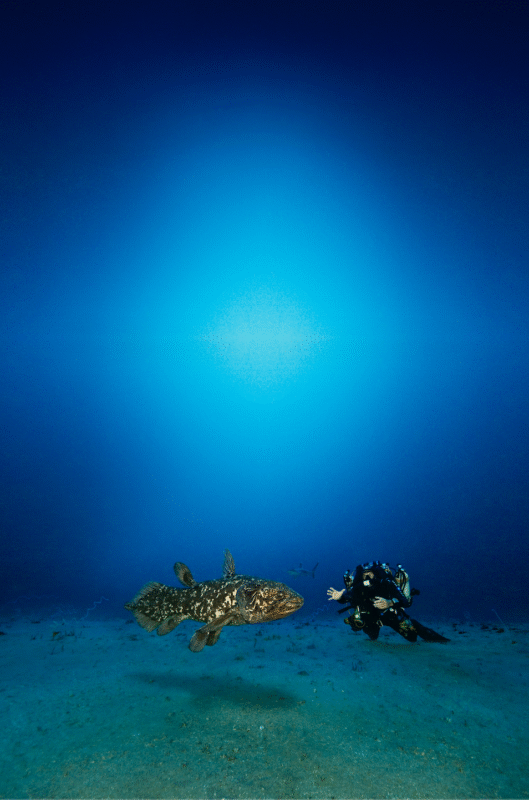
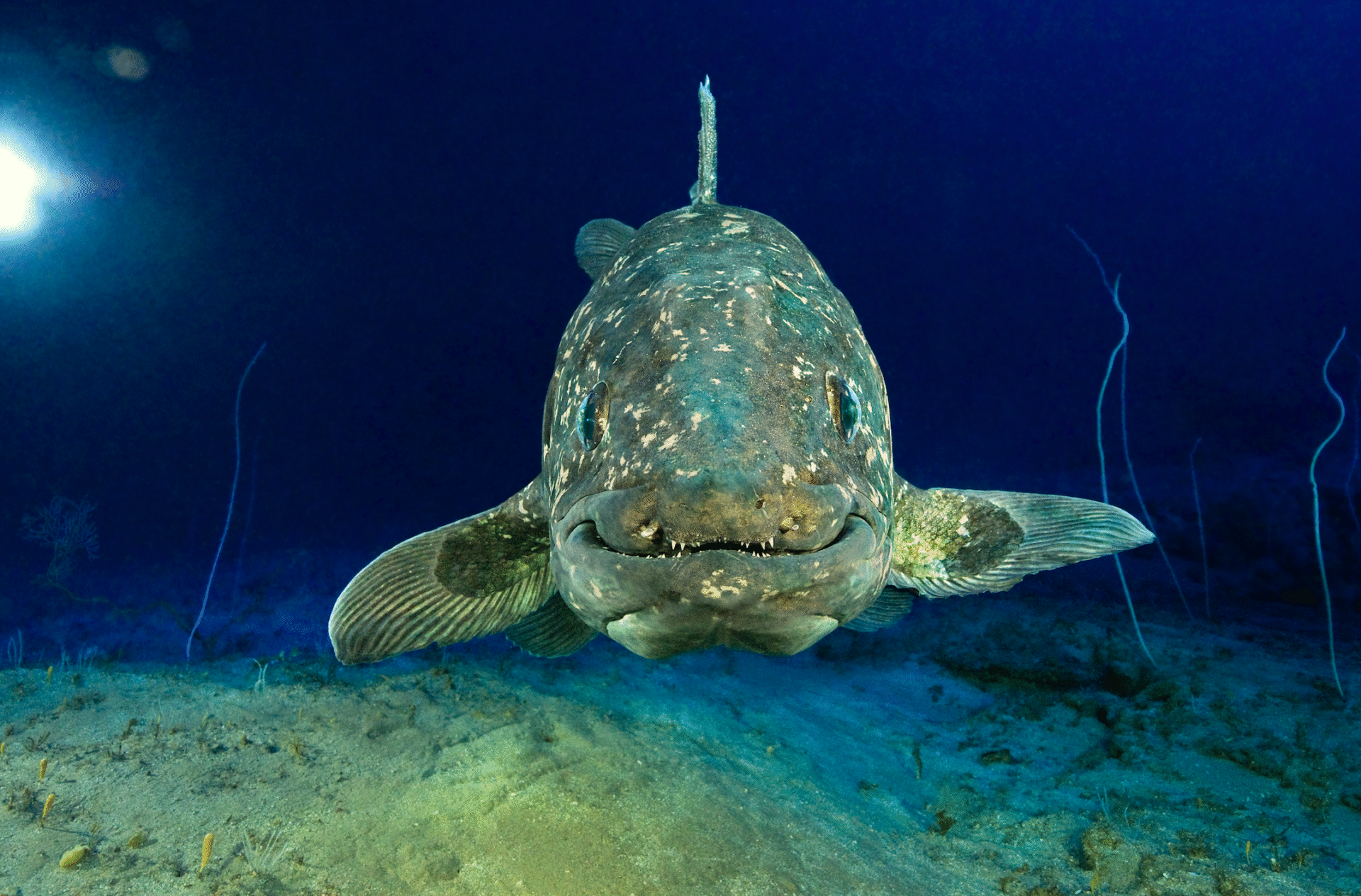
Coelacanths are lobe-finned fish that have been around for over 400 million years. While it’s not exactly the same species found alive today at depths of between 120 and 700 metres, it’s the same group and a rediscovery that gives us our best window into an evolutionary history of how vertebrates with limbs and digits left the sea and went on to conquer dry land – as ancestors of amphibians, reptiles, birds, mammals, and of course humans.
It’s a history that makes the coelacanth our closest sea-faring relative. And with that in mind, you can start to better understand the challenge Ballesta faced back in 2010 of remaining indifferent in its presence.
Both expeditions have brought local and international attention to conservation efforts to protect not only these species but the habitats they occupy through the creation of Marine Protected Areas that will not only safeguard the species – both of which are on the IUCN Red List (with the West Indian Ocean Latimeria chalumnae listed as ‘critically endangered’ and the Indonesian Latimeria menadoensis listed as ‘vulnerable’ – but help preserve an entire ecosystem to benefit diverse marine life.
“It was like being in a dream,” recalls Chappuis in the special documentary. “But you only have minutes to take it in. It is an extraordinarily calm animal. It hardly moves. It’s a bit of a shock and it’s difficult to force yourself to get back up.”
While the descent into the underwater world beyond 100 metres beneath the surface “takes no more than two minutes”, time is the ultimate price that needs to be paid for such a visit. The three hour ascent with the five or six decompression stops means that every moment at that depth is just that – a moment in which to be completely present.
“A lot of the passion and wonder lies in the fact that it is not insignificant, free, or easy to do and that it is fleeting,” says Ballesta. “It is fleeting.”
Watch the Blancpain documentary, Face to Face with the Coelacanth: A story revealed by Laurent Ballesta & Alexis Chappuis here.

Printed editions
Current issue
Back issues

Enjoy so much more from Oceanographic Magazine by becoming a subscriber.
A range of subscription options are available.
