We’ve spent years talking about how much ocean we need to protect. It’s time we talked about how to actually protect it. Award winning marine scientists and founder of Love the Oceans, Francesca Trotman reveals her study on how to implement ocean protection.
We’ve spent years talking about how much ocean we need to protect. It’s time we talked about how to actually protect it.
As a marine scientist and conservation practitioner, I’ve spent over a decade attending conferences where people repeatedly call for more effective marine protection, but nobody explains exactly how to do it.
In 2022, almost 200 countries committed to protecting 30% of the planet’s land and sea by 2030, now known as the 30×30 target. Since then, marine protected areas (MPAs) have been firmly in the international spotlight, with the High Seas Treaty entering into force earlier this year and discussions continuing at COP17. Despite this momentum, only 10% of our oceans are currently protected and there’s another problem: declaring an area protected doesn’t necessarily mean it’s actually being protected.
Without proper management, funding and enforcement, MPAs risk becoming ‘paper parks’ – areas that look protected on paper but achieve little in reality. A recent study examining 184 marine parks and classified an astounding 27% as ineffective ‘paper parks’. Alarming, considering we’re supposed to be prioritising protection.
If we know MPAs aren’t always working, why aren’t we talking more about how to fix them?
Working with coastal communities in Mozambique through my charity, Love The Oceans, I’ve experienced firsthand the complexities of turning conservation ambition into action. I’ve also grown increasingly frustrated by how rarely the grand declarations made on international stages translate into effective action.
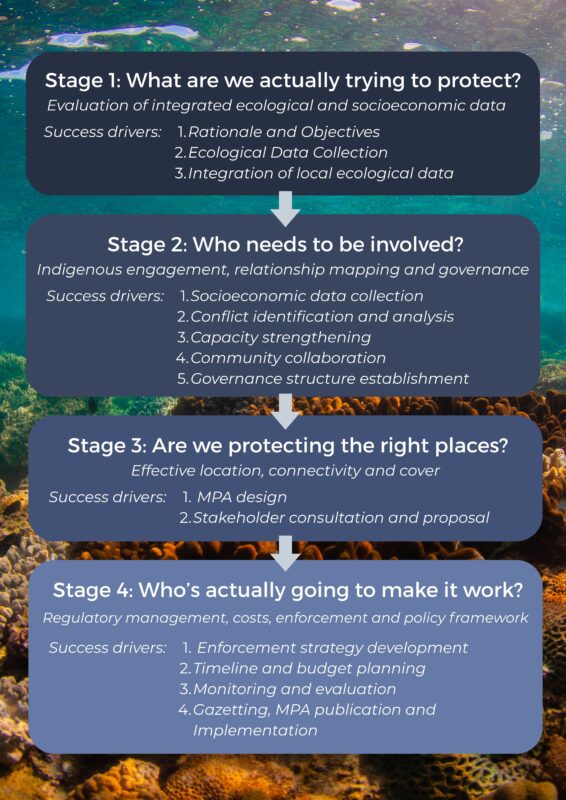
I decided to do something about it. With my co-author, Professor Per Berggren, we reviewed 202 scientific studies examining MPA effectiveness and identified four areas essential for effective protection. Rather than producing another academic discussion that feels like screaming into the void, we turned our findings into a practical roadmap, combining tangible steps, free tools and real-world case studies.
Think of it as a scientifically backed ‘how-to’ guide for effective MPAs, complete with four flowcharts to help conservationists navigate the process.

Continue reading
This story is exclusively for Oceanographic subscribers.