Hugo Tagholm has previously led the ocean campaigning charity Surfers Against Sewage and is the executive director and vice president of Oceana in the UK. In this column, he emphasises the importance of stopping deep sea mining before it starts.
As ocean activists, we must challenge extractivist industries. Industrial fishing, offshore oil drilling, and now, a new frontier: deep sea mining.
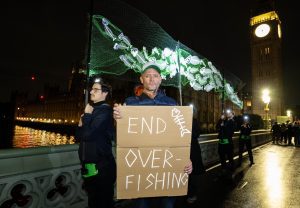
I wish I could go back to the start of the major industrialisation of fishing fleets – the huge trawlers and vessels that fish indiscriminately in almost all areas of the global ocean. Just imagine the abundance of ocean life we could have preserved. The many ecosystems that we could have kept intact. Thriving seas instead of bycatch, death and destruction. We could have ensured that the power remained with local communities and sustainable fishing knowledge and practices passed down across the ages. The sustainable alternative we are seeking in fisheries today existed before. Just think how much easier it is to stop Big Industry before it builds entrenched political power.
That’s the opportunity we have with deep sea mining. We can stop this new threat before it starts, preempting any harm to our ocean and some of the most pristine natural places left on our precious planet. Places that we need to remain intact to support our collective future.
Deep sea mining is as nightmarish as it sounds: sending massive tank-like machines to the depths of our ocean to ransack these most ancient ecosystems, to tear out minerals from the life-rich, millennia-old, thriving habitats in the deep ocean. The deep sea is full of truly weird creatures – the scaly-foot snail with iron armour, the ghost octopus that guards its eggs for years on the very rocks that mining companies are eyeing up, the hot-pink sea pig named after Barbie.
Thousands of species are being found in the part of the Pacific Ocean targeted for deep sea miners that were previously unknown to science and have been found nowhere else in our oceans. It’s no surprise that over 900 scientists are calling on governments to prevent mining from starting in the ecosystem that we know less about than the Moon.
Our oceans are already overloaded. The industrial scale of fisheries has created floating factories that trap and haul up marine life throughout the water column, using gigantic nets, lines and dredging equipment to extract biodiversity and biomass from our seas. The fossil fuel industry unleashes deafening seismic surveys on marine habitats to search out the oil and gas that, once extracted and burned, disrupts the very chemistry of our oceans. And that’s with industries that are supposedly regulated. Regulation of these industries is often enforced as thinly as the paper that it is written on.
Industrial destruction by Big Industry even happens inside our supposedly protected areas at sea – oil and gas licenses and the most damaging types of fishing are almost ‘better protected’ in these areas than sea life itself. Given the global climate and biodiversity crisis, it’s clear that current regulation intended to protect nature is failing us. So don’t fall for the lines of the deep sea mining industry, who are trying to tell governments they have to agree to a ‘Mining Code’ for the international seabed in 2025. Regulation of pristine habitats so deep beneath the surface is destined to fail. It’s a smokescreen to fast-track another big industry that wants to exploit our ocean for short term profit. The start of deep sea mining – whether ‘regulated’ or not – can never be safe or acceptable.
There’s zero public mandate for deep sea mining. This nascent industry is made up of a handful of companies, working through obscure partnerships and subsidiaries. Contrast that to millions of people across the world who are signing petitions and calling on their governments to seize this opportunity to protect some of the last remaining wilderness on our planet, not exploit it. The greats of ocean conservation are clear: David Attenborough has said mining these places we still have so much to learn about is “beyond reason”, while Sylvia Earle has called it “one of the stupidest ideas ever”.
More of Hugo's columns



Continue reading
This story is exclusively for Oceanographic subscribers.
