Krill or be 'QRILLed': Who governs the Antarctic Ocean?
On 1 August 2025, the Antarctic krill fishery closed. Not at the end of the season, but four months early, after the fleet triggered an automatic shutdown by hitting its catch limit for the first time in the fishery’s history.
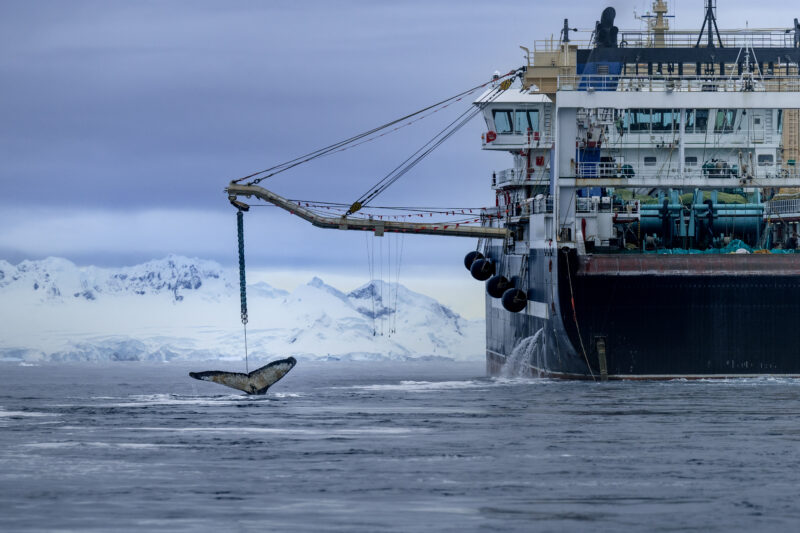
A catch limit of 620,000 tonnes covers the waters where krill fishing takes place, a figure set well below the level scientists believed would harm the overall stock. For 15 years, that total was divided between four active fishing zones, meaning the catch could not be concentrated entirely in one area. Then the zone-by-zone limits were allowed to lapse, and in the 2024/25 season more than 57 per cent of the entire annual catch came from a single zone – the waters around the Antarctic Peninsula – faster than it had ever been taken before.
The overall number still looked fine, but the local reality was different.
In the same season, independent auditors proposed the fishery’s highest sustainability scores in years. The Marine Stewardship Council’s blue label stayed on the product.
At the base of everything
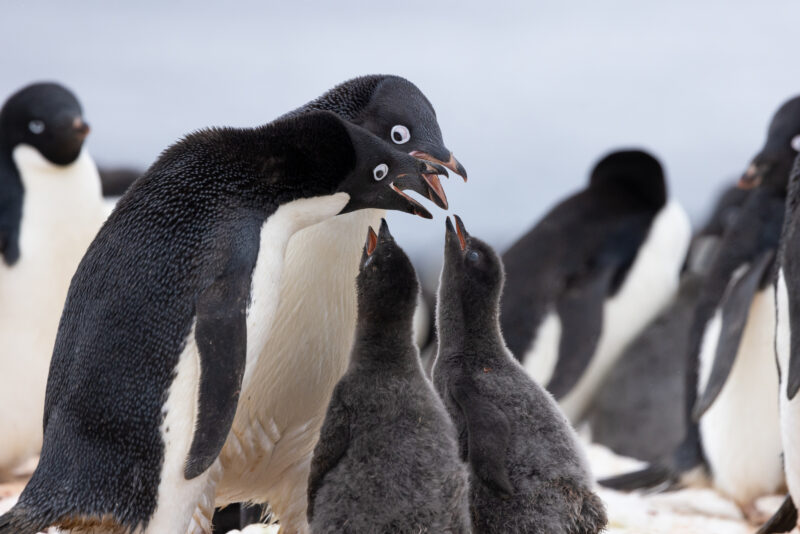
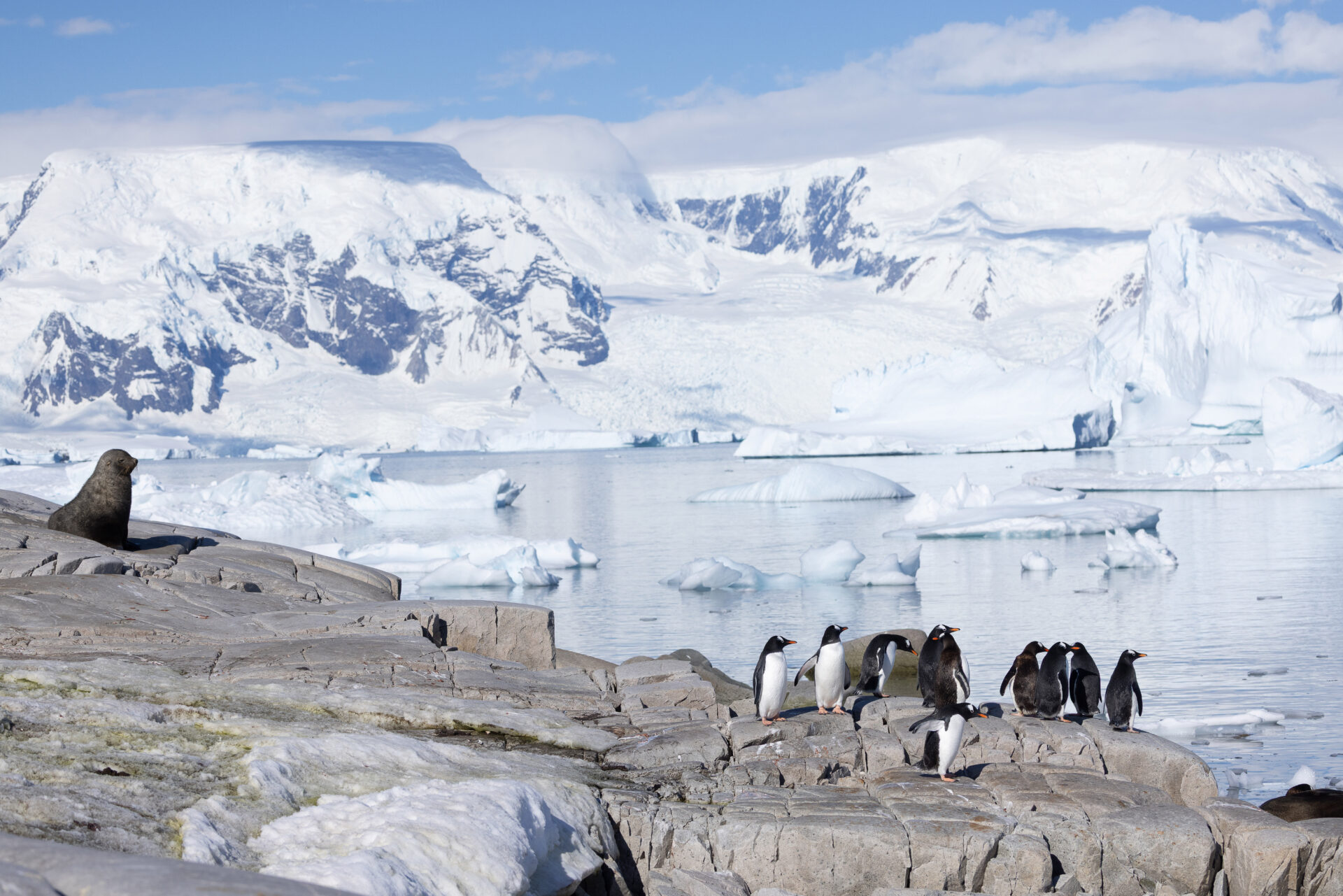
Krill is the creature at the base of the Southern Ocean food chain. Almost everything that lives there depends on it. On 9 April 2026, the IUCN listed both the emperor penguin and the Antarctic fur seal as Endangered, the fur seal’s population having fallen from an estimated 2,187,000 mature individuals in 1999 to 944,000 in 2025, with reduced krill availability – driven by climate change – identified as a key driver of the collapse.
Fishing didn’t cause the crisis but the fishery does operate in the same waters these animals depend on. The question the science cannot yet settle is whether industrial pressure is slowing a recovery that climate change is already making harder.
The Southern Ocean fishery harvests krill primarily for omega-3 supplements and fish farm feed. The dominant operator is Aker QRILL, a Norwegian company whose vessels have accounted for 62.6 per cent of the total catch over the past decade. The fishery is governed by CCAMLR, the Commission for the Conservation of Antarctic Marine Living Resources, a body of 27 nations whose decisions require unanimous consent.




The gap that wasn’t supposed to exist
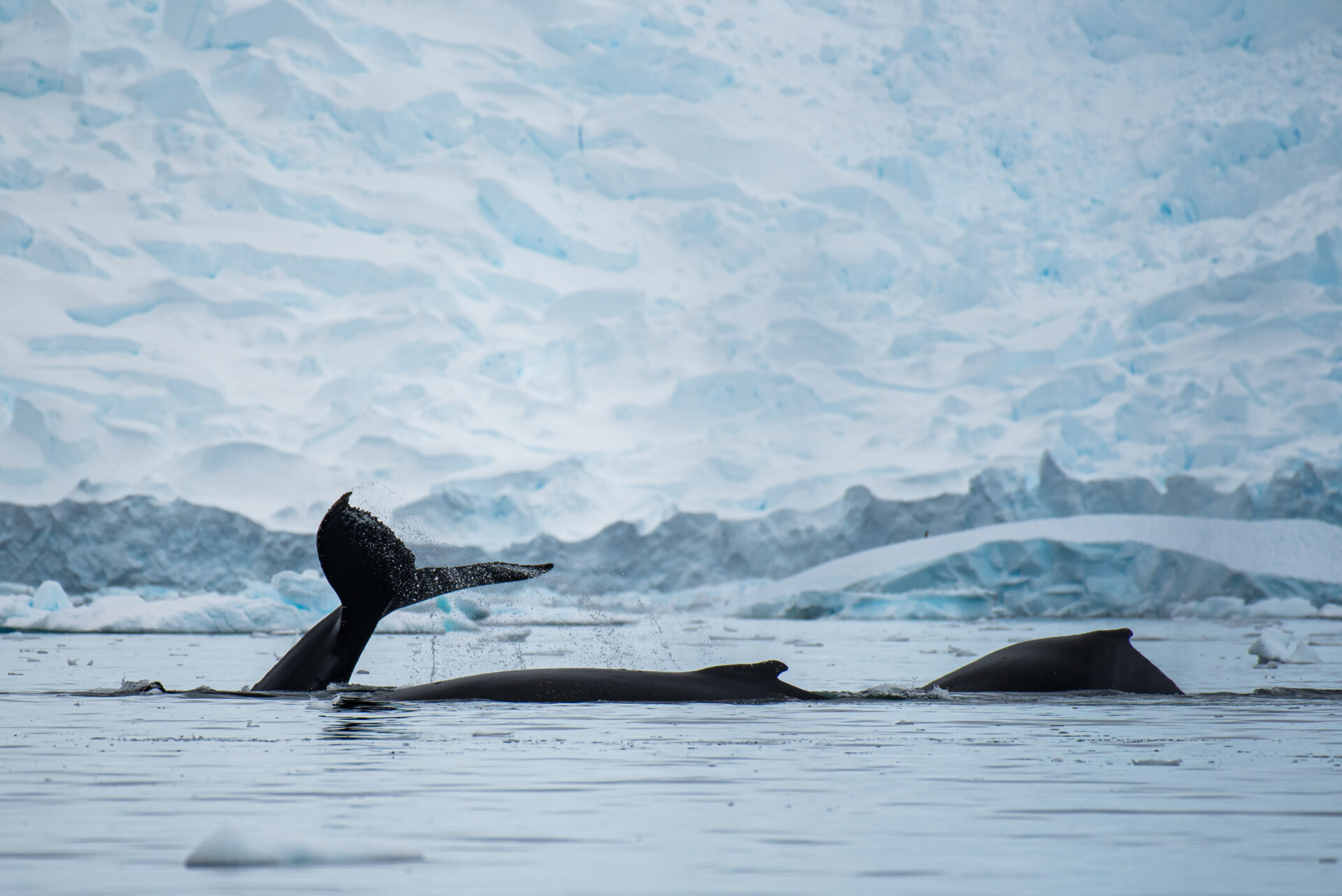
The 620,000-tonne trigger level sounds reassuring. Krill fishing takes just 11 per cent of what the science says the ocean can sustain. But that number describes the whole ocean. Penguins, seals and whales cannot follow the fleet wherever the catch is easiest. They feed where they breed, in the coastal waters of the Antarctic Peninsula, and if the krill disappear from those waters, it makes no difference to them that plenty remains elsewhere.
CCAMLR recognised this in the early 1990s. Sub-area 48.1 – better known as the waters around the Antarctic Peninsula – covers a fraction of the total fishing area, yet it has long drawn most of the fleet. Krill there are shallower, closer to port, and cheaper to catch than in the more remote zones further south and east. A separate rule capped this sub-area 48.1 at 155,000 tonnes, and was in place specifically to stop the fleet from concentrating in one area and stripping the waters that predators depend on.
But this rule required unanimous renewal from 27 nations every year. At the annual CCAMLR meeting in October 2024, that consensus failed for the fourth consecutive year. China and Russia blocked renewal. China argued the expiry was a natural outcome of how the original rule was written. Others pointed to a last-minute push by the UK and Australia for tighter restrictions than the majority had already accepted, this was independently reported by the Associated Press.
Matts Johansen, Chief Executive of Aker BioMarine, the parent company of Aker QRILL, told reporters at the UN Ocean Conference in Nice that the UK’s intervention was the decisive factor. The UK government did not respond to requests for comment before publication. On 30 November 2024, the rule expired. No replacement was agreed.
The 2024/25 season began with no zone-by-zone limits in place. The fleet piled into sub-area 48.1, and more than half of the entire annual catch came from that one zone. The total catch across all zones grew by two-thirds over four years, from 371,500 tonnes in 2020/21 to 624,918 tonnes in 2024/25. By August 2025, for the first time in the fishery’s history, the overall catch limit for the entire Antarctic was hit because too much had been taken from one small corner of it, fast enough to blow through the total limit before the season was halfway done.
The final total was just under 5,000 tonnes above the trigger level. The overshoot happened because vessels report their catch every five days, and in the final window, they caught more than the models anticipated. CCAMLR does not treat this as a violation. The five-day lag is a known feature of the system, and no vessel was penalised.
CCAMLR’s own Scientific Committee reviewed what had happened and was blunt. Concentrating that much fishing in one area was, in their words, “not precautionary.” There was, they said, “an urgent need” to fix it. At the following annual meeting in October 2025, no new rules were agreed. The 2025/26 season began exactly as the previous one had.
The certification question
Six months after the trigger level was reached, independent auditors, assessing Marine Stewardship Council standards, proposed higher sustainability scores for Aker QRILL’s MSC recertification than those awarded in its previous assessment in 2020.
Crucially, when assessing any individual company’s certificate, auditors must evaluate the management of the entire fishery, not just that company’s catch. The auditors had closed their evidence-gathering in June 2025, before the trigger breach and before the Scientific Committee declared the management not precautionary. Under MSC rules, they were not permitted to include anything that happened after June, and so the scores reflected a fishery that no longer existed.
ASOC and WWF filed formal objections to the recertification. An independent adjudicator admitted both of these on 30 March 2026. No decision has been issued. The fishery keeps its label while the process runs.
In the same month the objections were filed, a new initiative was launched at Hampton Court Palace. The Ocean Stewardship Initiative, founded by the King Charles III-backed Sustainable Markets Initiative, brings together governments, industry and civil society to advance Antarctic conservation. Former US Secretary of State John Kerry joined as a Champion. On its own website, the MSC described the initiative as being developed “in collaboration with MSC, Aker BioMarine and Aker QRILL Company.”
The playbook
The annual CCAMLR meeting is where decisions get made. Two proposals have been on the table for years. The first is the new krill management system to replace the zone rules that lapsed. The second is a marine protected area for the Antarctic Peninsula, which would close roughly 60 per cent of the area to krill fishing entirely. It has been in development since 2012, formally proposed at every CCAMLR meeting since 2018, and has been blocked every time, consistently by the same two nations: China and Russia.
At the most recent meeting in October 2025, while blocking the MPA for the eighth consecutive year, China secured licensing for a newly constructed 138-metre, 15,255-tonne krill supertrawler, the largest fishing vessel set to operate in Antarctic waters. Both proposals are formally linked. A marine protected area without new krill management rules, or new rules without a marine protected area, satisfies neither the conservation bloc nor the fishing nations.
While that process stalls, one actor is not waiting. Mats Qvigstad, Chief Executive of Aker QRILL, was candid and, at times, proud of what his company is building. He has spent roughly 30 per cent of his working time over the past year in transit between capitals, carrying positions between the Chinese government, the British government and others, looking for language everyone can accept.
He confirmed that Aker is now circulating draft language informally between governments ahead of this year’s session. Aker has positioned itself at the centre of both negotiations. The disagreements, he said, are often smaller than they appear. Negotiations that have stalled entire CCAMLR meetings sometimes come down to the meaning of a single verb translated differently by different delegations.
“Because we speak to the Chinese, and no one has us, basically everybody else speaks to us… If you get alignment among those nations,” he said, “the rest will fall.”
There is one question Qvigstad did not answer. Asked directly if Aker had briefed OSI on ASOC and WWF’s certification objections before the Hampton Court launch, he did not say ‘yes’ or ‘no’. He directed the question to MSC. He said the process was transparent. The call moved on.
Dan Crockett, Executive Director of the Blue Marine Foundation, does not think a commercial entity can legitimately occupy that space. “Aker cannot deliver an MPA. They have no legal power or legitimacy under CCAMLR to deliver this. It is the role of the countries to reach a consensus on the MPA. Any diplomatic role they have assumed is self-appointed.”
The countries within CCAMLR, he adds, must “urgently reach consensus across all the marine protected area proposals, without caving to industry demands.”
He goes further. “The challenge with the krill fishing industry casting itself in the role of diplomat is that they will inevitably want something in return.” In sub-area 48.1, the waters around the Antarctic Peninsula where krill predators feed and breed, the catch rose 118 per cent year on year, according to CCAMLR catch data. “Extraction is not stewardship,” Crockett said.
For Crockett, the vacuum is real. What it does not do is hand Aker the authority to fill it. Whether the outcome is good for the ocean is a separate question from whether the process is legitimate.
October 2026
The next CCAMLR meeting is in October 2026, and Qvigstad believes this time will be different. He is already circulating draft language informally between governments, building consensus before the formal meeting begins. According to him, agreement among the key nations is close.
At the October 2025 meeting, Norway, the flag state of the dominant krill fleet and Aker’s home country, formally acknowledged before CCAMLR’s Scientific Committee that the current situation was not the ecosystem-based approach the body was designed to deliver.
In the same submission, Norway proposed a catch limit for sub-area 48.1 alone of more than 668,000 tonnes, with additional catch permitted across the remaining zones on top of that. Norway described the proposal as “science-driven.”
Conservation groups described it as alarming. Neither a new management system nor a marine protected area was agreed.
Qvigstad is open about what success would mean beyond the Antarctic. The OSI, he said, is “building up a playbook for how industry can engage and get results.” The next candidate, he suggested, is the herring, mackerel, and blue whiting fishery in the Northeast Atlantic, where the UK, the EU, the Faroe Islands, and Iceland cannot agree how to split the quota. In 2023 alone, combined catches exceeded scientific advice by around a third. “We have already started gathering the industry players there,” he said.
If October delivers an MPA and new spatial rules for the krill fishery, it will be hailed as a diplomatic breakthrough after more than a decade of stalemate. Whether it is also a conservation breakthrough will depend entirely on catch limits, zone boundaries, and the balance between protection and permitted fishing.
Those are where the interests of the ocean and the interests of the industry either align or diverge. Those details will be written, in part, by the company that catches more Antarctic krill than anyone else on Earth.
This article has been written for Oceanographic by Luke McMillan.
Printed editions
Current issue
Back issues

Enjoy so much more from Oceanographic Magazine by becoming a subscriber.
A range of subscription options are available.
