Professor Callum Roberts: The intimately interconnected
Marine conservation biologist, oceanographer and author of The Ocean Life, Callum Roberts reflects on his Innerview, the ocean's extraordinary bounty and the collective action it will take to protect it.
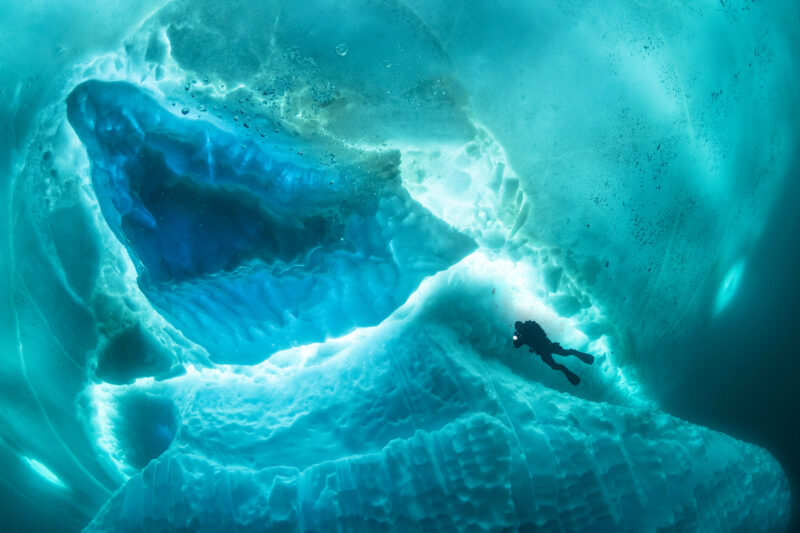
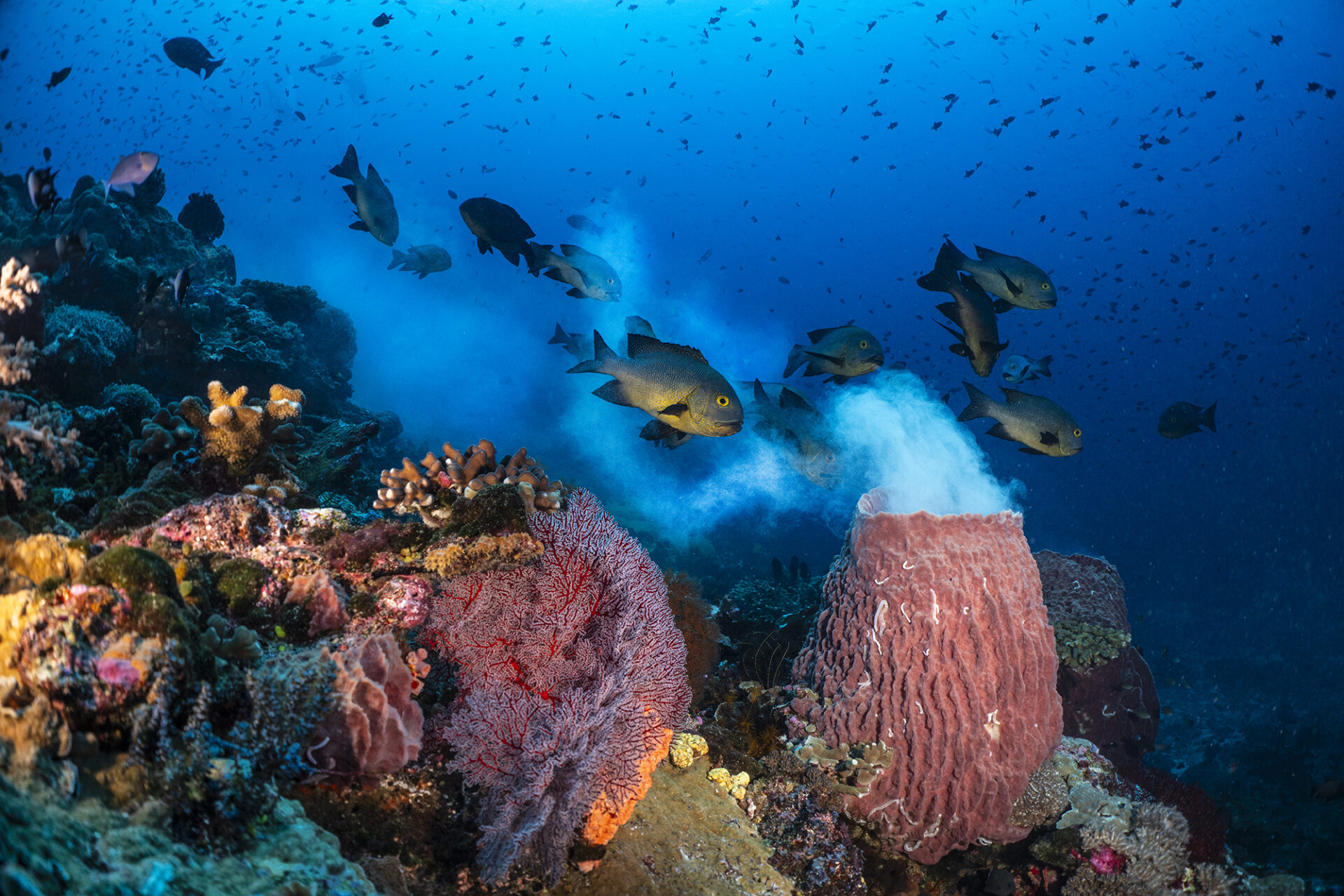
When you plunge underwater, you leave behind the immense vistas of sea and sky that stretch beyond distant horizons. Underwater the world is intimate: like stepping into a room with invisible walls whose size depends on water clarity. In the tropics, the room might be as large as half of a football pitch. Under Antarctic ice, where water transparency is close to the theoretical maximum, it would be about twice the area of London’s Trafalgar Square. But in the trawl muddied and sewage curdled waters of Scotland’s Firth of Clyde where I made some of my first dives in the 1980s, the visible space was barely larger than my student bedroom.
Wherever you are there is a sense of connection to a greater whole beyond the limits of visibility. Creatures materialise from the periphery or skirt the edges like half seen ghosts. Part of the thrill of diving is the unpredictability of these encounters. One day it might be a great hammerhead, its skin glinting like steel plate, another day a monkfish, all mouth and spread fins.
For me, these animals bring with them an air of mystery and make me yearn to follow them and experience the ocean as they do. For dolphins and some reef sharks, those habitual journeys might span tens of kilometres of coasts, visiting seamounts or crossing the deep abyss. Others make journeys of oceanic scales, connecting us across the vast watery steppes – like glossy tunas arriving back from the high seas to feed on prodigious shoals of coastal sardines, or humpback whales shrugging off the chill of polar seas to give birth and mate in the tropics.
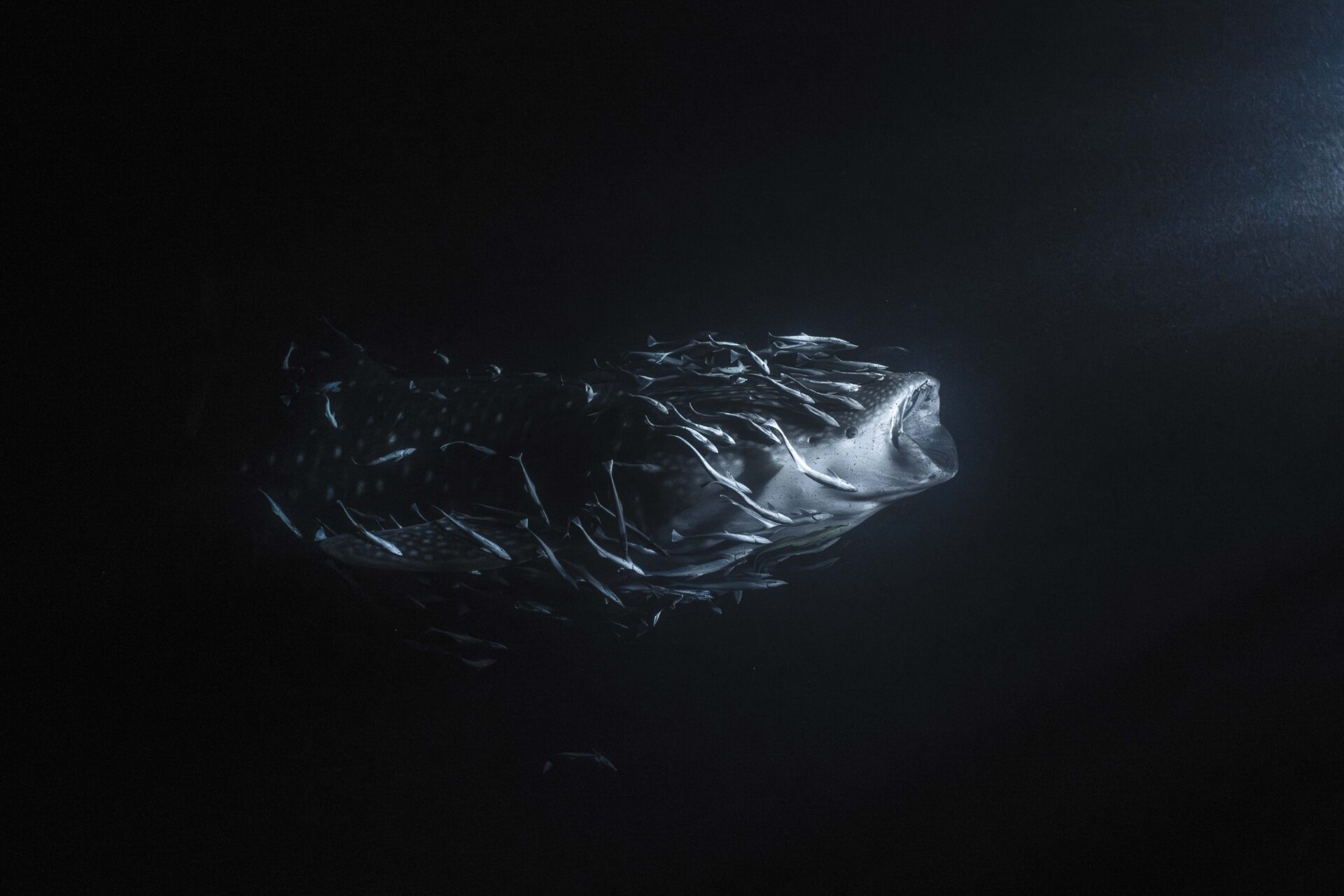
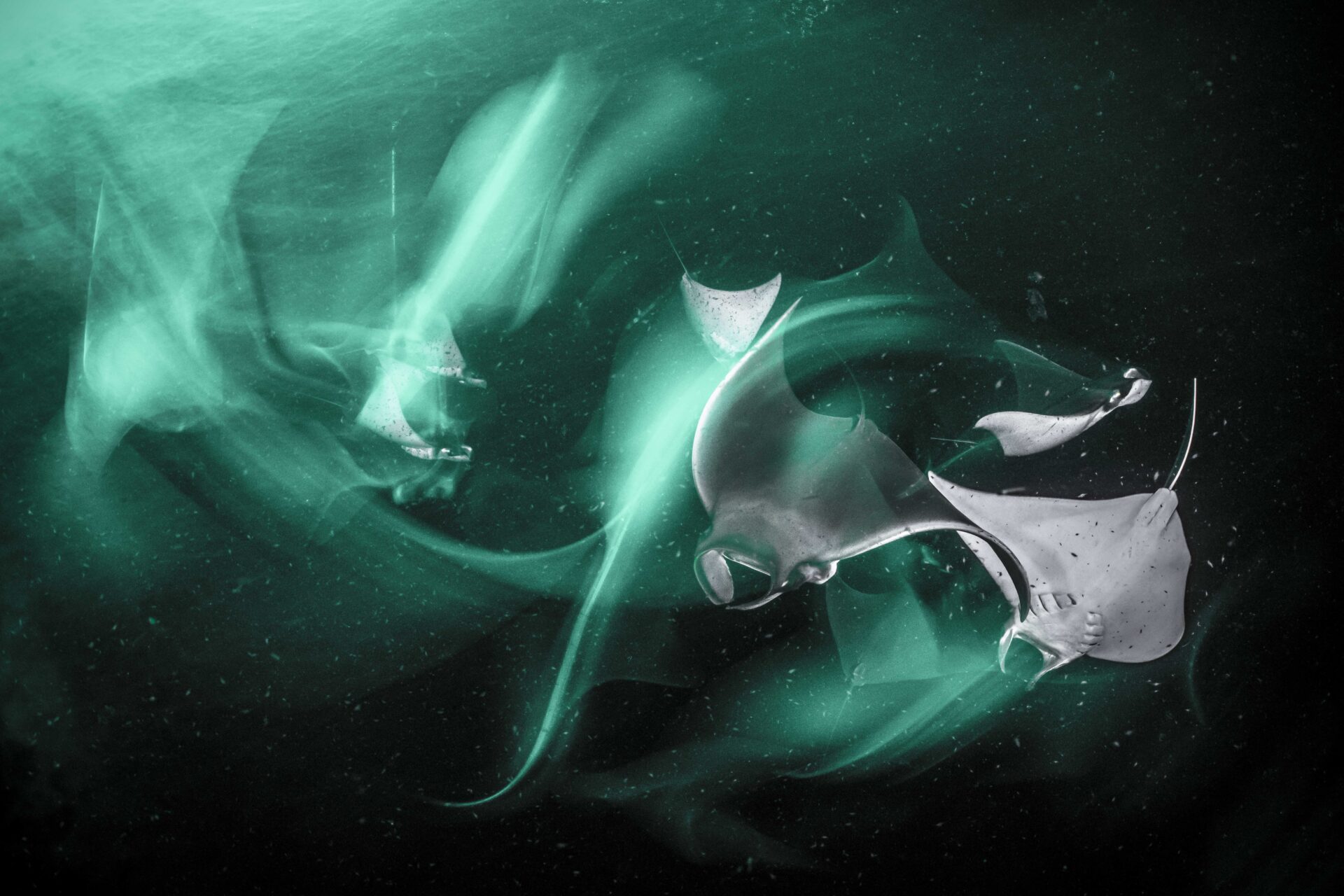
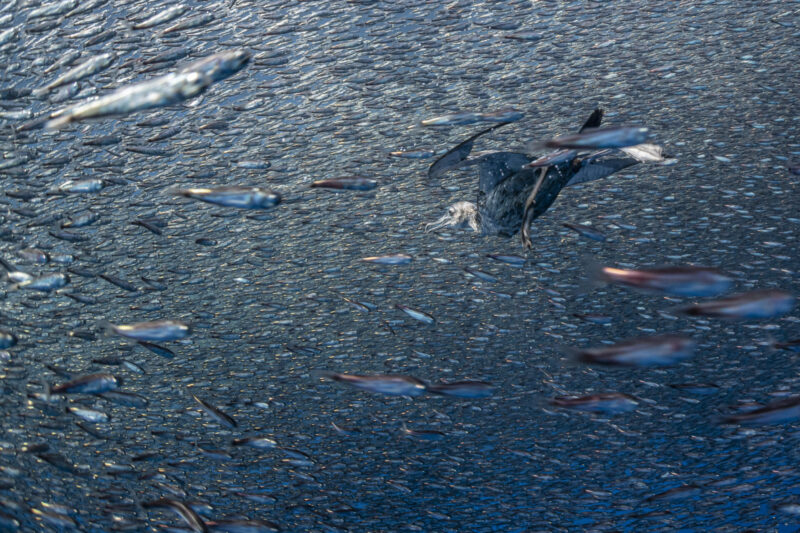
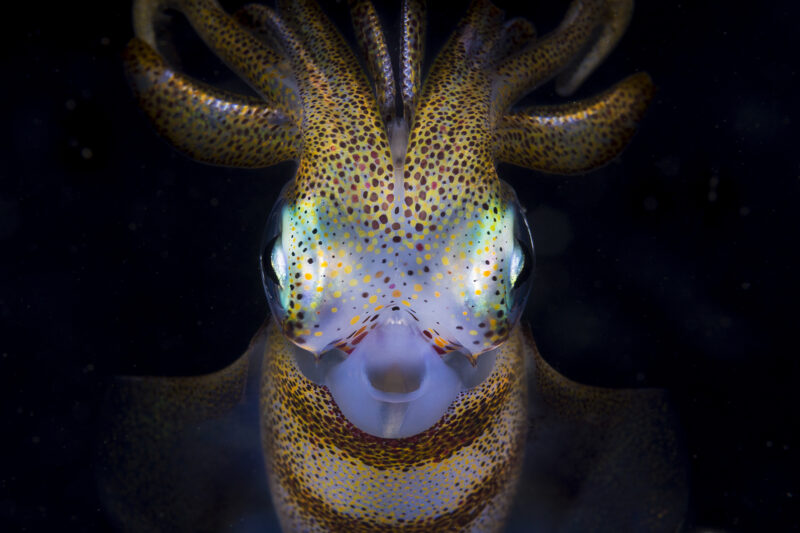
We are lured by the bottom of the sea and held near the surface. What fascinates me is that huge slab of inbetween. This place is habitually visited from the surface by hunters. When manta rays or whale sharks disappear into darkening depths, they are diving to feed in the colder, nutrient and food rich water of the twilight zone. Mantas forage to hundreds of metres in this near darkness, while whale sharks and beaked whales go further to hunt squid, even to thousands of metres down.
We know surprisingly little of what goes on in this world but the hints are tantalising enough to know it is vitally important. Perhaps a larger biomass of fish lives here than all the other vertebrates in the world put together. A sizeable fraction of these fish and myriad invertebrates here undertake the greatest migration on Earth: up to the shallows by night, back to the depths by day…up, down, up, down, inhale, exhale. It’s as if the ocean were a living organism taking deep, planet sized breaths.




This vast migration is indeed sustaining for life on Earth. These tiny, bizarre creatures, in countless numbers, swim up and down – eat shallow, poop deep – shuttling organic carbon from surface to depths, taking it out of harm’s way into the belly of the ocean.
Without this downward carbon pump, it is estimated that the atmosphere would have nearly 50 per cent more carbon dioxide and the world would be 2 to 3ºC hotter. Inevitably, some people keenly eye the life of the twilight zone as a source of fishmeal and oil, cheap bulk commodities to fuel aquaculture, farming and nutraceutical industries. As inevitably, were they to get their hands on it, this remarkable world would be devastated by our calamitous inability to exercise restraint.
A quarter of a century ago, I began work on the book about the history of ocean life and our relations with it. I discovered in writing The Unnatural History of the Sea that there was a repeating pattern to those interactions. Discovery of some animal – often encountered in spectacular abundance – was swiftly followed by exploitation, then depletion and loss. As the means of discovery and extraction became industrialised the cycle sped up, compressing the time between discovery and loss.
Fur seals, for example, were encountered in immense breeding colonies in the South Orkney islands by sealers in the 1820s, but were plundered to the edge of disappearance in less than a decade. I also discovered that fisheries management has failed repeatedly, since its inception roughly a century ago, to curtail our destructive tendencies. Managers typically hover on the sidelines as spectators at first when catches are good, then become cheerleaders as they help fishers find more powerful ways to find and catch dwindling fish. This goes on until a state of decline so obvious and severe has been reached that they must intervene. They have habitually taken the view that fisheries don’t need managing until problems emerge, by which time it is too late. Fisheries managers are either hardcore optimists or delusional, always believing that this time around it will be different and sustainability will be achieved.
The more prosaic answer, I feel, is that our management institutions fail because they operate on discredited assumptions. The precautionary principle is often paraded but rarely used. One such assumption made throughout history is that the ocean is too vast for us to cause more than local damage. Explaining away the growing difficulty of finding whales, 19th century whalers imagined them retreating under Arctic ice to places inaccessible to hunters.
The simpler explanation, that we caught too many, was rejected, even through to the middle of the 20th century when hardly any were left.
Each time a new resource is found (and few remain today), industry would have you believe that we will avoid the mistakes of the past. We have enough experience to know ourselves and our weaknesses. We seem incapable of managing rationally from the outset, instead exploiting recklessly and acting reluctantly and belatedly to repair damage rather than avoid it. Long experience also tells us that collapse happens fast while recovery may be slow.
There are other resources in the deep ocean attracting attention. Polymetallic nodules scattered on the muddy bottom, cobalt crusts that form on seamounts and precious metals belched forth by hotsprings are now in the crosshairs of industry. Over the last few years, the International Seabed Authority has been fast-tracking a mining code so exploitation can begin, against the advice of many scientists and industry experts who think exploitation cannot be undertaken without causing irreparable damage that cannot be avoided or remediated. That damage will spread to affect marine life and ocean health across tens of thousands of cubic kilometres of ocean.
I’ve spent much of my career figuring out how to better protect marine life. Shortly before the turn of the millennium, on the back of hugely encouraging results of rapid rebound of life in small marine reserves, I began to wonder how much of the sea we would have to protect to expand that recovery to oceanic scale. Within a few years we had an answer: 20 to 30 per cent of the sea. A further decade of research refined the number to “at least 30 per cent”, which through the efforts of many supporters became the global target that today is driving ocean conservation toward future success.
But is this enough for the high seas? A few of us have come to believe there is a better alternative. Given that the probability of harm is so great and the expected rewards of fishing and mining so fleeting and uncertain, we proposed last year that we should leave the high seas and its resources alone, forever. International waters of the high seas cover 43 per cent of the surface of the Earth. And with an average depth of 4.1km they occupy 75 per cent of its living space. That makes these waters fundamental to the processes that made and keep our planet habitable. With climate change accelerating, we cannot risk further disruption of the biological mechanisms here that enable the ocean to draw down carbon dioxide from the atmosphere. Life in the twilight zone is far too important to climate stability to grind up into fishmeal.
As for the story peddled by would-be miners, that deep-sea minerals are essential to the green transition, it’s nonsense. There are huge, untapped reserves on land that can be mined with less risk, greater oversight and a far lower probability of long-term harm.
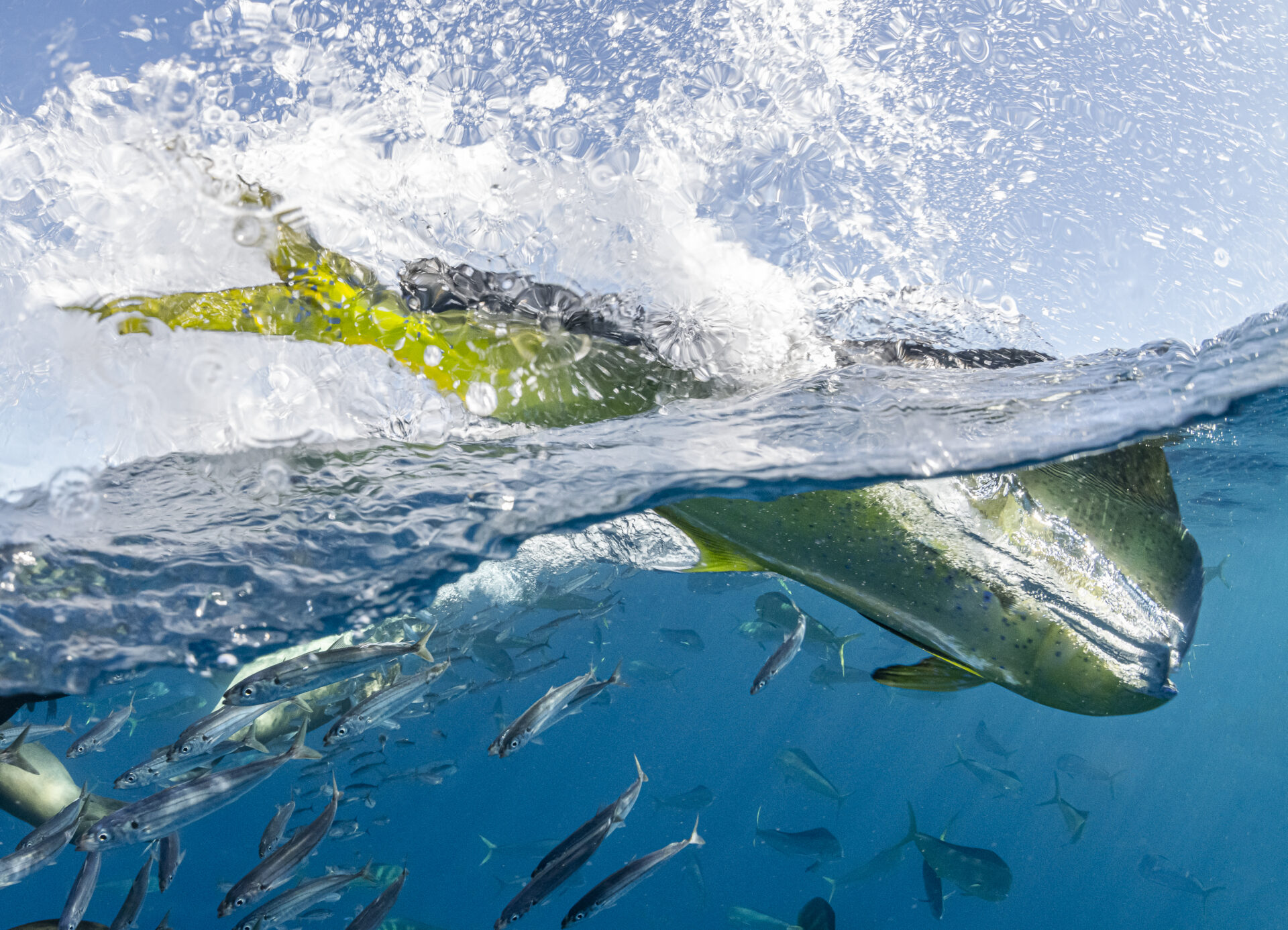
And what of the surface fish, like tunas? Surprisingly, fishing in the high seas contributes just six per cent to global catches, most destined for high income countries. These fisheries mean nothing to food security and the financial rewards go to a handful of countries. We could f ish them differently for greater benefit. Almost all high seas species straddle national waters and could be caught there instead, generally under better management at lower expense and with the benefits shared among many countries. Science suggests these fisheries would be more sustainable and productive if the high seas was fully protected as a giant reserve.
All eyes are on the new UN High Seas Treaty, which came into force this year, to protect ocean life in international waters. I well remember nervously presenting our first proposals for high seas protection at the UN in 2006, and personally spent much time over the following years urging on negotiators with better and more compelling science. But I’d be the first to admit that the scale of its task today is colossal. Given the scarcity of good data, identifying good places for protected areas will be a task of Gordian complexity. A better, surer, faster way would be to protect all of it. It sounds crazy. Sometimes ideas appear like that on first acquaintance but crystallise over time into shared good sense.
When nothing less than the world is at stake, bold collective action is imperative. We have done this before. Knowing that nobody could escape the effects of atmospheric nuclear tests, regardless of where explosions occurred, the world agreed to ban such tests forever. So far it has worked. The destruction of high seas marine life degrades the world’s life support system and has consequences for all. We need the equivalent of a nuclear test-ban treaty to protect it forever, for everyone. Ocean health is vital to planetary health and therefore human wellbeing, wherever you live. This is far too important to trust to profit chasing corporates with few morals and less restraint.
When I am diving and observe the sea from within my visual bubble of proximity, I feel a deep connection to life everywhere else, below and above water. I also sense a connection and responsibility to our future world, and the generations to come who will inherit it. Our choices today will shape that world. We need to practice making better decisions.
Printed editions
Current issue
Back issues
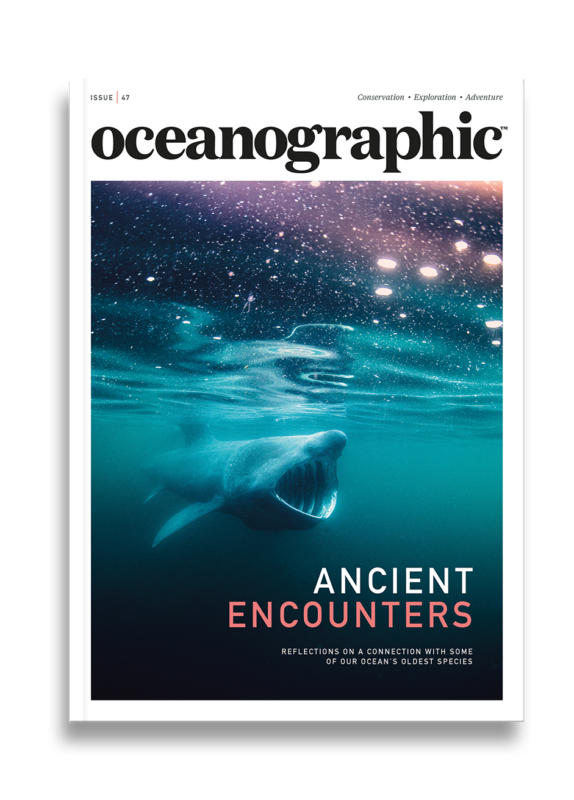
Enjoy so much more from Oceanographic Magazine by becoming a subscriber.
A range of subscription options are available.
