Sea olives and seeds of hope: An Italian restoration venture
Posidonia oceanica is an ancient plant that today offers breedings grounds and refuge to thousands of marine species, produces oxygen, and protects coasts from erosion. Today, almost 60% of Posidonia prairies along the Italian coast have disappeared. Luckily, there's a team of researchers working to reverse its fate.
Every year, small, olive-like spheres wash up on beaches across Italy. While they might look like uninteresting pieces of marine debris, to Maurizio Simeone, director of the Gaiola Marine Protected Area off the coast of Naples, these ‘sea olives’ are seeds of hope for an ever-more barren seabed.
These are the fruits of Posidonia oceanica, a flowering plant unique to the Mediterranean Sea that is not a grass at all, but an ancient lineage that once grew on land and returned to the ocean between 100 and 65 million years ago.
Its vast underwater meadows offer breeding grounds and refuge to thousands of species, protect coasts from erosion by dampening wave energy, produce vast amounts of oxygen, and act as a highly effective carbon sink, with their dense root mattes sequestering carbon up to 35 times faster than tropical rainforests.
But it’s according to Simeone that almost 60% of Posidonia prairies along the Italian coasts have disappeared over the last half-century, the result of decades of disastrous coastal management, uncontrolled development, illegal bottom trawling, and relentless damage from boat anchors.
In response to this silent collapse, and with a new sense of urgency driven by the global 30×30 target to protect 30% of the world’s oceans by 2030, Simeone and many other researchers across the country have worked for decades to heal these habitats. Traditional methods involve transplanting cuttings. But now, scientists have also begun to grow seedlings in the laboratory.
The degradation of Posidonia happens out of sight. “If a forest on land is destroyed, everyone sees it,” said Simeone. “When the same thing happens to a Posidonia meadow, practically no one notices because it happens underwater, far from the public eye.”
The greatest threats are illegal bottom trawlers that can obliterate entire meadows in a single pass; widespread damage comes from the hundreds of thousands of recreational boats that cruise the Mediterranean each summer. A single anchor dropped into a meadow rips through the dense, centuries-old matte of roots and rhizomes like a plough through a field, leaving a lifeless scar that can take hundreds of years to heal on its own.
A lot of this damage occurs within Marine Protected Areas (MPAs), the very places designed to prevent it. While they are the state’s primary tool for conservation, their effectiveness is often hampered by legal loopholes and a chronic lack of resources. Unregulated anchoring, for instance, is often still legally permitted in the outer zones of many MPAs. “It’s like a fight in the trenches,” lamented Simeone. “We have to defend these areas with tooth and nail, but the resources are scarce”.
To counter the direct mechanical damage of anchoring, one of the most effective strategies has been to provide boaters with an alternative. As part of the EU-funded SeaForest project, researchers mapped out anchor damage hotspots and placed there mooring fields, explained Marina Pulcini, a marine biologist at the Institute for Environmental Protection and Research (ISPRA). In the heavily trafficked Porto della Madonna in Sardinia’s La Maddalena archipelago, for example, the researchers installed a series of buoys where boaters can tie up without dropping anchor.
But protecting the remaining meadows from new wounds is only half the battle. “Thirty years ago, we talked about conservation and protection,” said Pulcini. “Today, we almost exclusively talk about restoration.”
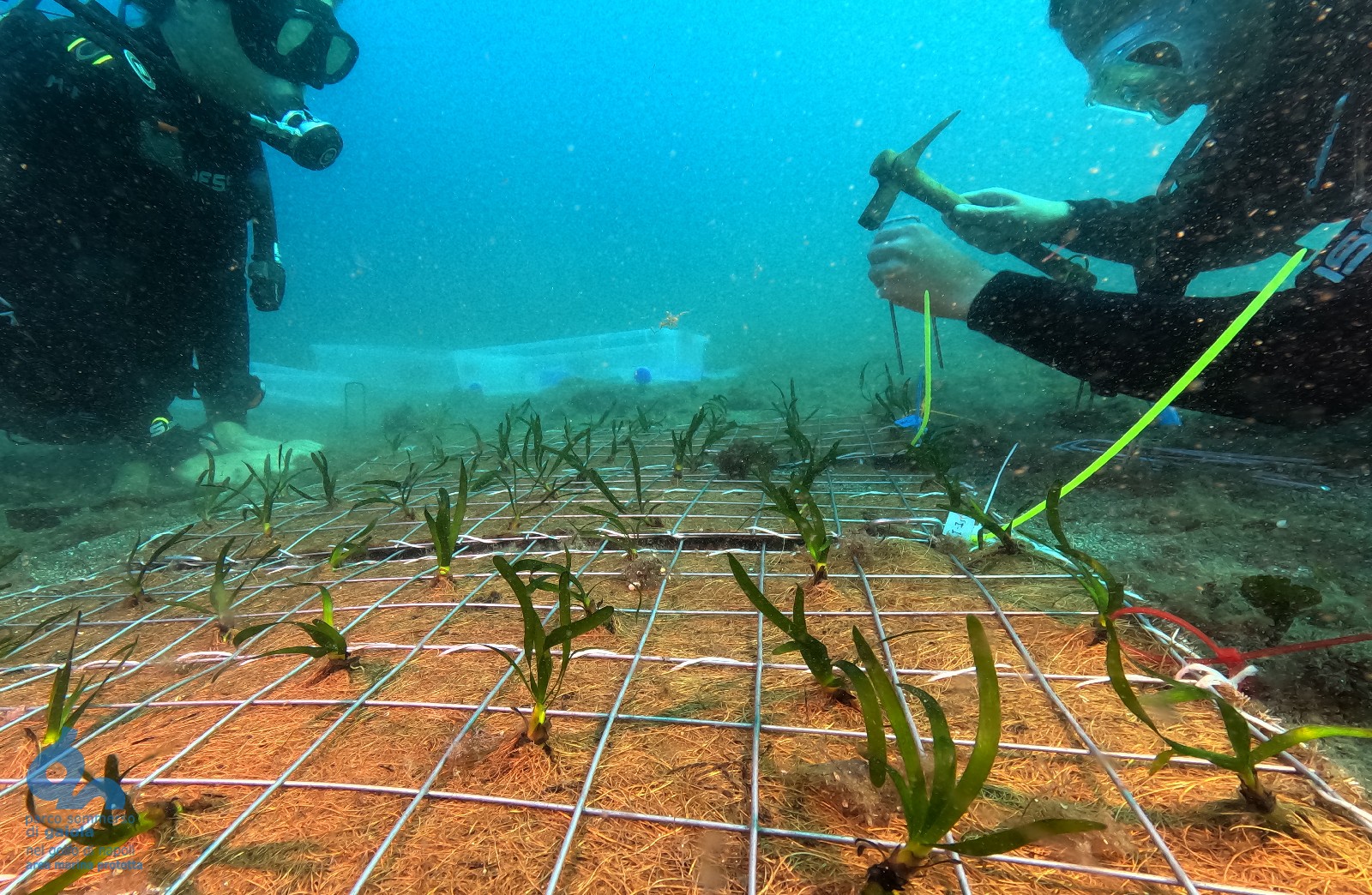
Along the Ligurian coast, the construction of ports and marinas has physically altered the coastline, disrupting the natural habitat where the meadows thrive. Increased pollution and runoff have reduced water clarity, which is essential for the survival of Posidonia oceanica. The plant needs clear water to get enough sunlight for photosynthesis.
When subjected to these threats, the once-dense meadows begin to fragment. “A healthy, dense meadow can withstand storms, but when it’s broken into patches, the edges become vulnerable and the degradation can accelerate,” said Francesco Pelizza, a PhD candidate at the department of environmental science (DISTAV) at the University of Genoa.
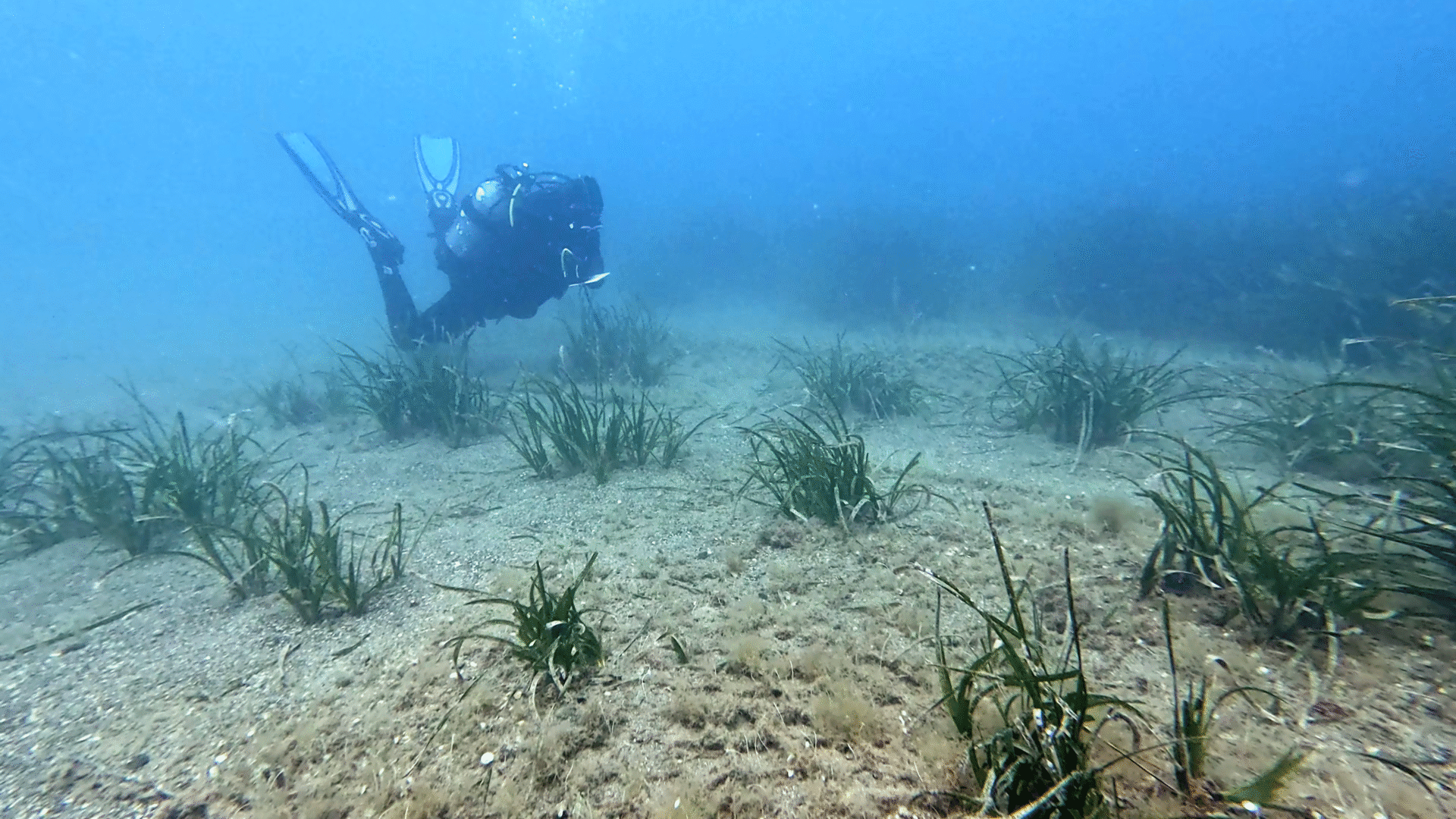
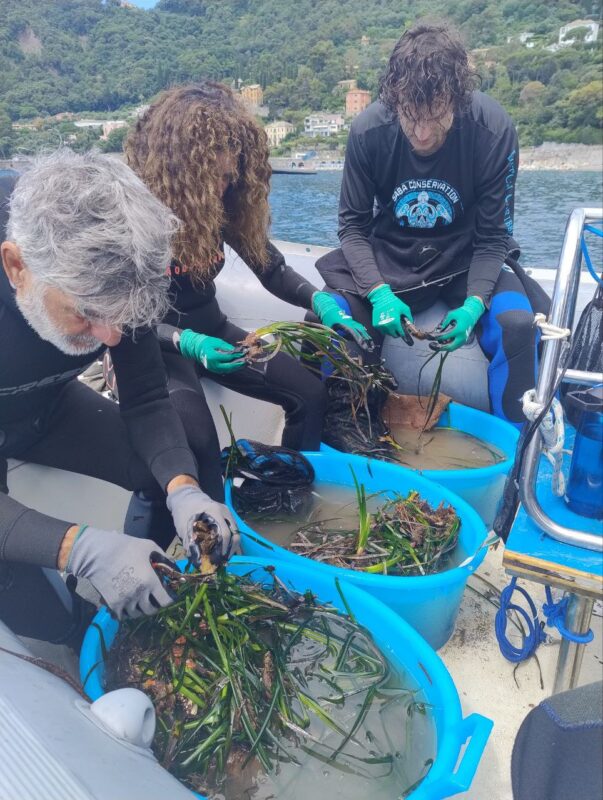
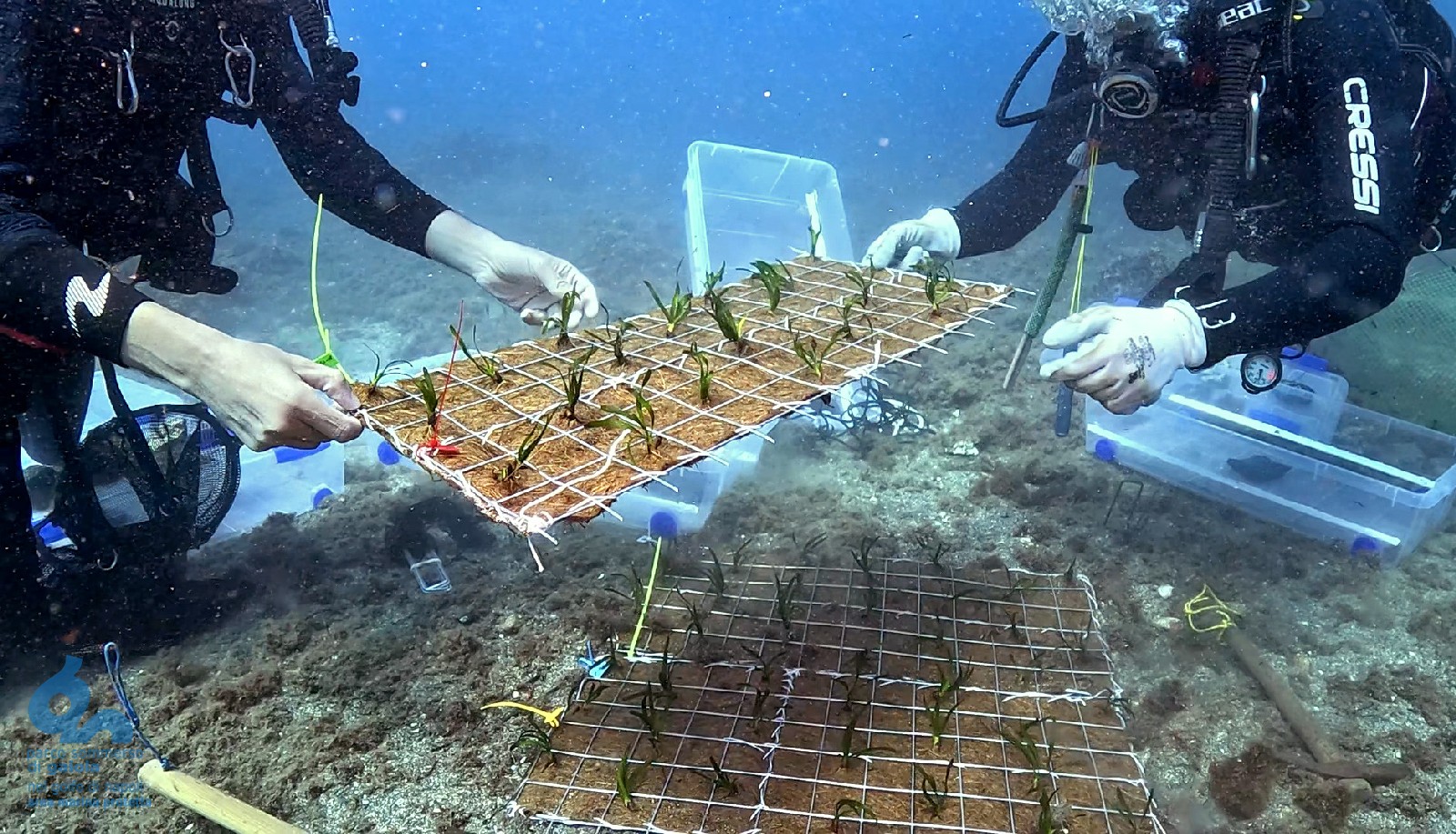
In Liguria, researchers at DISTAV closely collaborate with local MPAs to stitch Posidonia patches back together. Their work is a form of marine horticulture. First, they source their crop. They dive in search of areas on the seafloor where fragments of Posidonia, detached by currents or ripped up by anchors, accumulate. “It’s a way to give new life to material that would otherwise be lost,” said Chiara Robello, also a PhD candidate at DISTAV at the University of Genoa.
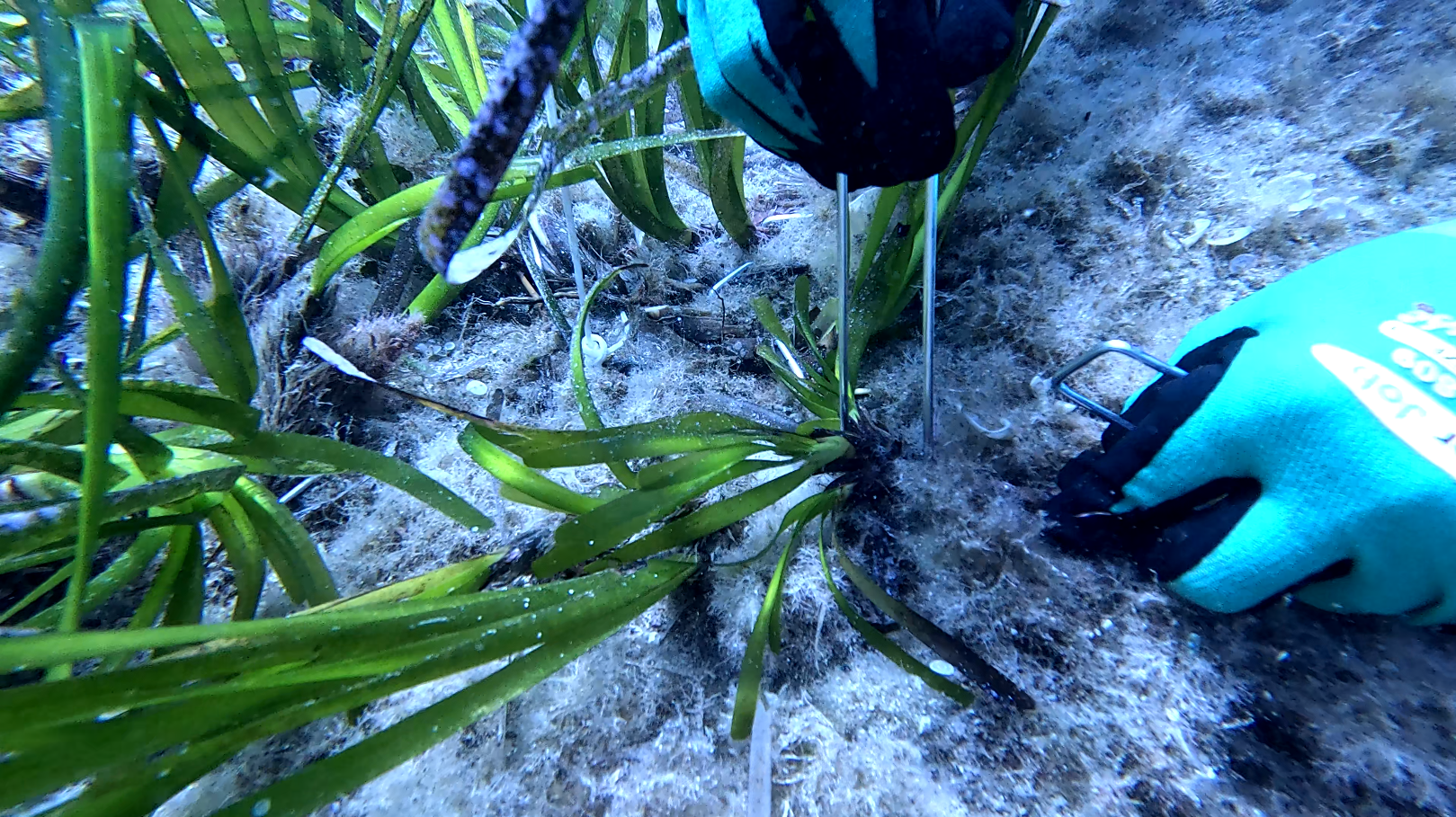
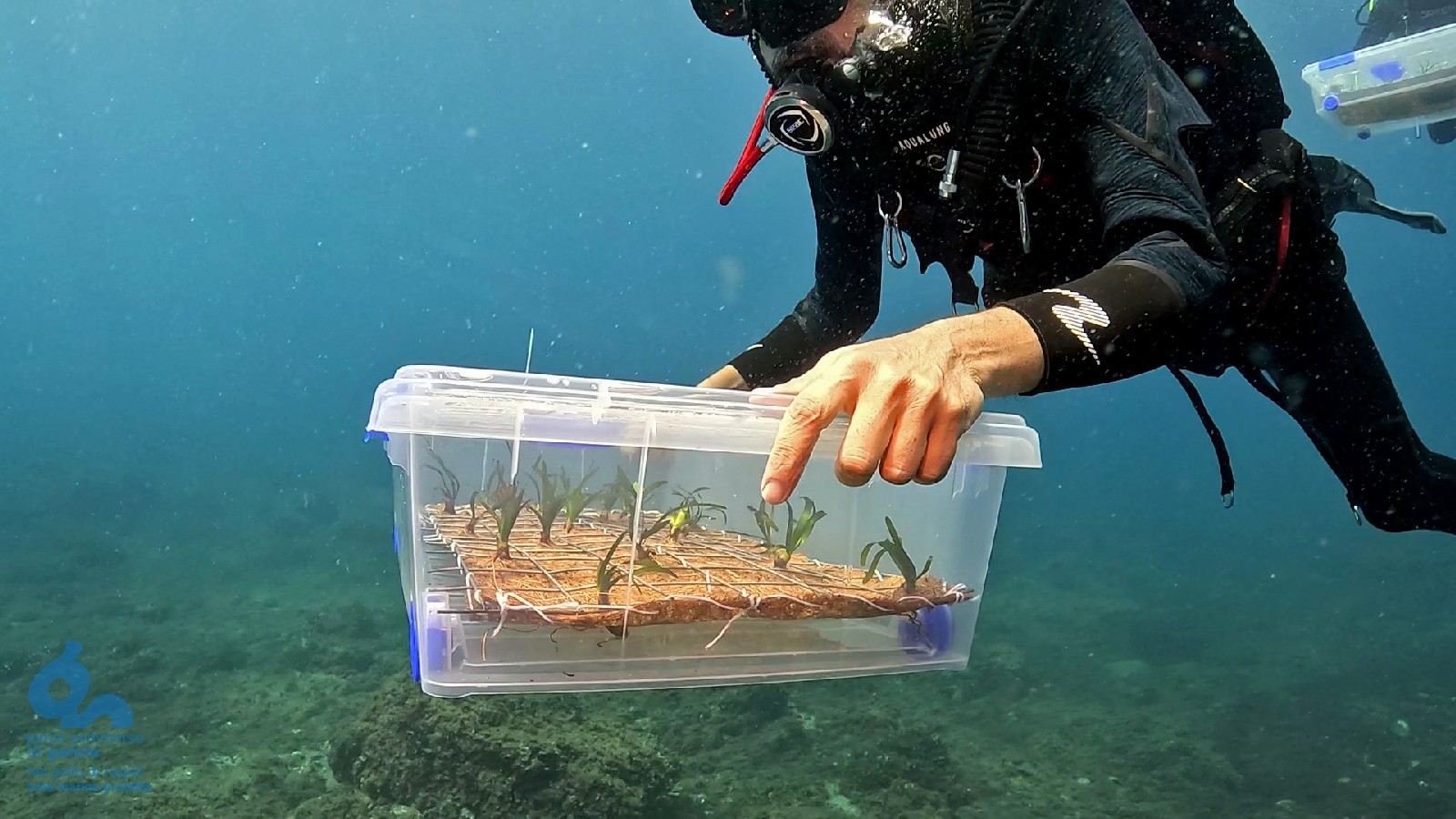
Back on their boats, the researchers prune the cuttings and insert them into biodegradable mats made from coconut fibre. They dive again to peg these mats to the degraded seafloor, creating dense clusters that mimic a natural sprouting. These patches will eventually grow, stitching together the two edges of the wound.
But there is no one-size-fits-all solution. “The technique has to be adapted to the site,” Robello explained. “The choice of materials and anchoring depends on local conditions.” For example, in the Bergeggi island MPA, bout 60km West of Genoa, where bottom currents are strong, the mats need to be firmly secured. In the Portofino MPA, about 50km East of the Ligurian city, the sediment is very soft, so the anchoring pegs must be longer and sturdier to get a good grip.
In other areas still, such as the Cilento coast, just south of Naples, researchers are experimenting with different clamping techniques. One intervention involves anchoring bioplastic, star-shaped modules to the seabed using large screws, explained Pulcini, who is coordinating the project. This method provides a stable, slightly elevated frame that lifts the delicate young plants away from the sediment.
Using detached cuttings avoids collecting them from healthy prairies. But researchers have to deal with the unpredictability and variable quality of the sourced material. “You never know how long a fragment has been detached,” said Robello. “One year, you might find fresh, healthy cuttings just after a storm. The next, the material you find might have been detached for weeks and has a much lower vitality”.
This variability makes it difficult to standardise the process and guarantee consistent results. What if, instead of relying on chance finds, researchers could grow the crop from seeds?
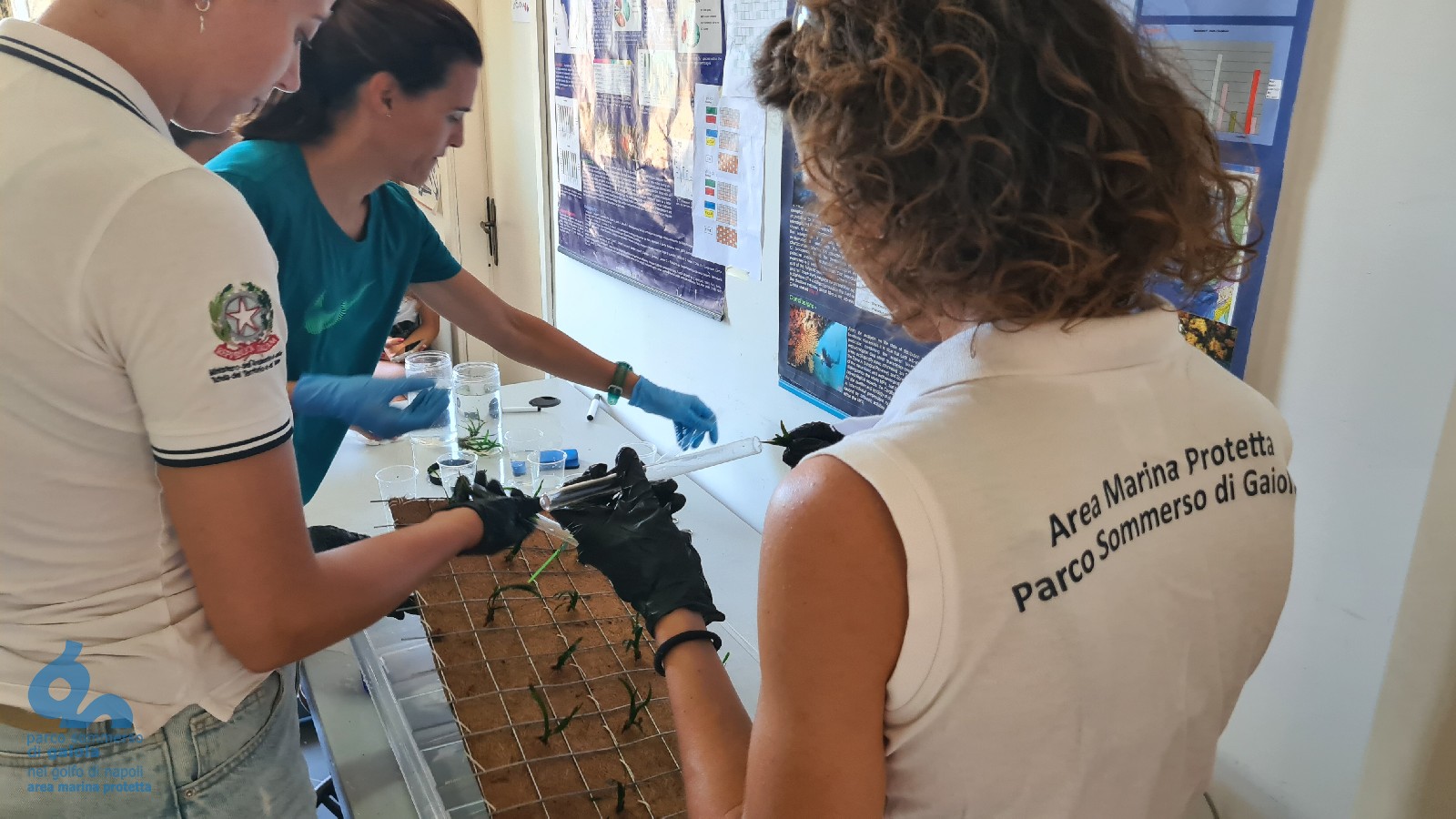
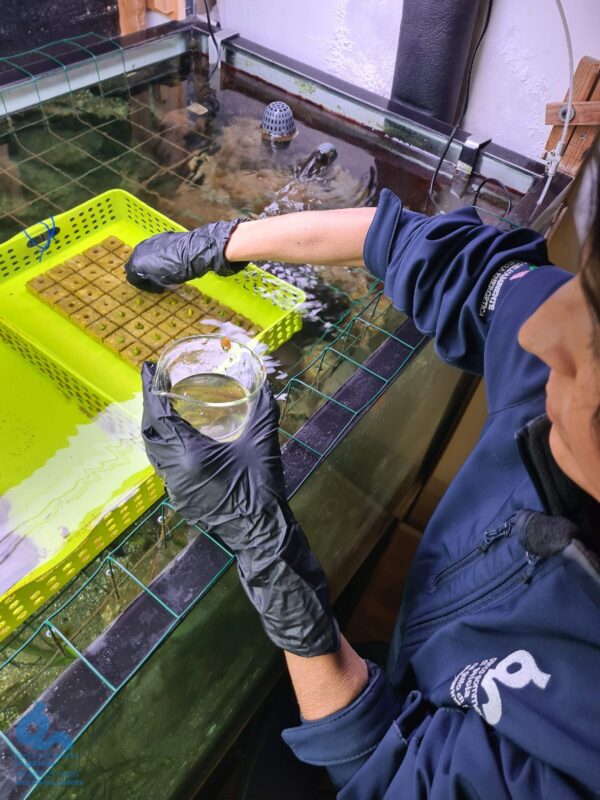
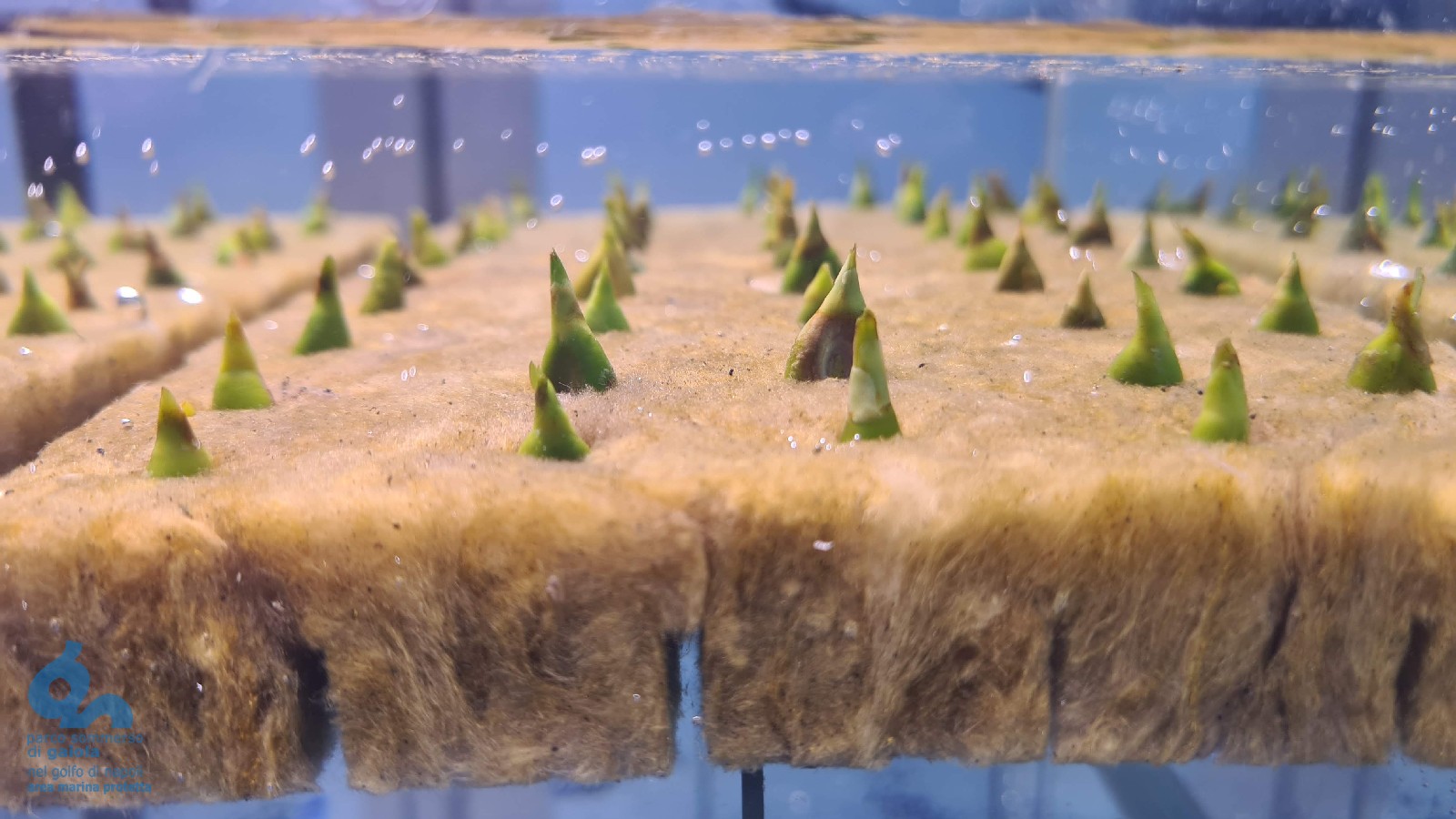
At the Gaiola MPA, Simeone, in collaboration with the Anton Dohrn Zoological Station of Naples, coordinates the PosiFarm project that aims to do just that. His team turned to social media to urge citizens to collect and post any sea olives they found washed ashore. “We received packages from all over,” Simeone said, “some even arrived from as far as Marsala, in Sicily”.
The community effort provided over a thousand seeds.
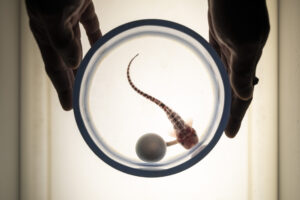
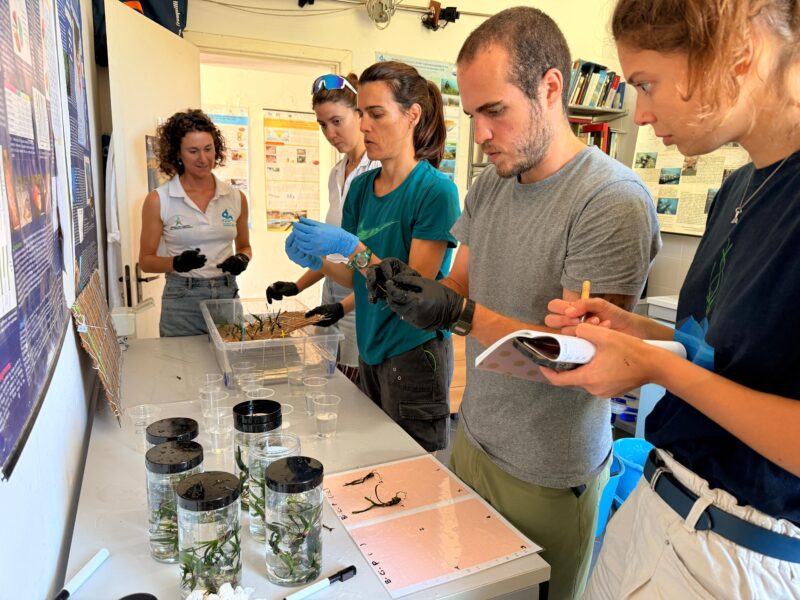
In the lab, the team created a low-cost cultivation system using simple tanks. “The goal was to create a model that was economically accessible,” Simeone explained. Of the thousand seeds collected, nearly 700 sprouted, and over 500 have now been planted on the seafloor.
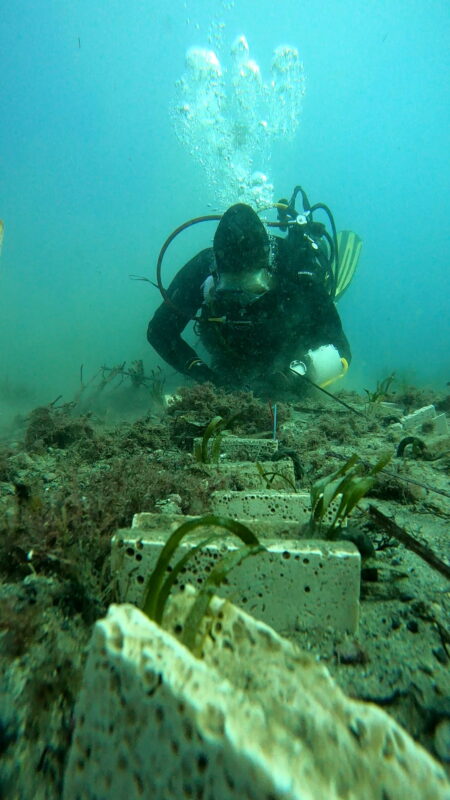
“In Genoa, a block away from the laboratory where Robello and Pelizza work, Claudia Pezzilli, a PhD candidate at DISTAV, uses small blocks made from porous Roman travertine, a type of limestone.” The block has a wedged shape with a fine central channel. “The seed is placed there, and as the roots grow, they follow the channel and anchor themselves directly into the block’s many small holes,” she explained. After cultivating the seedlings in the lab for six to 11 months, the researchers take to sea to place the blocks into small holes dug into the existing meadow matte.
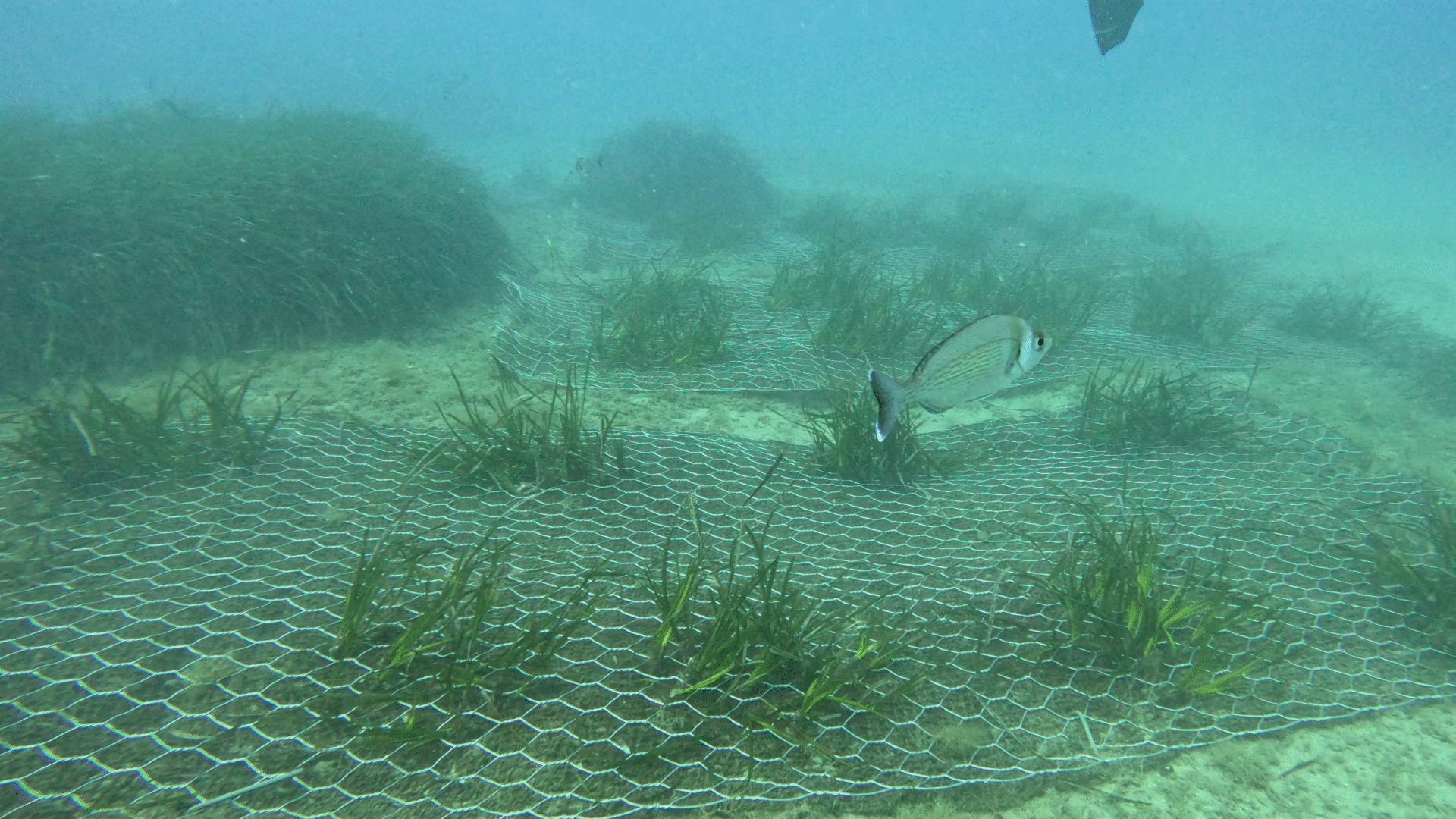
But the seabed is not a controlled greenhouse. Simeone’s team quickly discovered their sprouts were a delectable meal for the salema porgy (Salpa), a voracious herbivorous fish, so they built protective cages around the seedlings. Pezzilli’s team also noted that survival rates dropped from an initial high of 95% to 75% after the hot summer months, likely due to a combination of heat stress and grazing.
For now, the young seedlings in the Ligurian and Naples seas continue to grow. But it will take a decade for these young prairies to become fully functioning ecosystems.
This long recovery time is the reason why active restoration and protection must go hand-in-hand, said Marina Penna, a marine scientist at ISPRA. “It makes no sense to restore a meadow if the threats are still present. Choosing the right site, where impacts have been eliminated, is fundamental.”
Actively healing old wounds while creating the conditions for the ecosystem to thrive on its own offers the best hope for these Mediterranean underwater forests. It’s a long-term commitment that requires patience, scientific innovation, and a fundamental shift in how we view the seafloor. As Penna puts it, “We need to change our perspective. The sea isn’t an infinite resource we can exploit. It’s a system that needs to be brought back into balance, and that requires a collective effort.”
Planting Posidonia meadows is not just about returning them to a healthy state; it is about restoring entire ecosystems. “Restoring Posidonia creates a trickle-down effect for all the other species that depend on it,” said Pelizza. “The water is clearer. Red mullet, wrasse, brown meagre return.”
This story was produced with the support of the Earth Journalism Network.

Printed editions
Current issue
Back issues

Enjoy so much more from Oceanographic Magazine by becoming a subscriber.
A range of subscription options are available.
