Spearguns, sarongs and subsistence in Timor Leste
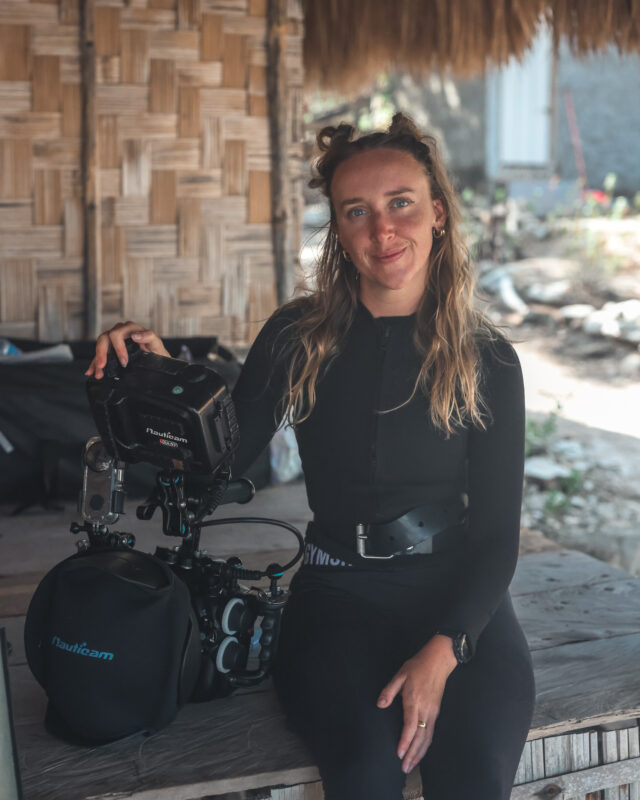
On her Timor Leste expedition on assignment for Oceanographic, our 2024 Storyteller in Residence, coral reef biologist, conservation photographer-filmmaker and expedition leader Mads St Clair, gets to know the Wawata Topu.

The batteries, in fact, did not charge.
Picking them up from Neka’s house this morning, I almost groan when I see that nothing has charged to more than 60%. After last night, I’m unsure who will have less energy, myself or my camera.
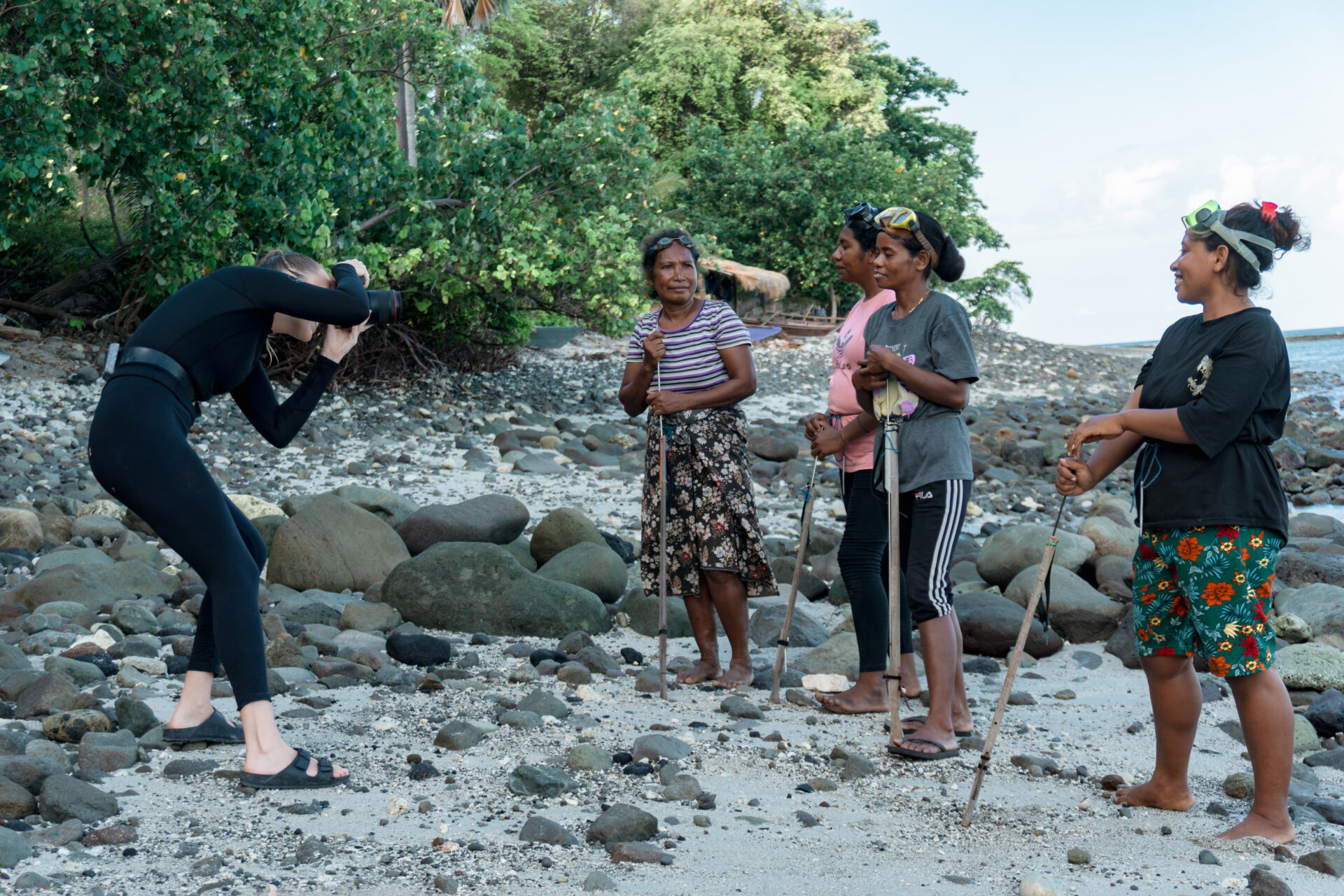
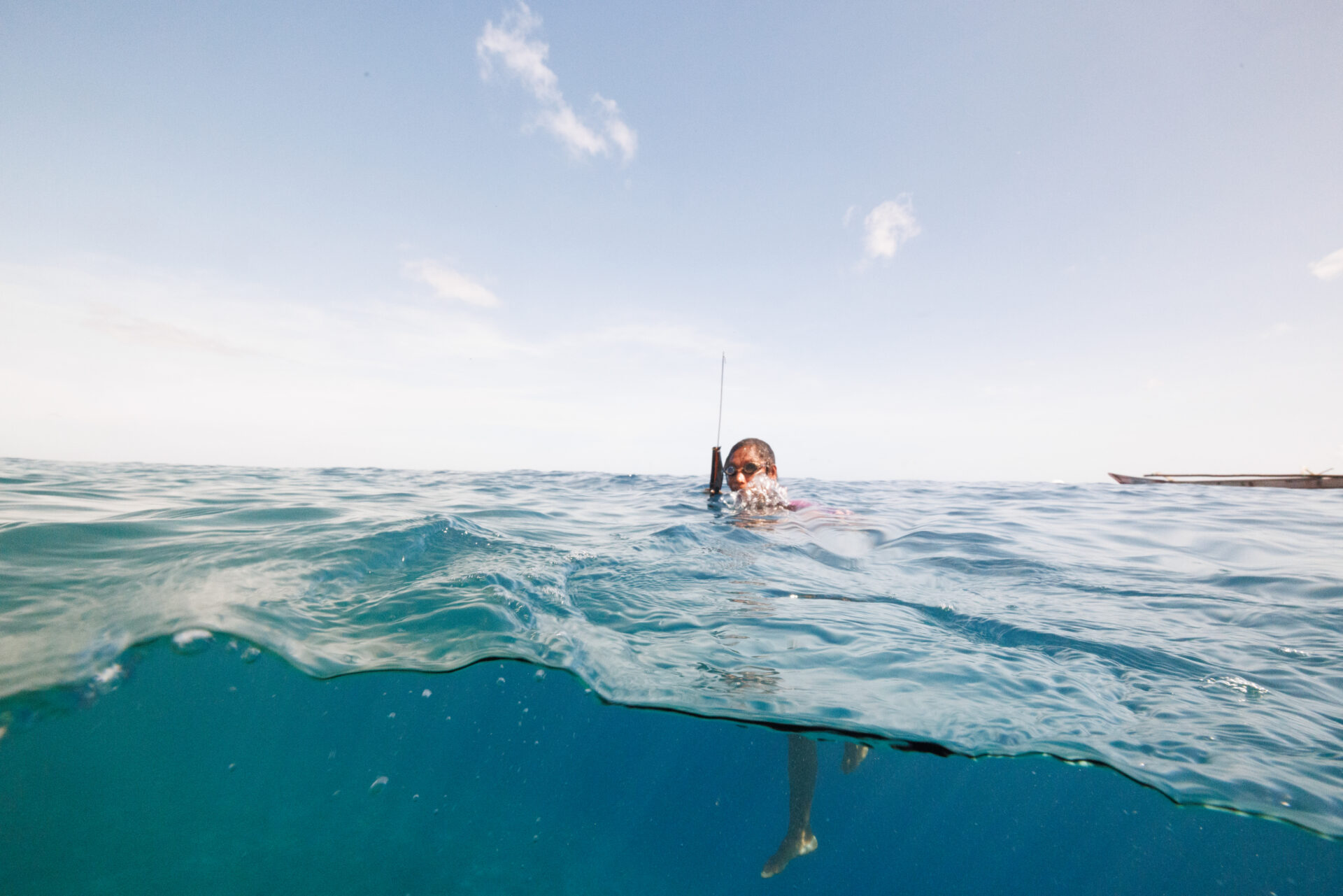
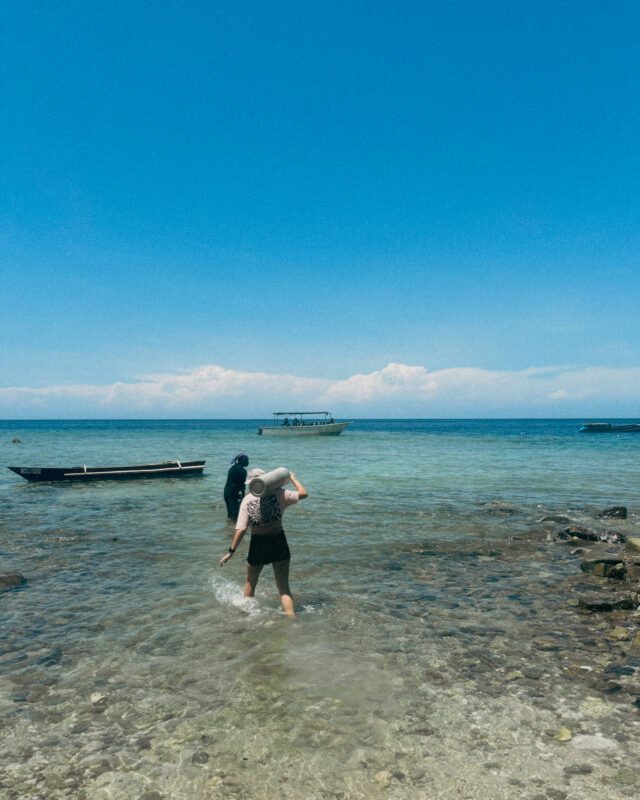
By early-afternoon, we receive word from one of the women from the village that the Wawata Topu are heading out to fish. The tide appears to be falling and the reef flat is partially exposed. We meet the women on the beach. They stand, spears in hand, an assorted bunch of ages and wearing everything from flipflops to sarongs to wooden goggles.
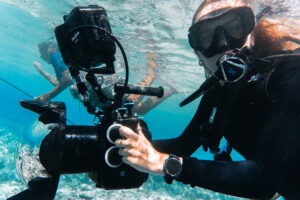
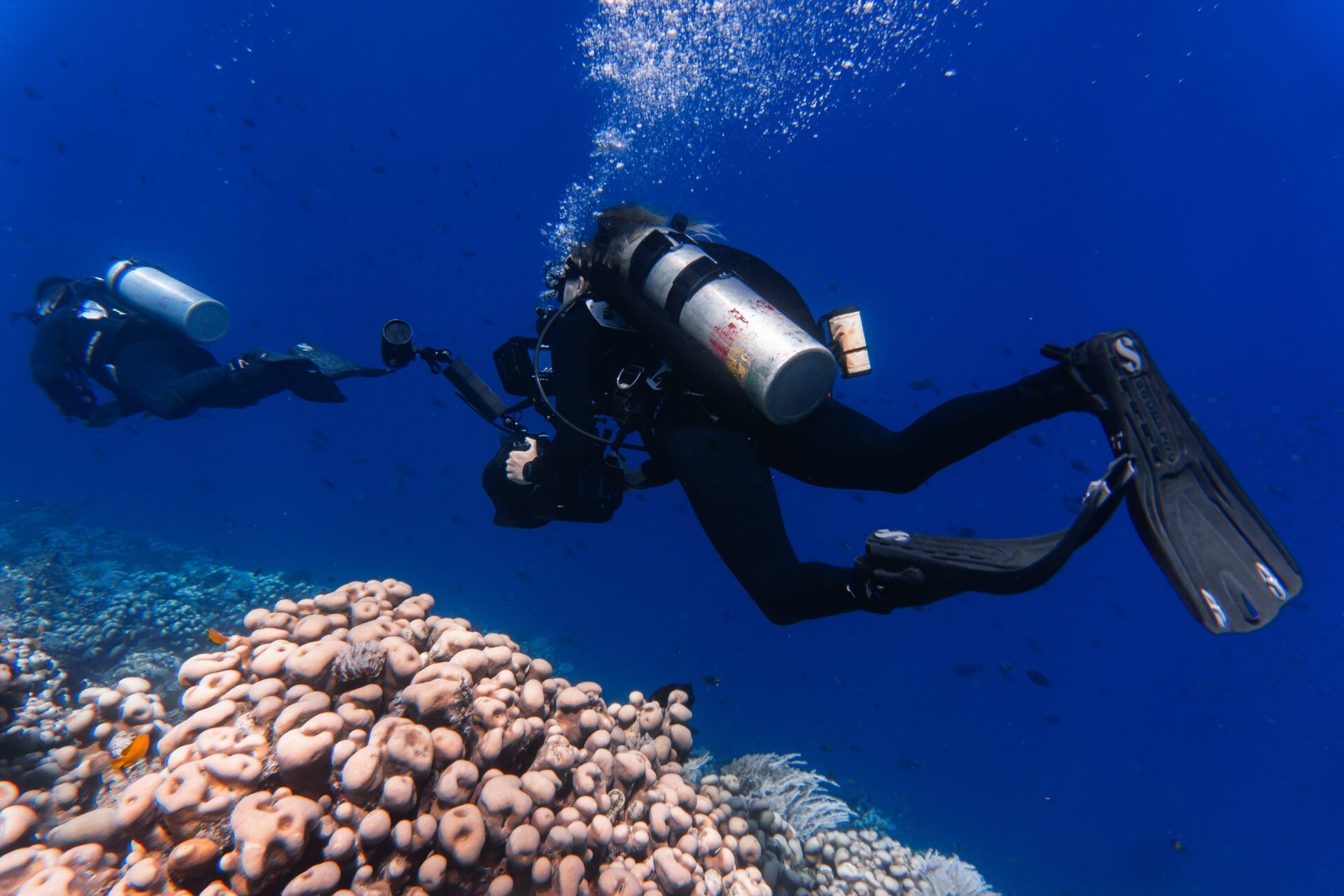
They delicately pick their way across the reef flat, before disappearing off the edge into the slightly deeper water that is the harbour. We trudge behind, slightly less graceful with full scuba gear on, camera rig clipped to my BCD and trying not to slip. It’s hot and I’m grateful when we finally sink into the water.
My idea, which is to drift gently back toward shore on the current, filming the women as they dive ahead of us, immediately goes to shit.
As soon as I hit the water, I feel it. The current is strong. I’m racing to keep up with the women, who are diving shallow but fast. Though not camera shy, they’re diving in the opposite direction to the sunlight. As a documentary photographer I don’t like to stage things too often, but I recognise at this moment that I might have to at some point.
And then, just as I’m finding my groove, the current splits. It’s pulling out. Fast. I start kicking pretty hard, but there’s resistance both sideways and slightly backwards all at once. The water is shallow enough to stand, so I raise my head above the surface and gesture to my safety. She has already realised the same thing. Around us, the heads of the Wawata Topu pop up and they signal to the shore.
For us, this suddenly becomes a large and dangerous problem. Toward the shore, waves are crashing hard onto dead coral that has eroded into sharp spikes. I try to hold the camera rig above water while kicking toward the reef crest, my BCD is inflated and I’m trying to keep the dome port safe. As the waves break on us I’m smashed repeatedly on the reef and dragged back by the current. I’m praying not to smash the camera. I glance back. Tess is behind me, also struggling. We’re caught.
The situation goes from bad to worse as I become aware that it will be difficult to stand on the brittle, sharp substrate in my thin freediving socks. Unable to stand at all with fins on, I make an exec decision to try to take my fins off to scramble across the coral.
And then, just as I’m losing a fin in a wave and shredding my arm on the reef, a hand grabs me. Joanna, one of the women, has come back to help. The Wawata Topu have already dropped their gear and waded back into the water toward us. They are calm, practical and so strong and one of them hands me her flip-flops without hesitation. Another grabs the handle of my camera. Behind me, Tess is being helped too.
We make it to shore, breathless and slightly wounded – but the gear, and most importantly the cameras, are safe. They giggle at us struggling on the rocks, of course. My terrible balance doesn’t exactly help. The sense of relief amongst the group is palpable. “Stong current. We had to stop. It is not safe.” The women don’t need to tell me twice. In a decade of diving, that was up there with one of the worst situations I’ve been in.
And then the walk begins. The current had pulled us a full kilometre away from the village and so we pick our way through an overgrown forest path. Carrying tanks and weights, the journey is long and hot. They carry things without asking: two walk side by side holding the camera rig, another carries our fins. But still, by the time we get back to the hut, my body is wrecked.
I pick my way carefully through the forest in my thin freedive socks, wincing as I step on twigs and sharp rocks, envious of the women who walk beside us, barefoot, unbothered. My English feet, embarrassingly unprepared for this, feel every sharp edge. In true British fashion, I refuse a pair of flipflops which Sara, who wore them freediving, has offered to me multiple times.
When, 10 minutes late.r another of the women says with a smile, that I’m slowing us down, I begrudgingly accept. Their generosity does not go unnoticed.


It’s morning and thankfully, the ocean is calmer today. We decide to head out on an earlier tide as I am determined to keep clear of any currents. The reef looks peaceful in the morning glow, glassy and undisturbed, but as we make our way to the water, I’m on high alert after yesterday’s rip.
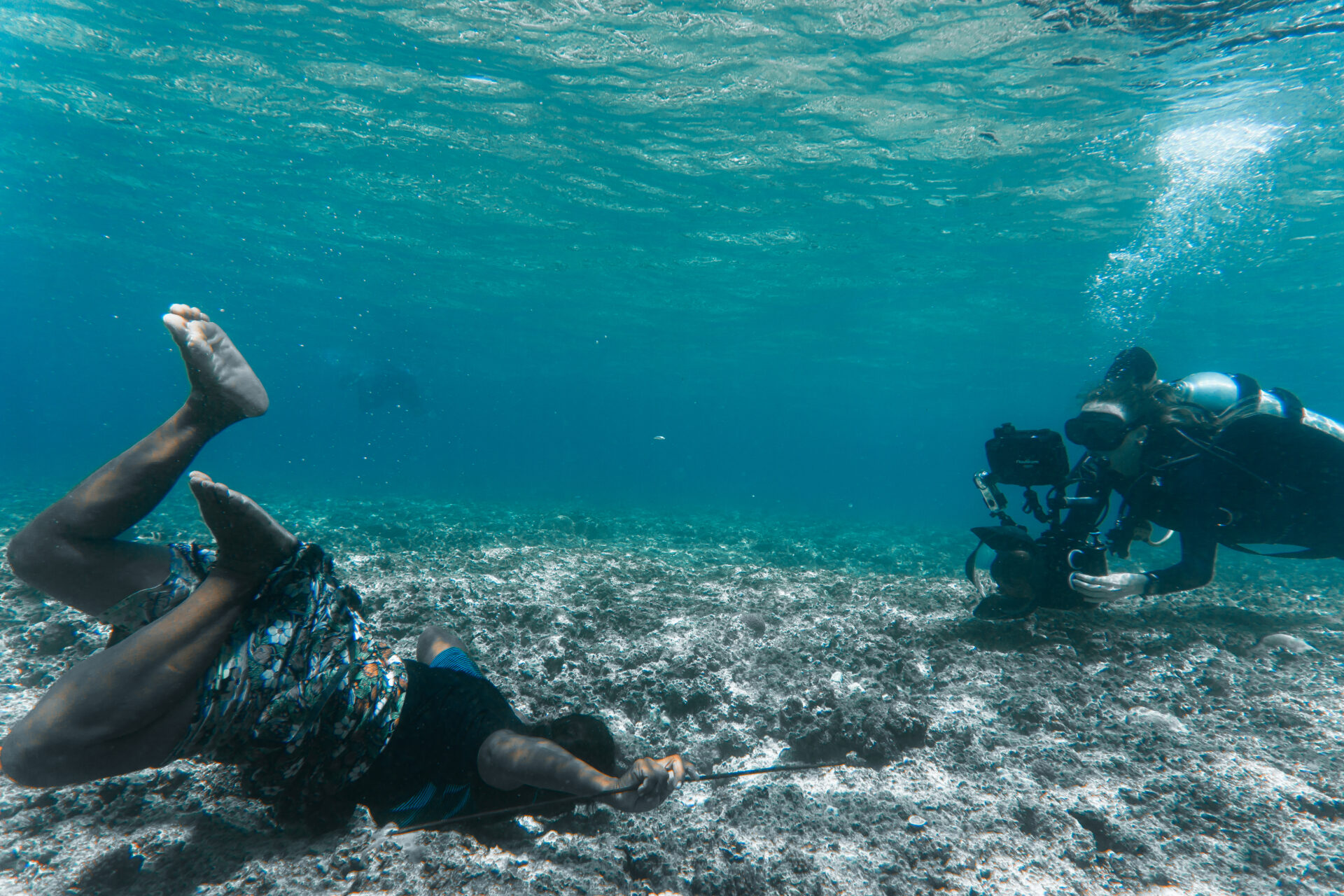
The women are already ahead of us, dropping off the reef flat and into the water with their spears. To my delight there is not even a whisper of current today and I slip into flow state as I start to shoot their movements underwater. It’s fascinating to watch them fish. Each of them uses a handmade wooden speargun – carved from local hardwood, with a simple rubber band mechanism – a far cry from the sleek aluminium or carbon you see in commercial freediving gear. They’re a little more clunky perhaps, but just as effective in the skilled hands of the Wawata Topu.
They dive, scan the reef and shoot – then follow the line to retrieve the spear, which, if successful, now carries a fish trailing from its point. If they’ve caught something, the fish is threaded onto a long piece of twine looped around their waist. One after another, small reef fish begin to dangle from their sides.
Diving in flipflops and sarongs, they’re surprisingly efficient. But I’ll admit, I feel a little concerned. Many of the fish they’re taking are species I’d normally consider too small to target – which include boxfish and small reef grazers. But, that said, this is subsistence fishing. And speaking as someone from the global north, someone who has never had to catch dinner to put food on the table, it’s easy to assess reef health through a scientific lens, but harder – and more important – to understand the choices people make when the ocean is not a resource, but a lifeline.
I make a mental note to ask the women later in the interviews about it, and it is Agustinha, one of the eldest Wawata Topus, who assures me: “We only take big fish. If it’s small, we don’t spear it.”
She says it with confidence and I believe her. At least in intention. The line between “big enough” and “too small” is different here – shaped by what the family needs and what is left to take.
I think about Tara Bandu – the customary law that underpins the conservation of the marine area here. In Adara, they’ve set up a community-managed marine protected area. The reef in front of the village is technically off-limits to fishing, a sanctuary space meant to allow species to recover and spill over into adjacent areas. The Wawata Topu fish in this spillover area to the side.
The Tara Bandu is rooted in tradition and ceremony – a binding community promise, reinforced with ritual and a shared sense of responsibility, and in interviews, the Wawata Topu seem proud of it. When conservation is led locally – not imposed – it tends to last longer.
The week passes in a blur of dives and interviews. We fall into bed each night, barely sleep with the heat, awaken to barely charged camera batteries – and then repeat. But despite the challenges, the story is taking shape. What started as a story about a biodiverse reef has become one of women, of resilience and of how sustainable, local livelihoods connect people to the ocean in ways we rarely see from the outside.
As the week has passed, I’ve made the conscious decision to shoot some video – I want to capture the way they speak, how they move in the water. Perhaps for a short film that could accompany the article. Next week, we’ll head over to the other side of the island and hopefully get some shots of coral once we have tanks with the dive centre, but for now, I’m really happy with how the assignment is coming together. I managed to get drone shots, the underwater stills are in the bag and now I just want to capture a little more footage.
Last night we completed the final interviews. It was challenging to find a spot to film, deciding between the beautiful background of the beach vs the crashing of waves on the shore. I vote in favour of the ocean view and cross my fingers that I can clean the audio up in post.
We run into our first issue immediately – translation. We’d planned to have our homestay host with us to help translate, but he was unexpectedly called back to the mainland for the week of our stay, which left us with no interpreter, no phone signal for a translation app and just Neka, his wife, helping us piece together three languages with a lot of pointing, guessing and laughter.
I interview the five Wawata Topu we’ve been diving with one by one; they are quiet at first, perhaps not shy exactly, but quiet. They answer slowly, letting their words pass through three layers of translation: from their local dialect, to Tetun, to Bahasa, to English. It’s not a perfect system, and sometimes meaning gets muddled in the process. I realise that our homestay owner will have to translate retrospectively from the video.
We make our way through the interviews, through cameras overheating and mics randomly failing, but what comes through clearly is how much they hold – stories of fishing, of learning from their fathers, of supporting their children through school on the income they make from octopus and reef fish.
We wrap the interviews just before sunset and the whole story comes together in my mind. Truthfully, I feel quite emotional. Today was one of those days I’ll hold close for a long time.
For more Despatches, images and more, follow our 2024 Storyteller in Residence’s journey here or over on Instagram.
Printed editions
Current issue
Back issues

Back Issues
Issue 43 Sir David Attenborough’s ‘Ocean’
Enjoy so much more from Oceanographic Magazine by becoming a subscriber.
A range of subscription options are available.