Their fate, their future: Community conservation of Palawan
A quiet revolution is taking place in the remote island communities of Palawan, Philippines. At the heart of it is the Sulubaai Environmental Foundation, a grassroots organisation working with local fishers to protect one of the most biodiverse marine ecosystems on the planet.
In a world where large-scale environmental promises often fail to translate into action on the ground, a quiet revolution is taking place in the remote island communities of Palawan, Philippines. At the heart of this change is Sulubaai Environmental Foundation, a grassroots organisation working hand in hand with local fishers to protect one of the most biodiverse marine ecosystems on the planet.
Earlier this year, during the third United Nations Ocean Conference (affectionately known as UNOC3) held in Nice, Sulubaai celebrated a milestone that speaks volumes about the power of community-led conservation: the official designation of a new 120-hectare marine protected area (MPA) around Debangan Island. The area, now under local protection, is a refuge for emblematic species such as green sea turtles, some of them over 40 years old, and the elusive blacktip reef sharks that have long patrolled these coral reefs.
But this MPA is not just a line on a map. It represents the sixth marine protected area established under Sulubaai’s stewardship, and perhaps more importantly, the sixth designed through a participatory process that gives local fishers a real voice in decision-making. This collaborative model is built on the belief that long-term ocean protection cannot succeed without those who depend on it most.
“We don’t come in with a pre-made plan. We start with conversations,” says Laure Thierry de Ville d’Avray, marine biologist and project manager at Sulubaai. “The knowledge held by local communities is invaluable, they are the ocean’s true stewards.”

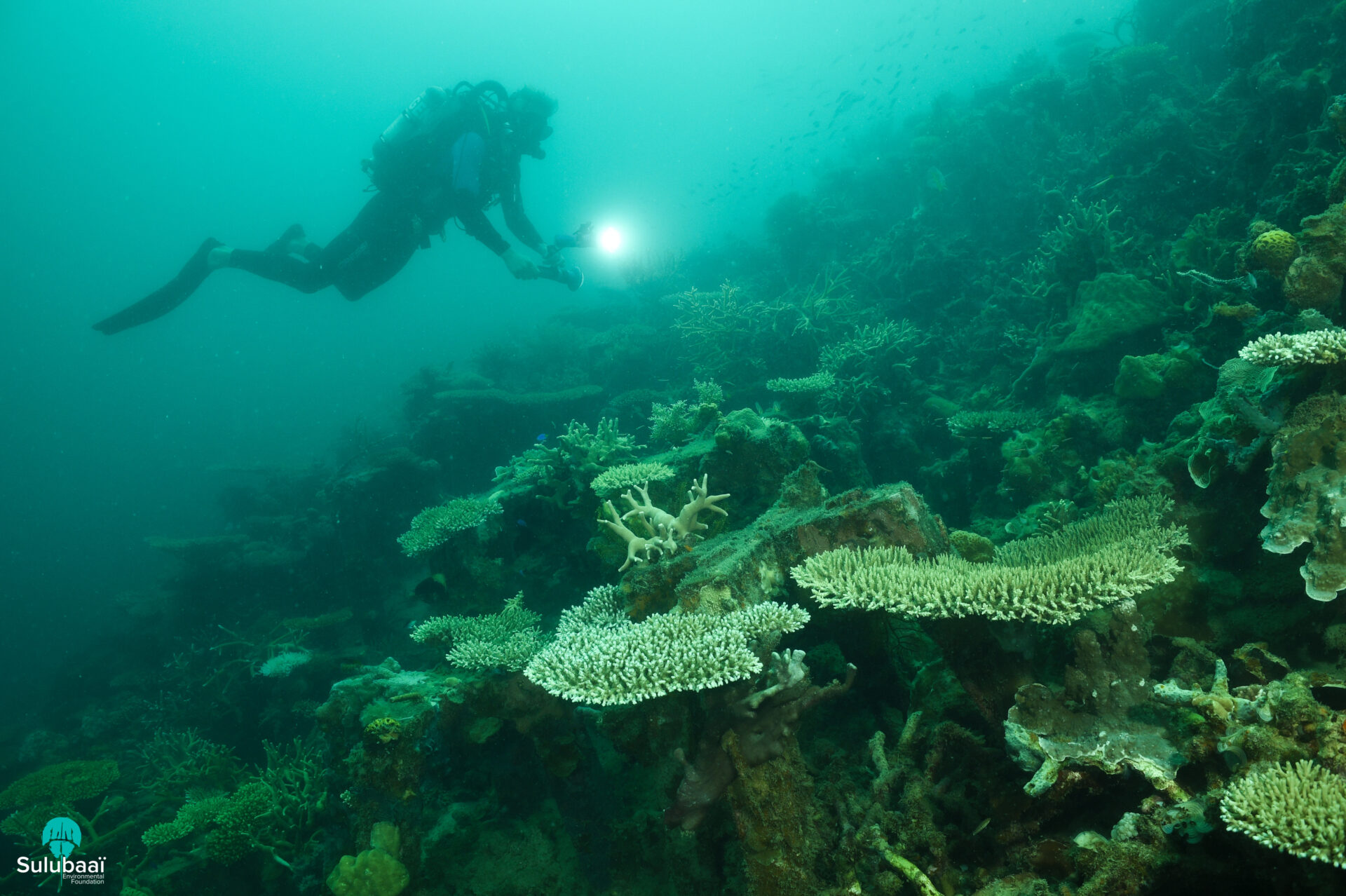
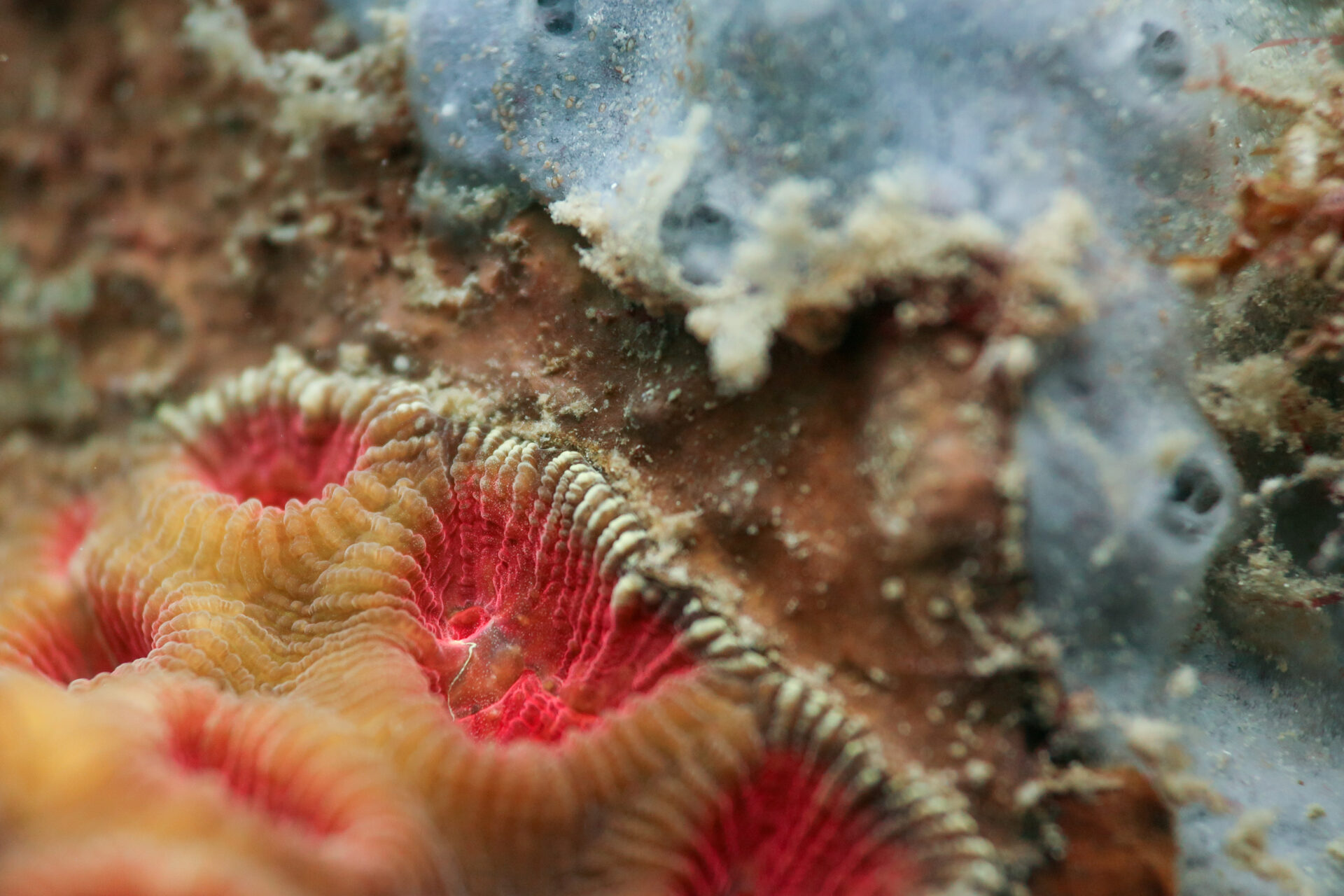
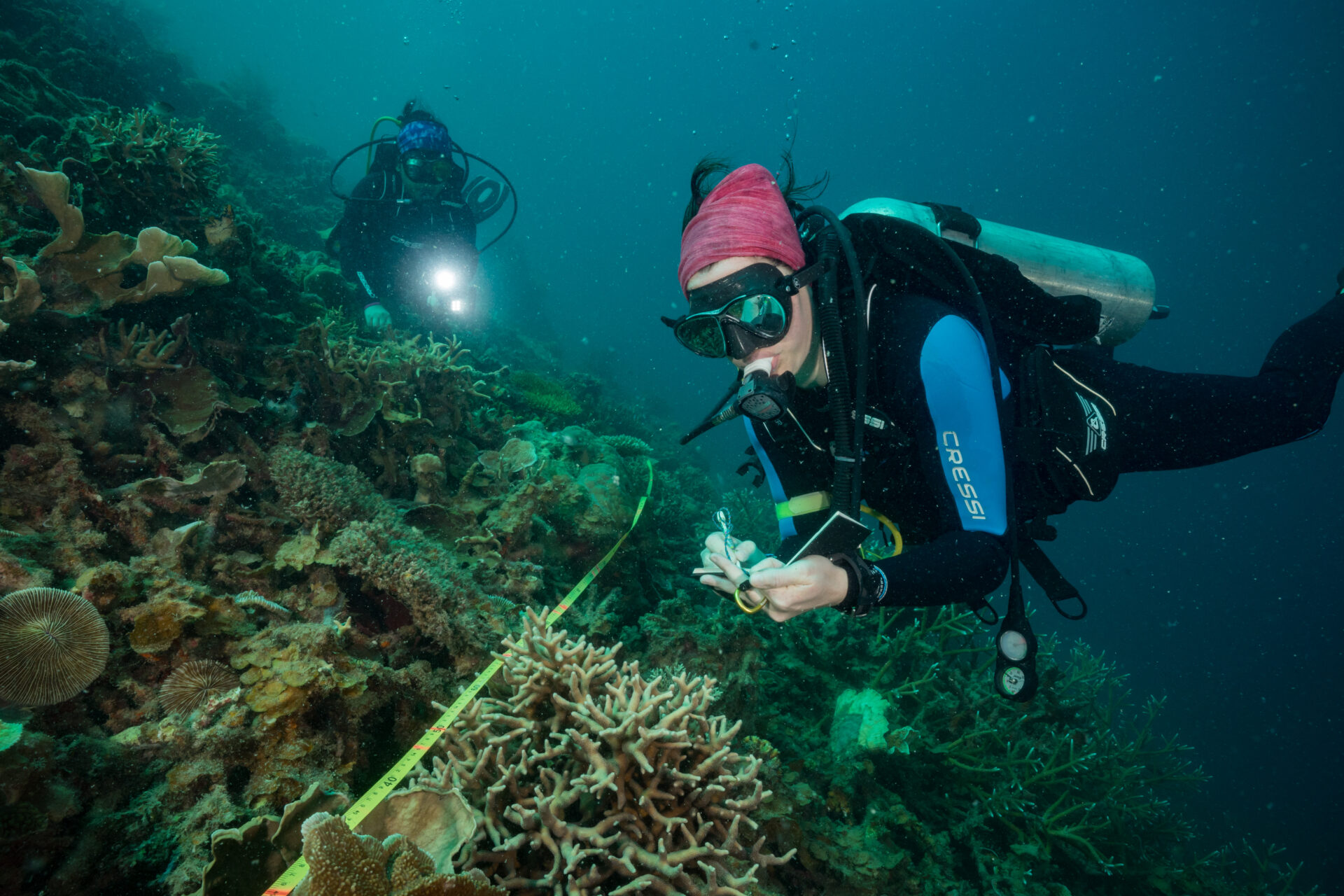
Sulubaai’s work doesn’t stop at boundary lines. In the neighbouring Taytay Bay, spanning a staggering 190,000 hectares, the foundation is expanding its Sea Academy+ programme, a multi-pronged initiative that integrates marine protection, coral reef restoration, scientific research, and youth training. At its core is a strong commitment to community governance, ensuring that knowledge, responsibility and benefits stay local.
In recent years, the Sea Academy has trained dozens of young “sea wardens,”, restored degraded reefs using innovative coral substrate technology, and supported fisheries monitoring programmes. By bringing together scientific expertise, traditional knowledge, education, and empowerment, Sulubaai is redefining what effective ocean conservation looks like – and who leads it.
This bottom-up approach is gaining global recognition. At the United Nations Ocean Conference, the Shark Fin Bay MPA network was awarded the Blue Park Award – Gold by the Marine Conservation Institute, placing it among the world’s best-managed MPAs. But perhaps the greatest recognition comes from the communities themselves: those who, after generations of seeing their marine resources depleted, are now witnessing signs of recovery and reclaiming their role as guardians of the reef.
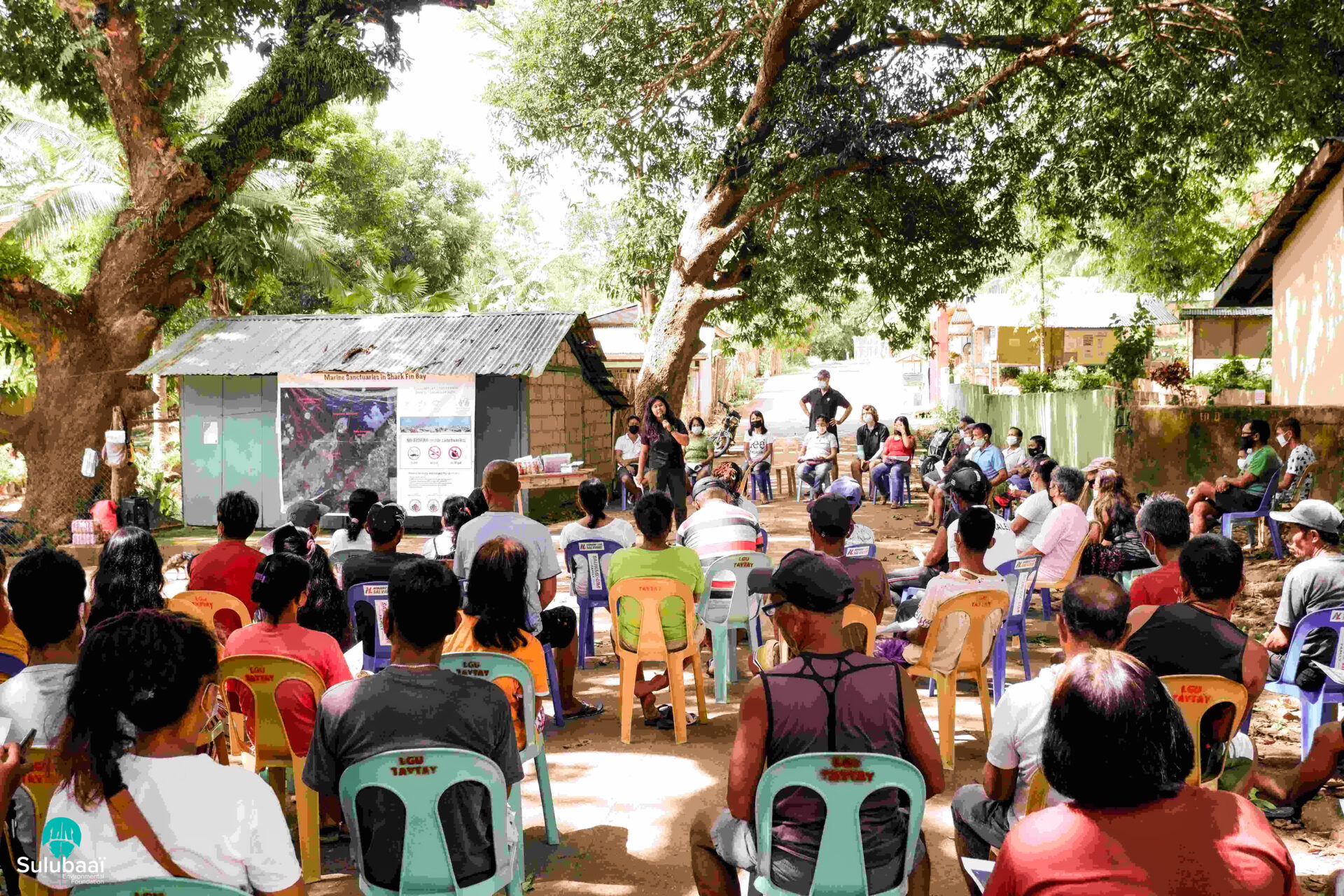
“Marine protected areas are established and implemented not for me or anyone else, it is established to help the community, for the fishers, and for the next generation so they can still witness and see the fishes that are almost extinct,” a representative of the Bantay Dagat – guardians of the MPA – tells us.
“It’s one of the things that people should know about MPAs – it should be included in our culture and history, as part of our livelihood for everyone and for the future generations.”
As the world races toward the global 30×30 target, the goal to protect 30% of land and sea by 2030, the Sulubaai experience is a vital reminder that top-down commitments mean little without local action, ownership, and respect. Coastal communities are not just stakeholders in conservation, they are its engine.
“In response to the collapse of their marine resources, often overexploited by external actors within their own territories, local communities have taken their future into their own hands. This marks a genuine awakening among villages and local communities,” continues Fréderic Tardieu, founder of Sulubaai Environmental Foundation.
“Aware of the persistent political inaction, civil society is stepping up. The fieldwork carried out by the Sulubaai Environmental Foundation over the past ten years, along with its tangible results, has played a key role in raising collective awareness among communities that depend directly on coral reef ecosystems.”
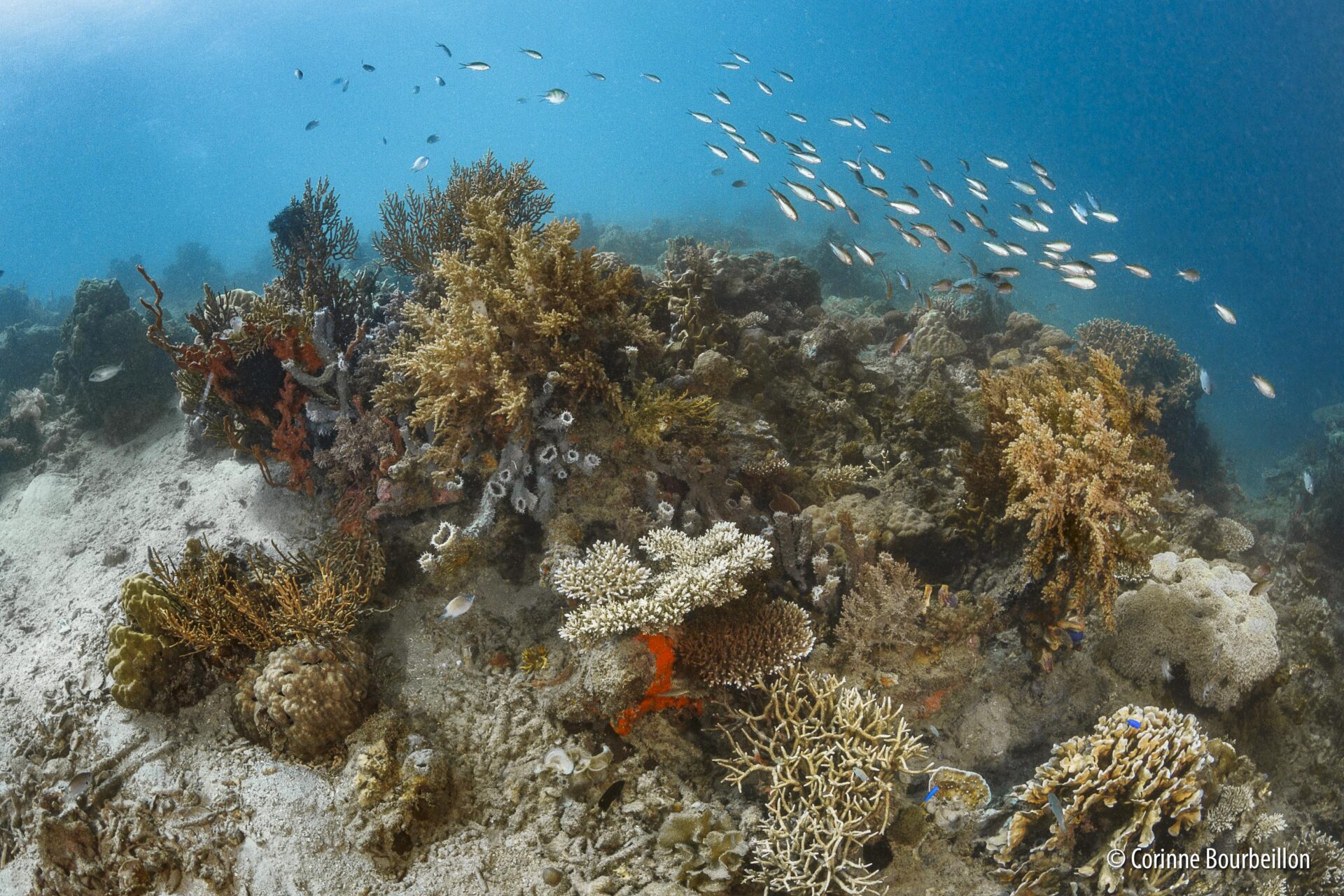
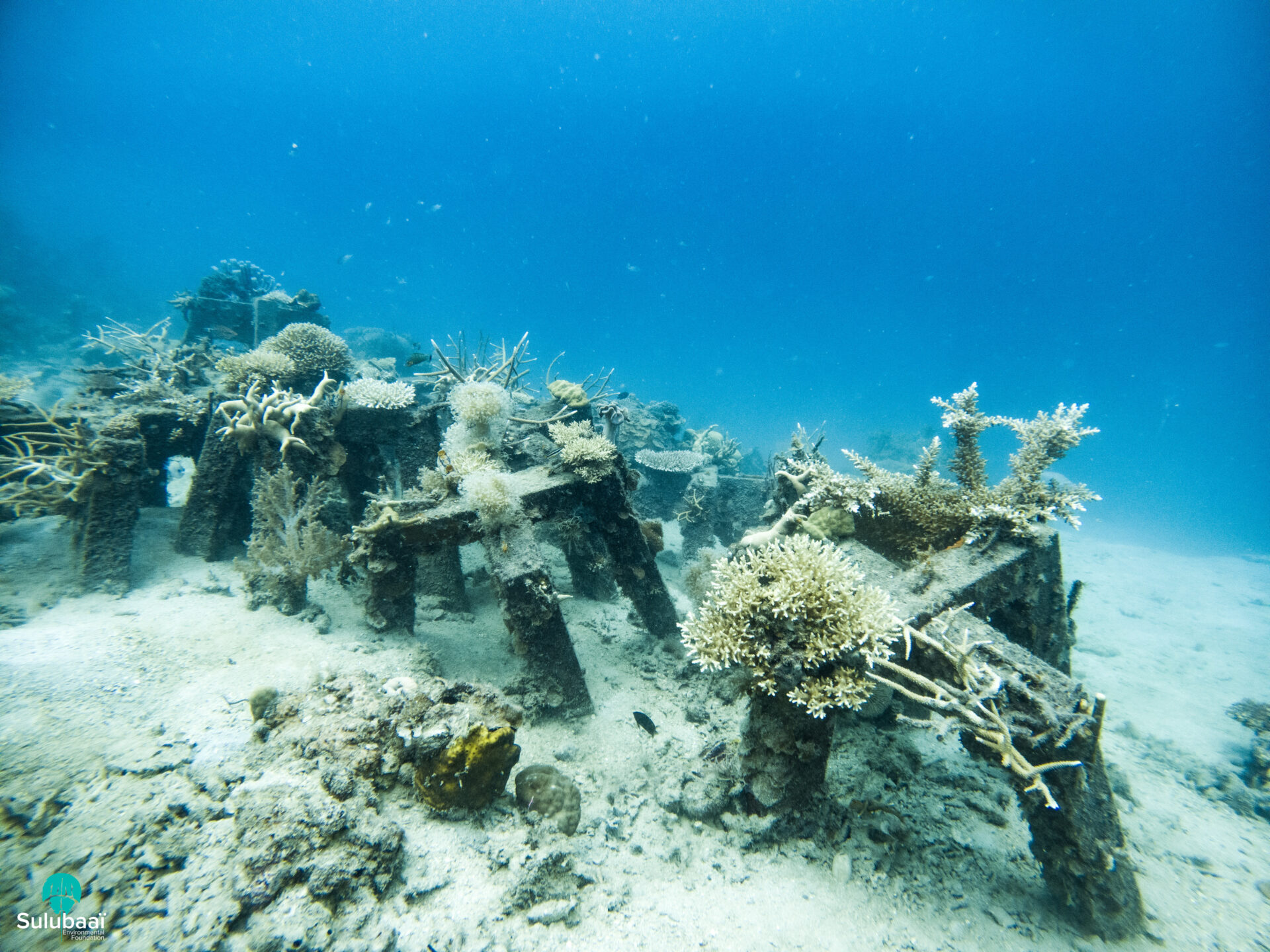
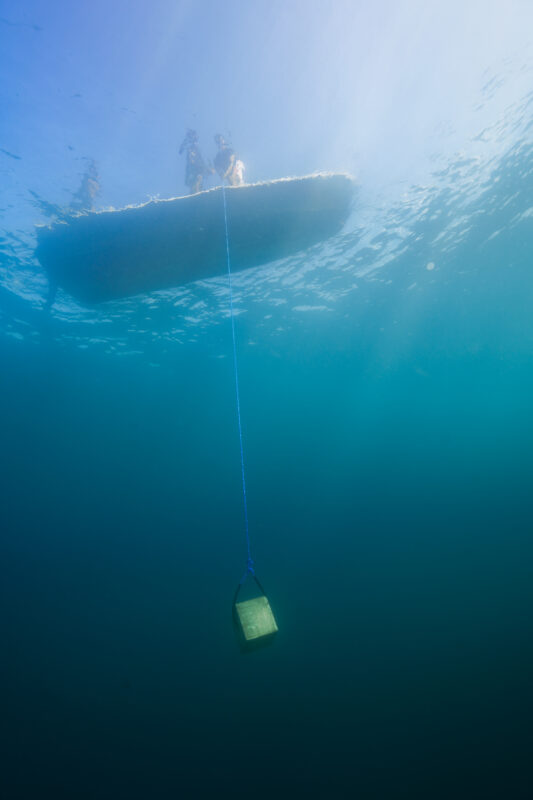
Across Shark Fin Bay, as across elsewhere in the Philippines, large amounts of coral have been destroyed by historic practices of dynamite fishing. It was in 2016 that members of the Foundation began to create artificial reef modules – under the name the Sulu-Reef-Prothesis – to support coral cuttings, re-establish coral cover, and increase the natural resilience of coral reefs.
In the years that followed, these artificial reefs also began to provide new habitats for marine life. Designed and manufactured on the island itself, the modules are built with the ability to host all types of coral and all without the need of any plastic or chemical components.
With a survival rate of 76.6% and an attachment rate of 70.9% in the first year alone alongside the ability to allow and promote the natural re-growth of corals, optimism is well -placed as to what can be achieved through the project. In the three years between 2017 and 2020, the Sulubaai Foundation had attached approximately 2,000 coral fragments.
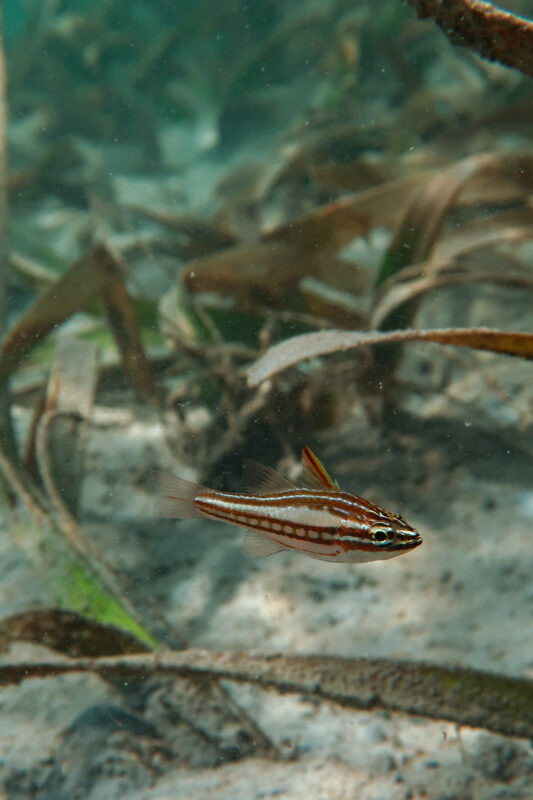
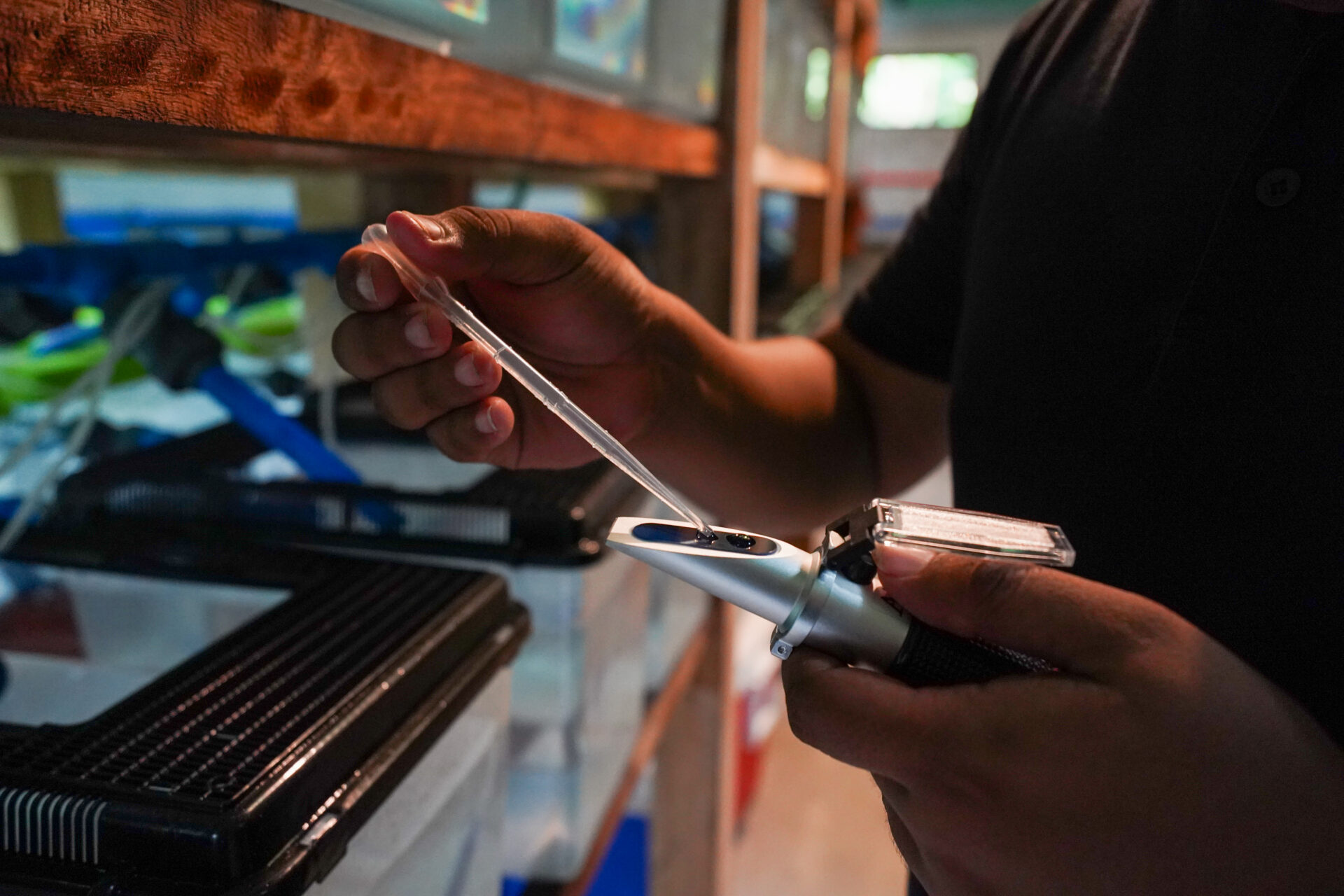
Alongside coral restoration are the continued plans to restock the biodiversity that lives among them. Three years ago, the Foundation kickstarted a fish restocking programme with the goal to release around 40,000 juveniles per year into marine protected areas. Adopting a technique known as Post-larvae Capture-Culture-Release (one developed by its project partner, Ecocean), the project spent three months raising young, juvenile fish in a controlled environment before finally releasing them into the nearshore waters.
By adhering to protocols that allow these fish to maintain their wild behaviours, the Foundation has witnessed survival rates increase by around 85% as wild populations increase. Off the back of successes here, more sustainable fish farms will also be developed with the local communities.
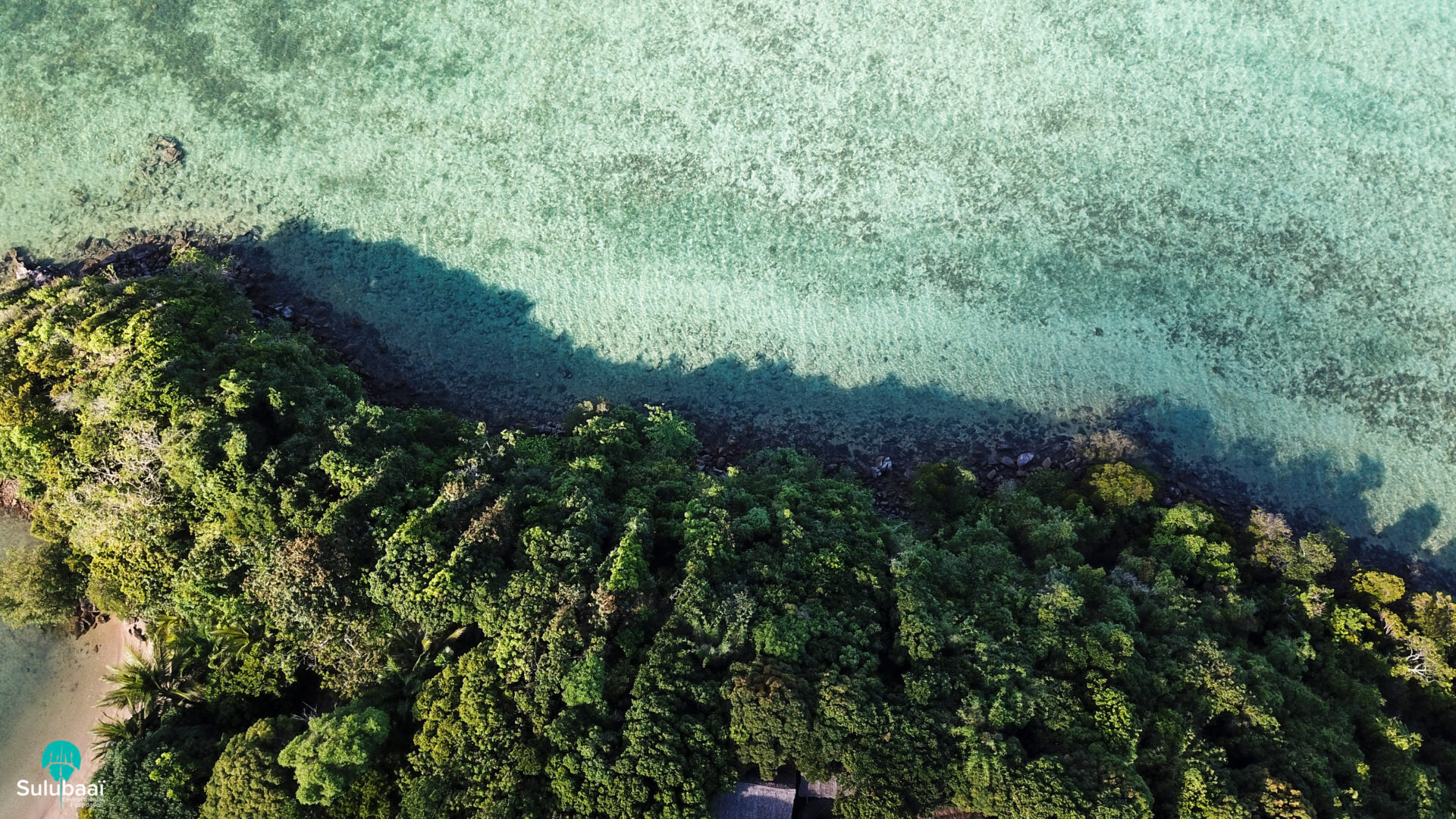
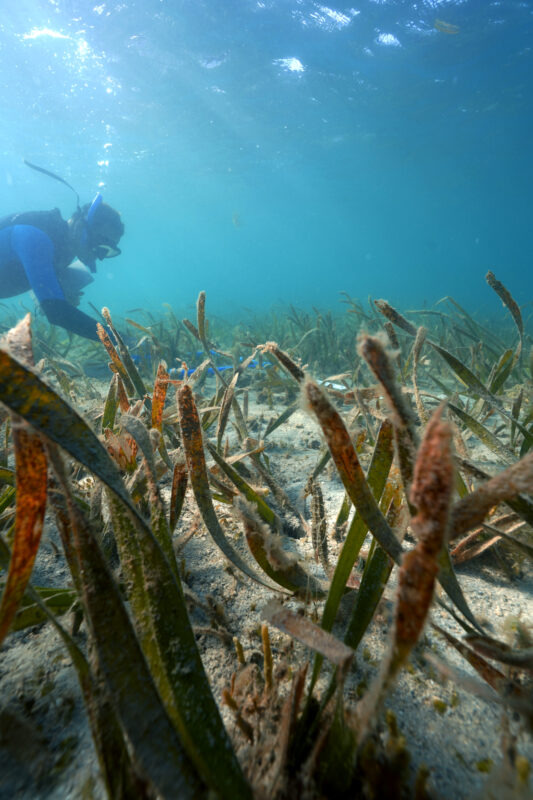
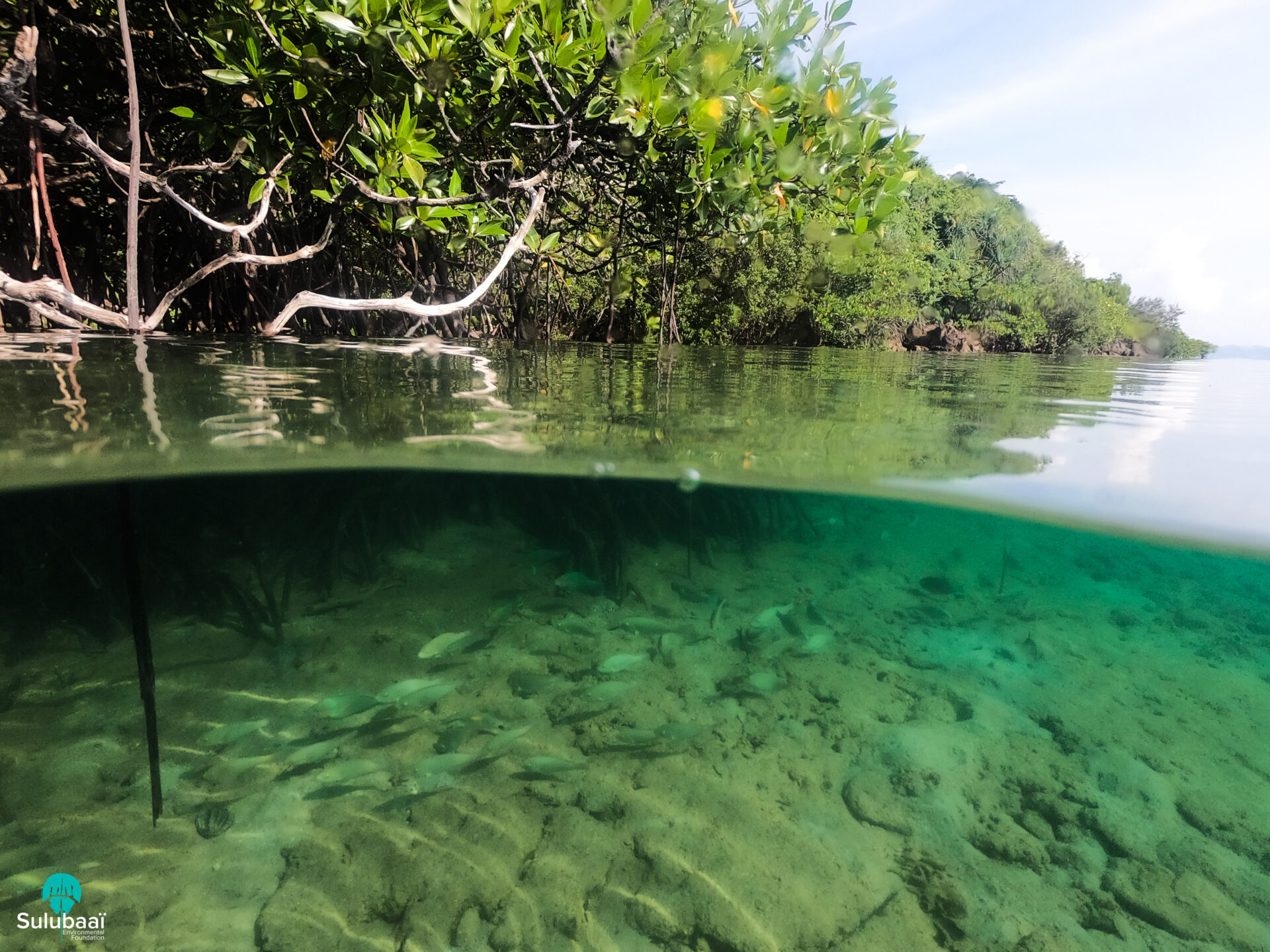
“The Shark Fin Bay marine reserve illustrates the power of science-based, community-led conservation. The outstanding efforts of the Sulubaaï Environmental Foundation and the local communities of Taytay to restore and protect coral reefs, seagrass beds, and mangroves show what can be achieved when people unite to bring nature back to life,” says Dr Sarah O. Hameed, Blue Parks Director and senior scientist.
“This initiative is a source of hope for coastal communities around the world.”

Printed editions
Current issue
Back issues
Enjoy so much more from Oceanographic Magazine by becoming a subscriber.
A range of subscription options are available.
