Descent to the Edge of Light: Secrets of Cabo San Lucas Submarine Canyon
In 2021 underwater photographer, Samantha Schwann piloted an ROV to explore the biodiversity within the ocean’s twilight zone. Joined by Cabo Shark Dive and the marine biologist Clara Calatayud, a team set out to explore the hidden depths of Cabo San Lucas Bay.
At 87 meters the water column was so thick with krill we couldn’t see to pilot. Tiny crustacean bodies pressed up against the camera glass so tightly the screen turned solid pink. I killed the lights, piloting in pitch black hoping to break away deeper. It didn’t work. Within seconds, a torrent rushed towards the camera, this time even thicker. Was this a hint of the canyon’s abundance?
In 2021 I began piloting a small ROV to explore and document biodiversity within the ocean’s twilight zone. Joined by Cabo Shark Dive Co-Founders Miguel Angel Eliceche Constantini, Jacopo Brunetti, and marine biologist Clara Calatayud, we set out to explore the hidden depths of Cabo San Lucas Bay: a submarine canyon known to attract animals as large as the blue whale.
Cabo’s iconic landscape and granite arch, El Arco, marks the collision of Gulf and Pacific seas. Underwater, the canyon is perhaps best known for its sand falls, one of the few places in the world where this rare process can be seen. In sunlit shallows, vibrant reefs of coral, fish, and invertebrates have drawn scientific interest since the 1950’s, protected as a marine preserve since 1973. Some areas of the canyon are as deep as the Eiffel Tower is tall, yet little has been recorded below 200 feet.
I’d been traveling to Cabo since 2018 to photograph sharks, which attracts significant populations of pelagic sharks including mako, blue, silky and hammerhead. It’s where I’d originally met Miguel, Jacob and Clara, local marine biologists and guides active in local shark research and conservation.
Shark vs Robots
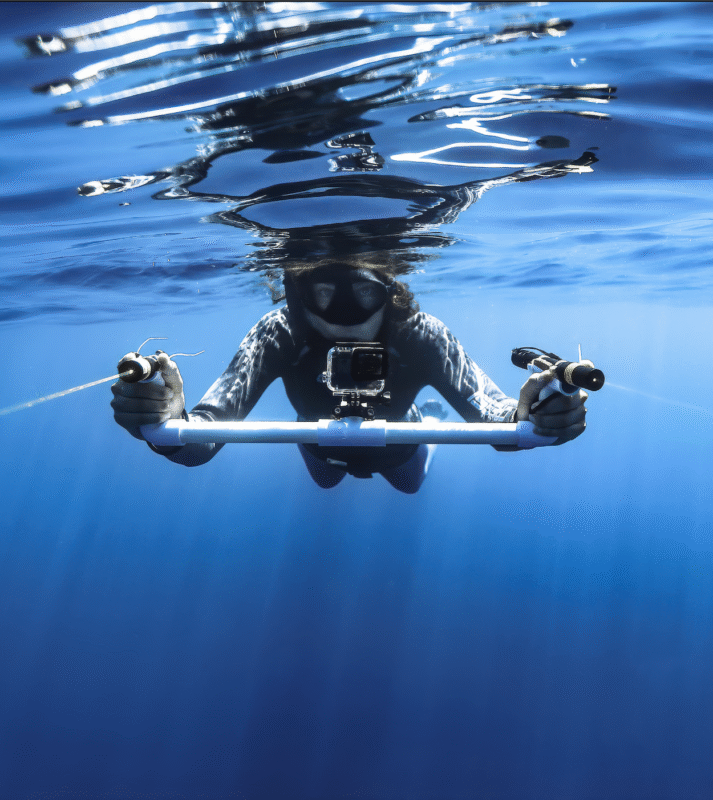
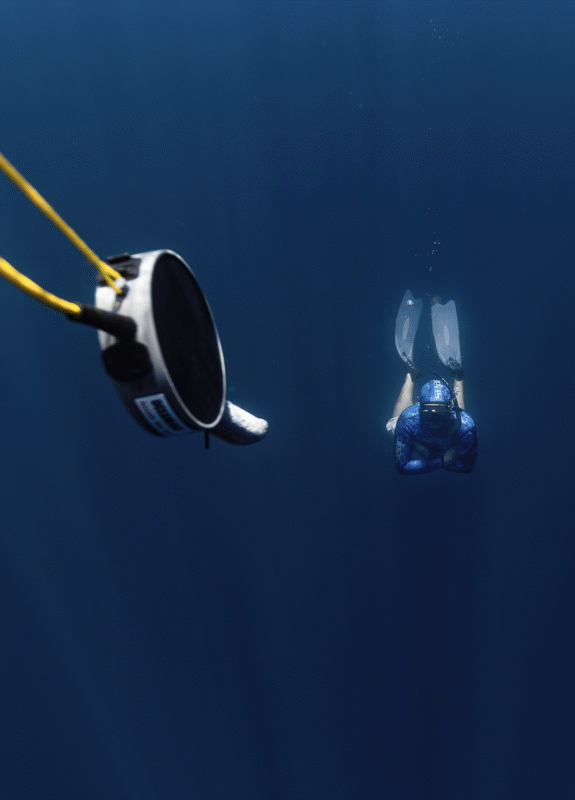
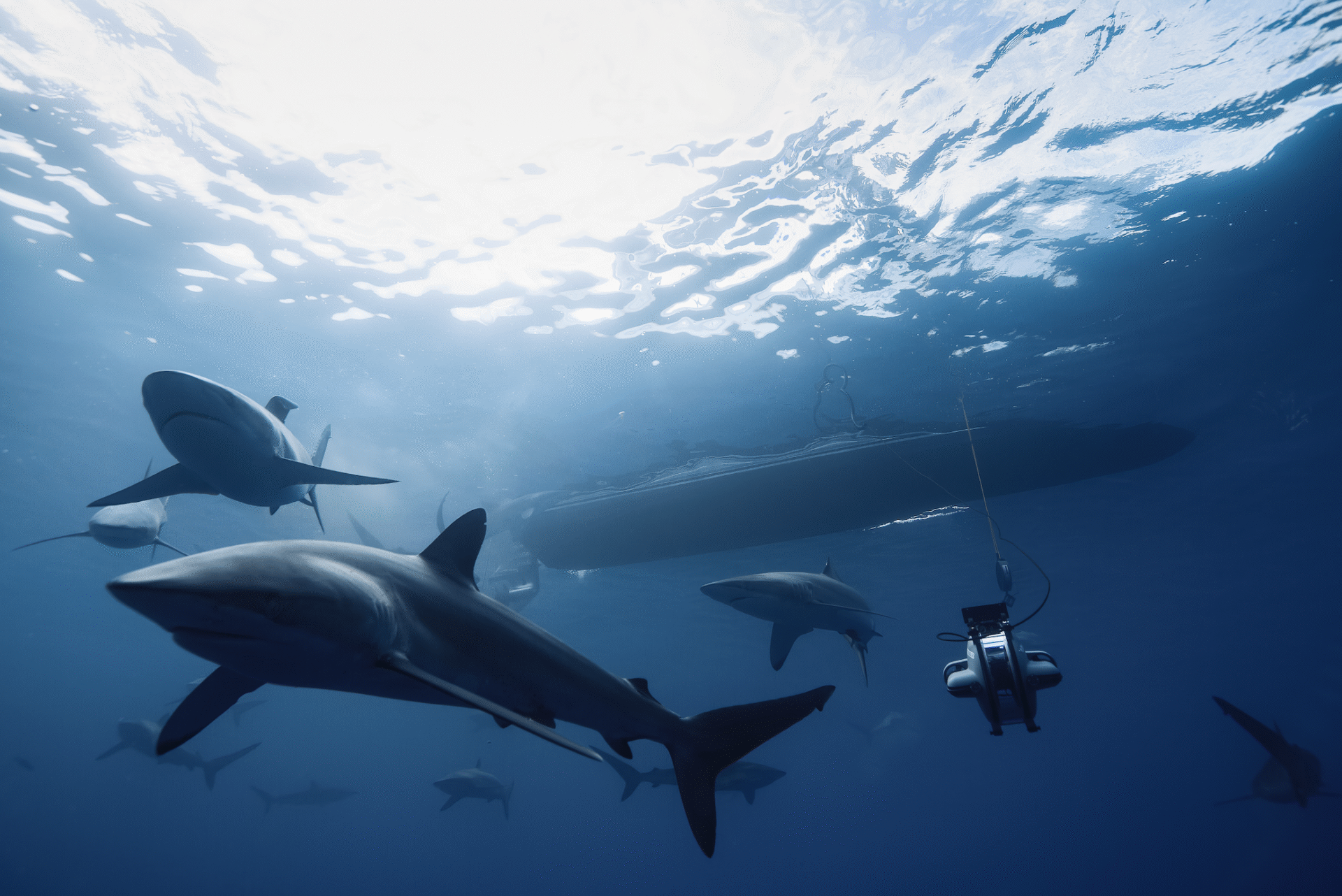
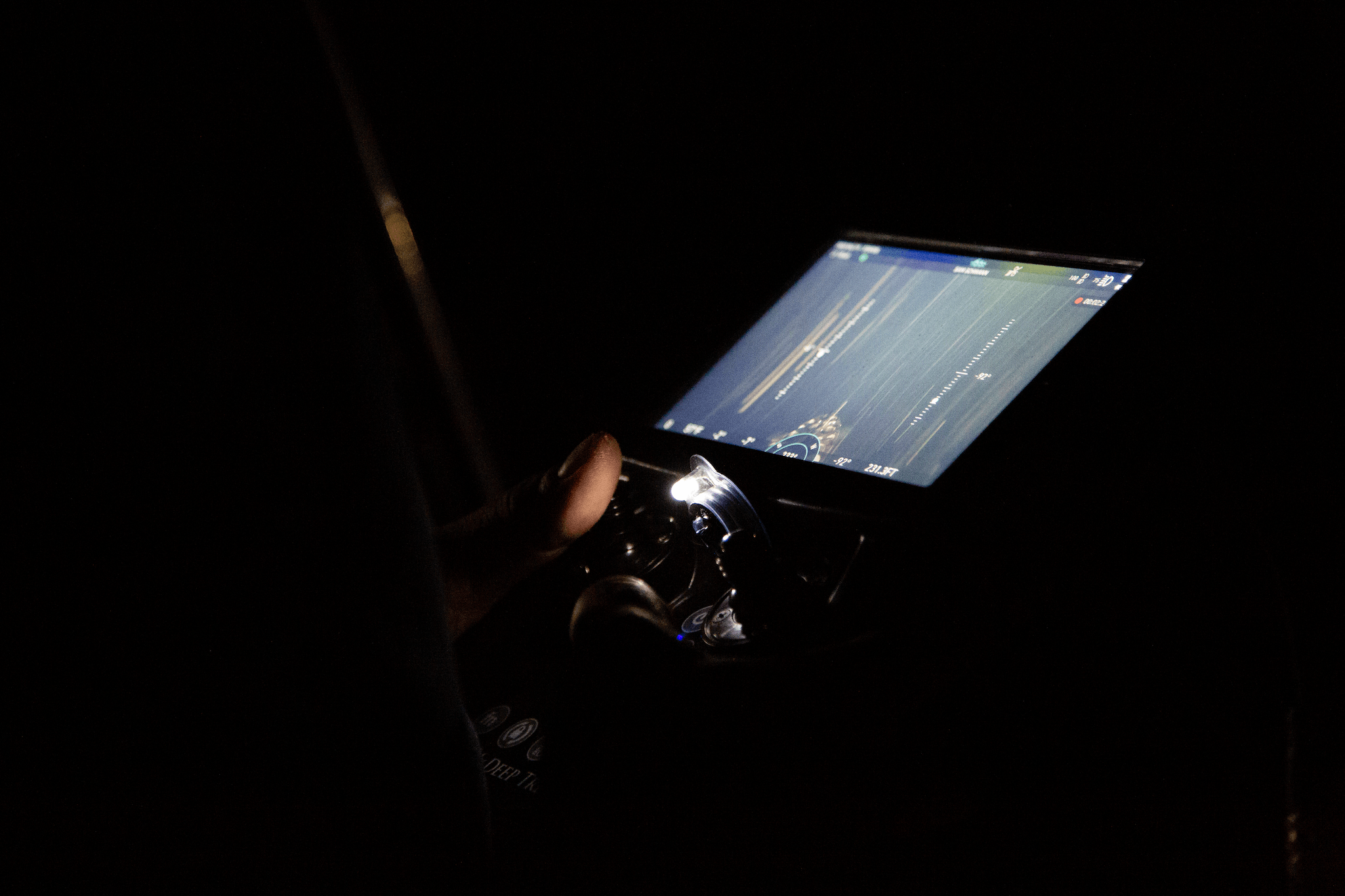
We weren’t sure how sharks might react to the ROV, but it seemed like a good idea to test at the surface before going deeper. My concern was the tether, as if severed would render the ROV powerless in dark seas. At 3mm thick, the umbilical would be like linguini to a shark.
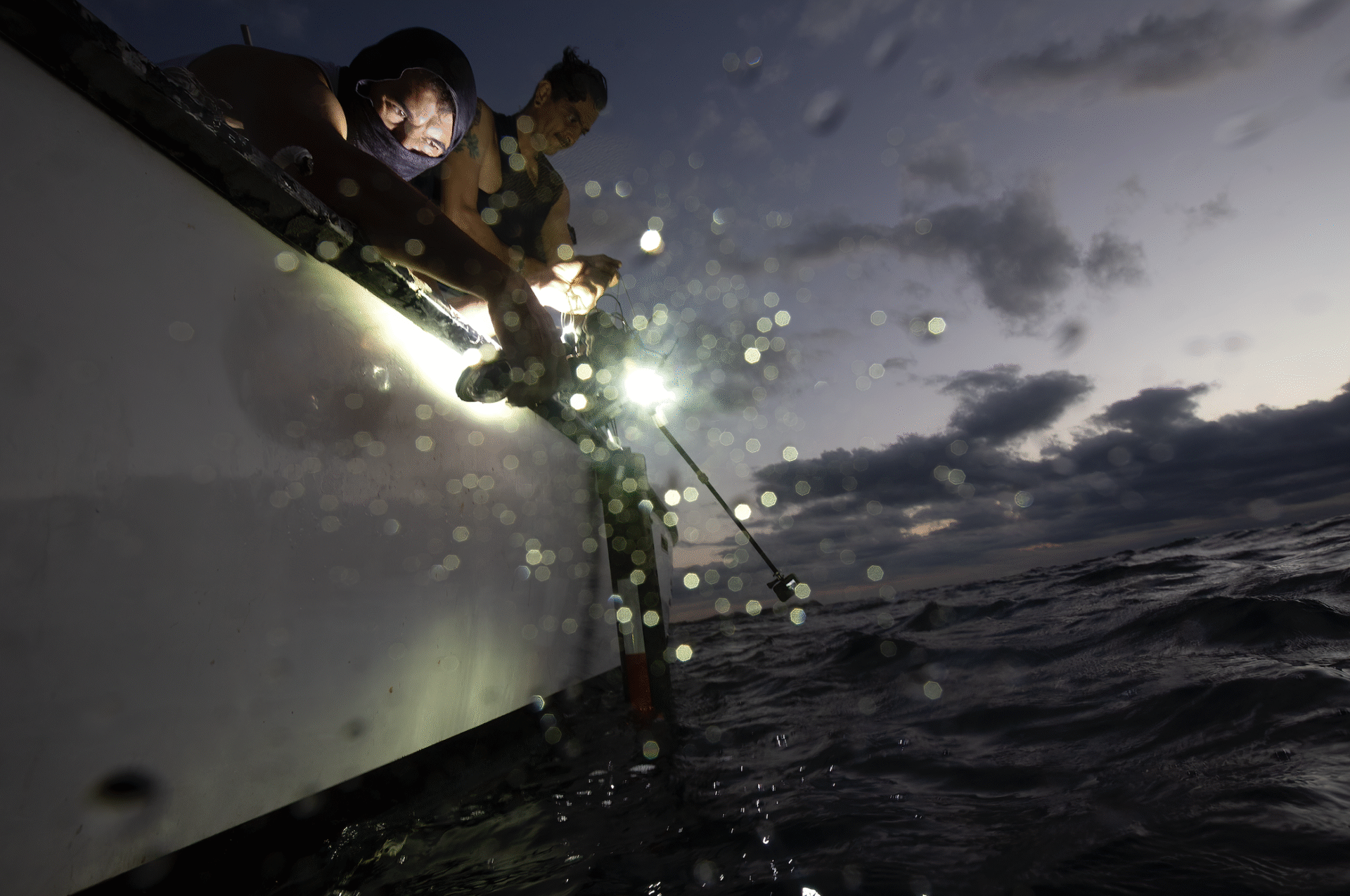
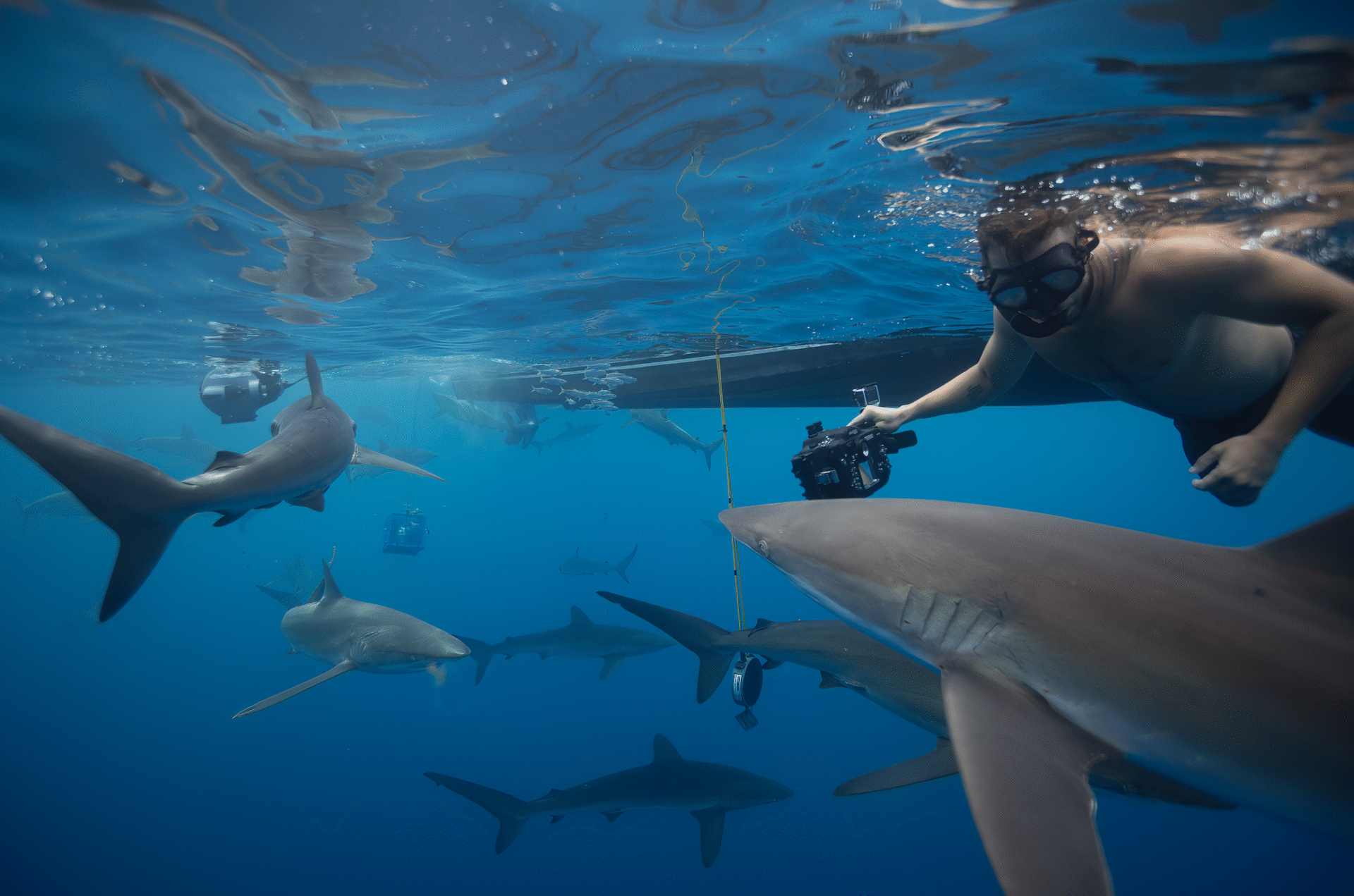
We tested with a single shark at first, which didn’t reveal much other than circling. Our larger focus group came in July, in a pool of around 80 sharks aggregating over a seamount. Jacob, Clara, and I slipped into the water to document, while Miguel piloted. Almost immediately, a receiving line of silkies took turns to deliver an investigative bump to the ROV. After several minutes it seemed to be just accepted, and Miguel piloted freely. While this guaranteed nothing, the ROV was still in one piece. We were ready to begin exploring, but it wasn’t sharks that we would need to be wary of…
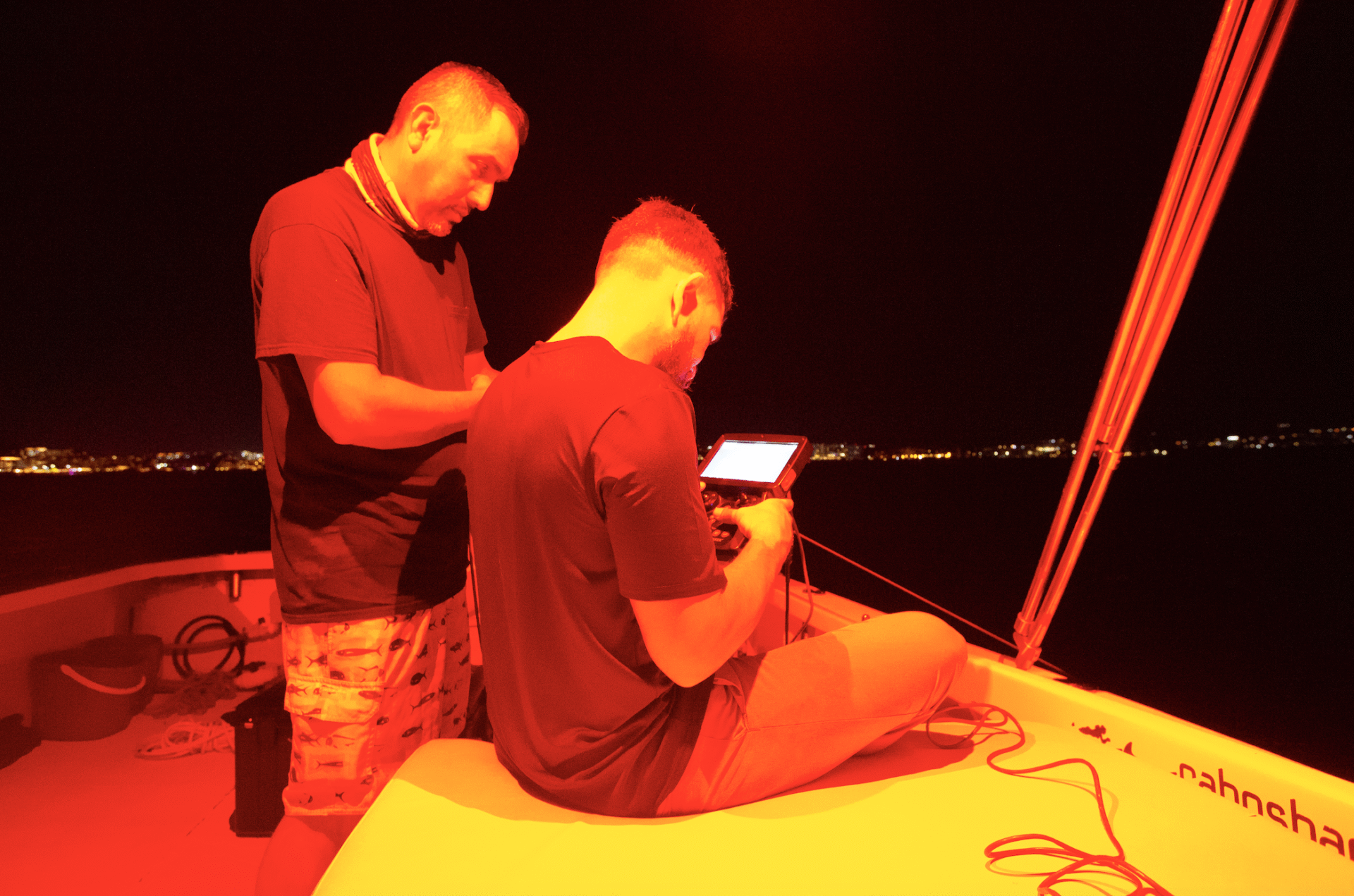
We operated at night to avoid heavy marine traffic, launching after sunset and often returning in the early hours of the morning. At dusk, billions of tiny animals rise from the deep in a layer so thick WWII sonar operators mistook it for the ocean floor. By biomass it’s considered the largest migration on the planet, and we were descending straight through it.
The ROV surged against a tide of marine snow, translucent forms and small fish. The lights lit up the water column, and a fast descent felt more like traveling through hyperspace than the ocean. It felt like a superhighway of tiny aliens, which just became chunkier and stranger the deeper we went. Flashes of bioluminescence started to pop around the ROV. Stopping to hover in the dark, traces of light began to streak across the video feed. We were surrounded by the migration, and it was moving past us in waves.
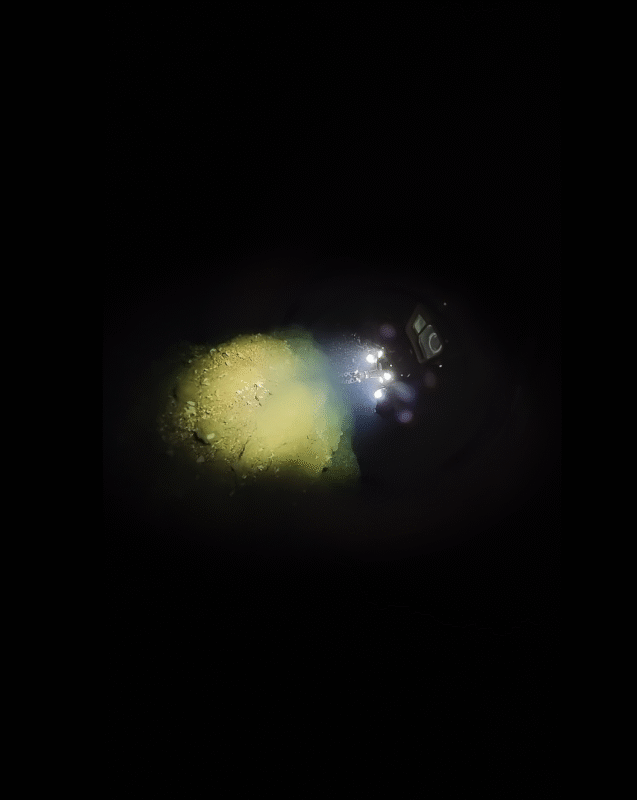
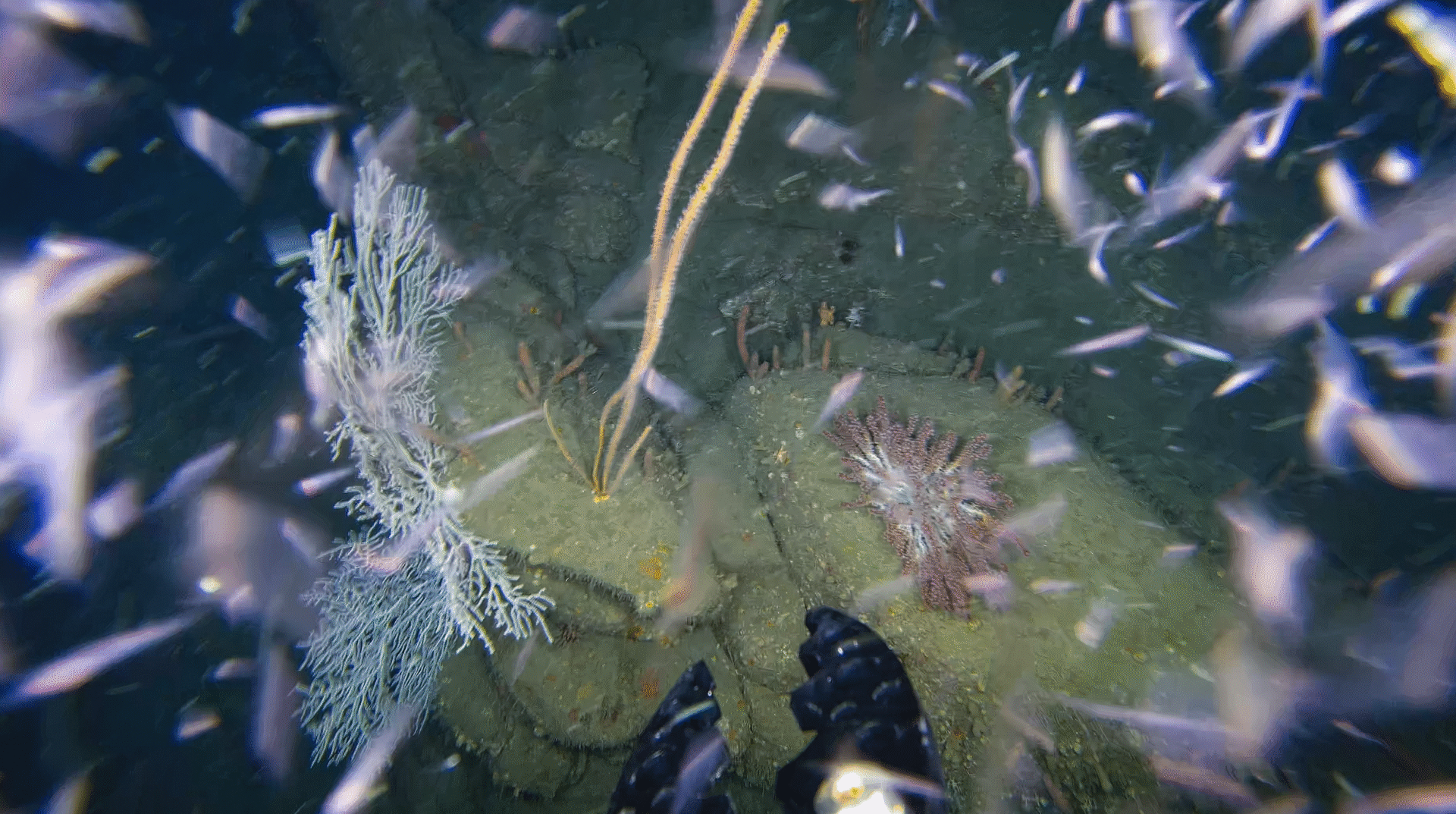
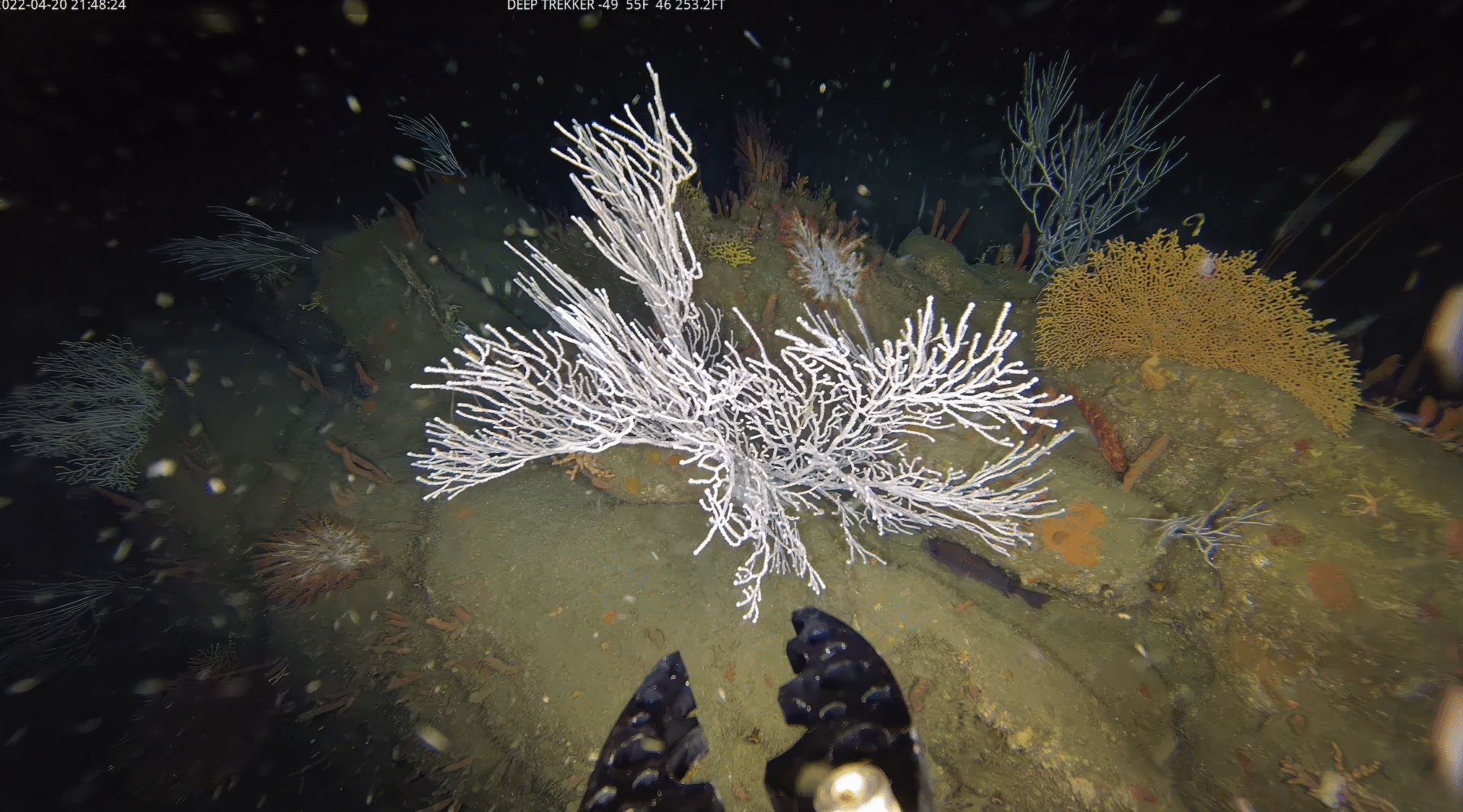
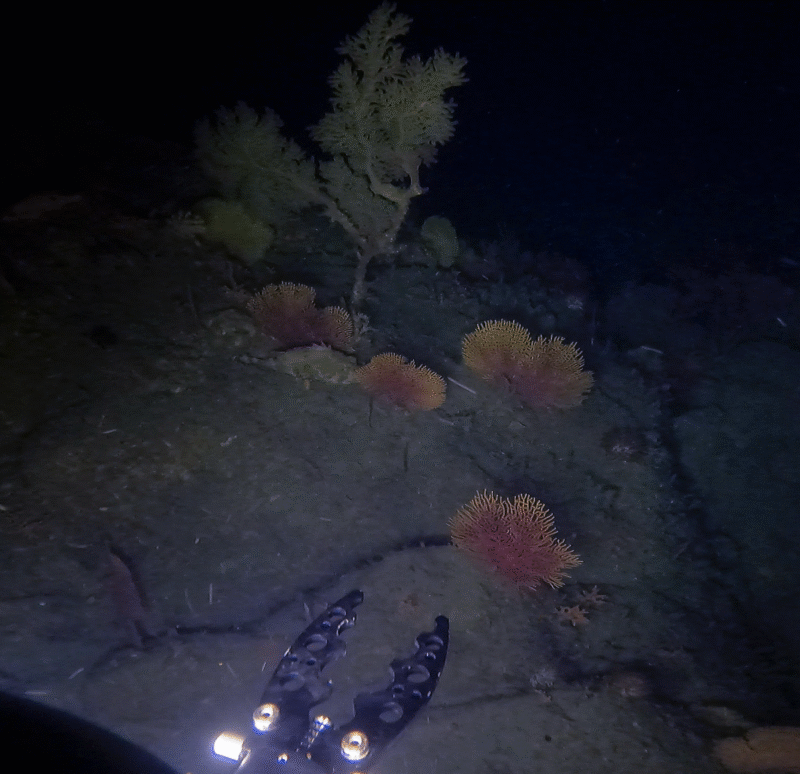
We were testing equipment modifications when we first stumbled across what looked to be a small patch of gorgonian. Miguel piloted closer, revealing a section of wall, decorated in colourful fans and lattices.
Clara later reflected that the realisation had “transported me back several years to the Mediterranean, where I had studied deep-sea coral ecosystems”. It was there that she had explored submarine canyons “rich in gorgonian coral forests, thriving in the dim depths.” It was now becoming increasingly to her that the underwater canyon off Cabo San Lucas played a “similarly vital role”, acting – as she would later relay – as a “biological funnel, channeling cold, nutrient-rich waters upward through a process known as upwelling.”
“This canyon connects coastal shallows with the deep ocean, creating a dynamic ecological corridor, and serves as a migratory checkpoint for sharks and many other species,” she said.
As expeditions continued, varieties of coral and gorgonians appeared in most places we explored, their exact species unknown without a sample. Some walls were crowded with white fans, flame-coloured lattices, and tree-like forms. Others held only small colonies, just inches tall. Even after 30 field days, where the forests ended was still unknown.
The coral wasn’t just beautiful; it seemed to be the foundation supporting life across nearly the entire food chain. Endemic butterflyfish hovered within the fans, wrasses tucked into crevasses, scorpionfish lay camouflaged.
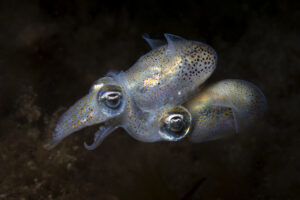
Small mesophotic squid cruised the forests, on occasion investigating the ROV in groups of 20 or more. Multiple species of eels roamed the surrounding sand, four of which unknown by experts consulted. Polychaeta worms marched along the seafloor. In July 2021, the ROV stumbled upon a mobula deadfall near gorgonian at 90metres. What had brought it here, so far into the canyon? The canyon walls were a storybook of life.
Operating at night krill seemed to be abundant, occasionally so dense it was hard to see to pilot. It felt a bit vulnerable being coated in the oceans favourite snack. A foundation of the food chain, research suggests they may concentrate in submarine canyons, one study finding more than 76% of persistent hotspots occurred within or adjacent to them (Santora et al., 2018). In footage from a camera mounted to the top of the ROV, small fish were recorded darting in and out of the krill – including one which I called “the flash”.
Appearing once an expedition, seemingly no matter where or how deep, the ROV would be visited by a long, ribbon-like fish (“the flash”) which would quickly explode away in a flash of light. Later suggested to be a possible Pacific Scabbardfish (Lepidopus fitchi), a species sitting squarely between predator and prey.
Into the blue
The next objective was to explore the water column just outside the canyon’s entrance, operating between 200-300 meters. I had upgraded to a heavier ROV to combat the current, and while technically easier, the area was known to attract a spectacular array of megafauna, including sharks, whales, and even orca. Just below 100 metres, sightings of a free-swimming remora, seemingly looking for a host. In a straight down full speed descent, the water column was filled with traces of life moving in all directions. Deeper, we passed through layers of groups of blinking blue lights. We wondered if they might be groups of squid but couldn’t tell for sure.
It was when they changed course that the problems began. The target seemed to be the lights, and the ROV was intercepted. All we saw were a few quick flashes of pink, but encounters led to propellor faults, damaged batteries, and a somewhat harrowing three-minute blackout at 966 feet. It felt a long way from the shelter of the canyon.
By December 2023, the objective was to reach the canyon floor, a goal since the beginning. Maps showed a “U” shaped bottom: a soft, sloping valley with rolling hills and five deep depressions in the centre. Maps showed irregular walls and an irregular floor, but one contour line at 630 seemed to hold steady the entirety of the canyon. What looked to be the only continuous feature, it seemed to be where steep walls seemed to transition to soft slope.
The canyon begins just a few hundred meters from Cabo’s sandy beaches, and it was an easy drop into a large sandy terrace just over 100 metres. Following a staircase of terraces and walls, large, jagged slabs of granite softened into sediment. The current felt eerily still, but even here was life. Orange, tubular organism attached to the rock, a sea star, fish in sediment. And of course, a visit from “the flash”.
Dives at the head was easy, but reaching the floor would be the most technically challenging of the project. Strong, shifting currents meant we couldn’t just drop straight down, and the underwater landscape might produce conditions we didn’t expect. I was hoping to avoid another tussle with squid.
We deployed early, allowing the current to drift us toward our target as the ROV made a seven-minute descent, reaching moon-like sediment at 844 feet only a few moments before reaching wall. For the first time we were exploring from the bottom up. Delicate, bell-shaped organisms clustered along the walls, translucent and fragile yet holding firm in strong current. As the ROV ascended the ROV meandered through a maze of white vessels, vases and tubes, which seemed to transition as we ascended.
Questions left behind
Each expedition was wildly different. It was only when reviewing the footage from over 200 locations did a larger picture emerge: of diversity, abundance, life, and death.
Cabo San Lucas Bay attracts visitors from around the world: cruise ships, pleasure boats, para-sailers, marine safaris, and snorkelers among the surface waters. But only a few hundred feet deeper, the canyon revealed a living forest marked by coral and sponge gardens, an oasis of life layered into the fabric of the canyon.
To better understand what the ROV recorded, images and video were shared with Benjamin Frable at Scripps Institution of Oceanography and Ross Robertson at the Smithsonian Tropical Research Institute, who generously lent their time and expertise in reviewing many of the records. Much still remains unresolved, including the delicate sponge gardens, for which I am grateful to Dr. José Antonio Cruz-Barraza for his expertise and guidance.
These weren’t scientific expeditions, but grassroots ocean exploration: a small ROV, a handful of people, and a canyon that has long held its mysteries. The canyon has guarded these secrets for centuries, and we plan to return to see what more it will reveal.

Printed editions
Current issue
Back issues

Enjoy so much more from Oceanographic Magazine by becoming a subscriber.
A range of subscription options are available.
