Chronic ocean warming drives 20% annual decline in fish biomass
Chronic ocean warming is driving a sustained annual decline of nearly 20% in fish biomass, while extreme marine heatwaves can temporarily boost some populations, masking long-term losses and complicating fisheries management in a rapidly warming ocean.
Chronic ocean warming is driving a near 20% annual decline in fish biomass across large swathes of the Northern Hemisphere, according to a startling new study led by scientists at the Museo Nacional de Ciencias Naturales and the National University of Colombia.
It’s a sweeping study that goes some length to paint the complexity of the picture. This is a story more nuanced than a simple downward trend, but one that has found that extreme marine heatwaves – those now increasing in frequency and intensity – can temporarily obscure this long-term decline by triggering short-lived biomass surges in some of the ocean’s colder regions.
Drawing on an unprecedented dataset of 702,037 biomass change estimates from 33,990 fish populations recorded between 1993 and 2021, the team examined trends across the Mediterranean, the North Atlantic and the Northeastern Pacific. The scale of the analysis provides critical insight for fisheries management and marine conservation at a time when global food security is under mounting pressure.
Marine heatwaves do not affect all species equally. Instead, impacts hinge on what scientists describe as a species’ “thermal comfort zone” – the temperature range in which it can grow and reproduce most effectively.
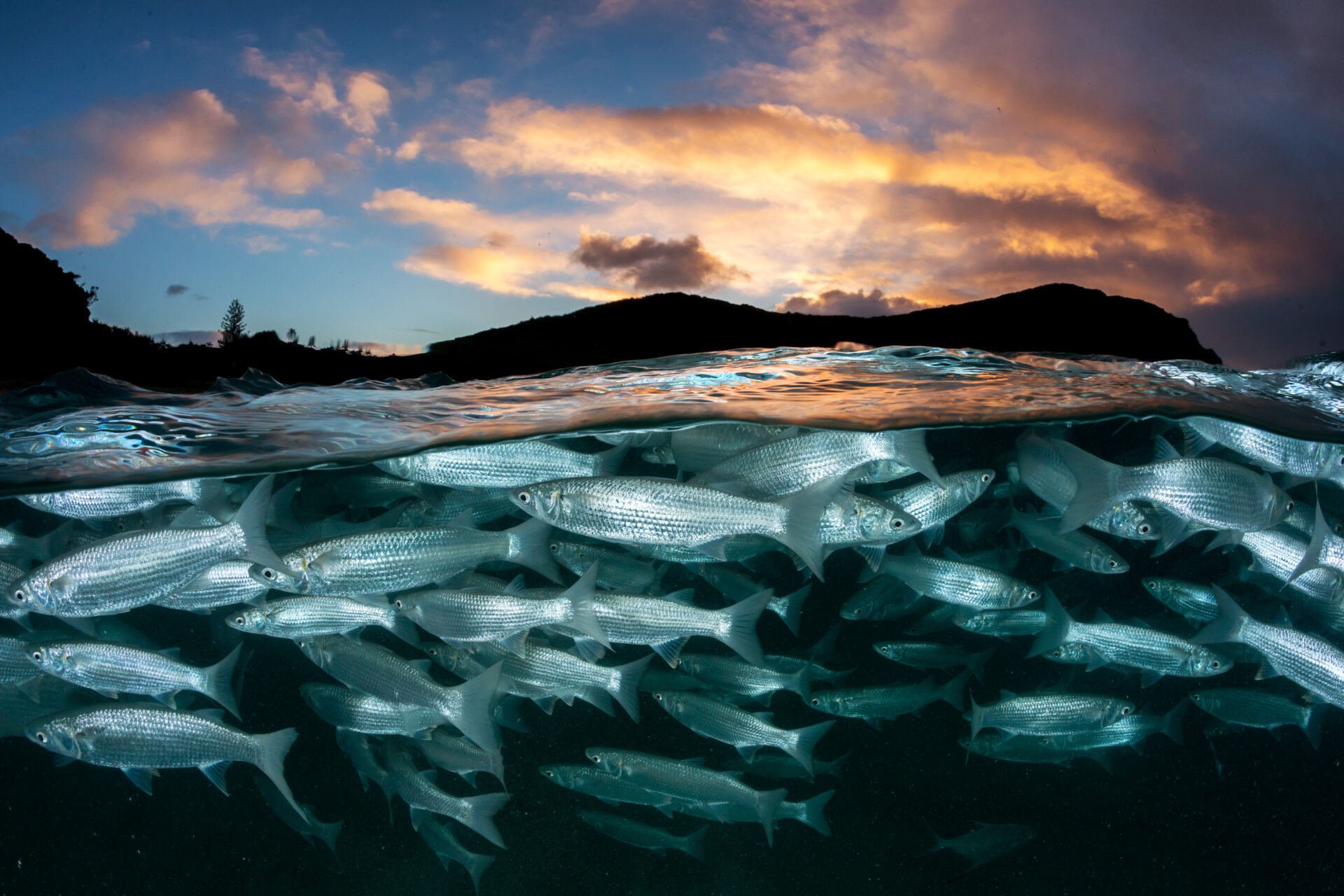
When extreme heat pushes already warm-water populations beyond that zone, the consequences can be severe. In these regions, biomass can plummet by as much as 43.4%. Conversely, fish populations in cooler waters may temporarily flourish as temperatures rise, with biomass increases of up to 176%.
“Although this sudden increase in biomass in cold waters may seem like good news for fisheries, these are transient increases. If managers raise catch quotas based on biomass increases caused by a heatwave, they risk causing the collapse of populations when temperatures return to normal or when the effect of long-term warming prevails, because these are short-lived increases,” warns MNCN researcher Shahar Chaikin.

In other news




While heatwaves generate dramatic headlines, the study identifies chronic ocean warming as the dominant stressor.
“When we remove the noise of extreme short-term weather events, the data show that this warming is associated with a sustained annual decline in biomass of up to 19.8%,” explained Chaikin. “Unlike extreme short-term weather fluctuations – which can vary dramatically – this chronic warming exerts a constant negative pressure on fish populations in the Mediterranean Sea, the North Atlantic Ocean, and the Northeastern Pacific Ocean,” adds National University of Colombia researcher Juan David González Trujillo.
In other words, beneath the volatility of extreme events lies a steady erosion of marine productivity – one that is far more consequential over time.
The findings raise urgent questions about how fishery resources are managed in an era of rapid climate change. According to the authors, traditional static management models are no longer fit for purpose. They instead propose a three-level framework built on rapid response, long-term planning and international cooperation.
In the short term, so-called “climate-ready plans” would enable immediate protective measures when marine heatwaves strike – particularly at the warm edges of species’ ranges, where sudden biomass crashes are most likely.
At the same time, policymakers must not lose sight of the quieter but relentless decline linked to long-term warming. Sustainable quotas and recovery strategies – the researchers argue – should be calibrated to reflect this documented downward trajectory.
Finally, as ocean temperatures shift, so too do species distributions. Fish striving to remain within their thermal limits are increasingly crossing national boundaries, complicating governance frameworks built around static stocks.
“A species population may be declining in one country but increasing in another. In this context, static management models are outdated. Effective conservation requires international coordination and joint resource-management agreements,” Chaikin added.
Although cooler regions may offer fleeting fishing opportunities as waters warm, the researchers caution against complacency.
“Managers must balance localised increases with long-term declines extremely carefully to avoid overexploitation,” said Miguel B. Araújo, also of MNCN-CSIC. “As ocean warming continues, the only viable strategy is to prioritise long-term resilience. Management measures must plan for the biomass decline expected in an increasingly warm ocean,” he concluded.


"*" indicates required fields
Printed editions
Current issue
Back issues
Back Issues
Issue 43 Sir David Attenborough’s ‘Ocean’
Enjoy so much more from Oceanographic Magazine by becoming a subscriber.
A range of subscription options are available.