Citizen scientists find largest known coral on Great Barrier Reef
Citizen scientists participating in the Great Reef Census have discovered the largest known coral colony on the Great Barrier Reef, spanning 111 metres. Verified through 3D mapping, the find highlights the importance of large-scale monitoring and community-led reef conservation efforts.
A mother and daughter team of citizen scientists surveying the Great Barrier Reef have identified what is believed to be the largest known coral colony ever documented on the reef, in a discovery that underscores the growing role of community-led science in marine conservation.
The find was made during the Great Reef Census, an initiative run by Citizens of the Reef as the pair were surveying the area from their family vessel. Sophie Kalkowski-Pope and her mother, Jan Pope first encountered the vast coral structure while contributing imagery to the programme.
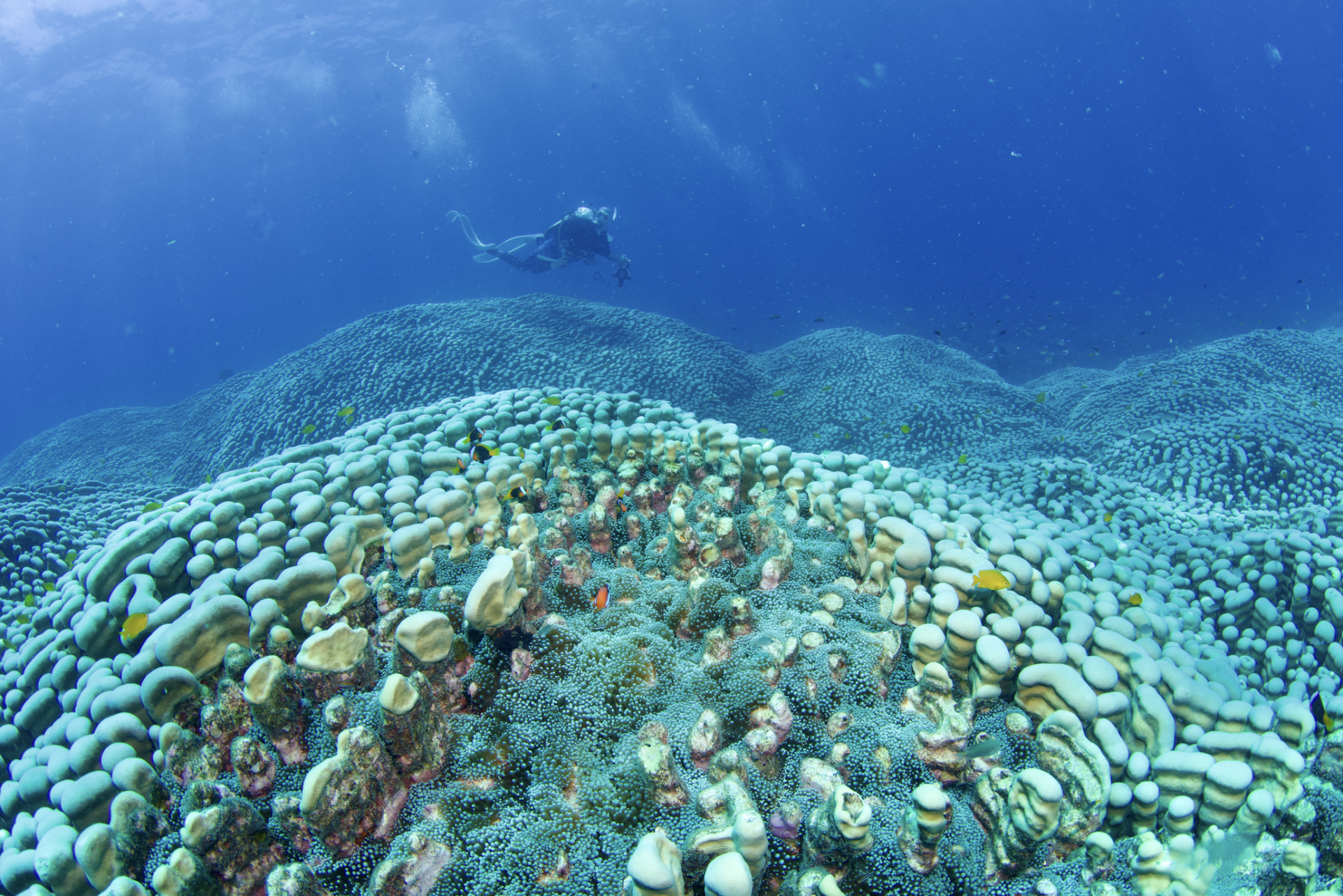
Preliminary measurements indicate the colony stretches approximately 111 metres at its maximum length and covers an estimated 3,973 square metres – roughly the size of a soccer field. By comparison, some of the largest individual colonies of the same species recorded internationally measure between 30 and 35 metres, according to reporting by ABC News.
The discovery was subsequently verified and mapped using coordinated in-water measurements, surface-based photogrammetry and three-dimensional spatial modelling.
“I knew right from the minute we dropped in that it was something special,” said Sophie Kalkowski-Pope. “My mum and I dive from our family boat, and taking part in the Great Reef Census has given us the opportunity to really explore the full scale of what was there,” said Jan Pope, who first encountered the coral alongside her daughter.
“When I got in the water, I’d never seen coral growing like this before,” she said. “It looked like a meadow of coral. It just went on and on.”
The Great Reef Census was established to enable large-scale spatial reconnaissance across vast sections of the reef – an approach designed to complement existing monitoring efforts.
“The Great Reef Census helps us to locate the most important sources of reef recovery, helping scientists and managers better target their protection,” said Prof. Pete Mumby from the Marine Spatial Ecology Lab at the University of Queensland.
Bringing together tourism operators, Traditional Owners, research teams, recreational vessels, divers, snorkellers and community participants, the Census mobilises more than 100 vessels to collect imagery from across the reef. The data generated supports reef managers in directing limited conservation resources to areas of highest ecological value.

In other news
“To drive conservation at the scale now required for reefs around the world, we need to engage local reef communities, leading scientists, and people power to target the best places for intervention and conservation impact”, said Andy Ridley, CEO of Citizens of the Reef.
“The Great Reef Census was developed to compliment existing monitoring programs by gathering large-scale data. This is made possible by people already out on the water, like Sophie and Jan, and thousands of citizen scientists around the world.”
By combining in-water imagery with AI-supported analysis and structured review by volunteers, Citizens of the Reef converts public participation into data suitable for scientific and management use.
Following the initial sighting, a coordinated verification effort combined manual underwater measurements with high-resolution surface imagery to construct a detailed three-dimensional model of the coral.
Spatial modelling was undertaken in collaboration with the Queensland University of Technology Centre for Robotics, with imagery capture supported by Biopixel.
“The benefit of this kind of spatial data is that we can take measurements at very high resolution,” said Serena Mou, Research Engineer at the QUT Centre for Robotics. “It also means we can return in future months and years and make direct, one-to-one comparisons to understand how the coral changes over time.”
The site itself is characterised by strong tidal currents and comparatively low exposure to cyclonic wave energy — environmental factors now under investigation as scientists seek to understand how such a vast coral structure has persisted.
Scientists stress that the identification of an exceptionally large coral colony should not be interpreted as evidence that reef systems are recovering or that climate pressures are easing. Rather, it highlights the uneven responses of reef ecosystems to environmental stress — and the importance of locating and safeguarding potential strongholds.
“Discoveries like this are significant because the reef still holds so many unknowns, and we don’t know what we stand to lose,” said Sophie Kalkowski-Pope. “I think this shows why reef conservation efforts like the Great Reef Census matter now more than ever.”
The coral’s exact location is being withheld to reduce the risk of unintended impacts. Imagery has been reviewed to prevent site identification, and relevant management authorities have been informed to support long-term stewardship.


"*" indicates required fields
Printed editions
Current issue
Back issues

Enjoy so much more from Oceanographic Magazine by becoming a subscriber.
A range of subscription options are available.
