Hidden deep-sea mining exploration brought to new light
An upgraded transparency portal from Global Fishing Watch and UC Santa Barbara brings unprecedented visibility to deep-sea mining, tracking vessel activity, exploration zones and emerging industrial impacts across the world’s oceans.

Global Fishing Watch and the Benioff Ocean Science Laboratory at UC Santa Barbara have introduced a major upgrade to Deep-Sea Mining Watch, an open-access platform that reveals – in real time – where vessels linked to seabed mineral exploration are operating across the globe.
The newly-refreshed portal offers a window into deep-ocean industrial activity, enabling users to trace vessel movements by region, timeframe or speed; overlay exploration routes with fishing effort and other Global Fishing Watch datasets; and view International Seabed Authority (ISA) license blocks alongside areas reserved or protected from mining.
This is now all accessible in a single interactive map designed to make this opaque industry visible for the first time.
“The deep ocean has long been a black box for human activity,” said Dr. Douglas McCauley, director of the Benioff Ocean Science Laboratory. “Deep-Sea Mining Watch provides the first global window into one of the planet’s last industrial frontiers. By adapting the same technology that transformed transparency in global fisheries, anyone – from scientists to policymakers to citizens – can see where vessels linked to deep-sea mineral activity are operating.”
Built on Global Fishing Watch’s proprietary analytics, the platform ingests automatic identification system (AIS) data – real-time broadcasts of a vessel’s identity, position, speed and course – and cross-references it with exploration footprints and timelines. The latest release highlights more than 40 vessels known to participate in mineral-related activity and overlays more than 30 exploration areas across the Pacific, Atlantic and Indian Oceans.
According to McCauley, the portal is intended to empower a wide array of ocean stakeholders: from tuna processors worried about impacts on fishing grounds to Native Hawaiian navigators watching for overlap with voyaging routes.
“Data is power,” he said. “And Deep-Sea Mining Watch puts data and power back in people’s hands.”
In other news
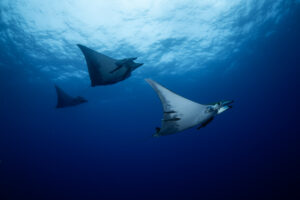

While no commercial deep-sea mining licenses have yet been approved, exploration is well underway. The ISA, which oversees mineral-related activities in areas beyond national jurisdiction, has issued contracts covering more than 1.5 million square kilometres of ocean floor.
“The global race for minerals has set off a modern-day gold rush into the depths of our ocean,” said Dr. Diva Amon, science advisor at the Benioff Ocean Science Laboratory. Abyssal plains, hydrothermal vents and seamounts hold cobalt, nickel, copper and manganese, key ingredients in batteries and other modern technologies.
Amon has cautioned, however, that these environments are “among the most fragile and least understood on Earth,” adding that mining could cause irreversible biodiversity and habitat loss and undermine deep-ocean processes that support climate regulation and fisheries.
Amon hopes the tool will underpin more transparent, data-driven conversations among governments, intergovernmental bodies such as the ISA, researchers, civil society groups and industry.
“By making exploration activities visible to all, Deep-Sea Mining Watch supports greater accountability and can help the world understand what’s at stake,” Amon said.
As industrial pressure increases on the global ocean, transparency tools have emerged as critical infrastructure for monitoring how – and where – human activity expands into previously inaccessible realms.
“Transparency is essential to understanding how human activity is expanding into the deep ocean and what impacts it will have,” said Paul Woods, chief innovation officer at Global Fishing Watch. “We need to make it the norm when it comes to ocean governance.”
Woods noted that the revamped mining portal aligns with the organisation’s broader mission to deliver oversight across all major ocean industries. Global Fishing Watch’s open ocean project, slated for completion by 2030, aims to publish a comprehensive public map displaying the activity of more than a million ocean-going vessels – from global fishing and shipping fleets to smaller coastal craft and tens of thousands of offshore platforms.


"*" indicates required fields
Printed editions
Current issue
Back issues
Back Issues
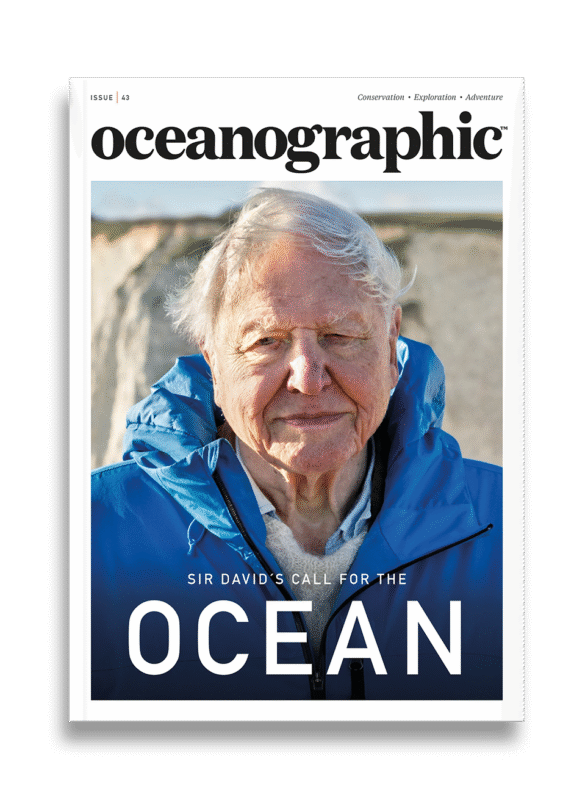
Issue 43 Sir David Attenborough’s ‘Ocean’
Enjoy so much more from Oceanographic Magazine by becoming a subscriber.
A range of subscription options are available.