Mobile lab gives Caribbean's iconic Queen conch new hope
A mobile hatchery in the Bahamas has successfully hatched its first queen conch larvae, marking a significant step in a community-led effort to restore a species facing commercial extinction within 15 years.
On the island of Eleuthera in the Bahamas, a solar-powered laboratory on wheels has just produced its first queen conch – and with it, a new reason for hope for one of the Caribbean’s most culturally significant and ecologically vital marine species.
It was in April this year that researchers from the Florida Atlantic University’s Harbor Branch Oceanographic Institute introduced the first egg masses into the system and witnessed the first successful hatch. Approximately 200 newly metamorphosed conch have since been produced from that first egg mass, with more than 100 additional individuals from a second egg mass completing metamorphosis. These developments mark a critical milestone for the project.
“We are incredibly excited to reach these milestones because it represents far more than the successful launch of a mobile hatchery,” said Dr Megan Davis, director of FAU Harbor Branch’s Queen Conch Lab. “It demonstrates what is possible when science, conservation and community come together with a shared purpose. Seeing the first egg masses and hatch in the mobile lab means we are now actively growing the next generation of queen conch for restoration, for healthy seagrass ecosystems and for the communities across The Bahamas. It’s a transformative and hopeful moment for conservation.”
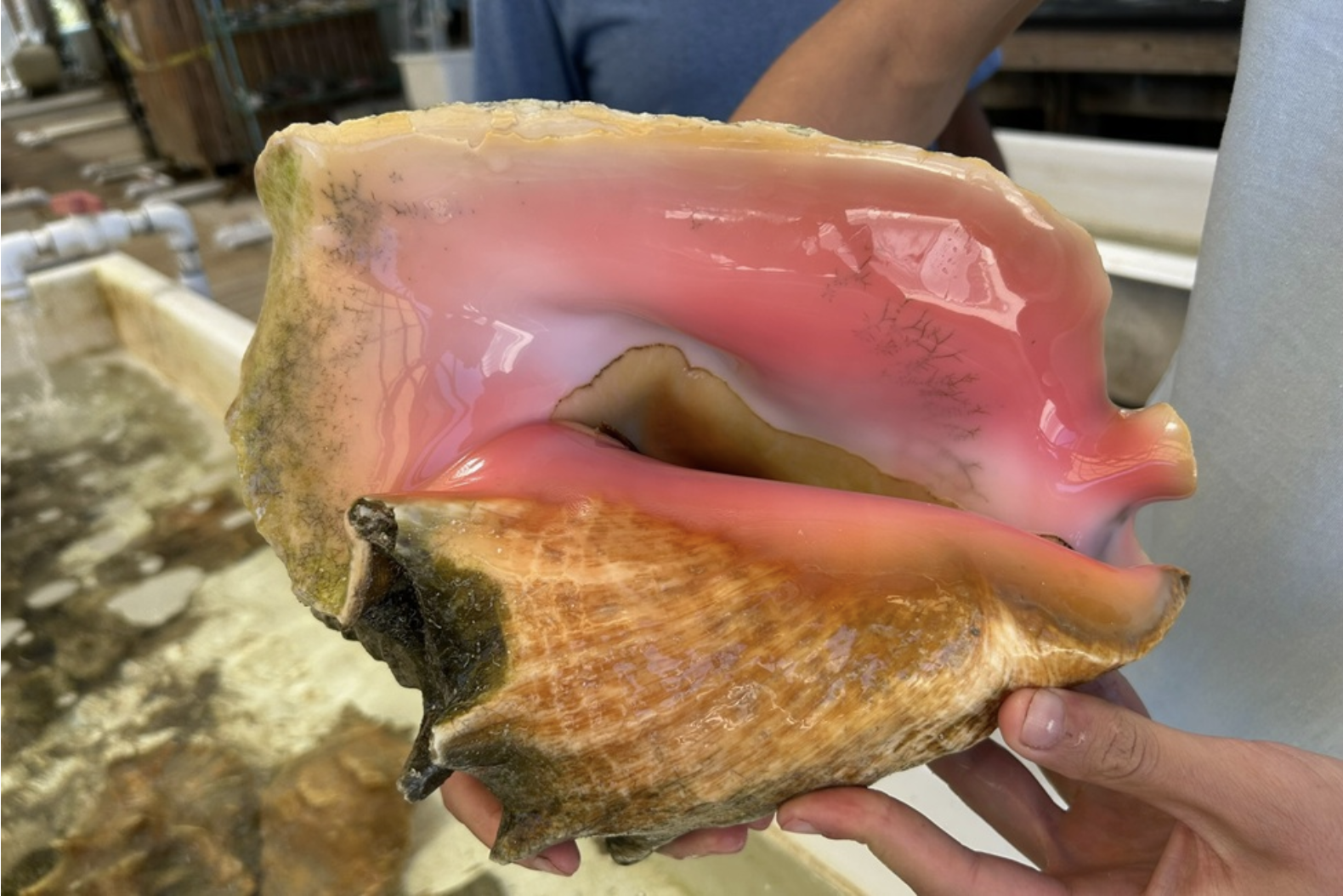
Native to Florida and the Caribbean, the queen conch is far more than the iconic shell sold in seaside markets. The large marine snail plays a vital role in maintaining healthy seagrass beds, grazing on algae and helping preserve ecosystems that underpin fisheries and marine biodiversity across the region. Yet populations have suffered steep declines through decades of overfishing and habitat degradation. Between 1980 and 2020, approximately 31,000 tons were harvested annually across the Caribbean – nearly $39 million per year in fisheries value.
Today the species is listed as ‘threatened’ under the Endangered Species Act, and surveys suggest that commercial fishing in the Bahamas could become unsustainable within the next 10 to 15 years without intervention. It’s a matter that makes the latest development from FAU and those working with them from The Island School’s Cape Eleuthera Institute and supported by Chef José Andrés’ Longer Tables Fund, all the more critical.
During breeding season, a single conch can produce up to 10 egg masses, each containing as many as 500,000 eggs. At approximately nine o’clock each evening, those eggs hatch into microscopic larvae known as veligers, which drift on ocean currents feeding on microscopic algae. Over a 21-day larval cycle, the veligers develop through successive stages before metamorphosing into tiny crawling snails that bury themselves in seagrass beds. “Fewer than 1% survive to adulthood in the wild,” said Davis. “Queen conch reach adulthood at approximately 4 to 5 years of age, when the lip of their shell thickens to about 9 to 15 millimeters, and they can live up to 40 years, carrying the same shell throughout their entire lives.”

In other news
The mobile lab – called the Queen Conch Mobile Lab – is designed to improve those odds considerably. Measuring approximately 26 feet by 8 feet, the self-contained unit is solar-powered and fitted with specialised saltwater and aeration systems to support sensitive larvae and algae cultivation. Once connected to a local seawater source, it becomes a fully operational field hatchery – bringing aquaculture and restoration capability directly to coastal communities that lack permanent infrastructure.
Inside, newly metamorphosed conch are raised through the breeding season before transferring to grow-out tanks, where they feed on natural diatoms and a specially formulated seaweed-based diet. Once juveniles reach around 7 to 9 centimetres, they are acclimated in protected pens before being released into surrounding seagrass habitats alongside local community members.
The lab is expected to engage between 1,000 and 1,500 visitors annually, support two full-time staff and provide workforce training and sustainable aquaculture education for local residents and fisherfolk.
“What continues to inspire us is the way this project brings people together,” said Becky Holt, assistant director of the Queen Conch Lab. “Scientists, students, fishers, interns and community members are all sharing in these moments together – whether it’s gathering late at night to witness a hatch for the first time or learning the techniques needed to support sustainable aquaculture. The mobile lab has become more than a research facility. It’s a place where conservation, education and community connection are happening side by side.”
The Eleuthera lab is part of a broader FAU Harbor Branch vision to establish community-based queen conch farms across the Caribbean. Since launching its first mobile hatchery in 2022, the programme has expanded to Puerto Rico, Jamaica, Curaçao and additional sites throughout the Bahamas. The long-term ambition is clear. “This work is about creating a future where Caribbean communities can actively help restore and sustain their own queen conch populations,” said Davis. “The queen conch is deeply tied to the identity, economy and ecosystems of the Caribbean, and we believe these partnerships can help ensure the species thrives for generations to come.”
The juveniles produced this spring will spend approximately a year growing before they are ready for release.


"*" indicates required fields
Printed editions
Current issue
Back issues



Enjoy so much more from Oceanographic Magazine by becoming a subscriber.
A range of subscription options are available.
