Rainstorms create invisible ceilings which trap jellyfish, study finds
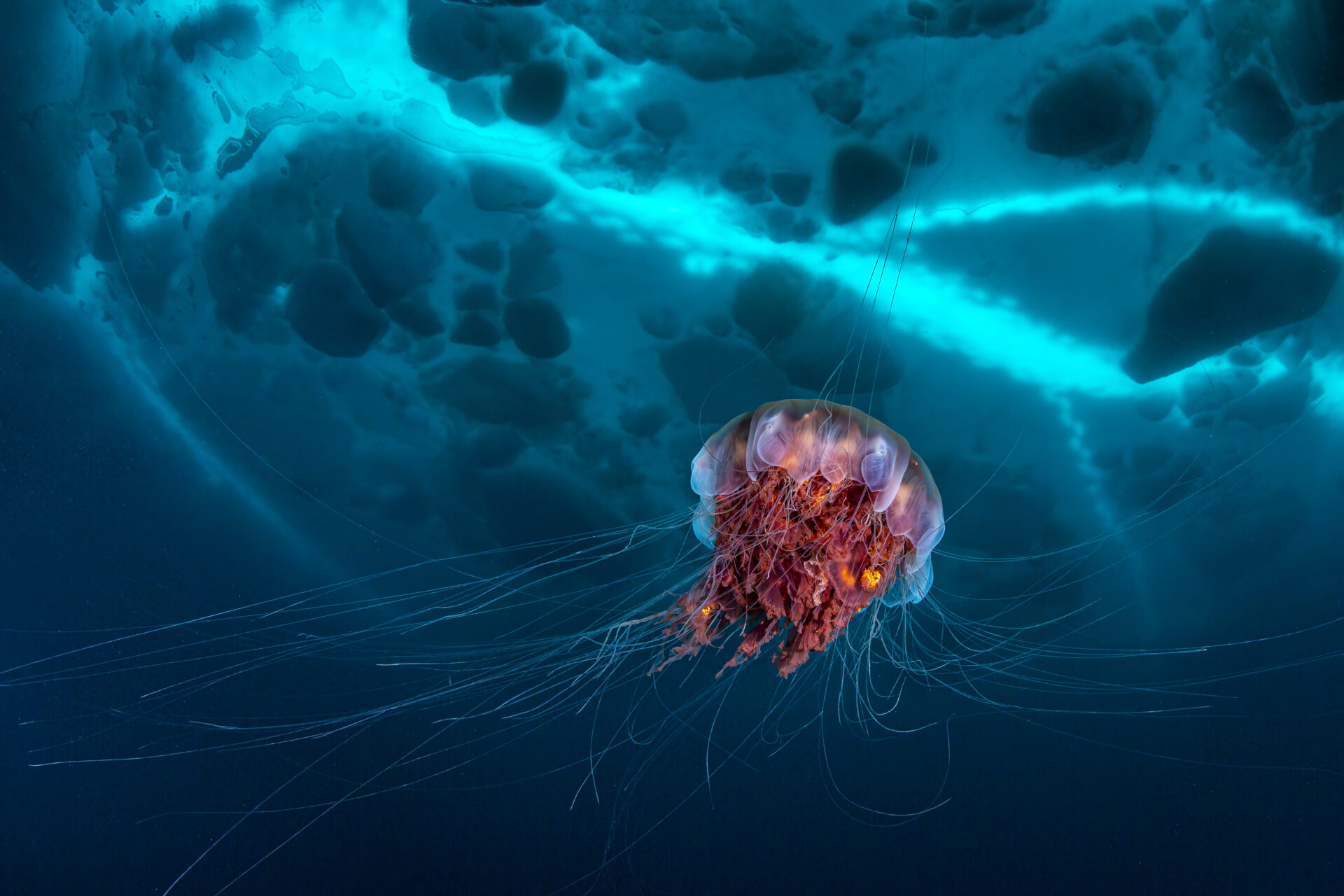
After a sudden tropical rainstorm in the Everglades caused a local box jellyfish population to disappear from the surface, researchers discovered that marine life can be physically trapped at different depths of the ocean.
A sudden tropical downpour in Florida’s Everglades National Park has led to a major discovery in marine fluid dynamics, proving that physical boundaries, not just animal behavior, can trap marine life in the deep ocean.
The study, published in the Journal of Experimental Biology by researchers at Kiel University (CAU), reveals how a phenomenon called stratification drag creates a physical ceiling that prevents certain marine organisms from reaching the surface, even as they actively swim upward.
It started as a routine field trip to Florida’s Everglades National Park. A team of researchers from Kiel University (CAU) was hunting for Tripedalia cystophora, a tiny species of box jellyfish. They wanted to study the creature’s nervous system to gather insights for developing nanoelectronics. While out in the field, they were drenched by a sudden tropical downpour.
Before the rain, the jellyfish were easily spotted swimming right at the surface, hunting for food in the mangrove shadows. After the rain, they vanished.
“We normally find the jellyfish close to the surface. After the rain, they had suddenly disappeared from there,” recalls Jan-Frederik Freiberg, a doctoral researcher at Kiel University.
That sudden disappearance sparked a curiosity that led all the way back to a physics laboratory in Germany.
Scientists have found that when heavy rain falls on coastal mangrove swamps, it creates a phenomenon known as water stratification. The light, fresh rainwater forms a distinct layer that sits directly on top of the heavier, denser saltwater. The sharp boundary zone where these two layers meet is called a halocline.
To understand why the jellyfish couldn’t cross this line, the Kiel team recreated an artificial halocline in a dark laboratory tank. They used a light source at the top of the tank to lure the jellyfish upward, mimicking how they swim toward daylight in the wild.
Using AI-assisted trajectory tracking, the scientists watched the jellyfish swim vigorously toward the light. Time and again, the animals hit the halocline, and then stopped in their tracks, trapped by a boundary invisible to the human eye.

In other news


Scientists had long assumed that jellyfish intentionally turn around because they dislike freshwater, or that the change in salt levels weakened the jellyfish or caused them to sink.
But, they have incidentally discovered that the physical act of swimming forces heavy saltwater up into the fresh layer, creating a heavy drag that anchors them in place.
As a jellyfish pulses its body to move upward, its swimming action inadvertently pushes some of the heavy, dense saltwater up into the lighter freshwater layer. This action creates a phenomenon called stratification drag.
Essentially, by trying to swim up, the jellyfish drags a small anchor of heavy saltwater along with it. This drastically cuts their buoyancy and robs them of their energy. The harder they swim, the more resistance they create against themselves.
“It is not the animals’ behaviour or physiology that holds them back, but the physics of the boundary layer,” explains Dr. Jan Bielecki, senior author of the study.
While the study focused on a small box jellyfish, the fluid dynamics at play affect everything that moves vertically through a stratified water column.
An estimated 10 billion tons of biomass undergo daily vertical migrations, driving the ocean’s biological carbon pump – a natural process that transports carbon from the surface to the deep ocean, helping regulate Earth’s climate.
As climate change warms ocean surfaces and increases freshwater input from melting ice, marine stratification is intensifying globally. Stronger density boundaries could mean that weaker swimmers, like larvae, small zooplankton, and jellyfish, may find themselves physically barred from upper ocean layers, a prospect that raises questions about long-term disruption to feeding cycles and marine food webs.
Unexpectedly, the discovery also has strong parallels in modern technology. Professor Hermann Kohlstedt, leader of the Nanoelectronics research group at Kiel, said that these natural fluid boundaries behave exactly like the interfaces in microchips that control the flow of electrons.
“What surprises me is that the same physical logic governing a transistor can dictate the vertical distribution of an entire animal population in the wild,’ said Kohlstedt.


"*" indicates required fields
Printed editions
Current issue
Back issues

Enjoy so much more from Oceanographic Magazine by becoming a subscriber.
A range of subscription options are available.
