Manatees among species at risk as Trump strips ESA protections
Conservationists warn Florida's manatees are at risk after the Trump administration rescinded the ESA's "blanket rule" and weakened critical habitat protections, prompting the Center for Biological Diversity to challenge the changes in federal court.
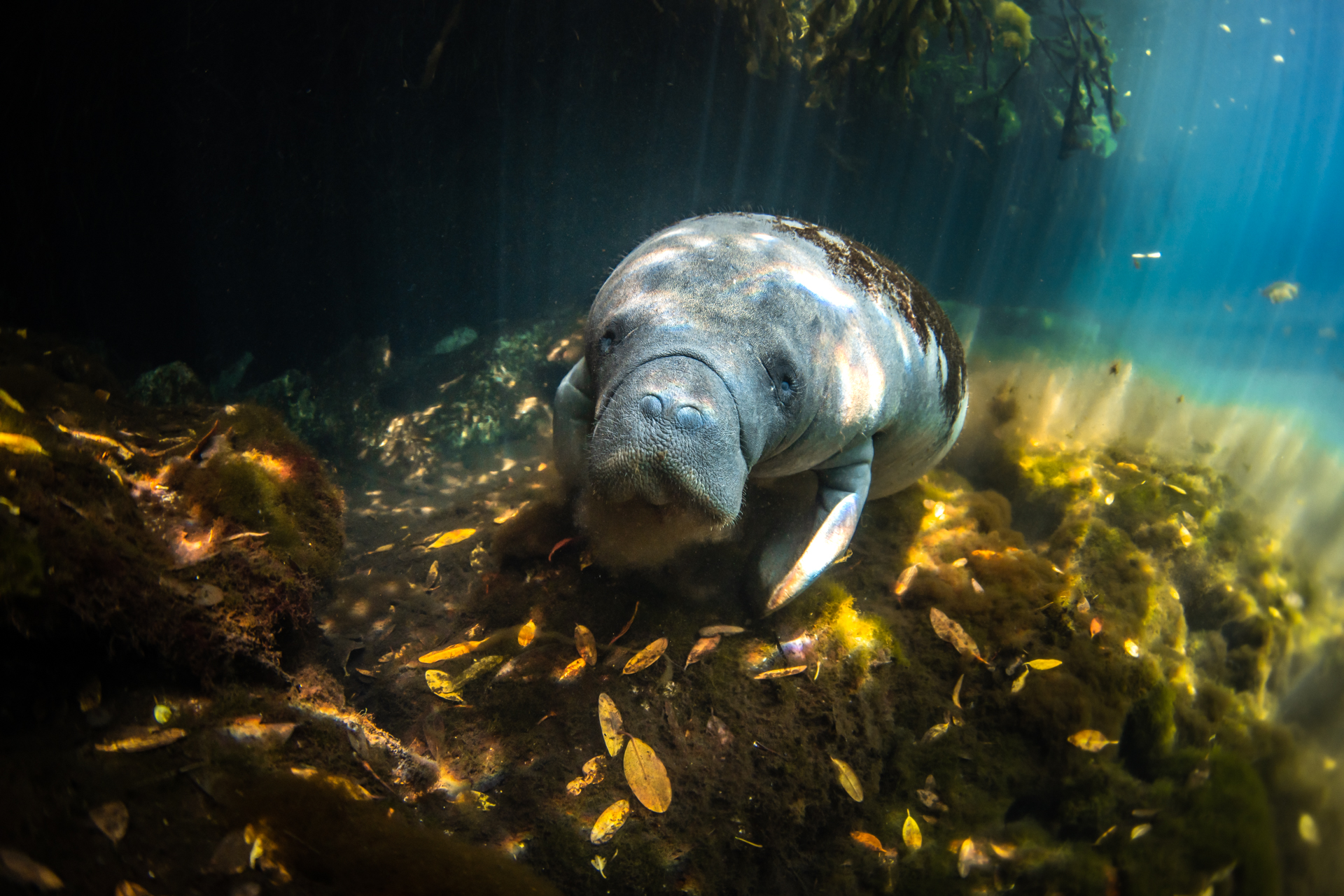
Florida’s manatees could be among the species left more vulnerable by the Trump administration’s rollback of Endangered Species Act protections, conservationists warn, as the Center for Biological Diversity moves to challenge the changes in federal court.
The Center has filed a motion challenging the administration’s decision to scrap the Endangered Species Act’s (ESA) “blanket rule,” which automatically protected plants and animals listed as threatened, unless officials developed a rule specific to that species.
The rule’s removal is one of two related changes announced Friday, both concerning Section 4 of the Act, which governs how federal agencies decide which species to list and whether they’re classified as ‘threatened’ or ‘endangered’. ‘Endangered’ is the more severe designation of the two and one reserved for species facing more imminent extinction.
The blanket rule protected threatened species from “take” – legally defined as any attempt “to harass, harm, pursue, hunt, shoot, wound, kill, trap, capture or collect.” That prohibition was “the meat of the ESA,” according to Elizabeth Neville, director of environmental law and policy for Save the Manatee Club, a nonprofit advocacy group based in Longwood, Florida.
“It’s a bit of a common-sense mechanism in efficiency for the agency: that, if a species is threatened with extinction, the baseline prohibition should be prohibition against take,” Neville told Central Florida Public Media. “Those are the common-sense protections to prevent an already imperiled species from declining further.”
The second change will require federal agencies to weigh economic and national security interests when designating critical habitat for a protected species, allowing areas to be excluded from that designation “if that exclusion will not cause the extinction of the species,” according to the Interior Department, as reported by Central Florida Public Media.
Neville considers all of the recently announced changes concerning, but has singled out the critical habitat revision as particularly troubling, if not “flagrantly illegal.”
“It makes critical habitat really vulnerable to economic considerations, when the statute requires the best available science,” Neville said. “It’s going to put a weight on the scale in favour of economic interests over conservation.”
Under the revised rule, if the economic costs of designating critical habitat in a given area are found to outweigh the conservation benefits, agencies will be required to exclude that area from the designation. For manatees, Neville said, that raises the risk of losing the warm-water refuges and forage habitat the species depends on to survive – a loss she warned could carry a steep long-term cost, both ecological and economic.
“Keystone species like manatees provide incredible ecosystem services,” Neville said. “And it’s really amazing the millions and millions of tourism dollars that manatees alone bring into the state.”

In other news
A wider legal challenge
This week’s federal court motion is tied to a 2025 lawsuit filed in U.S. District Court in Montana by the Property and Environment Research Center and Rocky Mountain Elk Foundation, which challenged the Biden administration’s restoration of the blanket rule after it was first scrapped during Trump’s initial term.
The Center for Biological Diversity had intervened in that case to support the U.S. Fish and Wildlife Service, and is now seeking to challenge the Service’s reversal and abandonment of the rule as part of the same lawsuit.
“The Trump administration wants to leave our country’s threatened species, from grizzly bears to Upper Missouri River grayling, without the critical protections they need to survive. We’re hopeful a judge will stop this,” said Noah Greenwald, endangered species co-director at the Center for Biological Diversity. “Just like endangered species, threatened species need strong protections if they’re going to avoid extinction and recover.”
With the blanket rule gone, the Fish and Wildlife Service will need to issue a specific rule for each individual species, and, for the first time, will be required to weigh the potential economic harm of any protections it puts in place – adding further strain to an already stretched agency, and raising the risk that some threatened species receive little to no protection at all.
Among the species that could be affected is the Upper Missouri River grayling, a relative of salmon that has disappeared from more than 90% of its historic range and now survives as a single native population in the Big Hole River. The fish is currently under consideration for listing as threatened under the Endangered Species Act, a decision expected in the coming months. If listed, it would likely receive weaker protections than it would have under the blanket rule.
The Center is also part of coalitions challenging two further rules recently introduced by the administration that weaken protections for threatened and endangered species more broadly: one giving industry greater influence over the designation of protected critical habitat, and another that largely eliminates habitat protections for endangered and threatened species altogether.
“These rules are a one-way ticket to extinction for our most imperilled animals and plants, from monarch butterflies to giraffes to alligator snapping turtles,” Greenwald said. “Trump is bending over backward for corporate polluters by ripping away the blanket that protects so many struggling wildlife species as well as the air we breathe, the water we drink and the natural places where we seek peace of mind. This is the last thing we need in the middle of an extinction crisis, and we’ll fight it with everything we’ve got.”
Under the Endangered Species Act, the Fish and Wildlife Service is required to weigh the benefits of designating a critical habitat area against the benefits of excluding it. Greenwald warned that the new rule leaves this calculation open to abuse.
“The way this is written, a landowner could falsely claim they planned to build the next Disneyland on their property so designating critical habitat would supposedly cost them tens of millions of dollars,” Greenwald said.
“This rule is clearly intended to prevent the protection of the wild places that endangered animals and plants need to survive. It’s a despicable move that cheapens the value of our most imperilled wildlife so corporations can make more money. Anyone can make outrageous claims about how much their property is worth, but that shouldn’t be taken as gospel.”


"*" indicates required fields
Printed editions
Current issue
Back issues


Enjoy so much more from Oceanographic Magazine by becoming a subscriber.
A range of subscription options are available.
