Rare great white spotting shows ‘ghost’ species still alive
After a great white shark was incidentally caught by local fishermen, researchers scoured records dating back to the 1800s to understand their historic presence in the region – and they say this sighting gives them hope.
A rare great white shark was incidentally caught by local fishermen off the coast of Spain, revealing that the species has maintained a continued presence in the waters.
Fishermen off the coast of the eastern peninsula in the Spanish Exclusive Economic Zone caught the juvenile great white shark (Carcharodon carcharias). It measured 210cm and weighed between 80 and 90 kg.
The exceptional sighting prompted researchers to review past records, spanning over 160 years. And the results of this deep dive into the archives have been published today in the open-access journal Acta Ichthyologica et Piscatoria.
The Mediterranean Great White Sharks are thought to be an elusive “ghost” population in the area – rarely seen and near impossible to track.
But this sighting confirms that the species hasn’t disappeared from the Mediterranean entirely.
Researchers were particularly excited by the fact that the shark was young.
Dr. José Carlos Báez, the study’s lead researcher said: “Determining the presence of juvenile individuals is of particular importance.”
“The occurrence of juvenile specimens raises the question whether active reproduction may be occurring in the region,” he added.
Currently, the species is listed as Vulnerable on the IUCN Red List, with a declining population trend.

In other news

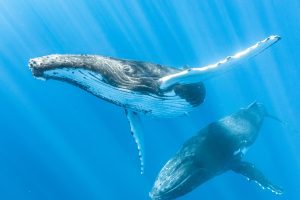


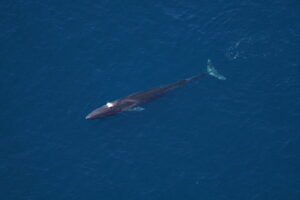
With great white shark populations in decline, researchers emphasize that long-term observation programs are vital to understanding the species’ biology in the Mediterranean. By pairing direct sightings with advanced tracking methods, evidence-based strategies can be developed for the conservation of this iconic apex predator.
The main idea I want to convey to the public is that these large marine animals have a fundamental role in marine ecosystems. As highly migratory pelagic species, they redistribute energy and nutrients across vast distances. They serve as nature’s scavengers—by consuming carrion, they keep ecosystems clean. Even in death, their descent to the seafloor provides a critical pulse of nourishment for deep-sea communities,” says Báez.
Baez believes H.P Lovecraf’s famous observation that “the oldest and strongest emotion of mankind is fear, and the oldest and strongest kind of fear is fear of the unknown.”
This, he said, also applies to the popular image of sharks as inherently dangerous and terrifying creatures.
“By shedding light on the biology and ecology of the great white shark, research can help replace unfounded myths with genuine understanding,” Baez added.


"*" indicates required fields
Printed editions
Current issue
Back issues
Back Issues
Issue 43 Sir David Attenborough’s ‘Ocean’
Enjoy so much more from Oceanographic Magazine by becoming a subscriber.
A range of subscription options are available.