Trump opens vast Atlantic marine monument for commercial fishing
President Trump has issued a proclamation reopening the Northeast Canyons and Seamounts Marine National Monument to commercial fishing, prompting legal challenges and strong opposition from scientists, conservationists, and coastal communities concerned about irreversible harm to ocean ecosystems.
Campaigners have called it a ‘blatant disregard for the health of our oceans’ as well as a danger to a ‘natural treasure’ as well as the valuable wildlife that inhabits it – a move made by the US President Trump to reopen the door of the Northeast Canyons and Seamounts Marine National Monument to commercial fishing.
It’s a move that reverses longstanding prohibitions on extractive activities in the monument, an area of the Atlantic located roughly 130 miles southeast of Cape Cod – one of the most biologically significant and heavily protected marine areas in US waters.
Understandably, President Trump’s proclamation – titled “Unleashing American Commercial Fishing in the Atlantic” – has triggered alarm among scientists, conservationists, coastal businesses, and lawmakers who all argue that the action undermines ocean health and threatens endangered species. Critics also argue it exceeds presidential authority under US law.
Designated in 2016 by President Barack Obama, the Northeast Canyons and Seamounts Marine National Monument encompasses an area roughly the size of Connecticut and protects three vast underwater canyons – deeper than the Grand Canyon – as well as four extinct volcanic seamounts that tower thousands of metres from the seafloor. Together, these features create habitat for endangered whales, sea turtles, seabirds, and ancient deep-sea corals, some thousands of years old.
“This hugely misguided Executive Order would recklessly roll back protections for a marine monument that we’ve worked hard to protect,” said Senator Richard Blumenthal of Connecticut. “This natural treasure should be preserved for future generations, not endangered by industrial fishing. It’s home to immensely valuable wildlife – a marine ecosystem that deserves to be defended. I’ll continue this fight.”
The Atlantic proclamation follows a series of actions by the Trump administration aimed at loosening protections for marine national monuments. On 17 April 2025, the president signed an executive order titled “Restoring American Seafood Competitiveness,” directing federal agencies to review all existing marine monuments with an eye toward reopening them to commercial fishing. That review process – initiated by NOAA with a 45-day public comment period in late summer 2025 – has yet to be released publicly.
On the same day as the executive order, Trump issued a separate proclamation opening much of the Pacific Islands Heritage Marine National Monument to US commercial fishing. A federal district court in Honolulu later ruled that commercial fishing could not legally proceed there, finding that the administration violated required legal processes.
The glimmer of hope here is that the Atlantic proclamation may face similar challenges. A 2025 opinion issued quietly by the Department of Justice’s Office of Legal Counsel sought to reinterpret the Antiquities Act, the century-old law underpinning monument designations. Conservation law scholars argue the opinion contradicts established precedent and does not grant a president authority to dismantle core monument protections.
“This latest attempt by the Trump administration to undermine the monument is not only unlawful, but it also demonstrates a blatant disregard for the health of our oceans,” said Erica Fuller, senior counsel at Conservation Law Foundation. “We will not stand by while his administration destroys vital habitats that are irreplaceable in our marine environment. We’ve fought this battle before, and we are ready to fight it again.”
Brad Sewell, Managing Director of Oceans at the Natural Resources Defense Council, echoed those concerns. “Northeast Canyons and Seamounts is a truly special place: a living scientific laboratory, a refuge for creatures as varied as cold-water corals and sperm whales,” he said. “Trump’s move to dismantle those protections is unlawful, and we’re confident that it won’t stand.”

In other news

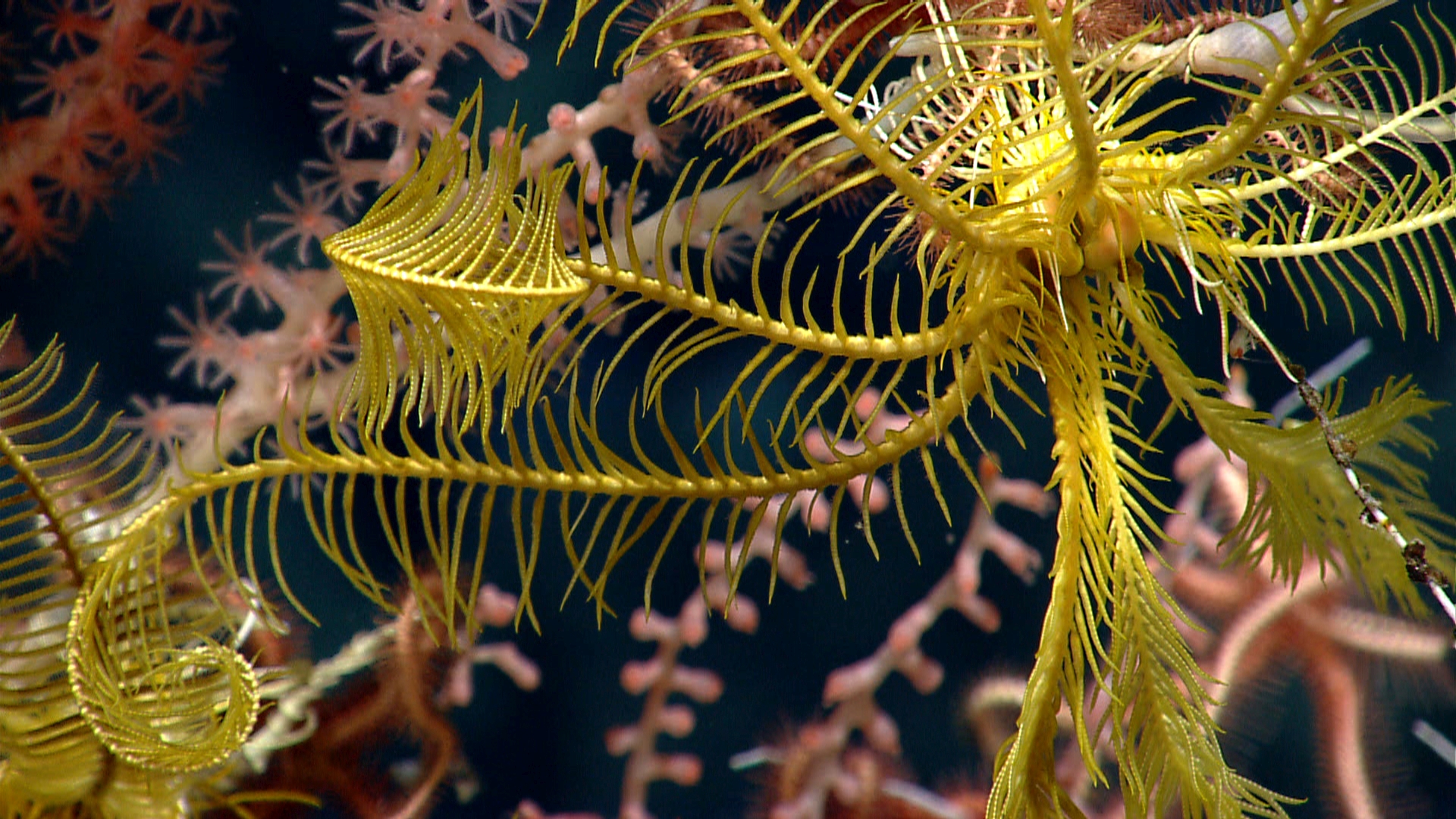
Marine scientists warn that allowing commercial fishing within the monument risks irreversible damage to fragile deep-sea ecosystems and undermines decades of research.
“This Monument is a unique, ecologically valuable, and irreplaceable marine area that should remain protected from human impacts,” said Dr. Peter Auster, UConn Professor Emeritus and Scientist-in-Residence at Mystic Aquarium.
“Without highly protected areas like this, we have no measure of how human uses elsewhere in the sea impact biodiversity and how we manage our activities for sustainable use, especially in the face of climate change.”
The monument is the only year-round entanglement-free zone for migrating marine mammals along the entire US eastern seaboard. Scientists say its protections also deliver benefits beyond its boundaries, with healthier fish populations spilling over into surrounding waters.
“The science shows that creating protected areas in the ocean increases fish abundance and catch,” said Zack Klyver, Right Whale Policy Director at Blue Green Future. “The fish populations grow larger and older and then spill over outside the boundaries where they can be caught by fishermen.”
Supporters of the proclamation argue that reopening the monument could bolster the US seafood industry. However, multiple analyses suggest the economic case is weak. Historic data indicate that less than one percent of New England fishing grounds were affected by the original closure, and most commercial landings have long occurred outside the monument.
Vikki Spruill, President and CEO of the New England Aquarium, said the monument’s protections underpin both science and regional ocean industries. “Scientific research by the New England Aquarium and others shows high biodiversity in Northeast Canyons and Seamounts Marine National Monument, and continued protections and monitoring are warranted to benefit the ecosystem and ocean industries in the region.”
Tourism and recreation also depend on a healthy offshore ecosystem, particularly in New England, where whale watching and coastal tourism are economic mainstays.
Public opinion appears firmly on the side of protection. A 2022 poll of 3,500 New England residents found that more than 80% supported permanently protected ocean areas. Ocean conservation leaders argue the issue goes beyond economics and politics, touching on national values and stewardship.
“America’s marine national monuments are vital if we are to make the world – including our precious oceans – a better place, both for us and for those who come after us,” said Philippe Cousteau, ocean restorationist and founder of EarthEcho International and Voyacy ReGen. “Any rollback of monument protections is an assault on our nation’s natural heritage.”
Legal challenges to the Atlantic proclamation are widely expected, with conservation groups signalling readiness to return to court. Until then, scientists warn that reopening the Northeast Canyons and Seamounts risks turning one of the Atlantic’s most important marine refuges into what critics call a “paper park” – protected in name only.


"*" indicates required fields
Printed editions
Current issue
Back issues
Enjoy so much more from Oceanographic Magazine by becoming a subscriber.
A range of subscription options are available.
