Record-breaking ship that carried presidents and Marilyn Monroe to become world's largest artificial reef
The SS United States, the fastest passenger ship ever built, is due to be sunk in the Gulf of Mexico in November, giving fish a new home and divers a new landmark.
The SS United States, the record-breaking ocean liner that carried four US presidents, Marilyn Monroe and Walt Disney across the Atlantic, is due to be sunk off Florida in the second week of November to become the world’s largest artificial reef.
Okaloosa County plans to sink the ship about 22 nautical miles (41km) south-west of Destin, in the Gulf of Mexico during the second week of November, although the exact date depends on sea conditions.
Known as the “Big U”, the 990ft liner was renowned for her speed: on her maiden voyage in July 1952 the SS United States received the Blue Line prize for crossing the Atlantic in three days, 10 hours and 40 minutes – around 10 hours faster than the Queen Mary’s record. She still holds the speed record for a passenger ship. Her design was kept secret because she was built to double as a troopship.
The ship’s passengers included Presidents Harry Truman, Dwight Eisenhower, John F Kennedy, and a 22-year-old Bill Clinton, on his way to study at Oxford. The liner also hosted cultural icons like Marilyn Monroe, Walt Disney, Salvador Dalí, Coco Chanel, Marlon Brando, John Wayne and Grace Kelly. In 1963, the ship also transported the Mona Lisa across the Atlantic.
Air travel ended the SS United States career in 1969. Plans to restore the ship were abandoned because of the cost. Okaloosa County says it bought the ship after “all other options” had been exhausted, and that the only alternative to a reef was the scrapyard. The county says her size, history and benefit to the marine environment were the main reasons she was chosen.
Steel wrecks give algae, corals and other animals a hard surface to settle on in an otherwise sandy seabed, which attracts fish. The county expects the liner to draw reef species such as red snapper and grouper, and, because of the ship’s size, open-water fish such as amberjack, mackerel and tuna. The habitat benefit prompted Coastal Conservation Association Florida to make its largest donation in 40 years, $500,000.
In other news

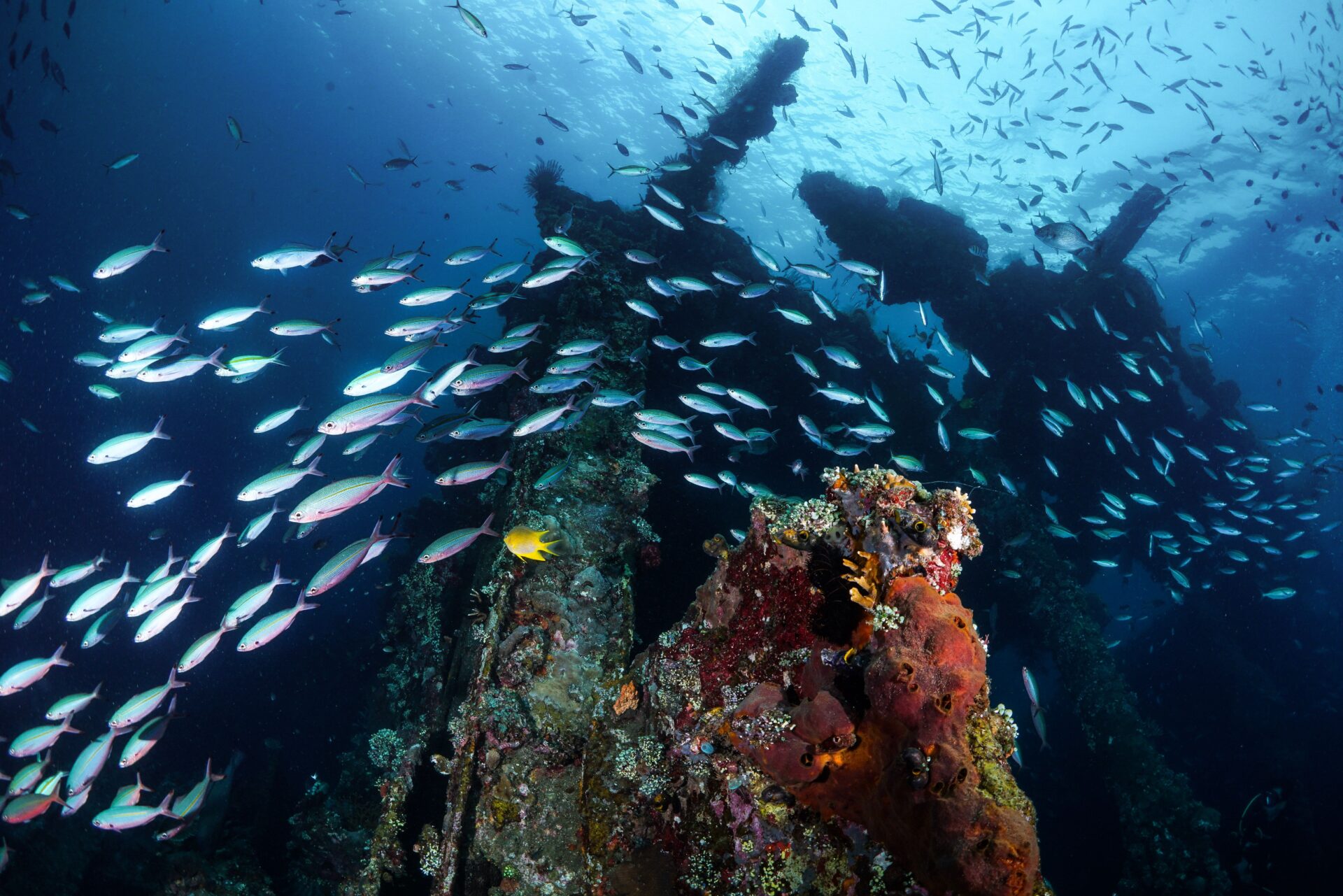
The county already manages more than 500 artificial reefs, including a dozen smaller shipwrecks. The liner will lie about 12 nautical miles from the aircraft carrier USS Oriskany, sunk off Pensacola in 2006, and will overtake it as the largest vessel deliberately sunk as a reef.
The county expects the sinking of the ship to benefit the local tourism industry: dive shops, charter fleets and hotels are set to earn millions of dollars a year from the site. She will rest in about 55m of water, with the liner’s upper decks sat 17 to 18 metres below the surface, so both recreational and technical divers can reach the wreck.
Contractors have emptied and cleaned all 128 fuel and lubricant tanks and removed paint and deck coverings containing PCBs. The funnels, radar mast, propellers and more than 400 portholes have been taken off, and many will go on display in a planned museum on land. The US Army Corps of Engineers has renewed the county’s reef permit.
In order to ensure the ship settles upright, operatives will use controlled flooding rather than explosives. Openings have been cut to let marine life and divers inside. Researchers from several US institutions are expected to monitor the effects.
“The SS United States has inspired millions the world over as a symbol of American pride and excellence. Should the ship be converted into an artificial reef, she will become a unique historic attraction above and below the waterline,” stated Susan Gibbs, granddaughter of the ship’s designer, William Francis Gibbs, and president of the SS United States Conservancy.
Mel Ponder, an Okaloosa County commissioner, said having the ship off the coast was “a heritage and a legacy that is generational”.


"*" indicates required fields
Printed editions
Current issue
Back issues

Enjoy so much more from Oceanographic Magazine by becoming a subscriber.
A range of subscription options are available.