Six in ten kelp forest regions degraded, but recovery efforts persist
A new Kelp Forest Alliance report finds 60 per cent of assessed kelp forest regions are degraded, but restoration, protection and Indigenous stewardship are growing and need long-term investment to scale.
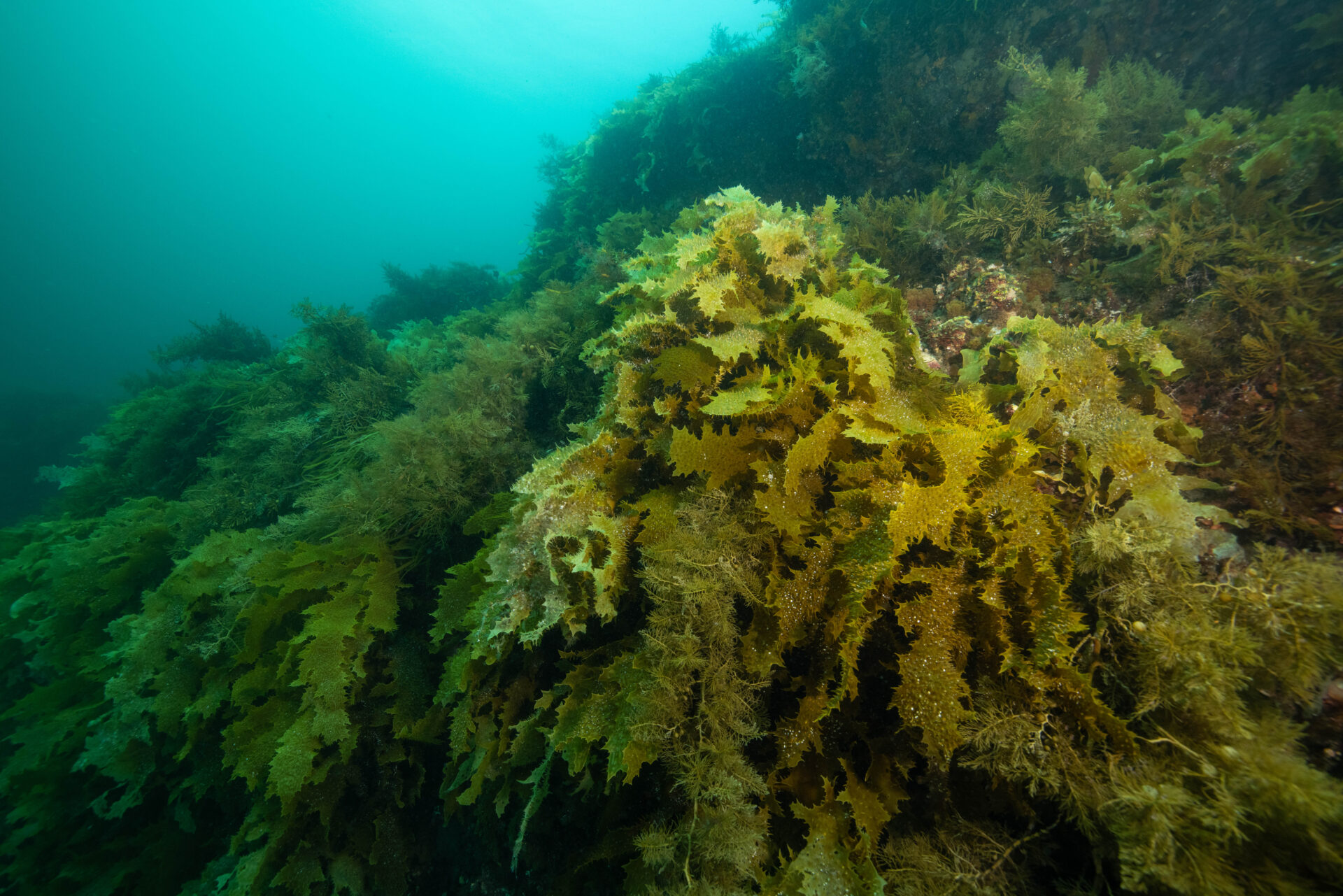
Around 60 per cent of the world’s assessed kelp forests regions still show some degree of degradation, according to a new global report, despite the fact that efforts to protect and restore them has been picking up in recent years.
The second edition of the State of the World’s Kelp Forests Report – published by the Kelp Forest Alliance (KFA) at the UN biodiversity summit (COP17) in Yerevan, Armenia, draws on global datasets, expert assessments, and case studies.
It finds that ocean warming and overgrazing are among the most important pressures, and that the need for action is urgent.
Kelp forests grow along one-third of the world’s coastlines, and the areas within 50km of them are home to about 950 million people, accounting for 18% of global GDP. The report puts the potential value of their ecosystem services at more than $500 billion a year, and estimates that kelp forests sequester about 32 million tonnes of carbon dioxide each year.
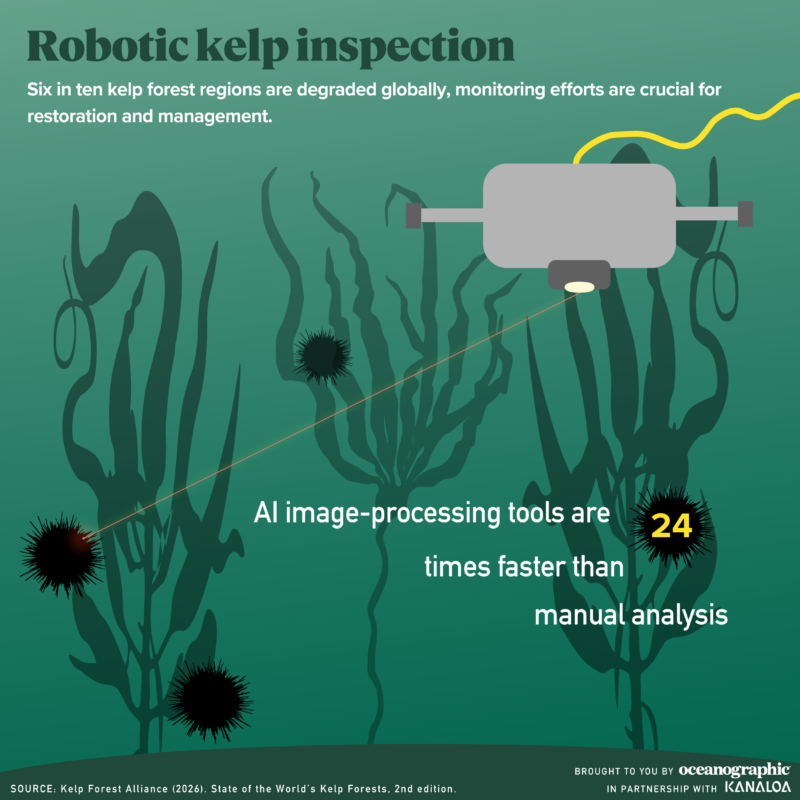
We are, however, seeing progress when it comes to global action. Restoration is expanding, Indigenous stewardship is gaining stronger international recognition, new monitoring and conservation technologies are emerging, and policy and funding frameworks are developing in places from California and Washington to the European Union, Japan, and South Korea.
Encouragingly, about 23% of the global kelp biome now overlaps with a protected area, up from 16% in 2024. KFA’s own restoration database records 19,071 hectares of successful restoration from 285 projects in 15 countries.
This progress is – the report underlines – uneven. More than three-quarters of the recorded restored area is in South Korea. Only 1.2% of the global kelp biome can currently be confidently identified as highly protected, and protection strength is unknown for roughly one-third of kelp habitat inside protected areas.
Restoration also cannot substitute for reducing underlying threats such as warming, overgrazing, pollution, and physical disturbance, the report cautions.
In other news


Kelp also remains far less visible in international policy than comparable ecosystems. Seagrass, salt marsh, coral reefs, and mangroves are referenced between eight and 43 times as often. Closing that gap, the report urges, could unlock the mapping, monitoring, long-term funding and explicit inclusion in biodiversity, climate, fisheries and coastal planning needed to scale recovery.
Dr Aaron Eger, founder and programme director of the Kelp Forest Alliance, said: “Kelp conservation has reached an inflection point. We have Indigenous leadership, stronger networks, better technology, national restoration programmes, and growing public recognition. The field is ready to scale. What it needs now is sustained investment, supportive policy, and long-term institutions that can turn promising work into lasting recovery.”
The report goes on to identify three areas that are currently driving the expansion of kelp conservation.
The first is Indigenous knowledge and stewardship. A growing international network links place-based knowledge, cultural continuity, research and policy, but Indigenous leaders still need sustained support.
Meanwhile, technology such as robotics and AI, satellite mapping, biobanking, genomics, selective breeding, and restoration tools are all expanding what conservation can do. Dedicated kelp R&D remains limited compared with terrestrial and coral systems, which the report identifies as a clear opportunity for targeted investment.
Finally, communication and connection such as ocean literacy, storytelling, naming, art and monitoring networks are all helping to make kelp more visible to communities and decision-makers, building the awareness and political support needed for lasting conservation.
The Kelp Forest Challenge has now called for the protection of 3 million hectares and restoration of one million hectares of kelp forest, alongside greater awareness and appreciation and $14 billion in support, all by 2040.


"*" indicates required fields
Printed editions
Current issue
Back issues
Enjoy so much more from Oceanographic Magazine by becoming a subscriber.
A range of subscription options are available.