Scientists set out to understand critical glacial tipping points
They will gather unprecedented data on these glaciers to inform new climate models and develop a global climate warning system
An international team of scientists are heading to Greenland this summer to understand how melting glaciers are pushing the Atlantic Ocean towards a critical climate tipping point – and develop a new warning system to provide advance notice of rapid glacier change.
The international team, from the British Antarctic Society (BAS), aims to understand how much meltwater is released from Greenland’s fjord glaciers, how it enters the North Atlantic Ocean and how this process will influence the wider ocean circulation and global climate system.
Climate tipping points are the thresholds at which change becomes rapid, self-perpetuating and potentially irreversible in Earth’s systems like ice sheets, rainforests and ocean currents.
One such system which would be affected is the North Atlantic Subpolar Gyre current system.
This transports heat from the tropics to the North Atlantic, helping to regulate temperatures and weather in Europe and North America.
But, Greenland’s melting ice is releasing freshwater into the ocean which may prevent the formation of the warmer, dense water that powers this important ocean current. Some scientific estimates suggest the North Atlantic Subpolar Gyre could change as early as the 2040s.
This fieldwork project is part of a five-year research project known as GIANT (Greenland Ice sheet to AtlaNtic Tipping points), a large international collaboration of 17 partners led by the British Antarctic Survey and funded by the ARIA, the Advanced Research + Invention Agency.
Despite their importance, current climate models struggle to predict exactly when these tipping points might be reached, and what would happen if they were.
The collected data will then be analysed by computer models, AI and machine learning tools to inform future climate modelling – including a prototype Early Warning System that could provide advance notice of rapid glacier change.

In other news

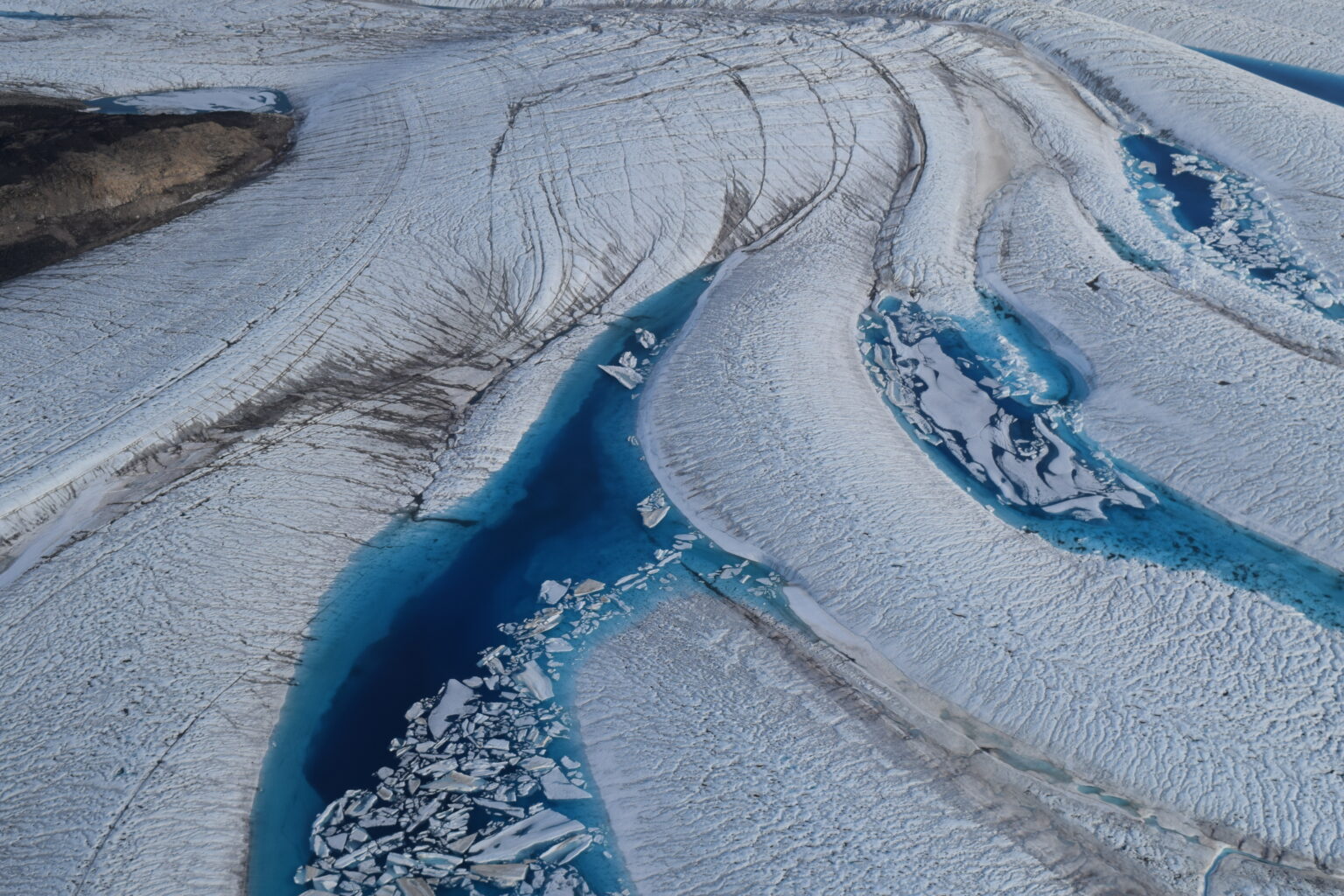
This warning system would combine satellite observations, field data, artificial intelligence and statistical glacier modelling to predict when ice loss into the North Atlantic might suddenly increase.
Alongside the global impact of melting glaciers on Atlantic current systems, they are also heavily impacting local coastal communities, who can no longer rely on ice fishing for their livelihoods.
Using drones, marine robots, satellites and instruments embedded directly into the glacier ice scientists will gain unprecedented observations of how these glaciers are currently behaving.
The huge array of innovative technologies deployed in the expedition should allow researchers to study the glaciers on a micro and macro level: from cracks within the ice to the movement of freshwater into the North Atlantic.
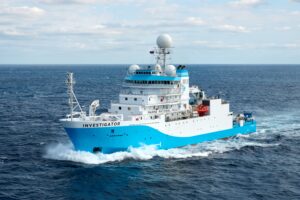
Research vessel RRS Sir David Attenborough will transport scientists and equipment to near Kangerlussuaq Fjord. Acting as both a floating laboratory and a launch platform for autonomous vehicles. The ship will also conduct detailed measurements of fjord depth and shape, as well as ocean temperature, salinity and currents.
GIANT will focus on two types of glaciers in Greenland that offer contrasting but complementary insights into how different glacier systems respond to ocean and atmosphere warming.
They are looking to research tidewater glaciers near Kangerlussuaq in South-East Greenland, that flow through long, narrow fjords and end in towering ice cliffs. Frequent iceberg calving in these areas create an ice mélange; a dense, slushy pack of sea ice and chunks of icebergs that can temporarily prevent more iceberg calving in winter. When the debris clears in the summer, glaciers can retreat rapidly.
They will also study the Petermann Glacier in North-West Greenland. This wider glacier terminates in a long floating ice shelf – where the floating glacier extends out into the ocean.
Sarah Bohndiek, Programme Director for ARIA’s Forecasting Tipping Points programme, said: “Developing an early warning system is necessary to provide governments, industry and society more broadly the information they need to build resilience and accelerate proactive climate adaptation.”


"*" indicates required fields
Printed editions
Current issue
Back issues

Enjoy so much more from Oceanographic Magazine by becoming a subscriber.
A range of subscription options are available.
