Southern ocean krill oil boycott backed by Benedict Cumberbatch
Ocean leaders including Sylvia Earle and Benedict Cumberbatch have launched a global boycott of Antarctic krill products, pressuring Norway and other krill-fishing nations ahead of October's CCAMLR-45 negotiations in Hobart.
A coalition of scientists, explorers, and public figures has launched a global consumer boycott of Antarctic krill products, calling on shoppers worldwide to stop buying krill oil supplements, pet food, and farmed fish fed on the tiny crustaceans until industrial fishing for the species in the Southern Ocean ends.
Declared by the self-styled ‘Antarctic Avengers’ during Climate Week NYC, the boycott lands four weeks ahead of CCAMLR-45 – the annual negotiation in Hobart, Australia, that sets catch limits and decides on marine protection across Antarctic waters.
The campaign is targeting concerted public pressure on the nations whose fleets take the most krill, starting with Norway – currently the world’s largest krill-fishing nation. It hopes that delegations in Hobart weigh scientific evidence over commercial interest.
Among those that make up the Antarctic Avengers line-up is the marine biologist and explorer, Dr Sylvia Earle, who said: “We are now witnessing the expansion of industrial fishing into one of Earth’s last great wildernesses. This is happening at a time when these waters are already under immense pressure from climate change, making it all the more urgent that we act to protect them rather than open them up to further exploitation.
“Krill are not a commodity to be extracted at scale for aquaculture feed, consumer supplements and cosmetics. They are the foundation of the Southern Ocean, and industry is treating them as expendable in pursuit of profit.”
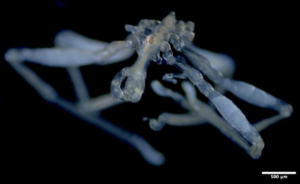
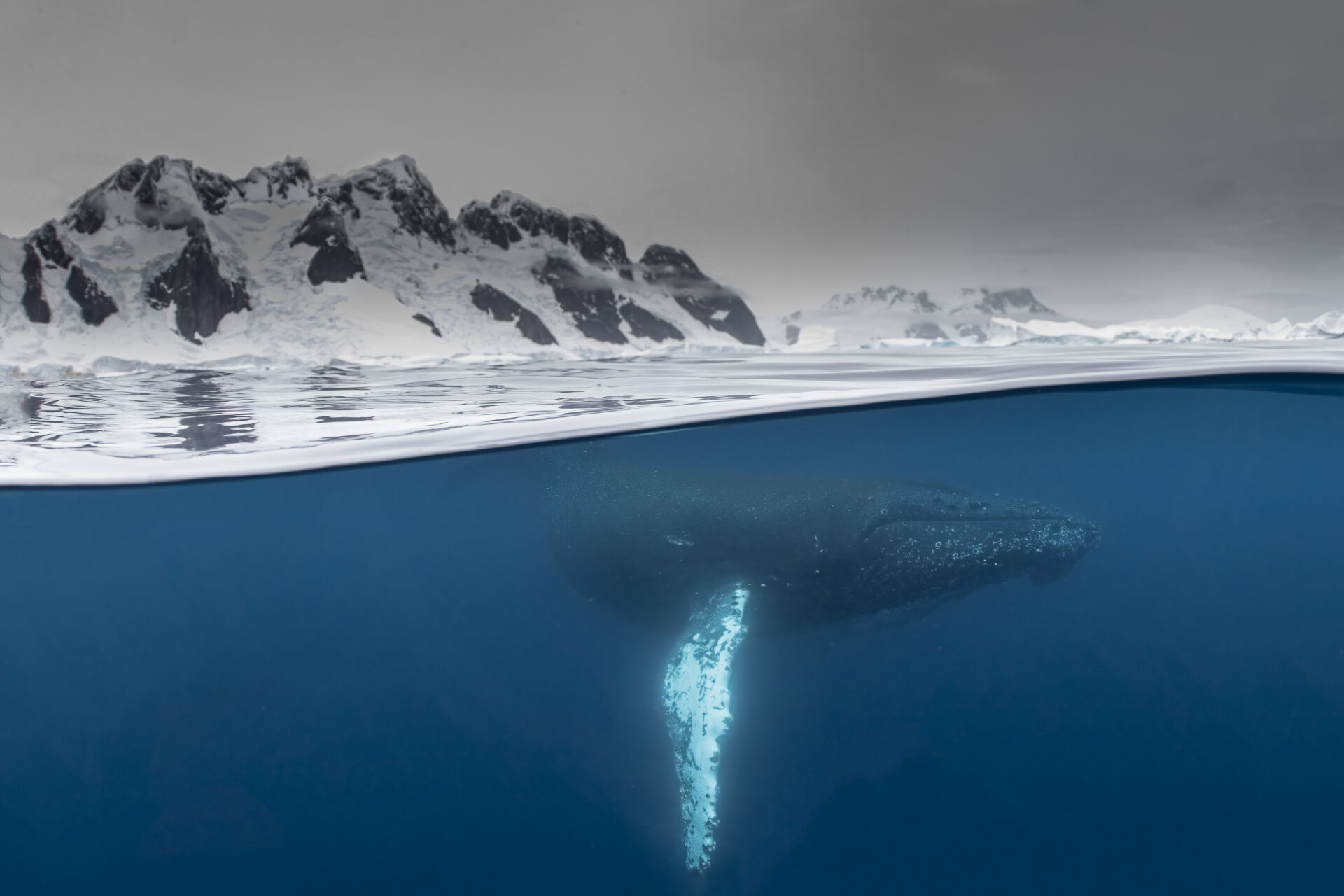
Antarctic krill are small, shrimp-like animals that swarm in numbers visible from space, and form the base of a food web that sustains almost everything in the Southern Ocean – whales, penguins, seals, seabirds, fish and squid. A single Antarctic blue whale can consume several tonnes of them in a day.
Their role extends into the climate system too. By carrying carbon from the surface into deep water, krill help lock away an estimated 20 million tonnes of carbon dioxide a year – a contribution comparable to mangroves or seagrass – while the humpback whales that feed on them migrate thousands of miles to breed off the coasts of the Pacific Islands, Africa and Latin America.
It’s a system that is under immense strain. Chinstrap penguin numbers on the Antarctic Peninsula have declined by around 30% in recent years, and in April 2026 the IUCN reclassified the Antarctic fur seal as endangered. Against that backdrop, the campaign argues, the case for the industry supplying krill oil capsules, pet treats and salmon feed does not hold up.

In other news
The Antarctic Avengers – assembled by the Our Antarctica campaign and including Benedict Cumberbatch, Bonnie Wright, Livia Firth, Sophie Hunter, Cristina Mittermeier, Paul Nicklen, Andy Mann and Professor Rashid Sumaila – are asking consumers to avoid three product categories: omega-3 supplements labelled as containing Antarctic krill, pet food and treats (including brands such as Nulo, where krill meal and krill oil are used as premium ingredients), and farmed fish raised on krill-based aquaculture feed, which accounts for the large majority of the catch taken by the world’s biggest krill operator.
The campaign contends that none of these uses are essential. Omega-3 fatty acids do not originate in krill at all – krill obtain them from the microalgae they eat – and algal oil is already commercially available, with every tonne able to replace roughly 50 tonnes of Antarctic krill. Krill-free alternatives for pet food and aquaculture feed, including algae, flaxseed, hemp and chia oils, are already on the market.
Andy Mann, photographer and National Geographic filmmaker, said: “I have spent years filming the wildlife that krill supports; the whales, the penguins, the seals, the fish, the entire living architecture of the Southern Ocean. You cannot look at an already fragile ecosystem, and then look at a supplement pill bottle and tell me the trade off is worth it. This is one of the few environmental problems where the fix is genuinely in our hands: read the label, put it back on the shelf, buy the algae version instead.”
The consumer boycott follows a year in which several of Europe’s biggest retailers reached similar conclusions. Holland & Barrett, the UK’s largest health and wellness retailer, announced a full exit from krill products by April 2026 – the first major UK retailer to do so – while UK supplement manufacturer Time Health became the first producer to sign the Antarctic Krill Pledge in March 2026, concluding that krill “no longer made sense” once the nutrients its customers wanted were available from algae instead.
In Germany, dm-drogerie markt, Europe’s largest drugstore chain, confirmed it would remove all krill-based products from its more than 4,000 stores across the continent. In Australia, Woolworths and Coles confirmed in early September that they had quietly delisted krill oil supplements, taking Swisse krill oil – the market’s best-known product – off both chains’ shelves. Chemist Warehouse, Australia’s largest pharmacy chain, has yet to confirm whether it will follow.
Maximiliano Bello, Global Marine Protected Area Specialist at Blue Marine Foundation, said: “For years the krill industry has told governments that there is no problem, and told consumers nothing at all. Retailers in Britain and Germany looked at the same evidence that CCAMLR members have in front of them and decided they did not want to be part of it. Now shoppers everywhere can make that decision too – and every one of them is a message to the negotiating table in Hobart.”
From 18 October, the 27 members of the Commission for the Conservation of Antarctic Marine Living Resources (CCAMLR) will meet in Hobart for CCAMLR-45. The campaign’s pressure is aimed squarely at Norway, which accounted for approximately 63% of the global Antarctic krill catch between 2014 and 2024.
This year’s talks follow a second consecutive early closure of the fishery: on 12 August 2026, CCAMLR confirmed that reported catches had reached the 620,000-tonne trigger level, shutting the fishery months ahead of its traditional 30 November end – a repeat of 2025, and, campaigners argue, a sign of how efficient the fleet has become rather than evidence that the current system is working.
The Our Antarctica campaign is calling on CCAMLR members, and Norway in particular, to deliver three outcomes in Hobart: adoption of the Domain 1 Marine Protected Area and a roadmap for further sites, given only two MPAs have ever been agreed in the Southern Ocean; rejection of any increase to krill catch limits, on the grounds that ocean-wide biomass estimates fail to account for penguins and seals that need krill within range of their colonies; and restoration of the binding spatial protections that expired in 2024, to keep fishing away from critical habitat. For the campaign, each is a step toward what it regards as the only ethically defensible outcome — an end to commercial krill fishing in the Southern Ocean altogether.
Consumers taking part in the boycott are also being asked to send a message directly to Norwegian ministers via act.our-antarctica.com, ahead of the government’s CCAMLR delegation departing for Hobart.


"*" indicates required fields
Printed editions
Current issue
Back issues


Enjoy so much more from Oceanographic Magazine by becoming a subscriber.
A range of subscription options are available.
