UK’s largest living seawall built on south coast a success
An artificial reef has been constructed in Shoreham port, to help local marine life regenerate, and to reignite local involvement with the coastline, and conservation projects within the area.

A new artificial reef made of cubes and tiles has been installed in Shoreham port in a bid to restore marine life in the area, and increase community engagement with coastal conservation.
Led by Shoreham Port, with research from the University of Brighton, the project has installed large reef cubes, designed to withstand tidal forces, along the shoreline; textured seawall panels, which encourage marine organisms to attach and grow; and vertipools, mini rock pools built onto the vertical sea harbour wall.
Together, these elements are designed to increase ecological complexity and support marine biodiversity along the Harbour Arm.
Worldwide, marine biodiversity is under increasing pressure. Global populations of marine species have almost halved from 1970 to 2021. Coral reefs – which supply a quarter of all marine life despite covering less than one per cent of the ocean – are projected to face widespread collapse by 2050.
Before the reef’s installation, researchers from the university’s School of Applied Sciences carried out a baseline survey to record existing marine life, providing essential data for long-term monitoring as the ecosystem develops.
Surveys were also carried out with the Shoresearch team from Sussex Wildlife Trust, recording over 90 different species across rock armour, sheet piling and beach habitats.

In other news

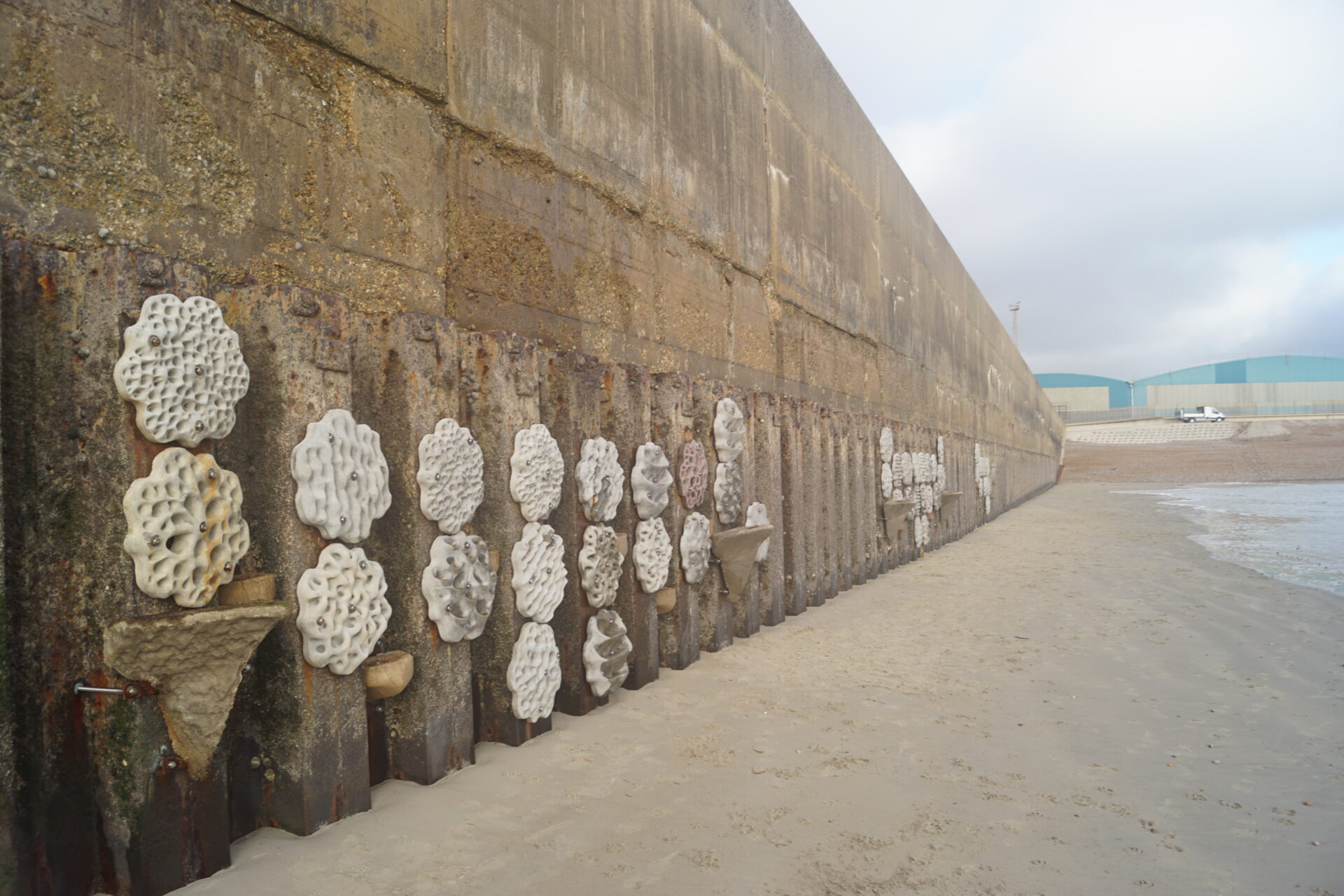
University of Brighton PhD researcher Isaac Doyle will monitor how marine species colonise the reef and test the potential for similar structures along the wider Sussex Bay coastline.
His research will monitor biodiversity above and below the tide line using camera monitoring, eDNA sampling and traditional surveying techniques, while also exploring public perceptions and the social value of marine enhancements.
Isaac Doyle said: “Living seawalls and artificial reefs represent a new way of designing with nature, rather than against it. My research focuses on understanding how these structures evolve over time, how different species colonise them, and how we can design them to maximise biodiversity.”
Alongside its direct habitat conservation benefit, researchers also hope to learn how locals, like wildlife enthusiasts and surfers, interact with the reef. And the site itself will be used as an important educational tool; it will become a field-trip location for hands-on visits from local schools and colleges.
Alongside the University of Brighton the Shoreham Port, the project works collaboratively with Adur and Worthing Councils, Brighton & Hove City Council, Sussex Bay and the Sussex Dolphin Project.
Dean Spears, Head of Sussex Bay said: ‘Shoreham Port is redefining what it means to be a modern port through wonderful nature and community projects such as this new reef.”
“We’re looking forward to watching the reef develop over time and anticipate wonderful biodiverse benefits that we will understand more fully and share as part of our ongoing future research together,” he added.
Brian Rousell, Shoreham Port’s Director of Engineering and IT said: “The learning from this project will have repercussions for generations and can inspire everyone to understand and enhance our marine environment. There’s no reason why industry and wildlife can’t coexist for the benefit of all.”


"*" indicates required fields