"We're rebuilding": Four nights to shape future of Florida's reef
Florida conservationists captured elkhorn coral's annual spawning to fertilise and raise juvenile corals for reef restoration, as new global data reveals a 9.5% decline in coral cover worldwide since 1980-2009.
Once a year, for just a few nights after a full moon, one of the Caribbean’s most important reef-building corals takes its one chance to reproduce. This August, a coalition of Florida conservation organisations was in the water, ready to capture that moment. It’s work that arrives when right new global data underscores just how critical that effort is.
Early this August, the Reef Institute joined Reef Renewal, Mote Marine Laboratory, and a wider group of partner research organisations in the Florida Keys to capture that narrow window. At this moment, scientists collected elkhorn coral gametes as they were released, to fertilise them and raise juvenile corals for future restoration efforts.
It’s work aimed at preserving genetic diversity and strengthening the long-term resilience of Florida’s reefs.
Elkhorn coral was once the dominant species on many of Florida’s shallow reefs, providing critical habitat for marine life and helping to protect coastlines from wave impact. Today, it is functionally extinct in the wild across much of its former range.
“There are three coral species in Florida considered functionally extinct in the wild. Elkhorn is one of those,” explained Leneita Fix, executive director of the Reef Institute. “There are between 20 and 27 wild elkhorn left in Florida. Not coral that scientists have out-planted, but those that have found their own way and settled on their own. There are 27 left.”
The project – funded through NOAA’s Re5 (Resilient Reef Research, Rescue, and Restoration) – all hinged on that one moment of reproduction.
“Corals are such divas,” said Fix. “Somewhere between April and October, just after the full moon, at a certain time of night – they decide to spawn.” For elkhorn and related species, that window is narrower still, to a three-to-four-day span within roughly two weeks.
And when it does happen, it is something spectacular. The coral releases a lipid-filled sac containing egg and sperm, which floats to the surface and bursts – “synchronised” said Fix. In the wild, this timing exists for a reason – to maximise the chance that gametes from different colonies find each other before drifting apart or being eaten.
In other news

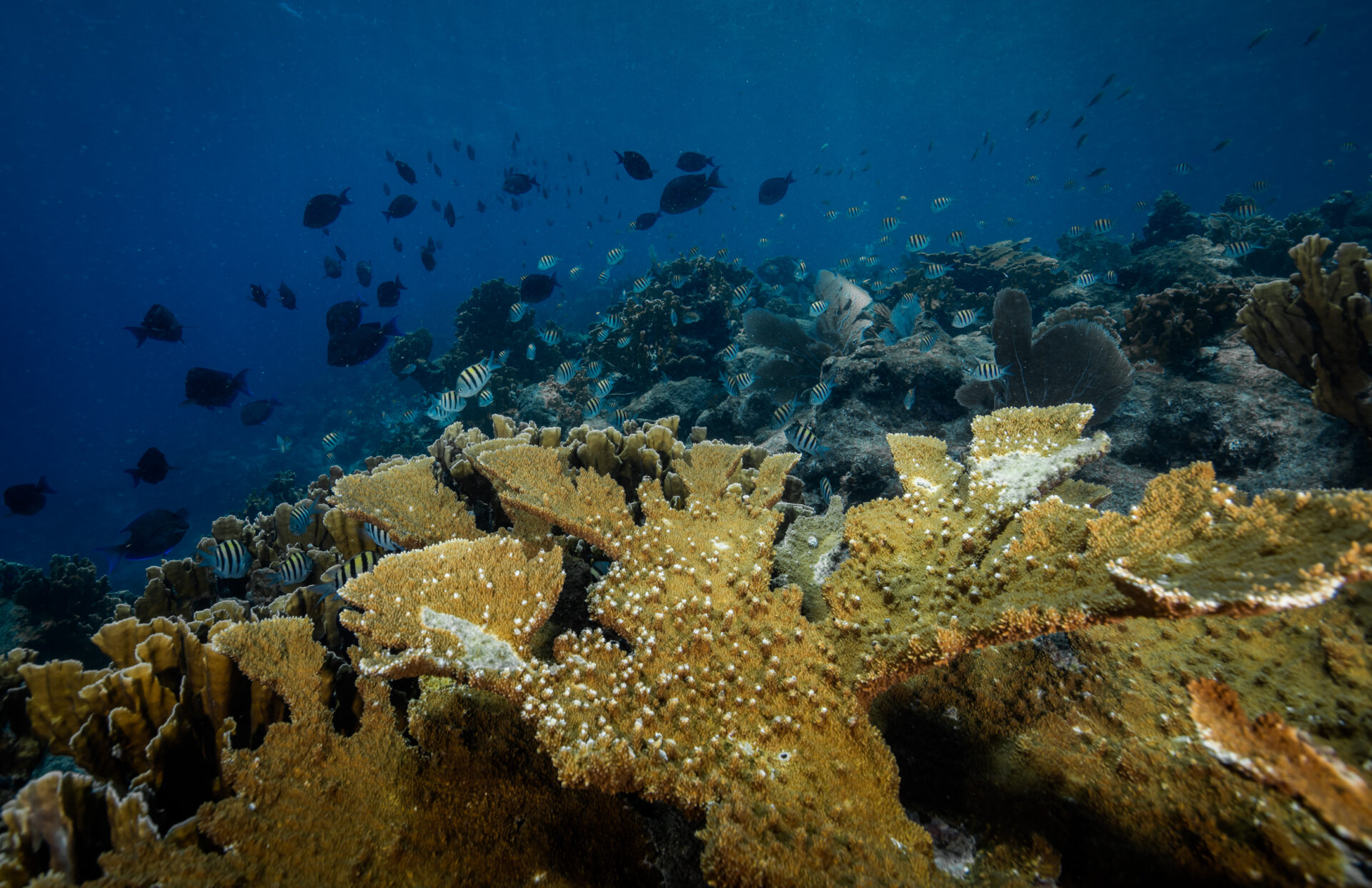
To capture it, divers placed fine nets fitted with collection tubes over spawning colonies. “They produce their gametes, they float into the tube, divers collect the tube, they bring them to land,” said Fix. From there, researchers carry out what has been described as ‘IVF for corals.’
On land, gametes are encouraged to fertilise in controlled containers, rather than at the ocean’s surface, giving researchers the ability to create specific genetic crosses. Some are one-to-one pairings, chosen deliberately, using guidance from NOAA on which parent corals have survived disease or shown greater thermal tolerance, in the hope their offspring will inherit that resilience.
Others are known as batch crosses, in which gametes from many parents are combined and allowed to fertilise more akin to how they would in the ocean, preserving – suggests Fix – a ‘broader genetic diversity.’
The Reef Institute first got involved in elkhorn conservation following the unprecedented global coral bleaching of 2023, during which coral across the Atlantic, Pacific, and Indian Ocean basins suffered severe heat stress. The Institute became one of just two Florida facilities serving as a biobank for elkhorn genetics. It’s a role that underpinned this year’s spawning effort.
Today, the organisation’s West Palm beach facility includes settlement tanks and a 23,000 gallon biobank for rescuing corals, as well as an on-land breeding infrastructure.
“We can control so many variables on land, it makes it a little bit cleaner. It makes it easier to say, okay, I can get this baby to survive. I can get these babies back out in the ocean,” Fix explained.
That work is still young. The Reef Institute’s first coral out-plants went into the water in 2023, with formal measurement beginning in 2024. “We have baby corals that are reproductive size now in the ocean,” Fix said. “Next year we’ll start paying attention and seeing if they’re actually reproducing for themselves.”
The collaborative effort across each of the organisations gathered this August is – itself – unprecedented. No single facility holds enough genetic diversity to safeguard the elkhorn species alone.
“If we have limited genetics on land, if there are five organisations that also have limited genetics on land, we can share babies. We can eventually share parents,” said Fix.
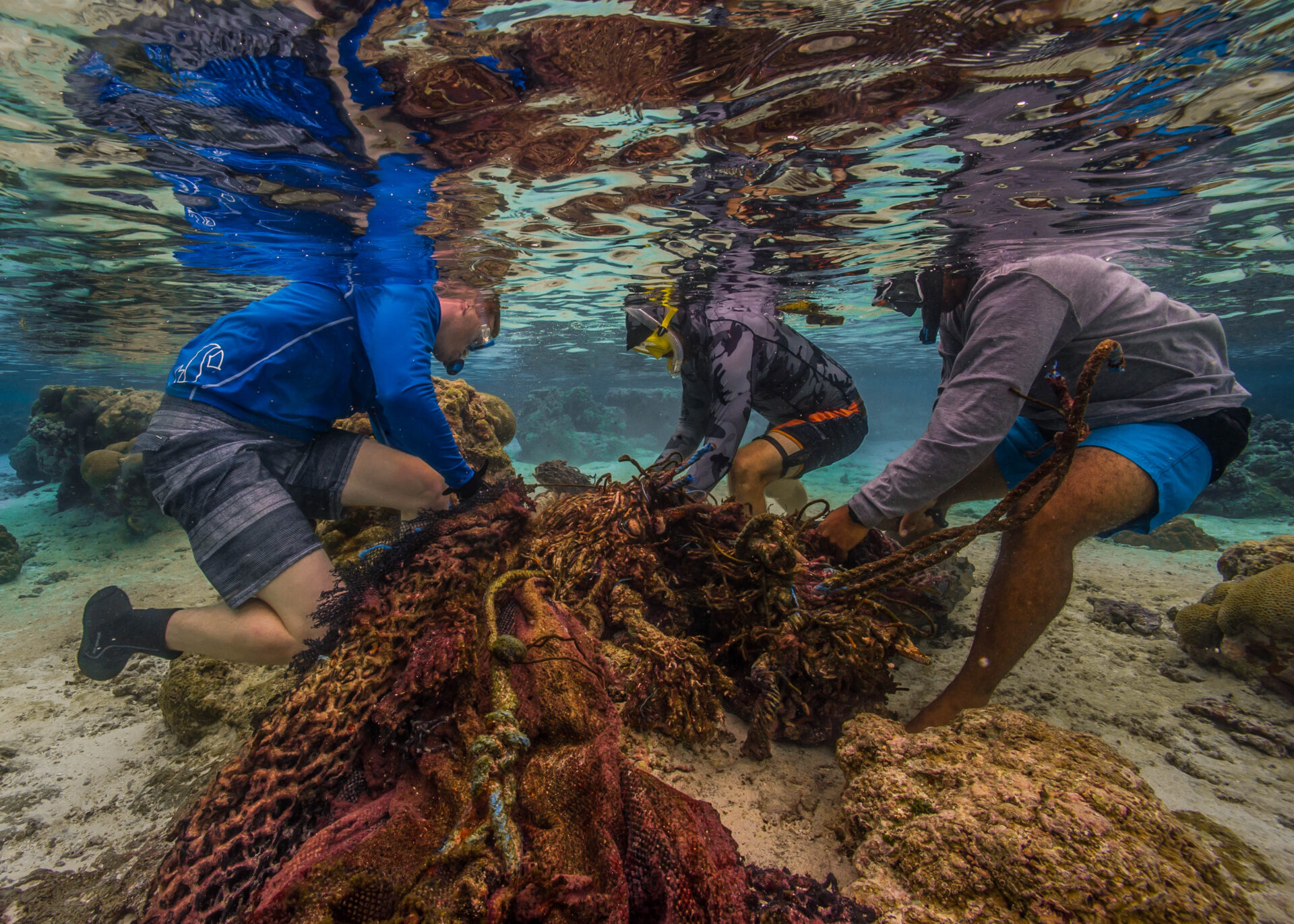
The complexity runs deeper than Florida’s coastline: ocean currents mean much of the Caribbean’s coral genetics aren’t strictly local. “We’re providing genetics for other places in the Caribbean. Other places in the Caribbean are providing genetics for us.”
“Elkhorn coral is one of the most important reef-building corals in the Caribbean, but it is also one of the most vulnerable,” Fix said. “This annual spawning event gives scientists a rare opportunity to help secure the species’ future. By collecting and fertilising gametes, we’re creating the next generation of corals that may one day help restore and strengthen reefs throughout Florida.”
The timing of this year’s spawning mission coincides with sobering new data. The Status of the World’s Coral Reefs: 2025 report, released by the Global Coral Reef Monitoring Network (GCRMN) and described as the largest, most comprehensive assessment of global coral reef health ever produced, found that coral cover on reefs worldwide has declined by 9.5% since the 1980-2009 reference period. The report draws on 21.1 million observations from almost 37,000 reef sites across 120 countries and territories – three times more data than the previous edition – and covers ten geographic regions, four of which recorded declines in coral cover.
Climate change-driven heat stress has become an increasingly dominant driver of that loss, but the data also points to reefs’ capacity to recover under the right conditions. “Globally, there was a 6% relative increase in hard coral cover between 2017 and 2019 after the third Global Coral Bleaching Event, showing reefs still have the capacity to at least partially recover,” said Dr Manuel Gonzalez Rivero, global coordinator of the GCRMN and a researcher at the Australian Institute of Marine Science (AIMS). “However, this recovery has been reversed by unprecedented loss from the recent fourth Global Coral Bleaching Event.”
Notably, the report does not yet include a full assessment of that fourth Global Coral Bleaching Event, meaning it does not capture the significant coral cover declines caused by the 2024 and 2025 mass bleaching events across the Great Barrier Reef and Western Australian reefs.
Gonzalez Rivero noted that major disturbances on reefs once occurred roughly once every ten years; that interval has now shrunk to five or six years, leaving reefs less time to recover between events.
It’s a pattern that echoes almost exactly what Fix described from Florida’s own reefs. In Florida, an estimated 2-8% of the state’s 350 miles of reef remains. Across the wider Caribbean, estimates range from roughly 8-15%. Even the Great Barrier Reef, she notes by comparison, retains only around 40% of its coral.
It’s a gap she believes shapes how people perceive the crisis, describing what scientists call shifting baseline syndrome: “People from the UK come here and go, ‘oh my gosh, I saw a nurse shark, I saw all these fish,’ and we’re sitting underwater crying, going, this is not what it’s supposed to look like at all.” Rather than despair, she said, that gap is precisely why projects like this matter: “This gives us the opportunity… to create a starting point to at least begin to get things moving.”
It’s also why Fix has grown wary of the word “restoration” itself. “There’s a mentor of mine, Judy Lang, who really talks about not liking the word restoration anymore, because it gives us this picture that we can get back to where we were,” she said. “We used this analogy of cathedrals – some of them took hundreds, some thousands of years to build… maybe it’s not framing it anymore around restoration. Maybe the new framing is rebuilding, like we’re rebuilding the reef.”
As climate pressures intensify – more frequent marine heatwaves, an increasingly active hurricane season, and now global data confirming shrinking recovery windows for reefs everywhere – Fix said the work now depends on accepting that disturbance will keep coming, rather than treating each event as an aberration. “I think we have to stop pretending it’s not going to happen again,” she said. “It’s going to come, it’s going to get hotter.”


"*" indicates required fields
Printed editions
Current issue
Back issues

Enjoy so much more from Oceanographic Magazine by becoming a subscriber.
A range of subscription options are available.
