Cal Major is a vet, ocean advocate and world-record stand up paddleboard adventurer who founded the UK charity Seaful to reconnect people to the ocean. In this column, she writes about the issue of whale entanglements in Scotland.
More of Cal's columns

The issue of marine mammal entanglement isn’t going to be solved by pointing fingers and yelling.
For the last few years, if you’d asked me what was top of my bucket list, I would have told you it was to see a humpback whale. More specifically, a living humpback whale, in Scottish waters. Like so many people, I’m inexplicably drawn to cetaceans – whales, dolphins and porpoises. But humpback whales hold a particularly special place in my heart.
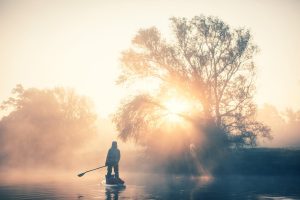
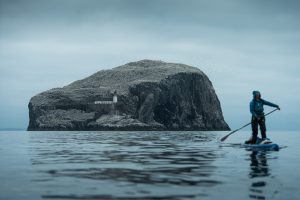
In 2021, I paddleboarded around mainland Scotland. As one would expect, the wildlife was spectacular: seabirds, dolphins, eagles, and even a pod of orca showed up and swam under my paddleboard! I also saw one solitary humpback whale – a juvenile less than a year old, floating upside down, entangled in rope and creel gear, dead.
It was a devastating and eerie sight, a mile out to sea on a windless day, the only sound the wingbeats of the fulmar surrounding the body. I had dreamed of seeing whales in Scottish waters, but not like this. It prompted me to deep dive into learning about cetacean entanglement in Scotland, and I spoke to several experts and organisations, including the Scottish Entanglement Alliance and the Scottish Marine Animal Stranding Scheme, who are working closely with fishermen to ascertain more accurate figures on marine animal entanglement in Scotland, and importantly, to put into place mitigation measures.
The current estimates are that five humpbacks and 30 minke whales become entangled in Scottish waters each year, but under-reporting might mean this figure is much higher. Most of the entanglements happen in creel gear – fleets of baited traps which are left on the seabed to catch lobster, prawns, and crabs. The traps on the seabed are connected to each other by rope, and there are additional vertical ropes at the end of each fleet of traps, attached to a surface buoy. Cetaceans are most likely to become entangled in the bottom lines that connect the traps – the ropes are buoyant and float upwards, creating arches of rope between the traps – but they can occasionally get wrapped up in the vertical lines too. If it wasn’t for the entanglement of marine animals, creel fishing in Scotland is a relatively small scale, low-impact and highly selective way of fishing, with minimal by-catch or disturbance to the seabed. But its impact on whales here and around the world cannot be ignored.
Fast forward to 2024, and a call came in from a friend about another deceased humpback whale, which this time had washed up onto a remote beach of the sea-loch where we live. It was another juvenile, with clear signs of entanglement.
There was a vitally important lesson to learn here. This whale was reported by a fisherman to somebody he trusted not to shame or blame him. Without the report, we would never have found this whale, or been able to gather important information from its post-mortem, which will help us learn about these animals, and hopefully help prevent future entanglements. Even though it can be horribly painful to witness, and change desperately and urgently needs to happen, the issue of marine mammal entanglement isn’t going to be solved by pointing fingers and yelling. No creel fisherman goes out wanting to catch a whale, and most are utterly devastated if they do. By creating good relationships with fishermen on the West Coast of Scotland, the Scottish Entanglement Alliance is trialling new kit with great success – weighted rope to connect the creels together. They will then sit flush to the seabed instead of floating into arches, thereby limiting entanglement.
The good news is that humpbacks are here. This week I’ve been out into The Minch, the stretch of water between mainland Scotland and the Outer Hebrides, several times and seen four humpback whales and a fin whale. My first encounter with a live humpback brought tears to my eyes. Its huge white pectoral fins were visible below the surface just metres from our boat, and its barnacle-encrusted tail exited the water gracefully as it dived below.
I feel an enormous sense of gratitude and belonging to the place I live, knowing that when I swim here, it’s that same body of water where whales swim. We live next to a Marine Protected Area which protects maerl, a coralline algae which is a vital herring spawning ground, from bottom trawling and dredging. There are reports of the herring returning, and there are herring-eating whales in our waters.
Whales face a whole host of threats, from climate change to plastic pollution, overfishing collapsing their food stocks, to entanglement. They all need to be addressed. Entanglement is a visually obvious problem, but my feelings around it have morphed from despair to hope – in part because of the willingness of the creel fishing community to trial different gear that will make our waters safer for marine life, and in part due to seeing all these glorious whales feeding in our waters. And there’s nothing like hope to nurture further positive action.
More of Cal's columns
The issue of marine mammal entanglement isn’t going to be solved by pointing fingers and yelling.
Continue reading
This story is exclusively for Oceanographic subscribers.
