Ocean Portfolio Photographer of the Year, Matthew Sullivan
Matthew Sullivan is an underwater and wildlife photographer based in Florida. As a 10 year old with a disposable kodak camera, to 20 years later, the passion for underwater image making has only grown. Weird, and unusual marine critters are his favourite photo subjects.
OCEANOGRAPHIC MAGAZINE: Congratulations, Matt on the success you had in this year’s Ocean Photographer of the Year Awards and your incredible portfolio. Shall we begin by looking at when you first connected with the ocean in this sort of way?
MATTHEW SULLIVAN: So I’ve been certified since I was ten, so it’s 22 years now. My parents, though they might regret it now, got me a little disposable underwater camera. Literally since then, I’ve had a camera on almost every dive. And it’s one of those things now where if I go on a dive, if I don’t have a camera in my hands I feel very uneasy.
But, I’ve loved the ocean since well before that. I first went snorkelling when I was four or five. I was hooked immediately and that has grown stronger and stronger as time has gone on.
OCEANOGRAPHIC MAGAZINE: Your winning portfolio has a very certain feel to it, there’s a technique in there or a style that makes you something of an auteur. How would you describe that? How did this portraiture style become a part of your signature with a camera?
MATTHEW SULLIVAN: So when I first started taking pictures, I just wanted to get whatever the subject is in the frame so that I have a record of having seen it. And for the first, probably ten or so years that I was shooting, that was all I cared about. Over time, I slowly progressed through from that to wanting the end result to be something that you enjoy looking at, beyond just whatever the subject is. So by around 2018, I started to take it more seriously from an artistic perspective. As the portfolio, I think showcases, I’m very drawn to portraiture with regards to wildlife photography. And it’s interesting because topside, I’m the complete opposite.
Underwater, I think a portrait is the best way to connect people with whatever your subject happens to be, especially if you have something that has big eyes or you can get double eye contact with or make something that’s not very charismatic in person feel charismatic to the viewer. I like capturing the details and features of faces. You can then layer in other photographic techniques to the pictures to make them more interesting.


OCEANOGRAPHIC MAGAZINE: How have you witnessed your technique evolve then over the years? And what were the inspirations or the learnings that you took on over the course of that evolution?
MATTHEW SULLIVAN: I think a lot of it is my over-the-top obsession with looking at underwater pictures in general and from whenever I get the opportunity to pick things up from people you talk to and admire. Now that I have a relationship with Alex Mustard [with whom I run a YouTube show] I appear to be learning through osmosis.
Picking up techniques though, a lot of the time is just by spending time in the water. I’m fortunate enough to spend a lot of time in the water here locally. I don’t do a ton of traveling, but typically I get to spend probably 150 dives here locally every year, which is a reasonable amount, I think.
If you’re spending that much time in the water, you get to work through different techniques and and are able to revisit subjects to try different things.
OCEANOGRAPHIC MAGAZINE: Yes, I would love to talk about the YouTube show and your partnership with Alex Mustard, but before I do – it’s interesting the way you talk about local waters and domestic diving. What is the appeal of domestic diving for you?
MATTHEW SULLIVAN: Well, fortunately I live in Florida, so we have good local diving. It’s not crap local diving, which would make a difference. But there’s a huge diversity of both freshwater and marine life here. So it would take a while to get through all or most of that before you could be like, ‘yeah, I photographed everything here’.
But I also think that by spending that time in the water, you end up seeing even more things. I’ve dived Blue Heron Bridge – which is my local dive site – probably 700 times. I still see new things there, not every time, but frequently enough that it keeps it refreshing.
Diving the same spot like that, you can start to look for new behaviours or new ways to photograph something that you’ve seen 15 or 20 times. And I think that has made a difference for me as well with regards to increasing the quality of my pictures, is revisiting those same subjects, but because I’ve seen them so much, I’m not concerned with just capturing the same old picture over and over and over again. It forces you to do something new.


OCEANOGRAPHIC MAGAZINE: Well, we’re very jealous of that. Being so immersed in these same dive spots, in that case, what environmental changes have you seen take place locally over the years you’ve been diving them?
MATTHEW SULLIVAN: Mostly in the freshwater environments; the spring ecosystems especially are very sensitive to any sort of environmental change. And agricultural runoff is a big one. So a lot of the spring ecosystems, while they do still have a lot of animal life, those days are probably numbered. The vast majority of springs have no more plant growth anymore, which is what attracts manatees and all the other wildlife. In some cases, with the very popular springs, I am sure they are just being loved to death by so many visitors. A lot of the more popular ones are missing seagrass and plant life.
With regards to the offshore stuff, there’s been fluctuations with sharks or goliath groupers, but these might just be fluctuations in the populations. At Blue Heron specifically, that’s a place that I think is being loved to death. When I first started diving here, 15 or 16 years ago you might see another diver on a dive. Now, if you go do a dive, you’ll see 50 to 70 other divers.
OCEANOGRAPHIC MAGAZINE: That’s very interesting, in terms of diving becoming more accessible to people… This is obviously a great way to drive awareness and conservation but in such high numbers, that must be having an impact on the environment?
MATTHEW SULLIVAN: I think the issue specifically here is that there are so few accessible shore dives in most of Florida that unless you’re out in a boat – which costs money and is a whole day commitment – there’s maybe two other two or three other reasonably popular shore dives along the entirety of Florida, which is a huge state. So, even if you spread all the divers out to those three sites, there’s still a ton of divers per site.
OCEANOGRAPHIC MAGAZINE: So, what is the message that you convey, or what is the story that you tell through your ocean photography?
MATTHEW SULLIVAN: I like to take things that people either don’t know exist, or overlook or don’t see very many pictures of and try to connect the viewer to that subject through the pictures. So specifically in my portfolio, there’s a jawfish which most people will never see; there’s the batfish, which is one of the freakiest fish in the ocean, but I love them so much; there’s an alligator, which, most people are afraid of. I like to be able to connect things that people usually overlook or are animals that are harder for people to anthropomorphise.

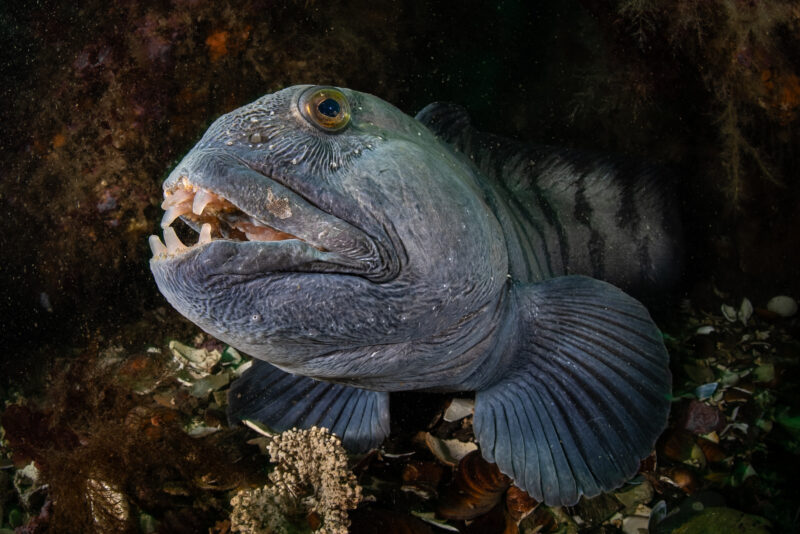
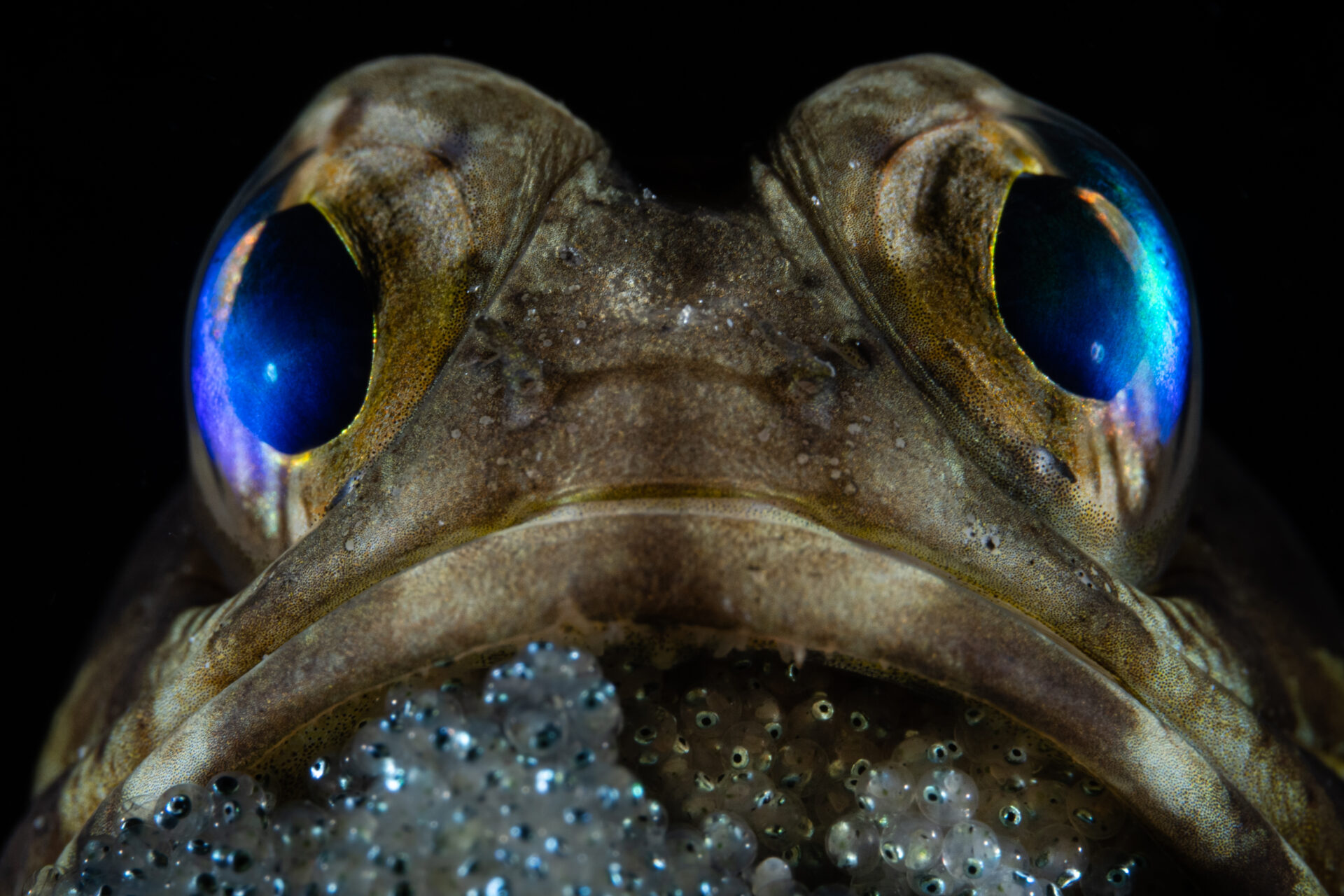
OCEANOGRAPHIC MAGAZINE: Absolutely, and it’s the character of these animals that runs throughout the portfolio. Their personalities really shine through. But what I really like about the collection is that it feels like the subjects are really welcoming you into their space… even with the alligator, you’re being invited to take pictures.
MATTHEW SULLIVAN: I’m sure most other photographers would agree with me on this, but I think if you let them be them and you don’t force yourself into their space or into their environment, the results – both experience-wise and photographically – can be much, much better. If you just spend time observing something from a distance then slowly let them get comfortable with you being with them, they can behave naturally.
The manatee in the portfolio, for example, followed me around like a puppy for two hours. If you were chasing him around, he’s not going to be like that. But if you let the interaction be on his terms or the animal’s terms, they’re much more likely to be obliging for pictures after that.
OCEANOGRAPHIC MAGAZINE: To address the big question on everybody’s lips. What does it mean to you to have been awarded the win for the Ocean Photographer of the year, the portfolio category?
MATTHEW SULLIVAN: It was funny because when I submitted, I thought I had no chance of it going anywhere. So when I saw that I had won, I was like, “Holy shit”. It was really cool because having the portfolio means there’s a body of work that I can be proud of, that other people recognise has quality for whatever their reasons happen to be, which I think is more meaningful to me. I didn’t just get lucky once.

Printed editions
Current issue
Back issues
Enjoy so much more from Oceanographic Magazine by becoming a subscriber.
A range of subscription options are available.
