Riding Green for the Blue
When artist and marine science communicator, Francesca Page received the call to create a moveable art installation worthy of a United Nations Ocean Conference, her first thought was how was she to get this done within a month... her second thought was 'where's my paintbrush?'
When an email landed in my inbox asking me to create a moving art installation for the UN Ocean Conference in Nice, with only a month to go, my creative brain lit up with excitement… and just a touch of panic. What an incredible opportunity this was to merge art with ocean conservation. But, could I really pull it off in time?
I love a challenge, so of course… I said yes.
I was commissioned by Lime (you know, of the bike fame) to create a moving art installation in collaboration with Together for the Ocean, a global campaign uniting voices from across the world to advocate for stronger ocean protection. This initiative brings together environmental organisations, Indigenous leaders, scientists, NGOs, youth activists, and ocean advocates. Together, we are calling on political leaders to take urgent action to safeguard national waters and the high seas through meaningful and measurable commitments.
As Rebecca Hubbard, Director of the High Seas Alliance, put it: “Together for the Ocean was created to unite global voices behind one clear message: protect at least 30% of the ocean by 2030. We’re proud to support Lime’s creative and visible commitment to this campaign. Calls for greater ocean protection, including the High Seas, which cover nearly half our planet, need to be felt in our streets as much as in our policy rooms. This campaign delivers both.”
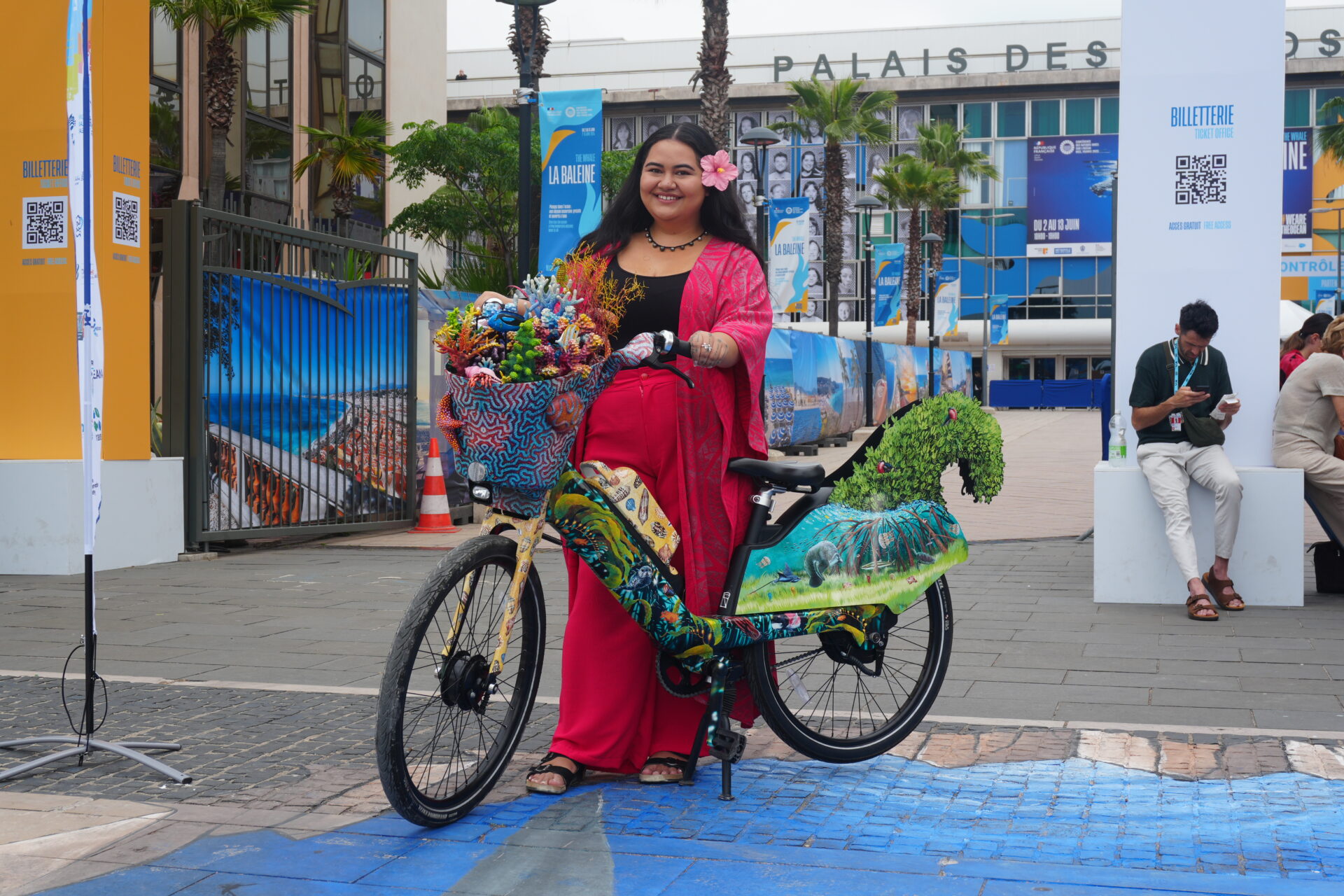
As world leaders gathered in Nice for the third UN Ocean Conference, Ride Green for the Blue rolled through the city’s streets, a powerful, moving artwork and campaign designed to turn heads and ignite action. From policymakers to everyday commuters, the message was clear: the race to protect our ocean is already underway.
“With less than 8.6% of the world’s ocean protected and the 2030 deadline fast approaching, Nice needed to deliver bold, ambitious action,” Imogen Jolliffe from Greenhouse Communications shared. “Our collaboration with Lime and artist Francesca Page transformed the iconic Lime bike into a moving art installation of thriving marine habitats – a vital reminder of the urgent need to protect our oceans. It ensured these crucial calls for protection resonated not just in the policy rooms, but across the streets of Nice.”
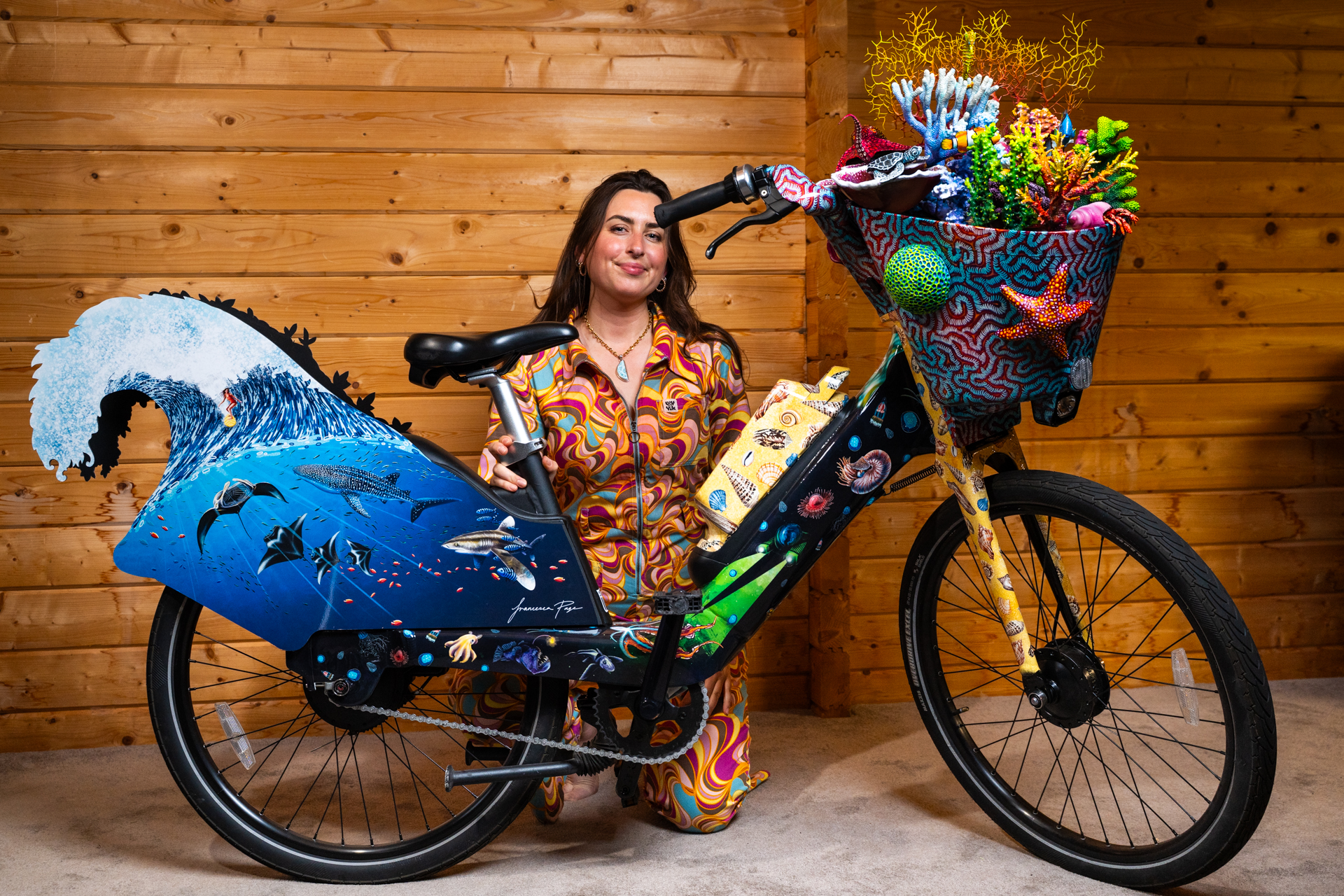
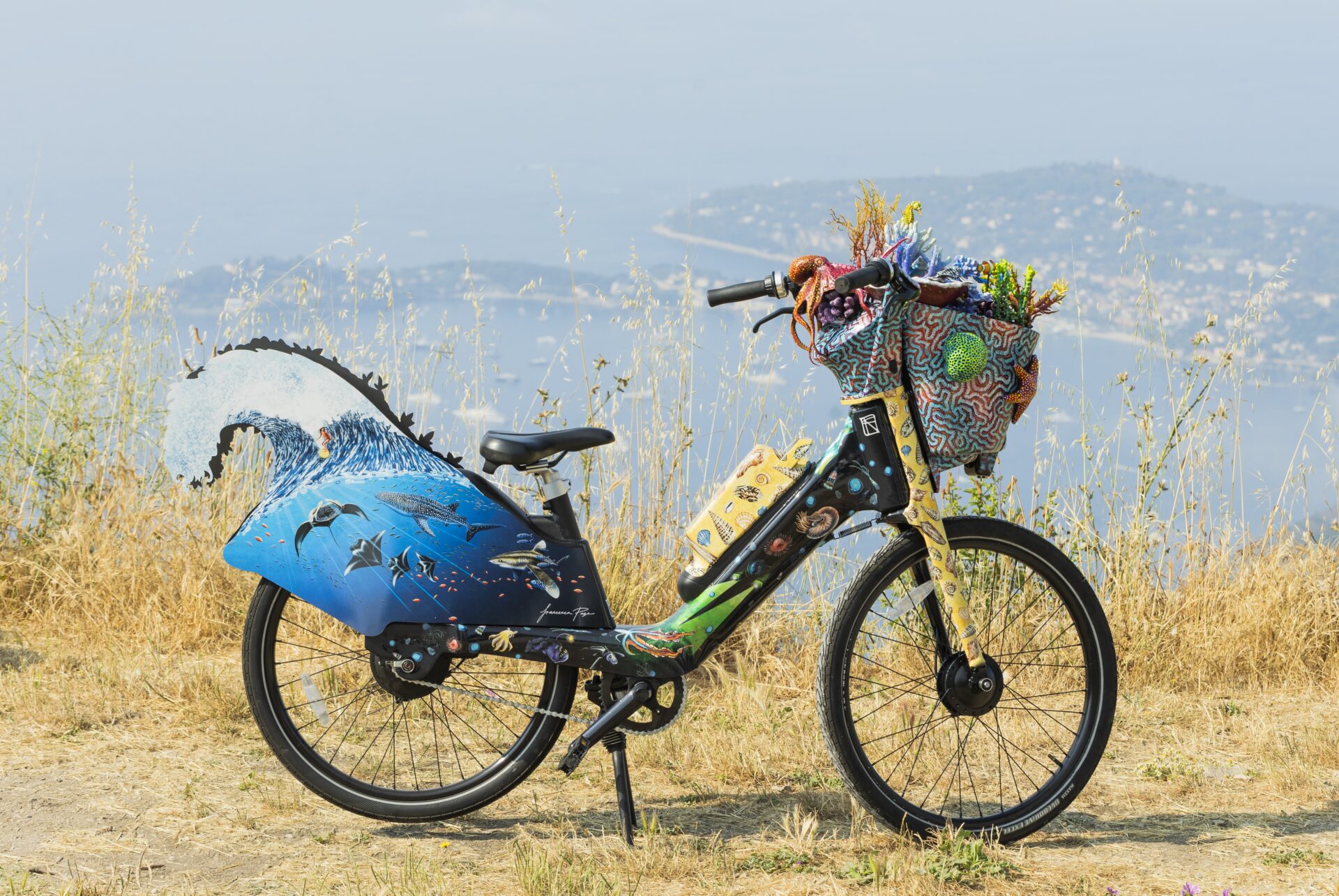
And so, my task was set: to transform a Lime bike into the Ocean on Wheels.
Other features
As we know, our oceans are not in a fantastic state. As a visual artist and ocean explorer, I’m acutely aware of the harsh realities they face. My photojournalism career has taken me around the world, from investigating the shark fin trade in Indonesia and exploring 300 metres below the waves in a submersible off the coast of Costa Rica, to documenting the open ocean in the Azores and learning about the importance of mangroves as nurseries for endangered sharks in the Bahamas. I’ve witnessed the world’s largest cuttlefish migration in South Australia and spent countless hours in my home waters here in the UK, exploring vital habitats like kelp forests and seagrass meadows.
Out in the field, I have worked alongside my twin sister, a doctor of coral science, to understand first-hand the devastating impacts of climate change on coral reefs. I’ve spent an unusual amount of time on the crimson-stained floors of fish markets, documenting shark and ray bycatch and joining local fishers at sea to better understand their perspectives. These experiences have deepened my understanding of the issues and the importance of balancing science, conservation, and local knowledge to create long-lasting change.
All of this has shaped how I see the world and strengthened my belief in the power of storytelling. With a deep curiosity for the natural world and a drive to make complex science more accessible, science communication has become a central part of my creative practice. Whether through my camera lens or paintbrushes, I believe art has the power to protect, connect, and ultimately help save our blue planet.
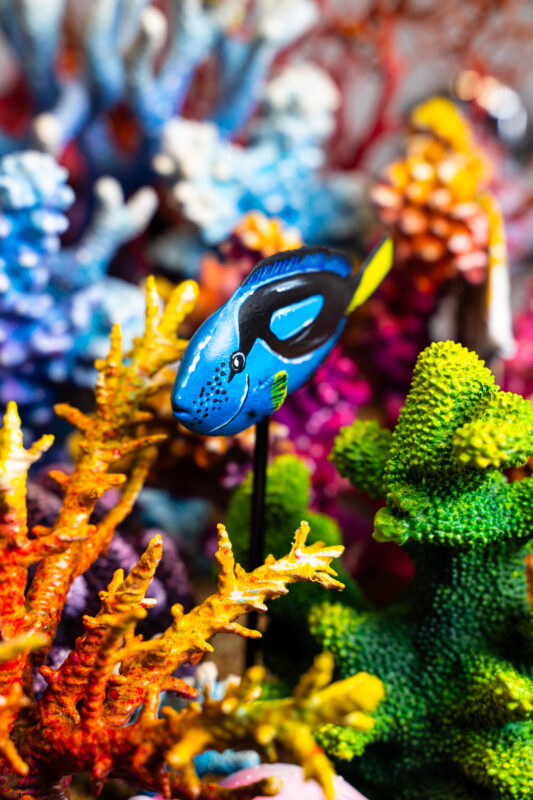
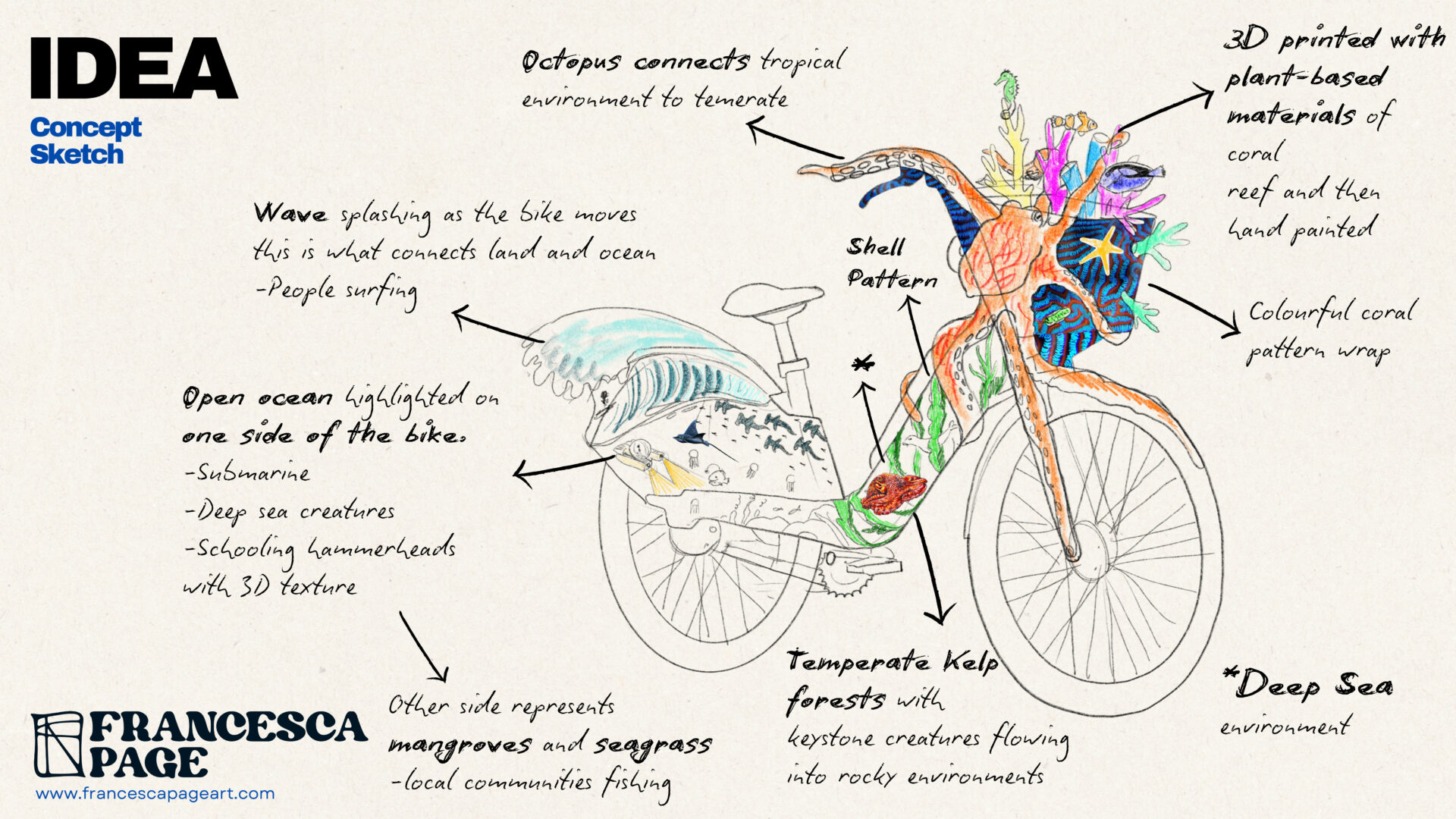
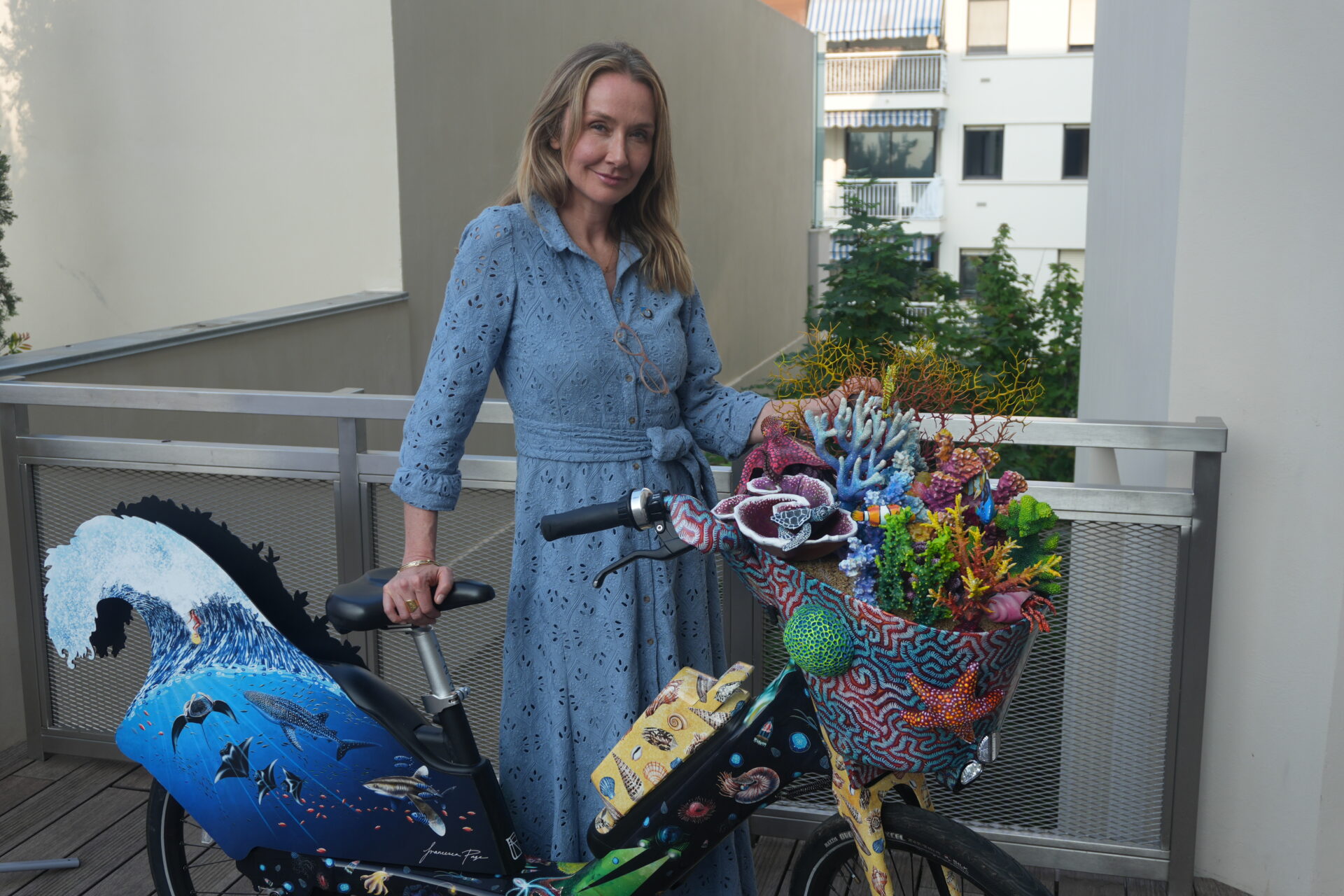
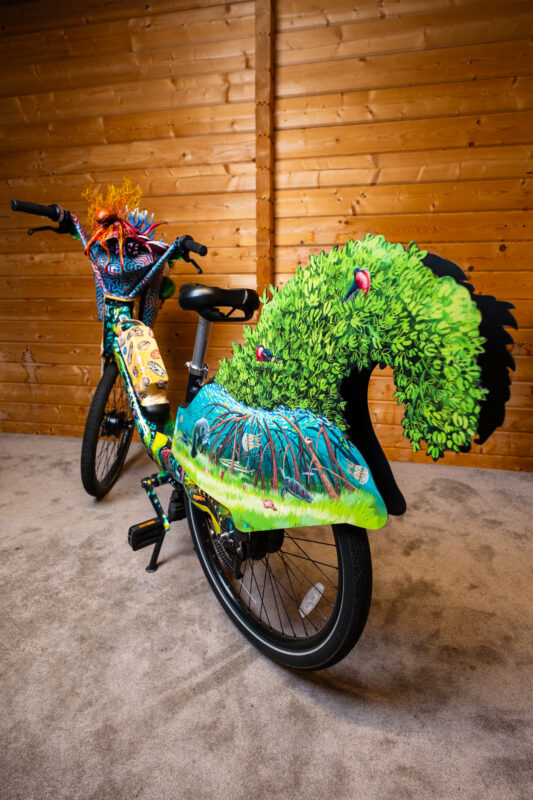
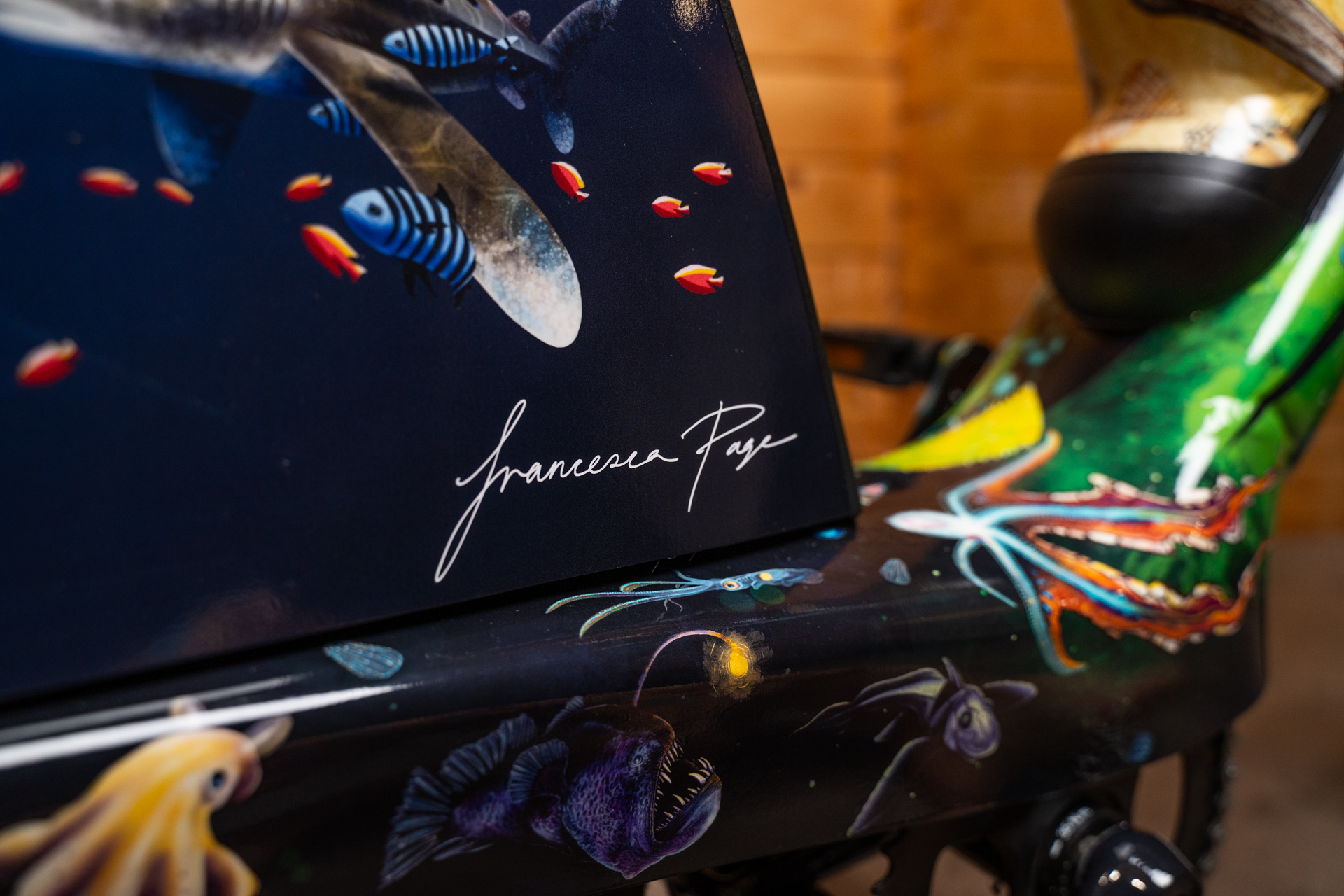
When developing the design and creative vision for the bike, the phrase Ocean on Wheels kept echoing in my mind. What if I could highlight some of the ocean’s most vital habitats by representing and celebrating them through art? After filling pages of my sketchbook with ideas, I landed on eight essential marine habitats, each critical to achieving the 30×30 conservation goal: coral reefs, kelp forests, the deep sea, the open ocean, coastal waters, seagrass meadows, and – of course – mangroves.
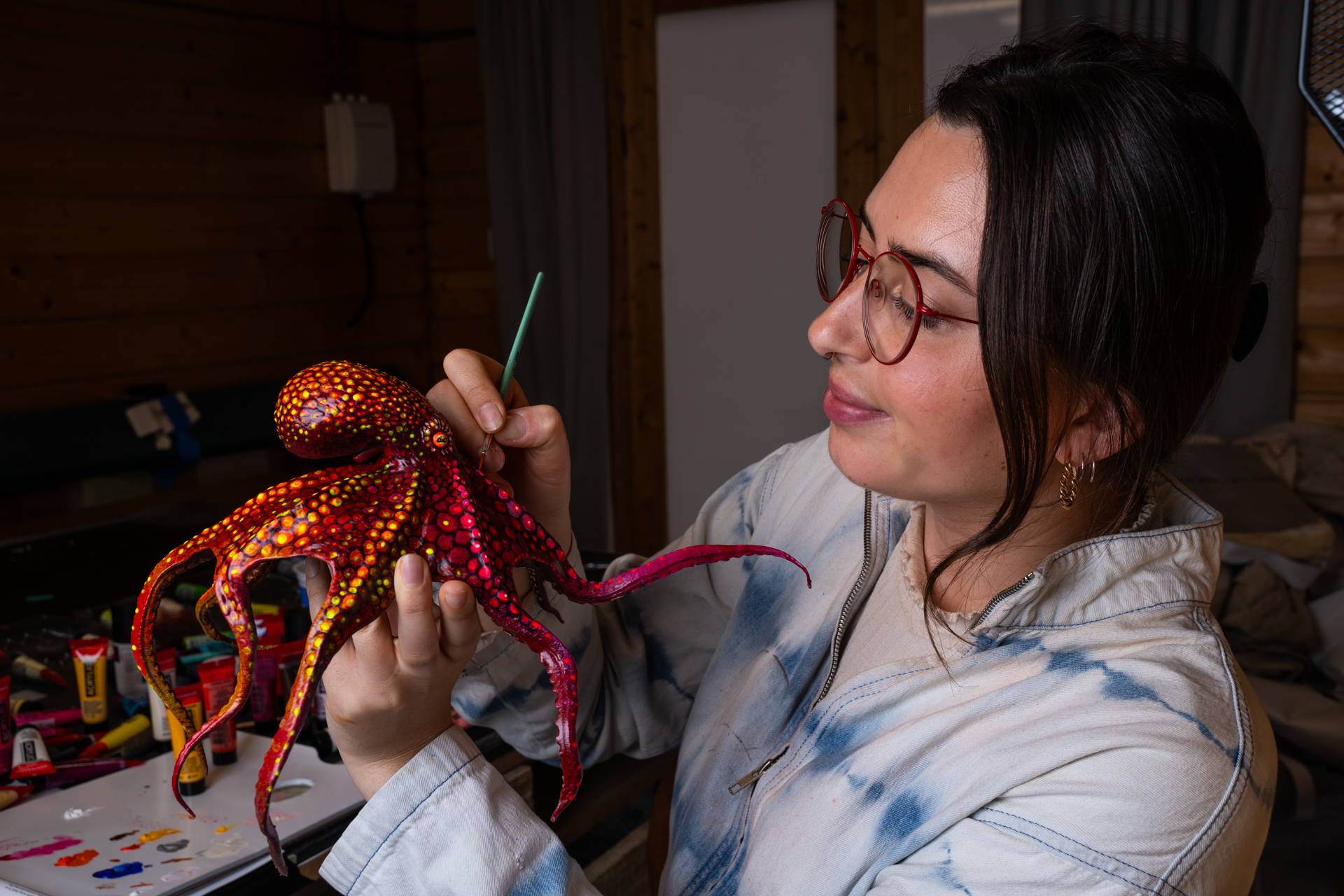
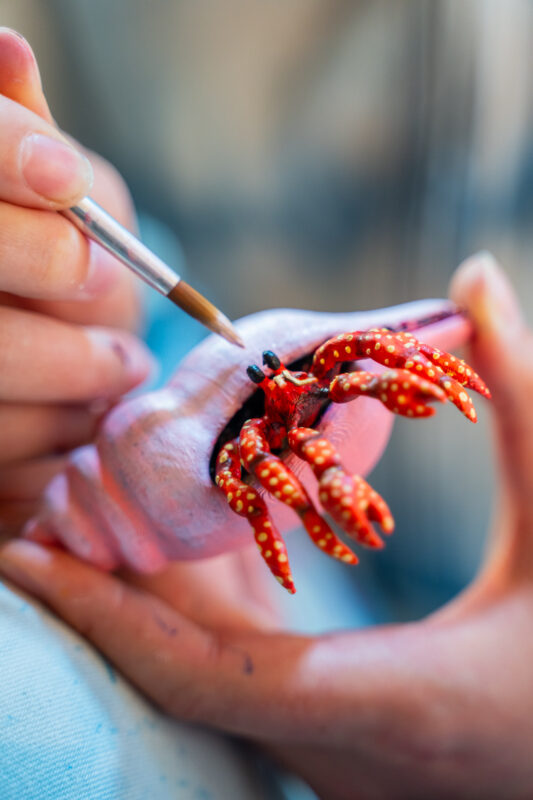
If you’re familiar with my work, you’ll know I’m pretty obsessed with colour and detail. For this project, I hand-illustrated each ocean habitat digitally, carefully bringing to life every creature and element on the bike. I wanted it to feel exciting every time someone saw it, a vibrant invitation to discover new species, form personal connections, and imagine their own ocean stories.
Each habitat holds powerful stories and questions, yet unlike the often grim narrative surrounding ocean decline, this piece was designed as a celebration. A bright, visual reminder of what we still have to protect. As Dr. Jane Goodall says, “There is still so much in the world worth fighting for.” That’s the feeling I hoped to evoke, urgency, yes, but hope.
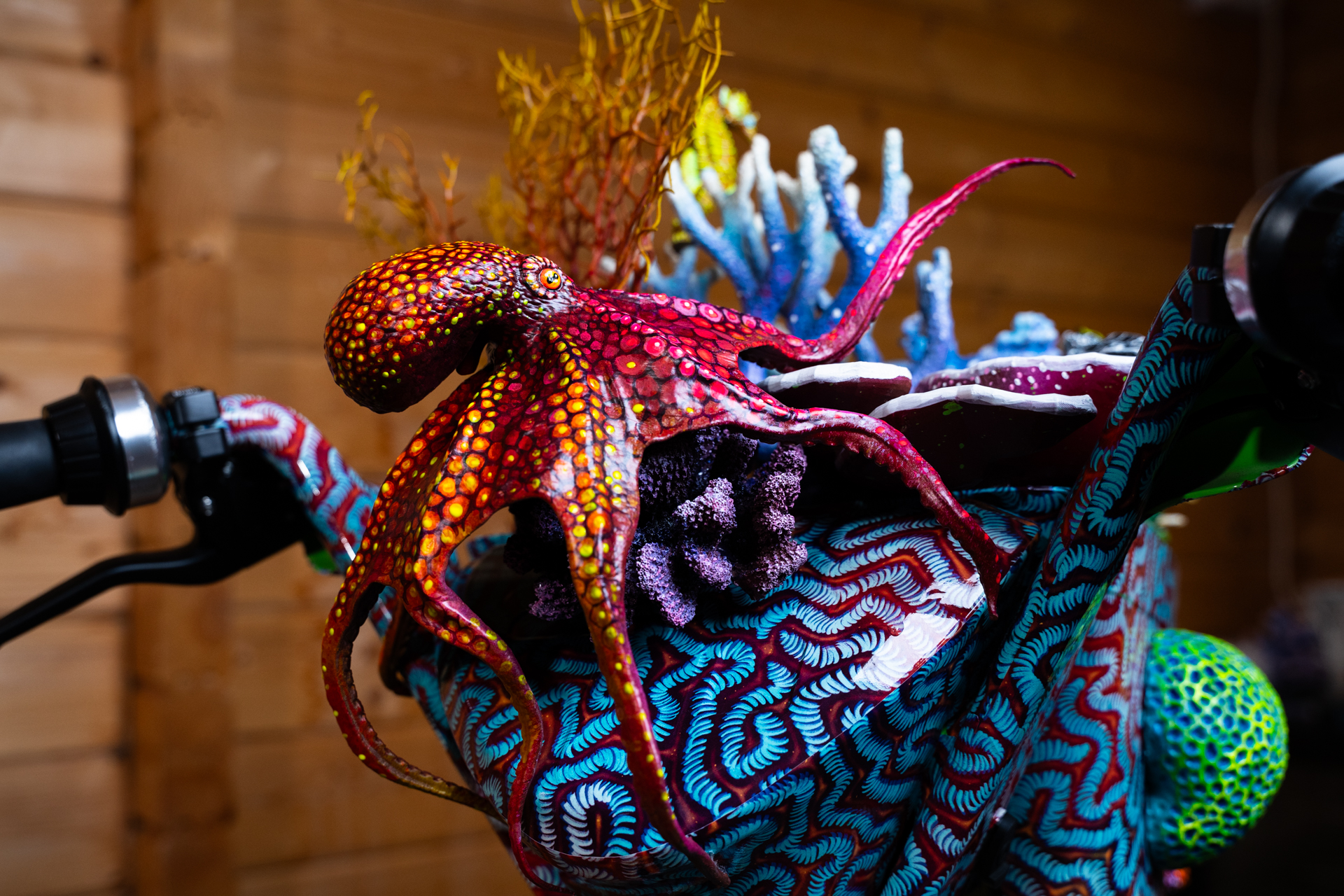
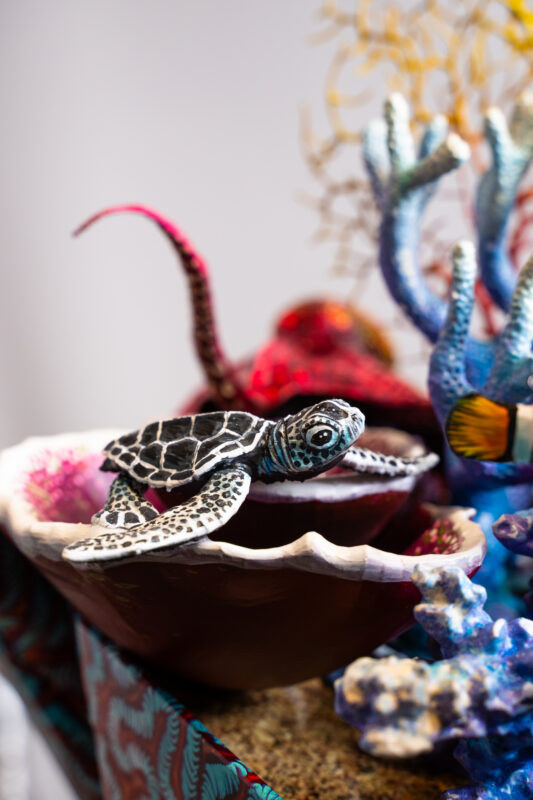
Bringing the ocean’s voice to the streets of Nice was a responsibility I took seriously. If I was going to create this bike, it had to be ocean-friendly. I focused a lot of my attention on ensuring that every material used was kind to our blue planet. At first, I considered using recycled plastic bottles; however, it still didn’t sit right with me. Even recycled plastic is still plastic, and if it finds its way into the ocean, it becomes part of the problem.
After a lot of research, I found a better solution. The 3D-printed sculptural element in the bike’s basket was made using PLA, a biodegradable, plant-based material derived from cornstarch, cassava, or sugarcane. For the bike’s body, I used a PVC-free (plastic-free) vinyl wrap and water-based paints, making the entire installation as eco-conscious as it is eye-catching.
As delegates raced between high-level meetings, and locals and tourists cruised through Nice on two wheels, this hero bike stood out, a moving symbol of accountability and action. During UNOC (9–13 June), there were approximately 25,700 rides on Lime bikes and 73,800 kilometres travelled across the city. Each one a small shift away from fossil-fuelled transport, and a step toward a cleaner climate and healthier ocean.
This was also a call to action, a loud, visual demand for our governments to step up and finally ban bottom trawling in EU and UK marine protected areas. Right now, bottom trawling is still tearing through supposedly protected waters, contradicting their very purpose while threatening marine wildlife, accelerating the climate crisis, and putting food security and economic resilience at risk, especially for coastal communities who rely on the ocean.
As Sylvia Earle puts it, “Bottom trawling is a ghastly process that brings untold damage to sea beds that support ocean life. It’s akin to using a bulldozer to catch a butterfly, destroying a whole ecosystem for the sake of a few pounds of protein. We wouldn’t do this on land, so why do it in the oceans?”
Through this campaign, around 30,000 emails were sent to the European, UK, French, and Spanish governments. And then, right in the middle of the conference, came the news – the UK government announced plans to ban bottom trawling across its network of marine protected areas. A huge step in the right direction, and proof that collective action and creative campaigning can lead to real change.
As Andrew Savage, VP of Sustainability at Lime, puts it: “Sustainability and reducing transportation’s impact on the planet is core to Lime’s mission. We’ve become part of citizens’ lives as our bikes are used for everyday travel, reducing carbon impacts one ride after the other. We are honoured to support this creative initiative with Together for the Ocean and Francesca Page as part of the UN Ocean Conference in Nice, once again taking a stand for the planet and inviting the community to recognise the role of transportation on the environment, to ride green for the blue.”
As the hero bike moved between the blue and green zones, the energy was electric. People stopped in their tracks to take photos, including high-profile figures like Alexandra Cousteau and UN ocean-climate solutionist Bodhi Patel. In doing so, the bike helped spark the kinds of conversations we urgently need, about action, accountability, and the role each of us can play in protecting our ocean.
Rebecca Daniel, Director of The Marine Diaries, put it perfectly: “I was blown away by the detail. Each side of the bike told a different ocean story, from the deep sea to seagrass, it was stunning.”
“It was more than just art, it was a visual call to action. I loved how it connected ocean protection with personal responsibility, like decarbonisation and sustainable transport. To see something so creative, so interactive, right at the entrance to the blue zone, a policy-focused area, was a breath of fresh air. It stopped people in their tracks. We need more of that in ocean conservation.”
As the UN Ocean Conference came to a close, a wave of powerful pledges offered glimmers of hope, for all ecosystems.
Support for the 2023 High Seas Treaty gained serious momentum, bringing us closer to protecting international waters that make up two-thirds of the ocean. A growing alliance of 37 countries called for a moratorium on deep-sea mining, recognising the irreversible damage it could cause to fragile ecosystems. Conversations around banning bottom trawling in marine protected areas finally began to feel louder and more urgent.
The spotlight also turned to plastic pollution and fisheries. Over 90 countries backed a global treaty to cut single-use plastics, while the Nice Ocean Action Plan elevated calls for sustainable fishing and restoring dwindling fish stocks.
Blue-carbon habitats such as mangroves, seagrass, and salt marshes got long-overdue recognition as vital players in coastal resilience and climate solutions. And new collaborations were launched to drive science-based action and direct funding toward frontline communities where these habitats still thrive.
“There was a huge sense of acceleration,” said Rebecca Daniel, “You could feel the energy – more collaboration, more commitment, more action. This UNOC was so much bigger than the last in Lisbon (2022). And holding it in Nice, a coastal community already so connected to the sea, just made sense. There was a real effort to engage the public too, which is so important because the ocean belongs to all of us. It was a vital opportunity for the ocean community to come together – to create connections and partnerships, get inspired, and break down silos – and that’s exactly what we need to really scale up ocean action.”
Yet as promising as these announcements are, I can’t help but feel that familiar tug of urgency. Words are powerful only if they lead to action. Coral reef collapse, biodiversity loss, and climate change aren’t distant threats. They’re here.
That’s why projects like Ride Green for the Blue matter. As this moving art installation moved between the conference’s blue and green zones, it sparked something: conversations, curiosity, and that critical moment of pause. It reminded us that we all have a role to play. Change doesn’t just come from leaders, podiums, or policies; it comes from people. From creativity, community, and the collective decision to keep moving forward, together, for the ocean.
Francesca Page will be joining the Oceanographic Magazine line-up of subject expert Columnists as she continues to explore the role of art and media in reconnecting society with the ocean.

Printed editions
Current issue
Back issues
Enjoy so much more from Oceanographic Magazine by becoming a subscriber.
A range of subscription options are available.
