Special feature: The deep sea and the race to mine the abyss
The metals needed for the energy transition lie on the floor of the Pacific. The rules governing how to mine them do not yet exist. This year, that changes, one way or another.
In a special and comprehensive feature written for Oceanographic, investigative journalist and ocean advocate, Luke McMillan takes a deep, cold plunge into the murky depths of deep sea mining.
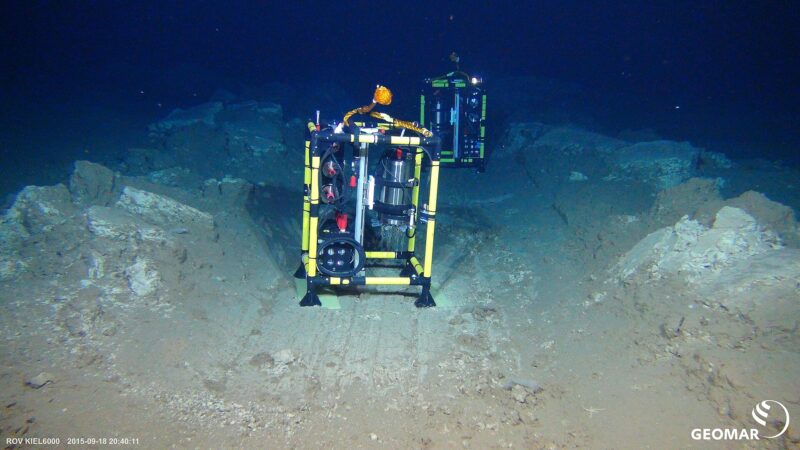
In February 2023, the Royal Research Ship James Cook set out for the central Pacific, midway between Mexico and Hawaii. Five kilometres below the surface, in water that has never known sunlight, the robotic submersible Isis descended toward the floor of the Clarion-Clipperton Zone (CCZ).
The tracks it was looking for had been made 44 years earlier. In 1979, the Ocean Minerals Company came to this stretch of abyssal plain to find out whether the metal-rich rocks lying across it could be collected at industrial scale. These rocks, polymetallic nodules, are typically five to ten centimetres across and form over millions of years, drawing dissolved metals out of the surrounding seawater. The company lowered a collection machine to the seabed. It scraped across the floor for four days, disturbing an area of about 0.4 square kilometres.
When Isis reached the seabed, the team found the machine tracks almost immediately. Eight-metre-wide strips where the nodules had been scraped away, flanked by deep furrows gouged by the machine’s rotating Archimedes screws. The marks, said Dr Adrian Glover of the Natural History Museum, who co-led the expedition, “looked like they were made yesterday.”
The larger animals that once lived there, sponges, corals, and other sessile creatures that fix themselves to a hard surface and cannot move, were still largely absent from the mined tracks. Counts of visible animal life in the disturbed areas ran well below those in a neighbouring untouched seabed. Smaller, more mobile organisms had begun to recolonise. Life was returning, slowly, after nearly 50 years.
Two large sponges were found growing on the tracks. Both were attached to nodules that were missed in 1979.
• • •
The same metals locked inside those nodules store more energy per kilogram than cheaper alternatives, which is why they went into the first generation of electric cars and into the batteries powering phones, grid storage, and aerospace.
The International Energy Agency’s latest projections suggest that demand for lithium could grow fivefold by 2040. Under the ambitious net zero pathway, nickel and cobalt demand both double, and total mineral demand for clean energy technologies quadruples by 2040, reaching nearly 40 million tonnes a year.
• • •
The International Seabed Authority, the intergovernmental body that regulates deep-sea mining in international waters, has designated an exploration area within the CCZ of approximately 4.5 million square kilometres, around half the size of Brazil. The nodules contain nickel, cobalt, manganese and copper, in quantities the ISA’s own assessments suggest may exceed all currently identified terrestrial reserves. The seabed figure measures what is believed to exist, while the land figure measures only what is currently profitable to mine.
So, the question is this. Should we mine the deep ocean to power the energy transition? Can we afford to? Can we afford not to? Who decides, based on what evidence, and on behalf of whom?
More than 30 exploration contracts have been issued by the ISA for deep-sea mineral resources worldwide, 17 of them in the CCZ alone. The finalised rules governing commercial extraction do not yet exist.

The resource and the habitat
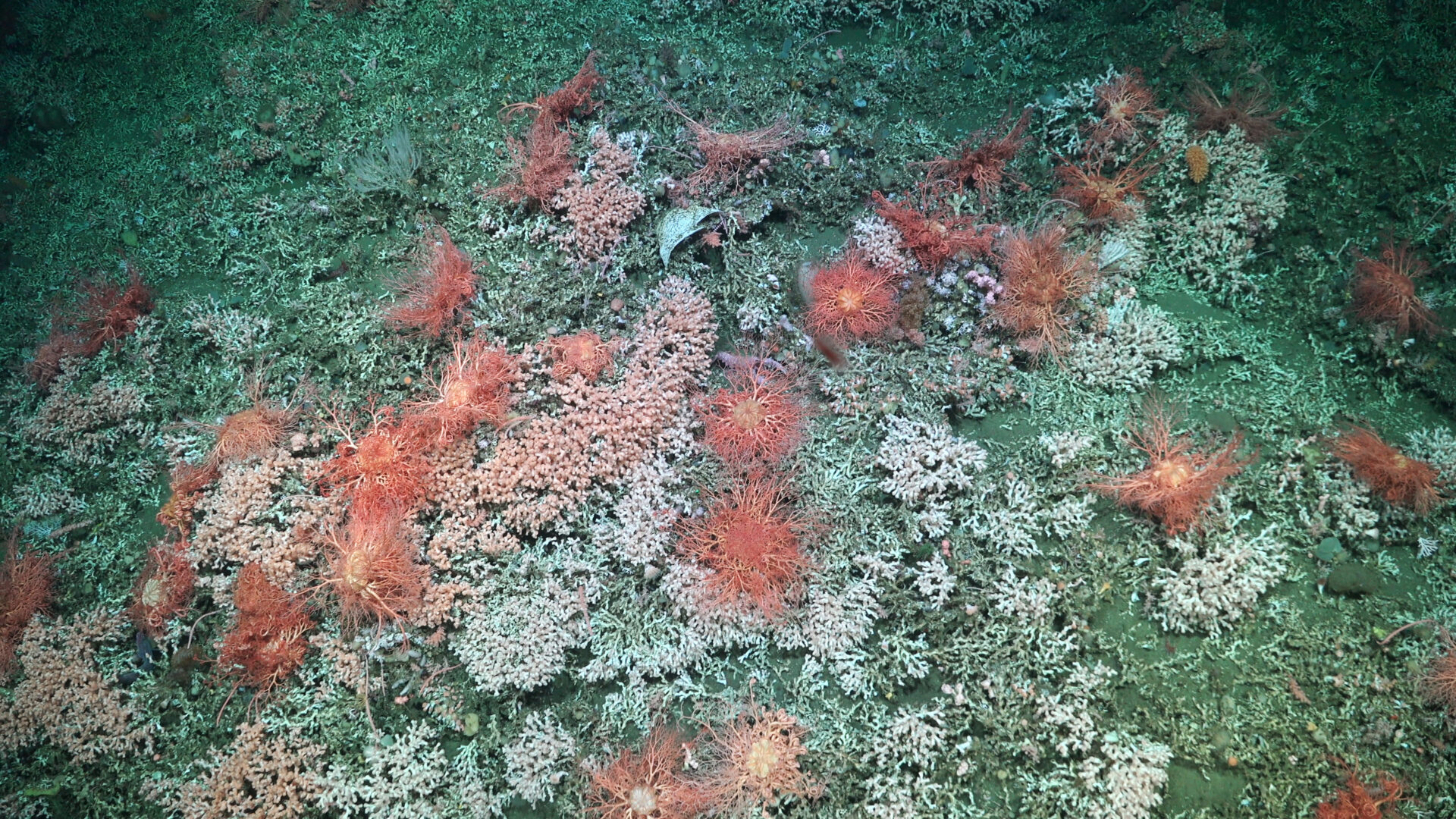
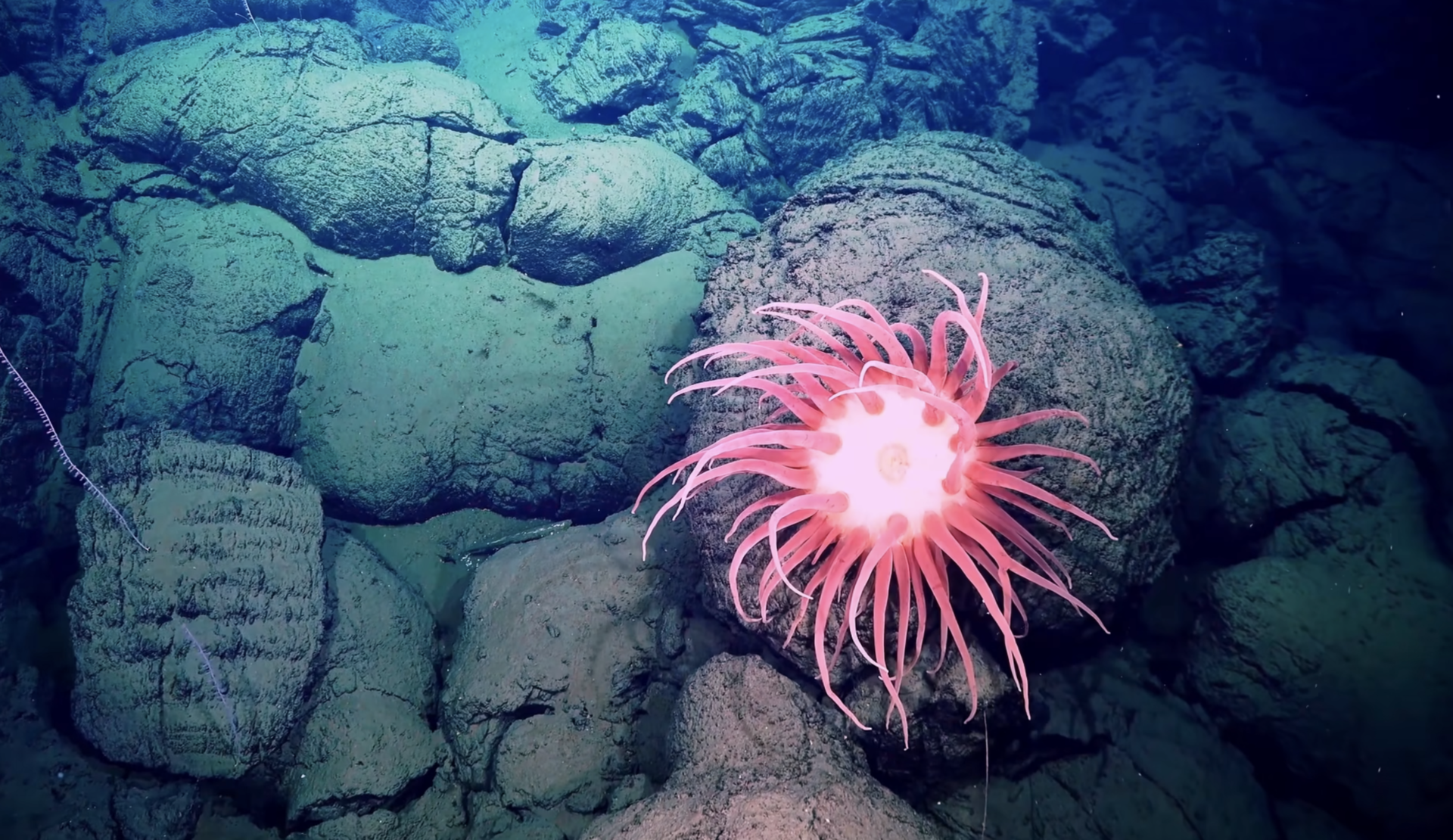
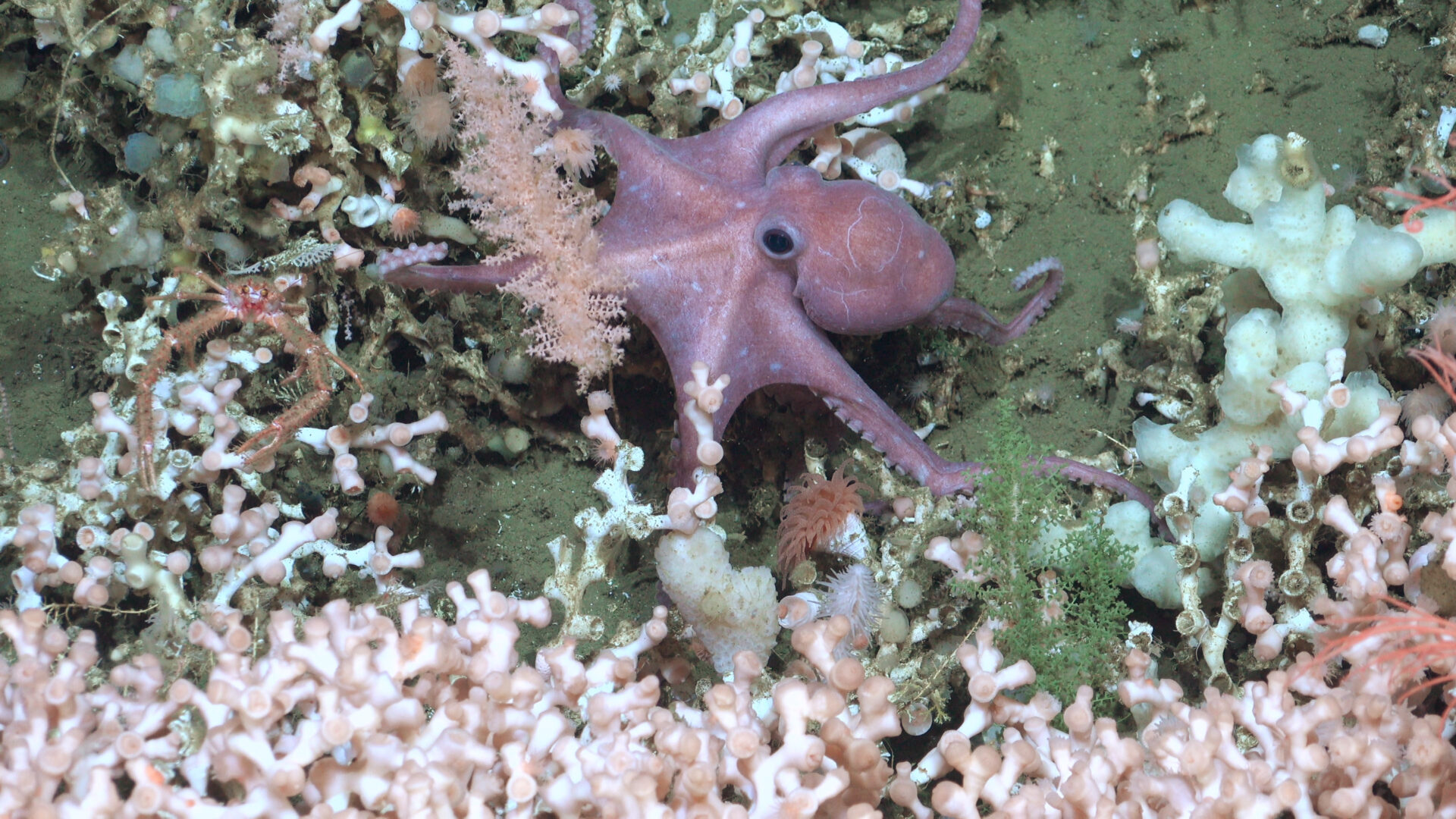
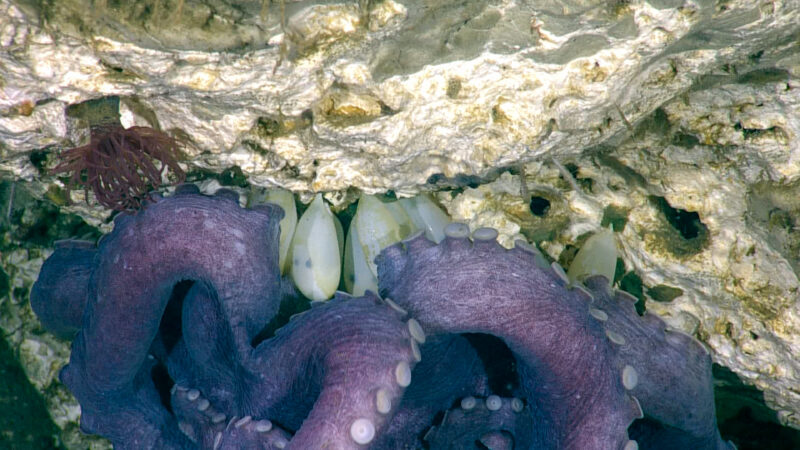
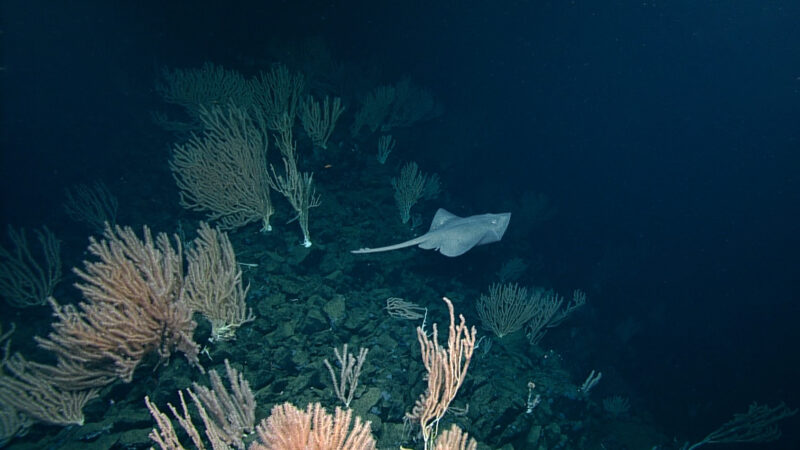
The Clarion-Clipperton Zone is an ecosystem of exceptional complexity. The nodules are not merely mineral deposits, they are a habitat. In an abyssal plain otherwise composed of soft sediment, they provide the only hard substrate for hundreds of kilometres in any direction. A typical nodule has been forming for tens of millions of years. When they are removed, the habitat is removed with them.
A Natural History Museum-led team compiled the most comprehensive species register of the CCZ to date in 2023, recording more than 5,500 species. Approximately 90 per cent are estimated to be new to science. Many depend on the nodule surface to survive.
The species count is not the only surprise the CCZ has produced. In July 2024 a team led by Andrew Sweetman reported that sealed chambers placed over nodule-bearing sediment at 4,000 metres depth were producing oxygen, in complete darkness, where no photosynthesis is possible. The research was funded by TMC, which also aided in site selection, a conflict disclosed in the paper.
The team hypothesised that the nodules might function as natural batteries, generating enough electrical charge to split water and release oxygen. The team called it “dark oxygen.” A peer-reviewed rebuttal published in December 2025 argued the increases were more likely explained by flaws in the sealed-chamber methodology. Most of its authors had their own disclosed connections to TMC or related companies.
Sweetman’s team later acknowledged that some of the instruments did not contain nodules, which the hypothesis required. By 2025, they were describing the cause of the oxygen increase as unclear. In April 2026, the editors of Nature Geoscience issued a formal notice that aspects of the paper are under editorial review. A follow-up expedition will report later this year.
• • •
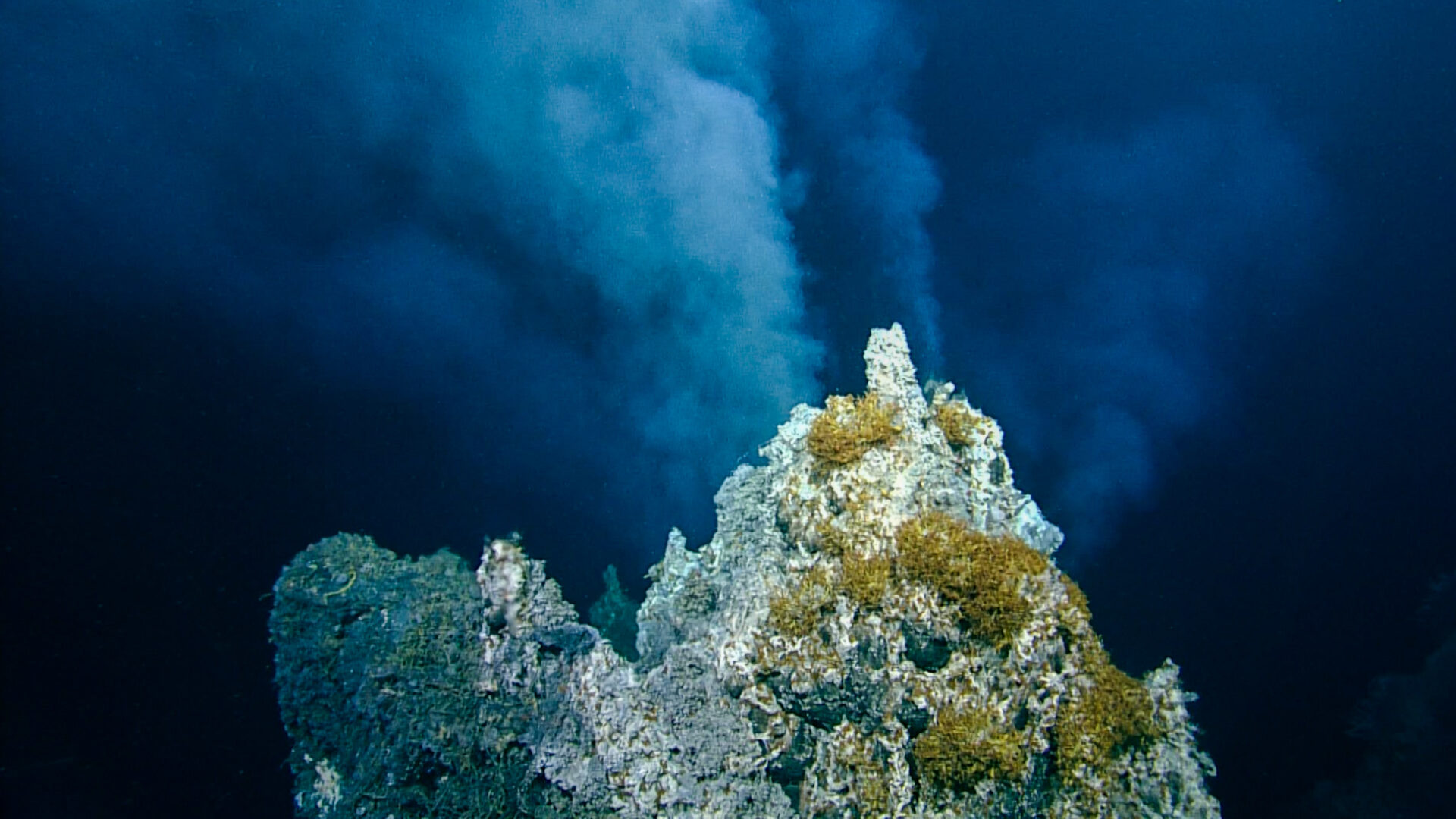
At hydrothermal vents, the problem is more fundamental. The mineral deposits and the biological communities are the same system.
The bacteria at the base of the vent food web derive their energy from the same hydrogen sulphide that creates the deposit. Mining the chimneys would not disturb the habitat, it would destroy it.
One species, the scaly-foot snail, incorporates iron sulphide directly into its skeleton. In 2019, it became the first species listed as Endangered on the IUCN Red List specifically because of anticipated deep-sea mining impacts.
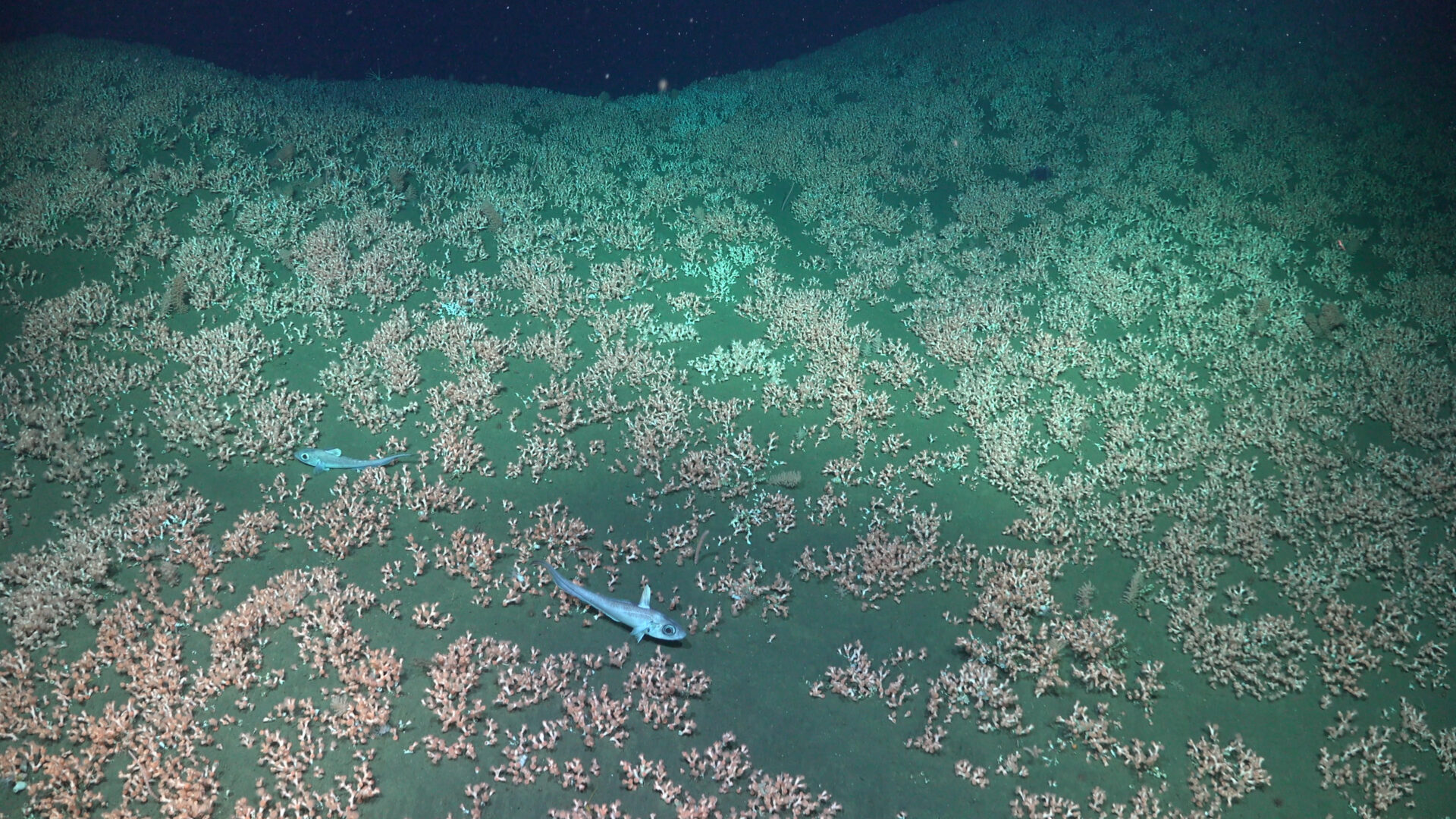
Cobalt-rich crusts present a third variant. They bond to the flanks of seamounts and grow at one to five millimetres per million years, the slowest-growing mineral deposits on Earth, supporting centuries-old cold-water coral communities. No commercial-scale extraction technology exists for any of these deposit types.

The demand
The supply chain for battery metals is heavily concentrated. China controls the refining of 60-70% of the world’s cobalt and a comparable share of lithium. The Democratic Republic of Congo supplies around 70% of global cobalt ore, extracted under conditions, including documented use of child labour, that have generated sustained international criticism. The industry argues that the deep seabed offers a way forward. Nodule fields in the CCZ contain more nickel and cobalt than all currently identified terrestrial reserves, available in international waters not dominated by any single state.
That argument carries a caveat. The nodules still need to be processed somewhere. In June 2025, Korea Zinc, one of the few non-Chinese companies capable of refining the relevant metals at scale, made an $85.2 million strategic equity investment in TMC, a deal both companies framed as the foundation for a future processing partnership, though the refining arrangements remain under evaluation. No processing deal has yet been signed.
The industry makes the further argument that nodule mining is cleaner than the alternative. TMC’s environmental case rests on a 2020 study that compared the carbon footprint of producing battery metals from CCZ nodules against conventional terrestrial sources. Its central finding was that nodule-derived metals would generate 70-75% less CO₂, with near-zero solid waste and no deforestation. The study was funded by DeepGreen Metals, the company that became TMC, which also provided the data. One author disclosed a financial relationship with the funder. The underlying claim is not implausible. Nodule collection sees no drilling, blasting, or toxic waste rock. A 2026 review found the carbon savings come primarily from cleaner processing, not from the extraction itself, which is more energy-intensive than onshore mining.
What studies of this kind can measure is limited to what has a market value. The deep ocean absorbs carbon, supports food webs, and processes chemicals on a planetary scale. None of this has a price, what has no price does not appear in the calculation, and what is not priced is not protected.
• • •
On 24 April 2025, President Trump signed an executive order to fast-track permitting for seabed mineral exploration in international waters. Five days later, TMC applied to NOAA, the US federal agency responsible for oceans and the environment, for exploration licences and a commercial recovery permit under a 1980 domestic US law enacted before the ISA existed. By January 2026, TMC had expanded its proposed recovery area to approximately 65,000 square kilometres, roughly the size of Ireland.
Gerard Barron, TMC’s chief executive, told Congress the nodule fields represented a strategic opportunity for America, framing the resources in national security terms and claiming the CCZ held more nickel, cobalt, manganese, and copper than all known land reserves combined. The same argument had appeared in a company statement weeks earlier. The ISA had failed to meet its own treaty obligations, and the US offered a more reliable path forward.
The legal position is contested. The United States never ratified the UN Convention on the Law of the Sea, the treaty that established the ISA and governs international seabed rights and disputes the ISA’s claim to exclusive authority over deep-sea mineral activities in international waters. The ISA’s position is categorical. It remains “the only legal authority to regulate deep-sea mineral activities in international waters” and any attempt to bypass its framework “would constitute a violation of international law.”
In July 2025 the ISA’s governing council formally asked for information from contractors it believed might be planning to operate outside its authority. A March 2026 Greenpeace briefing argues the language was aimed specifically at TMC, given its pursuit of US permits. The compliance inquiry findings are expected at the ISA’s summer 2026 sessions. Meanwhile, TMC’s own filings to US financial regulators contain a striking admission. There is no guarantee the permits will ever be granted. Barron was telling Congress the nodules would end American mineral dependence. The same filings required his company to state the opposite to investors.


The ecological price tag
Two studies from overlapping teams bracket what mining does to abyssal ecosystems. One measures the immediate aftermath and one measures what remains after nearly half a century.
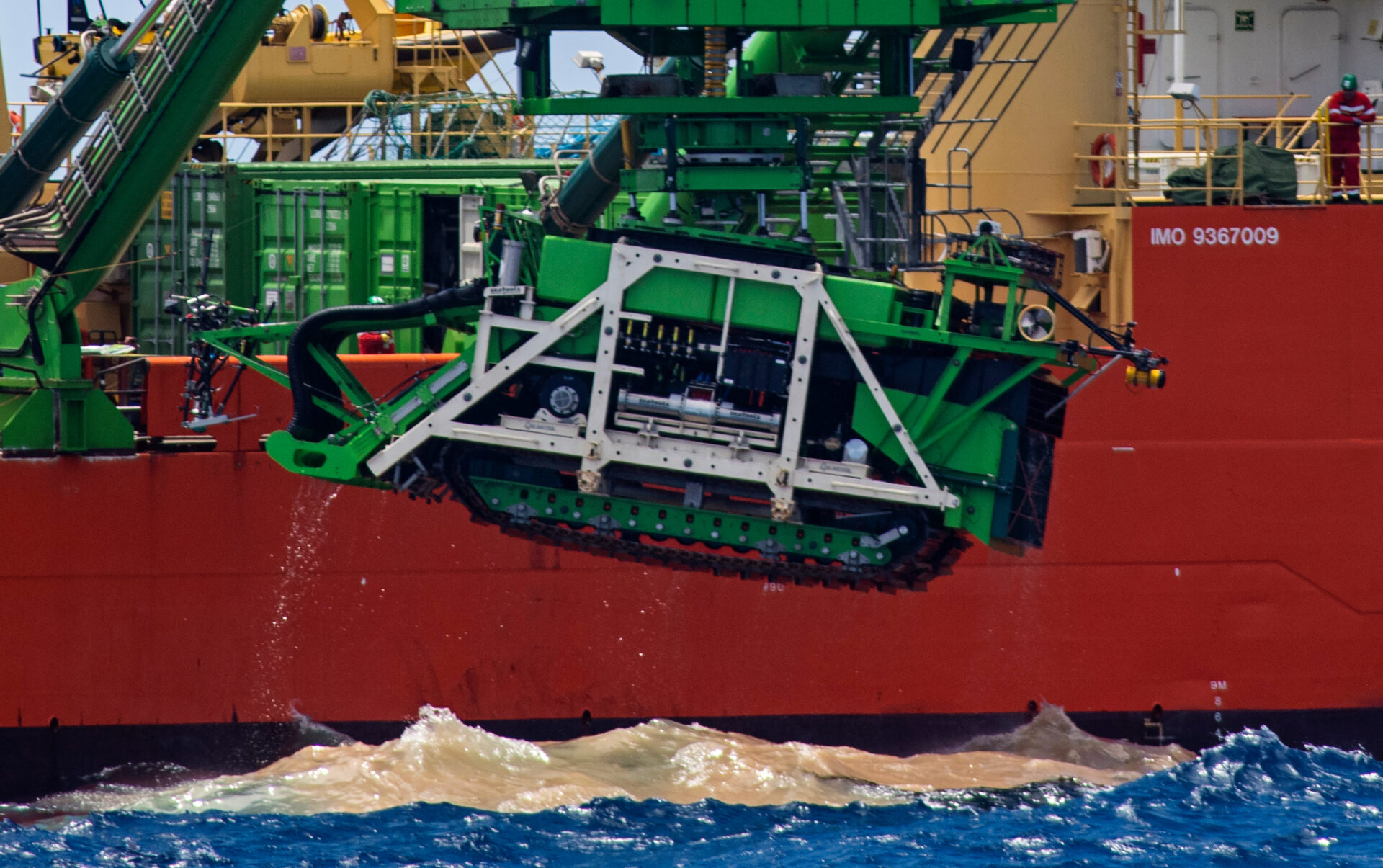
The short-term picture comes from the 2022 NORI collector test, the most advanced commercial mining trial yet undertaken. TMC’s collector vehicle ran for several weeks in the CCZ, recovering more than 3,000 tonnes of nodules and cutting more than 80 kilometres of tracks. Two months later, animal density in the tracks had fallen by 37% and species richness by 32%, though the authors note the species drop largely follows from the loss of animals overall. The community left behind was patchier and less structured. Nobody has been back since.
The long-term picture comes from the study of the 1979 test site, published in March 2025, the 44-year record described in the opening of this article. The physical scars remain. The eight-metre-wide cleared strips are still visible on sonar. Some recovery has occurred. Smaller mobile organisms have returned. Sediment-dwelling animals have largely regained their pre-disturbance numbers. Jones calls these early returners “like the poppies that return quickly to a ploughed field.” The trees have not grown back. The sponges, corals, and creatures that anchor to hard surfaces and grow across decades remain rare in the tracks, showing only the earliest signs of re-establishment. Where the nodules themselves were removed, the substrate they grew on is gone.
Jones et al. also found that areas affected by sediment plumes from the 1979 test showed limited detectable long-term biological impact, a finding Jones describes as “a surprise,” and one that challenges a widely held assumption about plume damage. The caveat is that the 1979 test was small-scale. Scaling these findings to commercial operations across thousands of square kilometres may not translate directly.
Barron responded to the paper by telling a mining industry publication that “recovery is not only possible but likely within decades.” He was drawing on real findings. Sediment-dwelling animals have largely returned to pre-disturbance numbers after 44 years. But the paper also shows that the large sessile creatures remain rare in the tracks, that physical impacts persist for at least many decades, and that where nodules were removed, the substrate they grew on cannot be restored.
Glover was unambiguous. For the first time, scientists had real evidence of how long recovery in deep-sea mining regions takes, something that had been entirely unknown until now.
Not everyone drew the same conclusion. An MIT co-author of the Jones study, who advises the ISA on environmental monitoring, testified before Congress four weeks after publication. His lab runs trials with a Belgian ISA contractor, a conflict he disclosed. He argued some impacts had been overstated: plumes travelled less distance than predicted. He urged a slow, monitored approach before commercial scale.
Neither paper can answer the most important question. What does a commercial-scale operation, run continuously across thousands of square kilometres, leave behind over decades?
The studies describe what happened to an eight-metre-wide machine over four days in a single stretch of abyssal plain. TMC’s application covers approximately 65,000 square kilometres, roughly the size of Ireland. Industry analysts suggest total operational seafloor requirements of around 400 square kilometres per year, implying roughly 8,000 square kilometres disturbed over a 20-year mine life.
The same researchers note that modern collector designs may cause less physical disruption than the 1979 machine. Their conclusion nonetheless is that mining impacts in the abyssal ocean will persist over at least decadal timeframes.
• • •
The disturbance does not stop at the seabed. A 2025 study examined the depth at which mining waste would be discharged and found that those particles contained far lower amino acid concentrations than the natural matter sustaining life there. More than half the zooplankton and 60% of small fish and crustaceans at that depth depend on the natural particles as their primary food. Replace them with nutritionally empty waste, the researchers warn, and the food web could begin to unravel, with “potentially severe consequences.” The research was supported by TMC through NORI, a conflict disclosed in the paper.
The concern is not only ecological. The depth band where waste would be discharged is the same zone through which mercury enters the marine food web and travels up to human consumers through fish. Some Pacific Island nations draw more than 20% of their reported tuna catches from within or adjacent to CCZ mining zones. No mining has yet occurred and no health impacts have been measured, but the peer-reviewed literature identifies plausible pathways from discharge to seafood contamination, and the ISA’s unfinished environmental standards were not designed to address them.
The ISA has not yet established the thresholds that would define when mining causes unacceptable harm. In their absence, its own guidelines instruct contractors to set their own. The Commission has been urged to submit recommendations as a priority. It has not yet done so.

Who decides, and how
In 1982, most of the world’s nations signed the United Nations Convention on the Law of the Sea, declaring that the ocean floor beyond any nation’s jurisdiction belongs to no one. The seabed and its resources are the common heritage of mankind, not the property of whoever gets there first and not sovereign territory. Any exploitation must be carried out “for the benefit of mankind as a whole.” The institution charged with making that principle operational is the International Seabed Authority, established by the same convention, with 172 members.
The ISA’s mandate contains a tension at its core. It is required both to manage the development of seabed mineral resources and to ensure effective protection of the marine environment. In January 2026, the High Seas Treaty entered into force. It requires environmental impact assessments for activities in international waters and creates a mechanism for marine protected areas beyond national jurisdiction. Together, the two instruments form the legal architecture within which any deep-sea mining is supposed to take place.
Russia has neither signed nor ratified the High Seas Treaty. The United States signed in 2023 but has not ratified it.
The treaty’s tension is plain to Duncan Currie, an environmental lawyer who advises the Deep Sea Conservation Coalition on ocean governance. “There is a conflict between the two mandates,” he acknowledges, “but there is a simple resolution. Don’t conduct exploitation where, taking into account the precautionary principle, harm may be caused to the marine environment.”
Michael Lodge, the ISA’s previous Secretary-General, argued throughout his tenure that development and environmental protection are co-equal obligations. Neither prevails over the other, and the Authority is required to facilitate exploitation as well as protect the environment. His successor, Leticia Carvalho, who took office in January 2025, has signalled that environmental protection is a precondition rather than a consideration. Her first major test is the summer 2026 Council session, where the TMC compliance investigation findings are expected.
The Mining Code, the regulatory framework that would govern commercial deep-sea mining, has been under negotiation since 2011 and remains unfinished. Currie put it directly. “There is no likelihood of regulations being adopted this year.”
Under the treaty that created the ISA, any sponsoring state can serve notice that its contractor intends to apply for a commercial mining licence. Once that happens, the ISA has two years to finalise its regulations, or face an application under whatever incomplete rules exist. The clock only starts if someone actually applies. Nobody did.
Nauru served notice in June 2021, on behalf of NORI, TMC’s subsidiary. The deadline expired in July 2023. The regulations weren’t ready. The ISA said it would continue without approving any exploitation plan. A moratorium held by default, because there was no rulebook to apply.
The ISA was not moved. The status quo held. Currie was clear. “The only way a contractor could apply for an exploitation plan of work is through the two-year rule. Most observers would conclude that such an attempt would fail due to multiple legal and political obstacles.”
• • •
Forty countries now support some form of restriction on deep-sea mining, spanning Pacific Island states, European nations, and Latin American and Caribbean countries. The ISA has 172 members. A two-thirds majority, around 115 votes, would be enough to implement a precautionary pause without requiring any treaty amendment. Of the ISA’s 172 members, 75 more would need to join them.
Norway illustrates how quickly positions can shift. It opened 280,000 square kilometres of Arctic seabed to exploration in January 2024, then reversed course and halted its licensing programme until at least 2029 following budget negotiations. China and India, both holding multiple ISA exploration contracts, China more than any other single nation, have not supported any moratorium.
The politics are nowhere more complicated than in the Pacific. Palau, Fiji, Vanuatu, and Samoa are among the most forceful advocates for a pause. Nauru triggered the two-year rule on behalf of the contractor it sponsors. The Cook Islands, with one of the most mineral-rich seabeds in the region, has framed extraction as a sovereignty question before an environmental one. The sovereignty argument and the commercial interest run in the same direction; whether they are the same thing is a question the debate has not yet had.
• • •
Beneath the governance debate sits a question nobody has answered. Who is accountable if things go wrong, financially or environmentally. The liability frameworks, Currie says, are “almost non-existent” and have “had very little discussion in the Council.”
The only available precedent is a financial one. Nautilus Minerals advanced further than any other company towards commercial deep-sea extraction before entering insolvency in 2019. Papua New Guinea had taken a 15% equity stake in the project and contributed the equivalent of hundreds of millions of dollars to its development. When Nautilus filed for court protection in Canada in March 2019, Papua New Guinea was among the creditors. The government recovered nothing. No legal mechanism existed to make anyone pay. Solwara 1 was in national waters, not governed by the ISA, but it shows the distance between theoretical accountability frameworks and what actually happens when a company collapses before those frameworks are tested.
TMC has never extracted a tonne of metal commercially. Its share price collapsed to below $1 by late 2024, then recovered to around $6 in the weeks after Trump signed the executive order. Its lobbying spend shifted over the same period from energy to seabed critical minerals to defence and national security.
The financial distribution raises a separate question. A February 2026 analysis, commissioned by Greenpeace International and drawn from the ISA’s own financial models, found that mining companies would take roughly 98% of gross revenues in the early years. Under a six-mine scenario, the average African ISA member state would receive around $344,000 a year; the average Pacific Island state, around $46,000. A peer-reviewed study reached the same conclusion. The architecture, the authors write, is redistribution “residual by design.” For most tuna-dependent Pacific states, the projected royalty is smaller than their annual tuna access fees.

What the evidence supports
The seabed authority has not established the environmental thresholds that would tell it when mining causes unacceptable harm. Defining those thresholds before any exploitation contract is considered is the stated goal of the expert group tasked with the work. It has not yet reported.
The United States has signed but not ratified the High Seas Treaty and has never ratified the convention that governs the seabed. It is proceeding under domestic legislation while the international framework remains unfinished. TMC’s own filings acknowledge there is no guarantee the permits will be granted.
The market has already started drawing its own conclusions. BMW has said deep-sea minerals are not an option at the present time, declaring it will not use raw materials mined from the deep sea or finance such projects until comprehensive scientific research into the impact of deep-sea mining can be conducted and the consequences for the environment are clearly assessed. More than 80 financial institutions have adopted formal policies excluding or restricting investment in the sector, according to a 2026 report by Seas at Risk and the Deep Sea Mining Campaign. The regulatory gap, unresolved thresholds, and absent liability framework are not just governance problems. They are material risks that responsible investors are already pricing.
The world is not going to stop needing metals. The energy transition is real, the demand projections are real, and the pressure to find sources beyond Chinese refineries and Congolese mining pits is real too.
The question was never whether to mine. It was whether to mine before the science is in, before the thresholds are set, before anyone has defined what harm looks like or who pays if it happens. The deep ocean is not the last option, but it may be the least reversible one. A nodule that took four million years to form cannot be put back. A species that existed nowhere else cannot be recovered.
Those are not arguments against development. They are arguments for knowing what you are doing before you begin, and for asking, of every party with a stake in the answer, whether they actually do.
• • •
The clock
Several things converge this year.
Sometime in the coming months, a research team will lower instruments to the abyssal floor of the Pacific to find out whether the oxygen anomaly reported in 2024 is a genuine discovery or an experimental error. American regulators will decide whether to grant a commercial mining permit for an area of seabed the size of Ireland, under a 1980 US law the ISA says cannot lawfully apply there. That body will simultaneously be investigating whether the same company has already breached its obligations. The Mining Code, 15 years in the making, will still be unfinished. And on 21 July 2026, the exploration contract that started all of this expires.
Five kilometres below the surface, where no light has ever reached, the tracks of a machine that passed for four days in 1979 are still visible on the seabed. The nodules it missed are still there. Sponges have attached themselves to their surfaces. The nodules have been growing for millions of years, accreting metals from seawater one molecule at a time. Whatever happens next will happen faster than that.
This is a special feature written for Oceanographic by Luke McMillan.

Printed editions
Current issue
Back issues


Enjoy so much more from Oceanographic Magazine by becoming a subscriber.
A range of subscription options are available.
