Where penguins meet rainforest: Seeking the tawaki penguin
Photographer Annika Dahlberg travels to New Zealand's remote West Coast to observe the tawaki, the endangered Fiordland crested penguin, a rare species navigating coastal rainforest, rocky shores, and an increasingly threatened ocean environment.
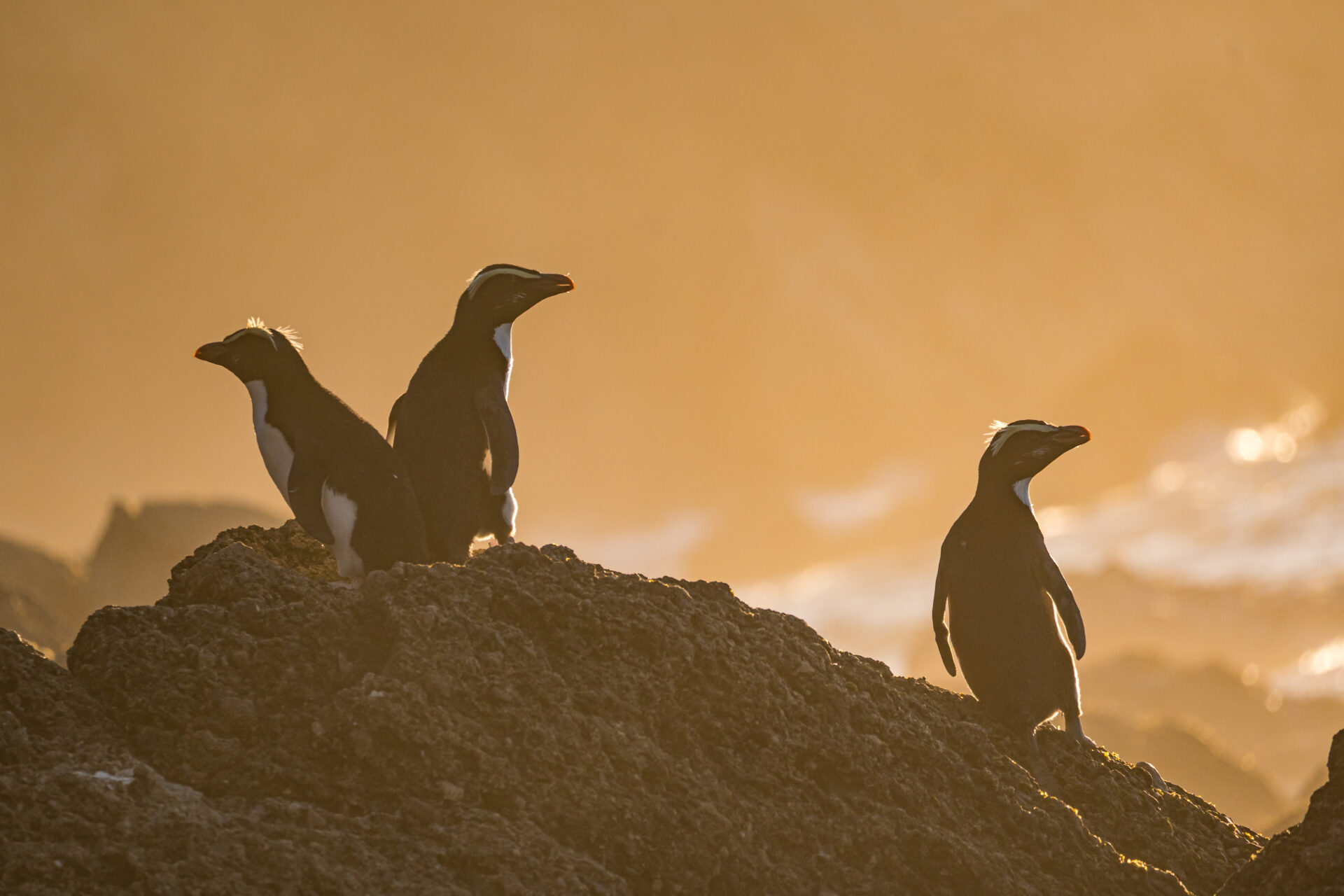
In the quiet of the early autumn’s evening, the light brush of wind gently rustles the flax. I can just make out the light movement of small feet shuffling over the rocks. Something or someone is moving past me ever so slowly. Careful not to move, I am waiting patiently for them to waddle past. Here they come. I spot a vibrant yellow crest standing out against the feathery black and white bodies. The unmistakable sight of a trio of penguins has come into view.
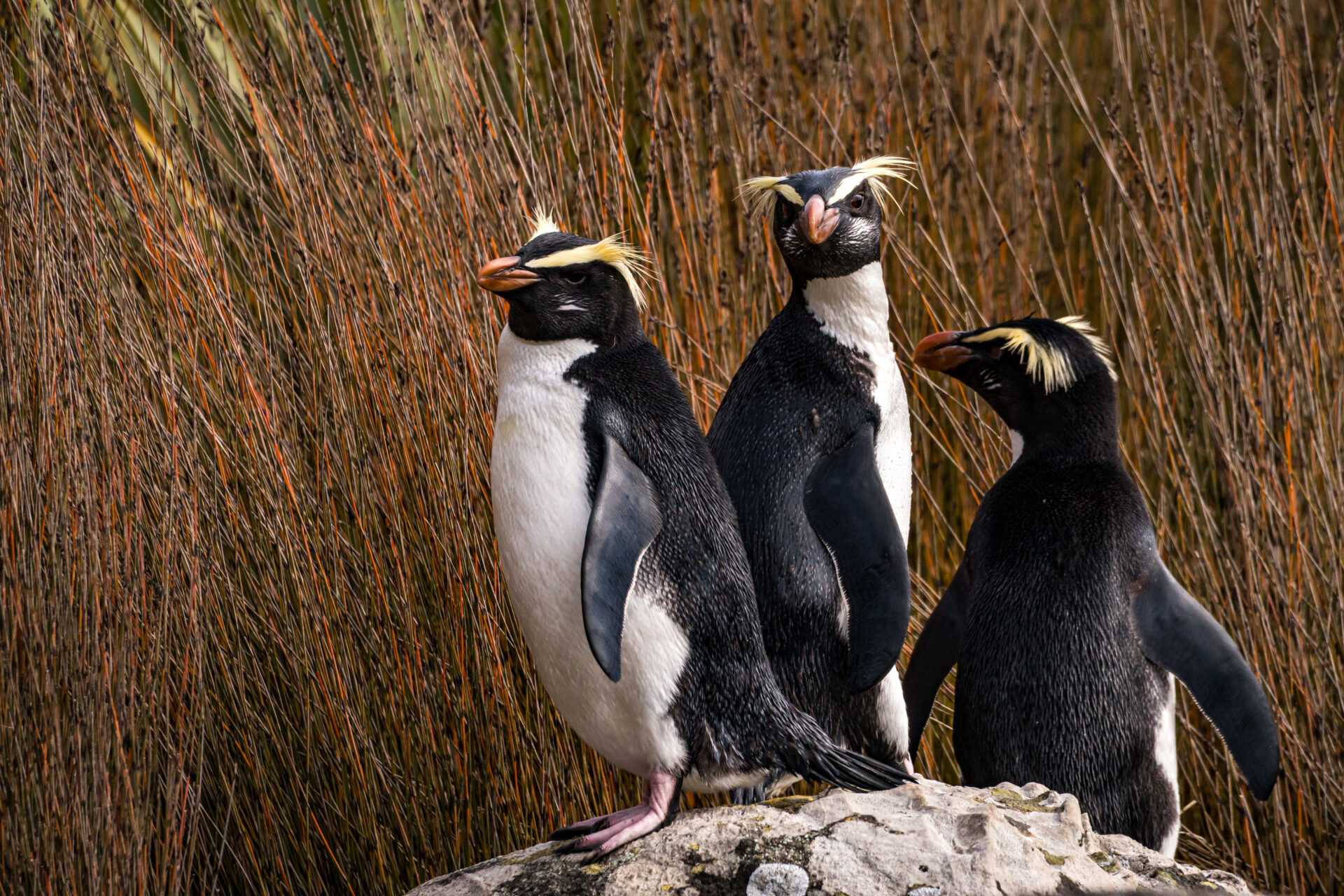
They are navigating the arduous rocky shoreline, making their way to an easier and clearer path. As they pause, they look around to make sure that nothing is moving along their way. The coast is clear. After a few more steps, they stop to preen their wet, salty feathers after a big day out to sea. I am holding my breath, making sure not to make any sounds or sudden movements. With my camera set on silent mode, I capture the moment where the three penguins place themselves on a rock with the beautiful coastal grass in the background.
After only a minute, they are on their way once again. Eventually finding their correct path, they quickly pause before they slowly disappear into the thick foliage of the coastal rainforest. I breathe once again, taking a careful look around myself before relishing the moment that passed so swiftly.
When thinking of penguins, I used to imagine them on ice, navigating the ice floes of the great Southern Ocean. The harsh landscape and endless walks across the Antarctic sea ice, a walk to find a partner and to nest after an extended time out to sea.
The West Coast of the South island in Aotearoa New Zealand is, however, home to very different scenery and to a very different species of penguin.
More features
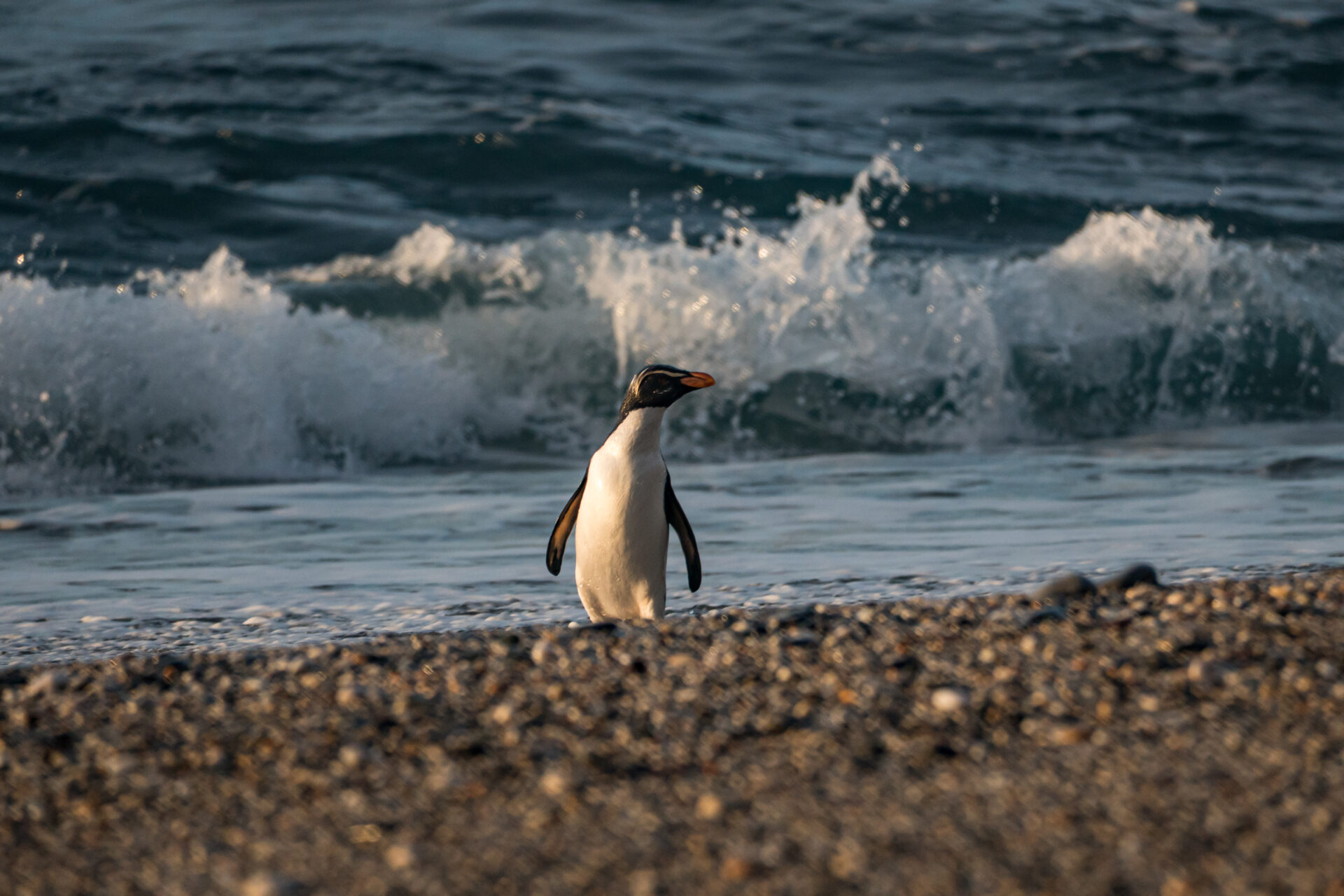
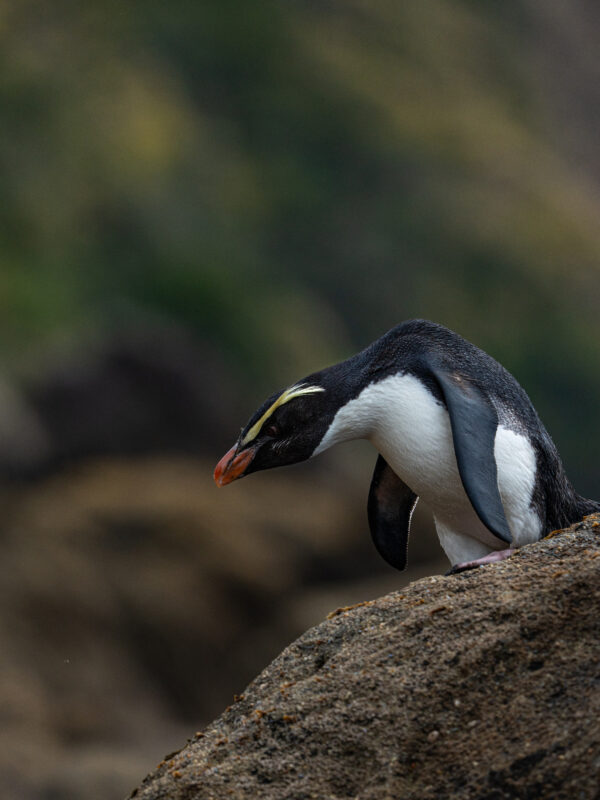
The tawaki or Fiordland crested penguin is one of the rarest species of penguin in the world and inhabits coastal rainforest. With a population of only about 2,500-3,000 breeding pairs and in decline due to overfishing and climate change, they are rare to encounter.
I decided set off on a mission to find these elusive and unique birds of the ocean and in doing so, eventually found myself in a small coastal area of the remote West Coast. I started my walk into the native bushland with my trusted camera on my back and mosquito spray at the ready to fight off the inevitable swarm of blackflies. It did not take long until I emerged out of the bush onto the rocky beach, waves crashing onto the shoreline.
On a mild afternoon such as this, swarms of black flies quickly fill the air. Yet this is precisely the area, the perfect habitat of dense coastal forest and rock crevices that the tawaki favour. I continue to navigate along the rocky shoreline a while longer, strategically placing my feet on the dry rounded rocks, avoiding the algae covered slippery rocks close to the crashing waves. I eventually find the perfect place on top of a large boulder and I am surrounded by nature and its comforting sounds. I sit down and take in the scenery around me as I observe the return of the penguins as they go about their busy afternoon.
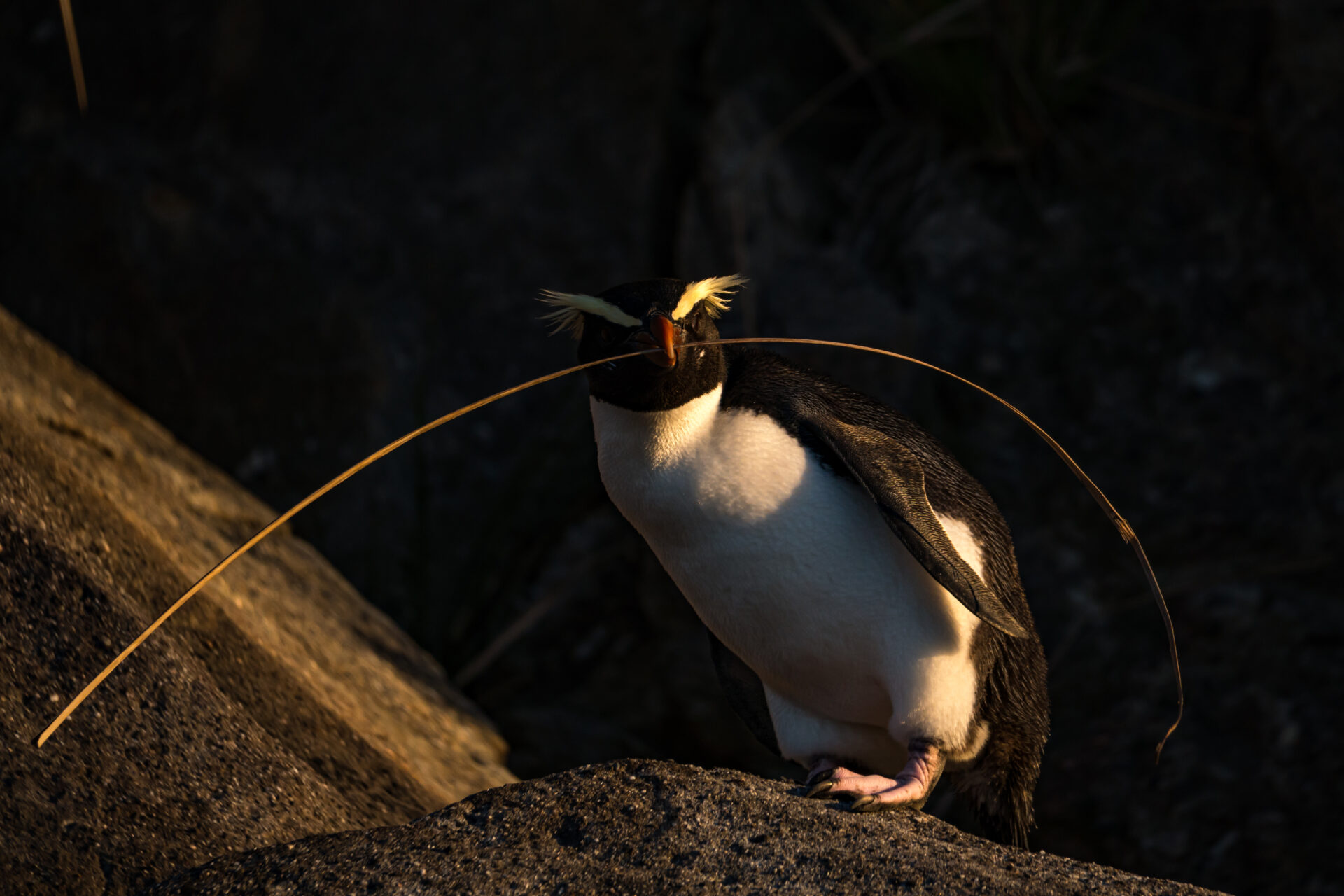
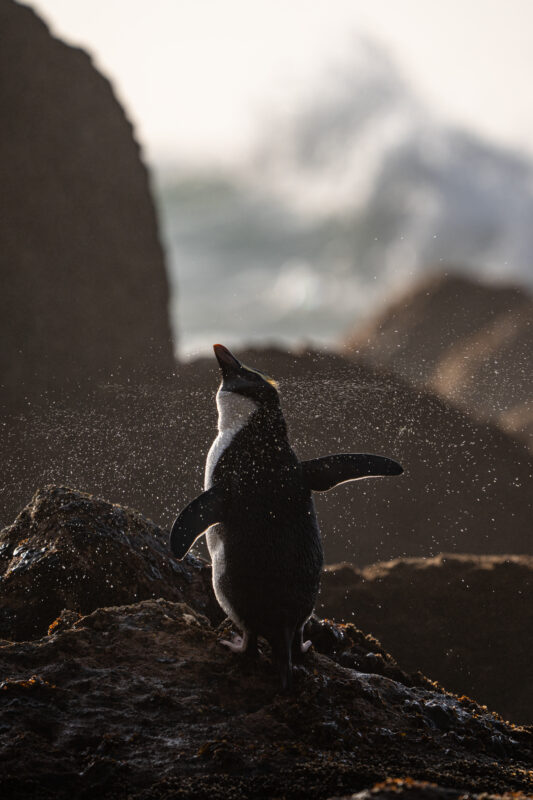
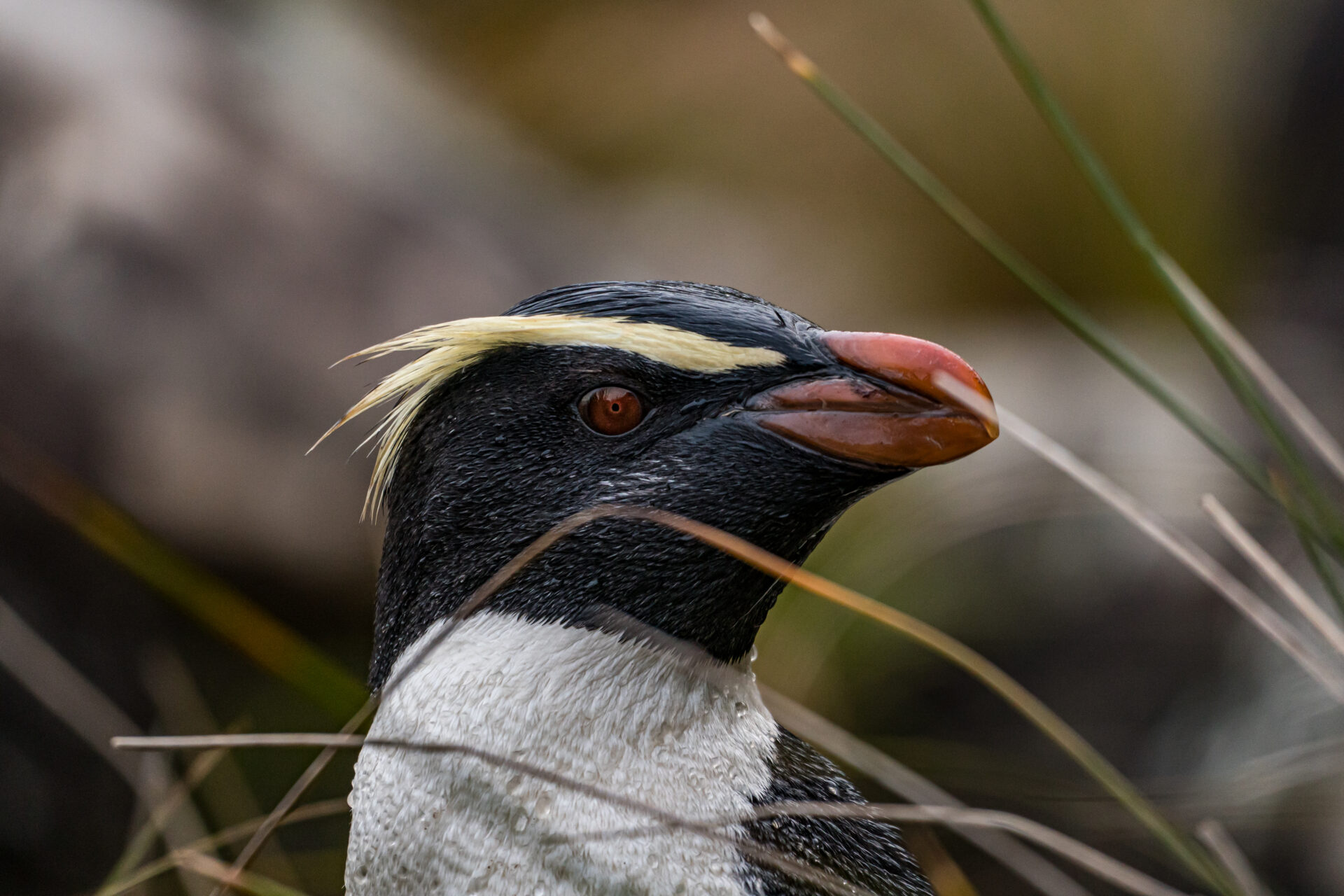
At the edge of the forest, I spot a penguin waiting patiently, who is finally greeted by its newly returned partner. They exchange energetic calls as they reconnect and waddle into the rainforest together. Others catch a wave as they surf in and takes a giant leap onto the rocks. After a brief look around, one waddles around for a few moments to hop straight back into the ocean again, maybe it wasn’t quite the right spot for this individual after all.
In the distance, I notice three penguins collectively return to shore at one time. As they move together, they pick a position on top of a large boulder. This appears to be the perfect place to keep a lookout and preen their wet black and white feathers. Their bright yellow crest stands out beautifully against the deep orange background of the colourful sunset.
It is a harsh world these birds live in. Some penguins unfortunately do not succeed in their return to their partner or chick who are waiting for them back on land. Others return, but injured after a rough day at sea. On a daily basis, they have to navigate rough seas and compete against big trawlers for the scarce fish that can be found in the ocean. Not only do they need to find food, they also need to avoid getting caught as by-catch by set nets and trawlers.
As they return to shore, the sharp rocks along the coastline are another obstacle to avoid. The ones that return safe make their way to their young chicks with food to regurgitate. While being back in the safety of land, they have to be on the lookout for stoats and other introduced predators that may attack their young.
I never thought I would find myself, sitting on a rugged shoreline, surrounded by crested penguins. Away from civilisation there are no anthropogenic sounds to be heard. Only the wind blowing in from the sea, waves crashing against the rocks and the soothing calls of penguins greeting one another in the distance.
Printed editions
Current issue
Back issues

Enjoy so much more from Oceanographic Magazine by becoming a subscriber.
A range of subscription options are available.
