AI system provides hope for grey whales after deadliest migration season
With local whale deaths spiking due to ship strikes and Arctic starvation, scientists have deployed a round-the-clock thermal monitoring system to detect whale breaths and guide heavy vessel traffic safely around the ocean giants
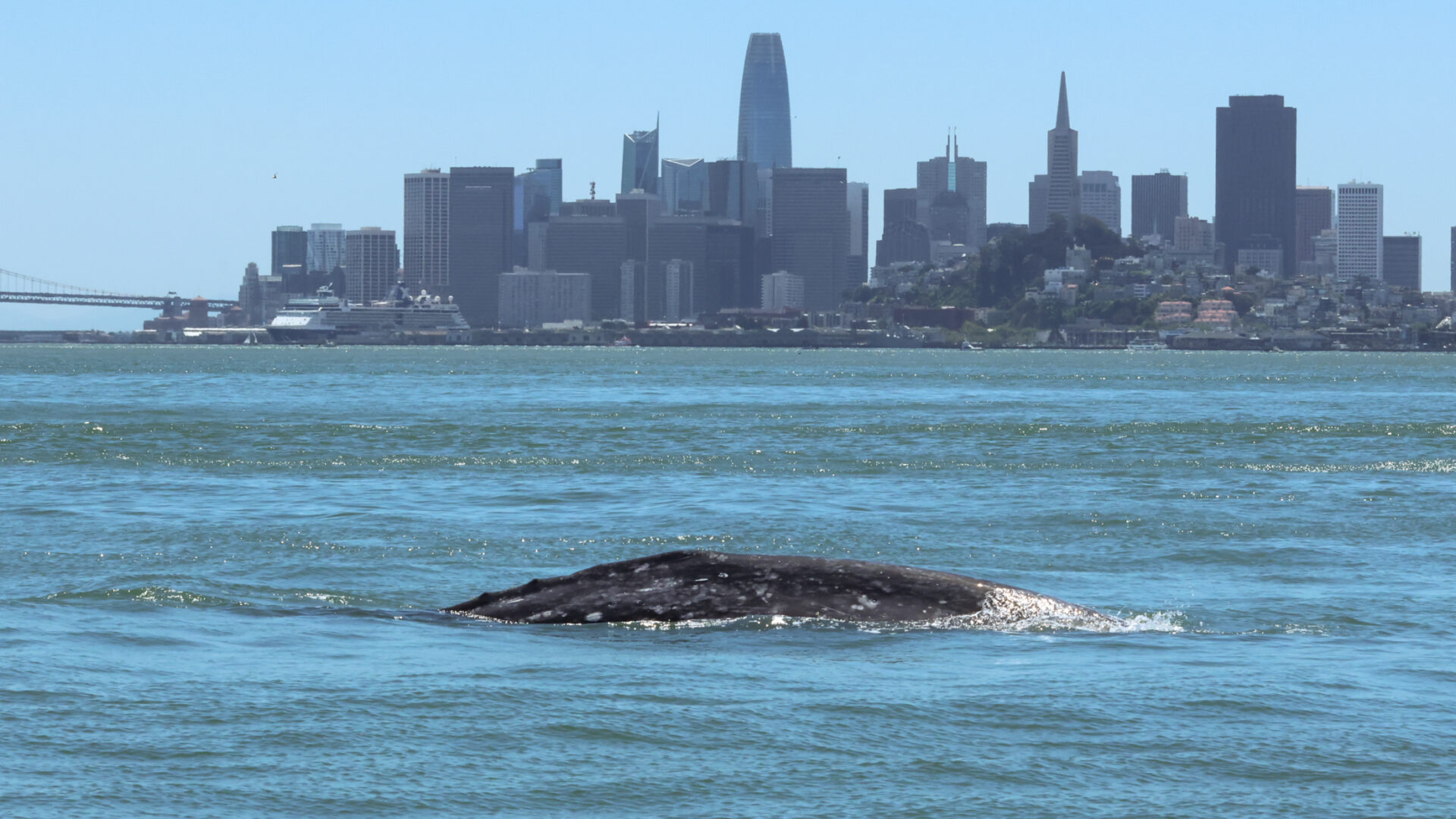
Earlier this year, scientists tracking grey whales in San Francisco Bay found that nearly one in five individuals identified there died in its waters; 40% of these deaths were found to be caused by vessel strikes.
But, a new AI system is set to change that, making the busy waterway safer for grey whales.
While not currently listed as endangered Eastern Pacific grey whales are facing a crisis: their population has plummeted by over 50% since 2016, leading NOAA to declare an “unusual mortality event”. On top of this, very few calves are being spotted while emaciated whales have been recorded foraging in habitats they would not ordinarily use
As a result, more and more grey whales are taking a detour on their 12,000-mile route from Alaska to Mexico, to stop for rest and respite in the San Francisco bay – and May is the grey whale’s peak time for this stop-off.
“It is heartbreaking to see these starving whales stumbling around in the middle of the hustle and bustle of San Francisco Bay. Every day is a nailbiter,” said Professor Douglas McCauley, Director, Benioff Ocean Science Laboratory, UC Santa Barbara.
The new detection system however, is giving Professor Douglas McCauley hope.
The system provides constant monitoring of the bay area, using a near real-time thermal camera monitoring system that detects whales’ heat signatures and exhaled breaths or “blows”. A team of WhaleSpotter’s credentialed marine mammal specialists then reviews the detection and maps the whale detections onto a Whale Safe website.

In other news


It was designed by researchers at the Benioff Ocean Science Lab, in collaboration with the U.S. Coast Guard’s Vessel Traffic Service and whale experts at The Marine Mammal Center.
One camera has been installed on Angel Island and a second will soon be fixed aboard a ferry traveling between downtown San Francisco and Vallejo to create what Rhodes described as a “moving data collection platform.” Scientists hope additional cameras on the Golden Gate Bridge and Alcatraz could eventually expand coverage across the bay.
This information is passed onto Bay mariners and the US Coast Guard’s Vessel Traffic Service, which can then radio vessels to re-route or reduce their speed to avoid collisions with whales in the area under imminent threat.
“We’re relieved to have these cameras going live during this critical moment in the grey whale season. Last year was one of the deadliest on record for grey whales in the Bay, with 21 dead, and seven more have already died this year,” said Rachel Rhodes, Scientist leading the project, Benioff Ocean Science Laboratory.
Kathi George, Director of Cetacean Conservation Biology, The Marine Mammal Center said: “Having 24/7 visibility into when whales are present will strengthen awareness and communication across the maritime sector and support action to help keep both whales and vessels safe.”


"*" indicates required fields
Printed editions
Current issue
Back issues
Enjoy so much more from Oceanographic Magazine by becoming a subscriber.
A range of subscription options are available.
