Rare seals hide in bubble caves to escape tourist attention
The islet of Formicula was once a quiet, uninhabited monk seal paradise, but increasing human activity is forcing these endangered seals into underwater caves
Seals are hiding in underwater bubble caves in order to escape busy summer tourist crowds in Greece’s Inner Ionian archipelago, the uninhabited islet of Formicula, a new study has revealed.
Mediterranean monk seals are one of the world’s most endangered seals; they have inhabited the islet for generations, and the islet is a crucial breeding and resting site for the population.
However, the area has also increasingly become a hotspot for tourists seeking clear waters and swimming spots.
Historically monk seals have rested on open beaches to dry their fur, but tourists in the Formicula area have increasingly tried to interact with the seals, and to visit the caves where they rest and raise their pups.
This human behavior, researchers discovered, was causing monk seals in the area to seek refuge from the summer crowds in underwater bubble caves: air-filled chambers only accessible through submerged passageways.
Inside the bubble caves, the animals were seen either floating awake on the surface, sleeping vertically at the surface, or sleeping motionless on the sea floor.
Researchers had an inkling the seals were using these bubble caves for respite, and used an automatic monitoring system and remote online cameras to capture images of the seals in July 2020, and June to October 2024.

In other news
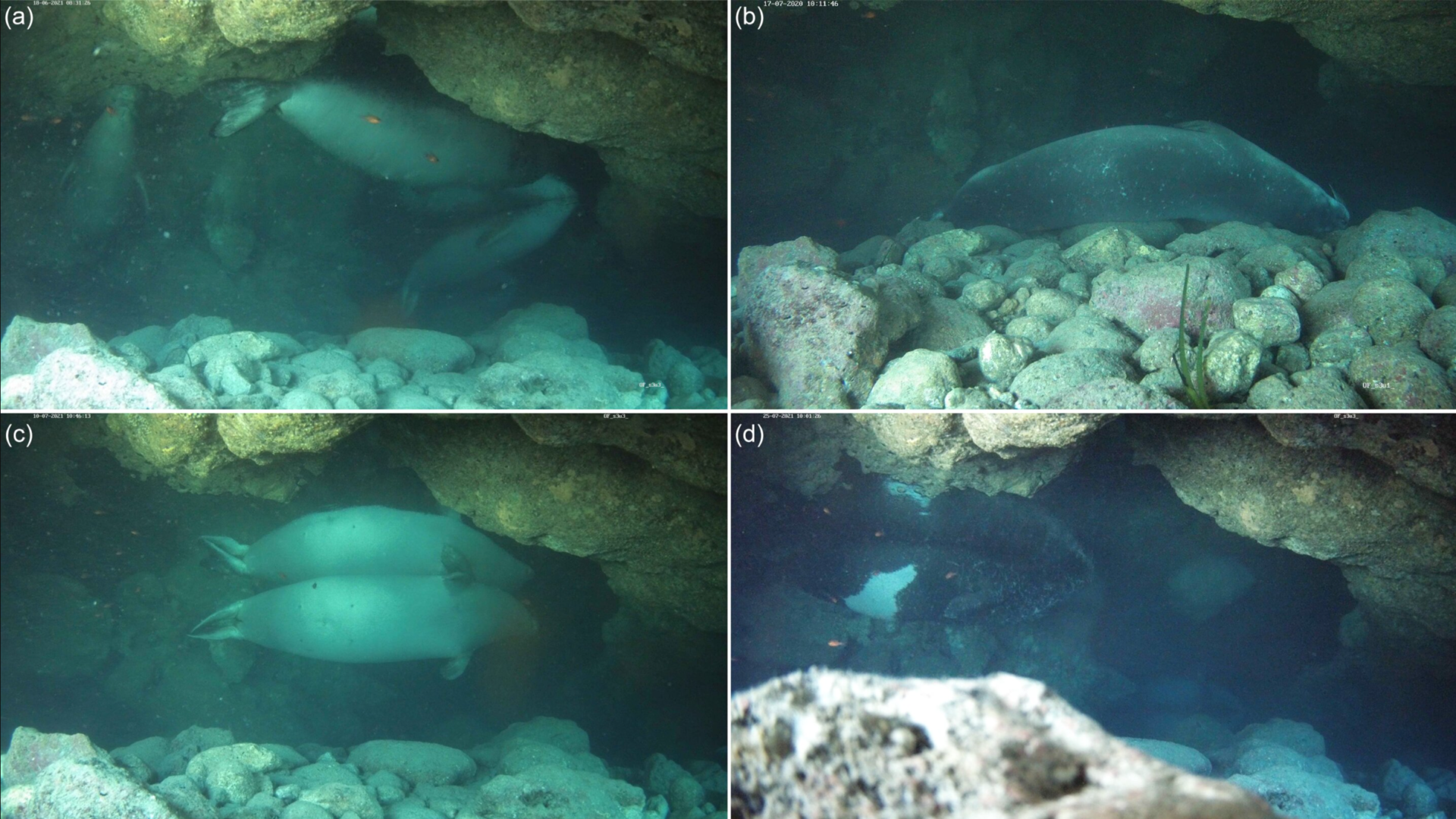
During the entire monitoring period, the team observed the seals using the bubble cave for 119 days and the main cave for just 30 days.
The larger caves are thought to be more comfortable for the seals, and also more suitable for birthing and nursing. The bubble caves are therefore likely attracting seals more frequently because they are far less accessible, and remain relatively undisturbed from human activity.
Understanding how monk seals in the area use different habitats informs future conservation approaches, and researchers said these findings support the need for strengthened habitat protections in the area.
In the paper published in the International Journal of Conservation Oryx, the researchers noted: “Habitat suitability studies for the Mediterranean monk seal may benefit from including bubble caves, as they provide valuable resting spots, especially in tourist areas.”
Governments and conservation groups have already made strong progress. In 2024, Greece implemented a 200-metre restricted access zone around the islet of Formicula, and last year, the nation’s prime minister approved the creation of two large-scale marine protected areas in the Ionian and southern Aegean seas.


"*" indicates required fields
Printed editions
Current issue
Back issues
Enjoy so much more from Oceanographic Magazine by becoming a subscriber.
A range of subscription options are available.
