Pushed to the edge: Seabird world shrinks as ocean warms
University of Reading scientists find that rapidly warming oceans are forcing seabirds to abandon habitat and fly further to survive - with over 70% of species expected to contract their ranges by 2100.
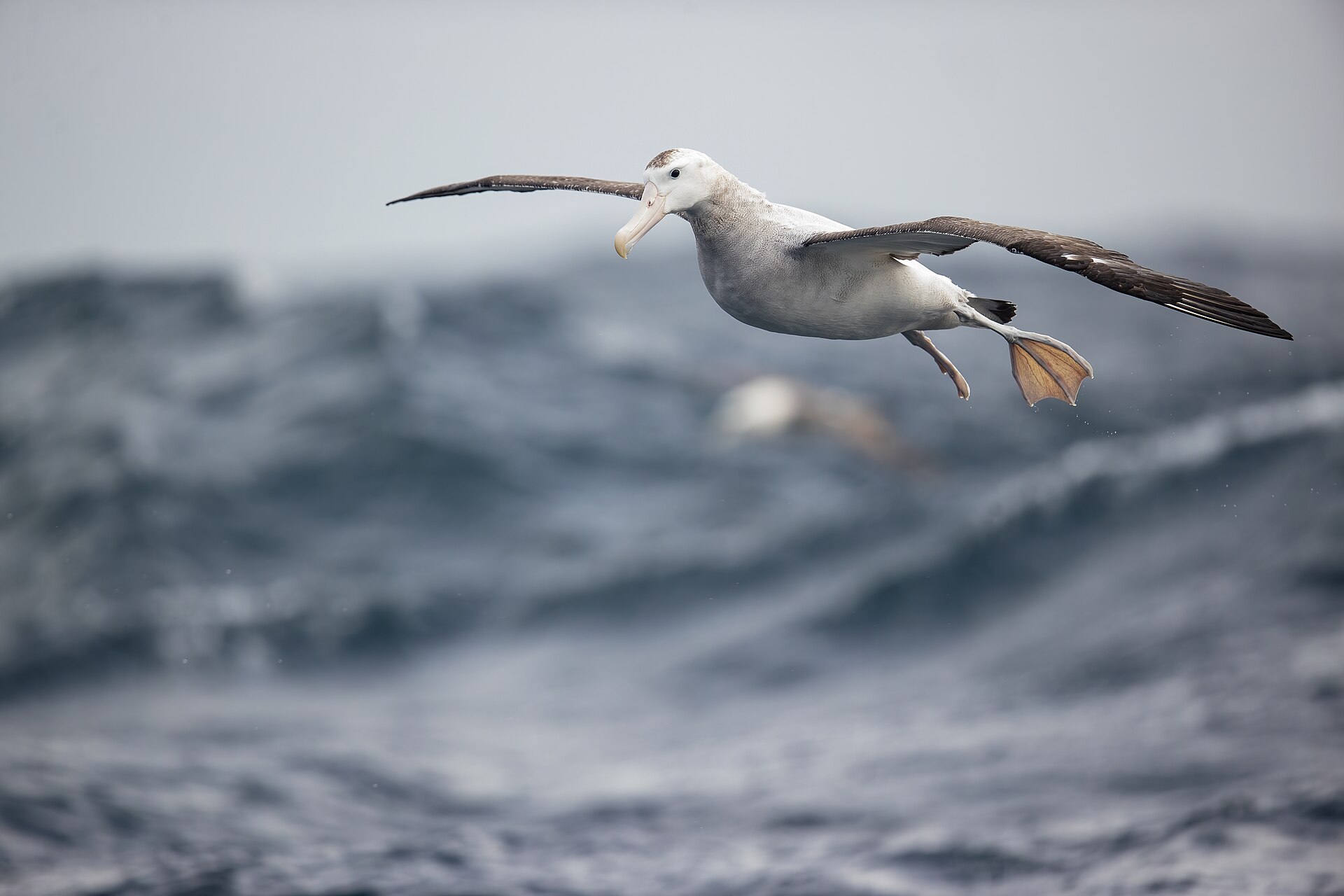
Albatrosses, petrels and their feathered relatives are being pushed into ever-smaller corners of the ocean while being forced to fly farther than ever before to find suitable places to live. These are the findings of a critical new study from the University of Reading, which tracked the fates of more than 120 species of Procellariiformes across millions of years of Earth’s climatic history.
The research, published today in Nature Climate Change, combined evolutionary family trees, ancient climate records and ocean temperature data to reconstruct how these birds’ ranges and long-distance movements have shifted in response to past episodes of warming and cooling.
Scientists found that when temperatures rose rapidly, seabirds did not shrink in size, as some fish and other ocean creatures are known to do. Instead, they contracted their territories and extended their flights in search of survivable habitat.
“Seabirds have survived dramatic climate shifts before, but never at the speed we are seeing today,” said Dr Jorge Avaria-Llautureo, lead researcher at the University of Reading. “We can see from history that when temperatures rise quickly, these birds do not adapt physically. Instead, they are forced to abandon parts of their range and travel further to survive.
“Conservation efforts need to focus not just on protecting the places where seabirds live now, but on safeguarding the places they will need to reach in the future.”
Among the study’s most concerning revelations is the matter of just how rapidly climate change is impacting seabird populations. Whether the climate was warming or cooling mattered far less than how fast it was doing so. Species exposed to the most rapid historical temperature shifts were left with the smallest ranges and were compelled to travel the farthest distances.
Across all species studied, the rate of temperature change alone accounted for 35% of the variation in range size – a figure that underscores just how sensitive these birds are to the tempo of environmental upheaval.

In other news
Today’s oceans are warming at a pace that dwarfs anything in the seabirds’ evolutionary experience, approximately 10,000 times faster than the rates to which these species have adapted over geological time.
To project what this means by the end of the century, the team deployed new statistical models capable of tracing where seabirds lived through millions of years of climate transitions. Applied for the first time to future scenarios, these models paint a markedly different picture depending on how aggressively humanity curbs emissions.
Under lower-emissions pathways, fewer species are affected and range losses remain comparatively modest. Under the worst-case scenario, however, the picture is severe: more than 70% of species are expected to contract their ranges, with the heaviest losers driven to undertake the longest journeys simply to persist.
The Galapagos petrel, Jouanin’s petrel, Newell’s Shearwater, and White-vented storm petrel face a genuine risk of extinction under the modelled high-emissions future.
In fact, seabirds are already counted among the most threatened groups on Earth, and they play roles in ocean ecosystems that reverberate across ecosystems, cycling nutrients through the water column and underpinning the productivity of fisheries on which many human communities depend. Losing them, the researchers warn, would leave gaps that no other species is positioned to fill.
For the scientists behind the study, protecting the habitats seabirds occupy today is necessary but no longer sufficient. The flyways and future refuges these birds will need as the ocean warms must be mapped, safeguarded, and kept open.


"*" indicates required fields
Printed editions
Current issue
Back issues

Enjoy so much more from Oceanographic Magazine by becoming a subscriber.
A range of subscription options are available.
