Arctic bobtail squid filmed in the wild ... and she's carrying eggs
Marine biologists have filmed the Arctic bobtail squid in the wild for the first time, discovering a mature female with eggs in Northeast Greenland National Park - rare evidence of cephalopod reproduction in extreme polar waters.
Marine biologists have recorded the Arctic bobtail squid in its natural habitat for the first time, capturing footage in the North Atlantic that includes a rare and valuable discovery of a mature female carrying its eggs.
The observations, detailed in a new study published in Polar Biology, documented the species – Rossia moelleri – in the waters of Northeast Greenland National Park, one of the most remote and least-studied marine environments on the planet.
“Northeast Greenland National Park is the largest national park on Earth but one of the least biologically documented marine regions in the Arctic,” said Dr Paige Maroni of The University of Western Australia’s School of Biological Sciences, lead author of the study.
Among the research team’s findings was a mature female bobtail squid alongside multiple egg masses, providing direct and on-the-ground evidence of cephalopods actively reproducing in this remote, sub-zero fjord system.
“The squid and eggs were recorded at a depth of 50 metres in water around -1.6 °C, which highlights the resilience of marine life in one of Earth’s most extreme environments,” Dr Maroni said.
Cephalopods like squid and octopus are considered valuable indicators of environmental change, occupying key positions in the food web as both predator and prey. Understanding where and how they live, researchers say, offers a window into the wider health of the ecosystems around them.
“Establishing knowledge of the biodiversity in this region is crucial for understanding ecosystem function and resilience under accelerating climate change,” said Dr Maroni. “This study provides a valuable new baseline for tracking ecological change in the rapidly warming Arctic.”

In other news

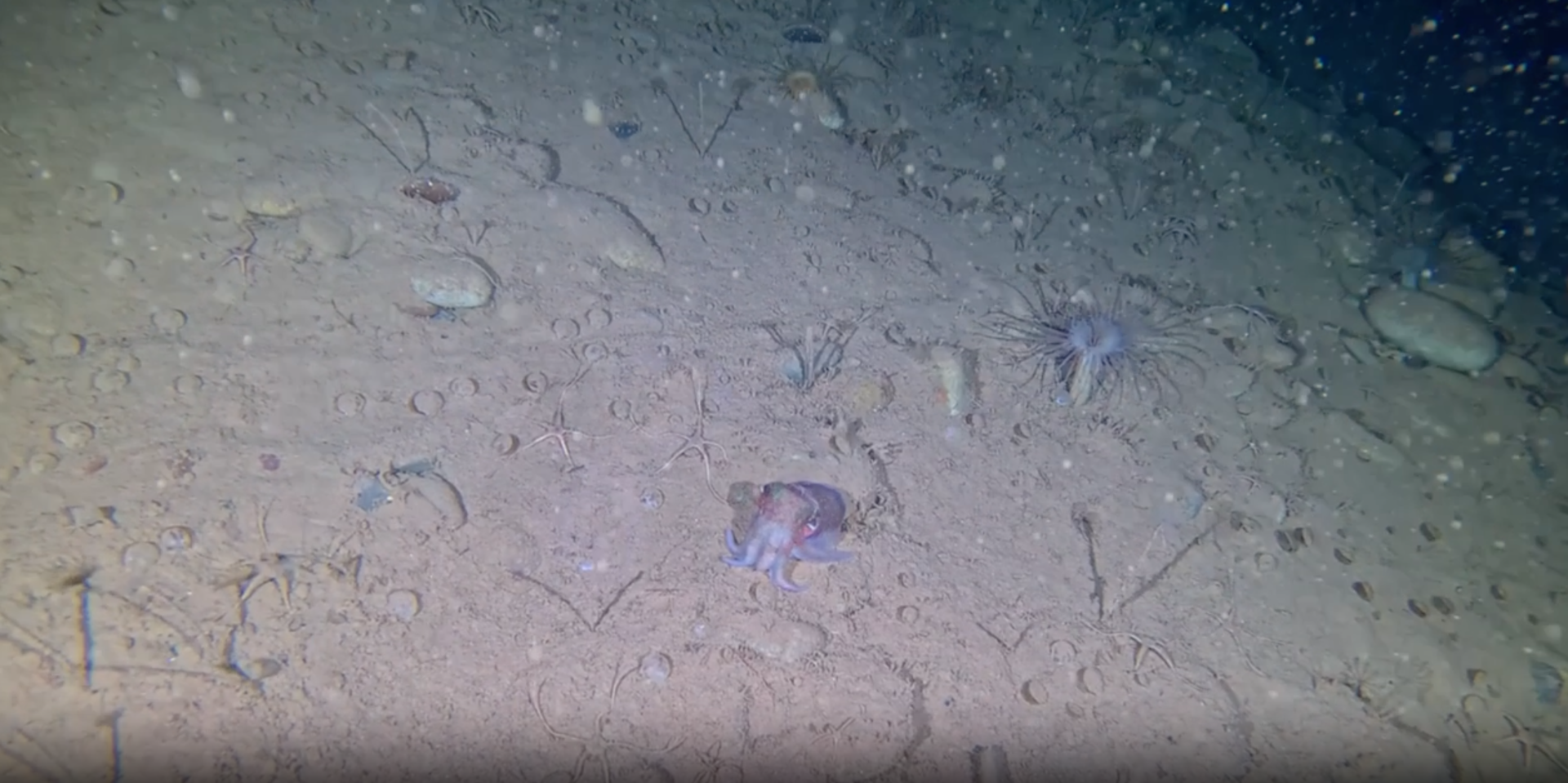
The squid were spotted using a lightweight remotely operated underwater vehicle, deployed during a Polar BLAST expedition aboard a Secret Atlas Micro Cruise Expedition vessel, with support from Yachts for Science – a collaboration that pairs scientific fieldwork with low-impact expedition tourism.
“Our results show low-impact science and expedition tourism can help fill major biodiversity gaps in remote polar regions,” Dr Maroni said. “In poorly studied polar ecosystems, even one verified observation can provide important insight into species distributions, reproduction and resilience under climate change.”
Establishing biodiversity baselines in this Arctic region is crucial for understanding ecosystem function and resilience under accelerating climate change. Cephalopods, which play vital ecological roles as both predators and prey, remain poorly known in Arctic waters, with only a few confirmed records.
Despite the vast size of the Northeast Greenland National Park – the largest national park on the planet at some 972,000-square-kilometres – it remains among the least documented in the Arctic, with only sparse benthic and pelagic datasets currently available.
Documenting new occurrences from this region, the authors note, is of “exceptional scientific and conservation importance.”


"*" indicates required fields
Printed editions
Current issue
Back issues

Enjoy so much more from Oceanographic Magazine by becoming a subscriber.
A range of subscription options are available.
