Arctic deep-sea expedition set to livestream unexplored ocean ecosystems
The month-long mission will document biodiversity hotspots in areas previously opened to deep-sea mining, amid ongoing debate over the future of the industry.
A deep sea expedition will set sail for arctic waters this week to explore remote seamounts and hydrothermal vent fields at depths of up to 3000 metres.
‘The Deep Arctic Expedition’ is being launched by environmental NGO Greenpeace to understand these largely uncharted ecosystems.
This area was previously opened for deep-sea mining by the Norwegian government, but this was halted in 2024 following protests from environmental organisations, scientists and green opposition parties.
The month-long mission will focus on biodiversity hotspots, including seamounts and hydrothermal vent fields, underwater volcanic systems that support life in total darkness. These ecosystems are prime targets for the nascent deep-sea mining industry.
Seamounts are often covered in cobalt-rich ferromanganese crusts containing critical minerals such as cobalt, nickel, manganese and rare-earth elements. Hydrothermal vent systems are also rich in seafloor massive sulfides, which contain valuable deposits of copper, gold, zinc and silver.
“We are sailing into the planet’s uncharted and unexplored territory and will probably find new species that haven’t been described and named up to now,” said Dr Paco Cárdenas, deep-sea sponge expert at the Museum of Evolution, Uppsala University.
Greenpeace and scientists on board the expedition will be live streaming these remote ecosystems.

In other news
Setting sail on 8 May in Ireland, the expedition will conclude on 8 June in Bergen, Norway. There they will present their findings to the public and policy-makers.
“We cannot protect what we do not know,” said Dr Sandra Schöttner, chief scientist with Greenpeace International. “This expedition will gather scientific evidence of the Arctic’s vulnerable deep-sea ecosystems.”
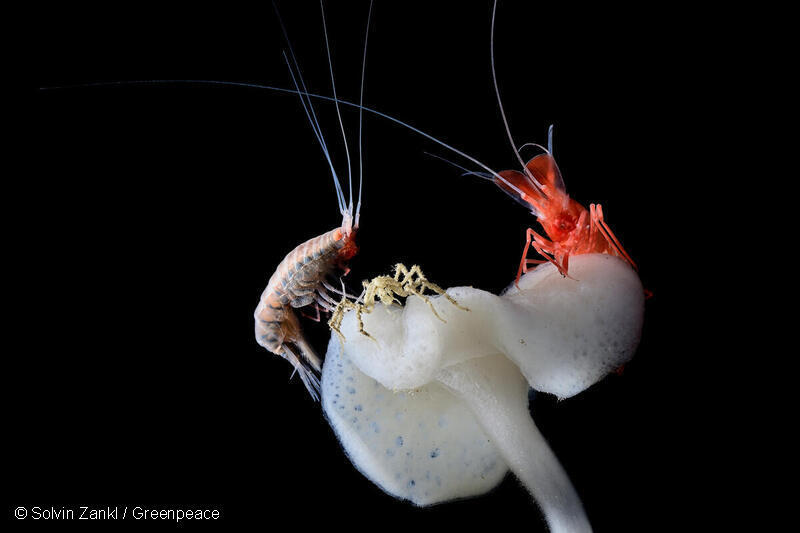
Dr Anne Helene Tandberg of the University Museum of Bergen is a specialist in crustaceans that live in deep-sea Arctic environments and has described many species previously unknown to science.
“The Nordic and Arctic deep seas are the heartbeat of our northern oceans,” said Dr Tandberg. “From the smallest amphipod to the largest seamount, these sites are interconnected.
“We aren’t just looking at rocks, animals and water; we are documenting the vital organs of a global ecosystem that keeps our planet habitable,” she added.


"*" indicates required fields
Printed editions
Current issue
Back issues
Enjoy so much more from Oceanographic Magazine by becoming a subscriber.
A range of subscription options are available.
