British Risso's dolphins are genetically unique, study finds
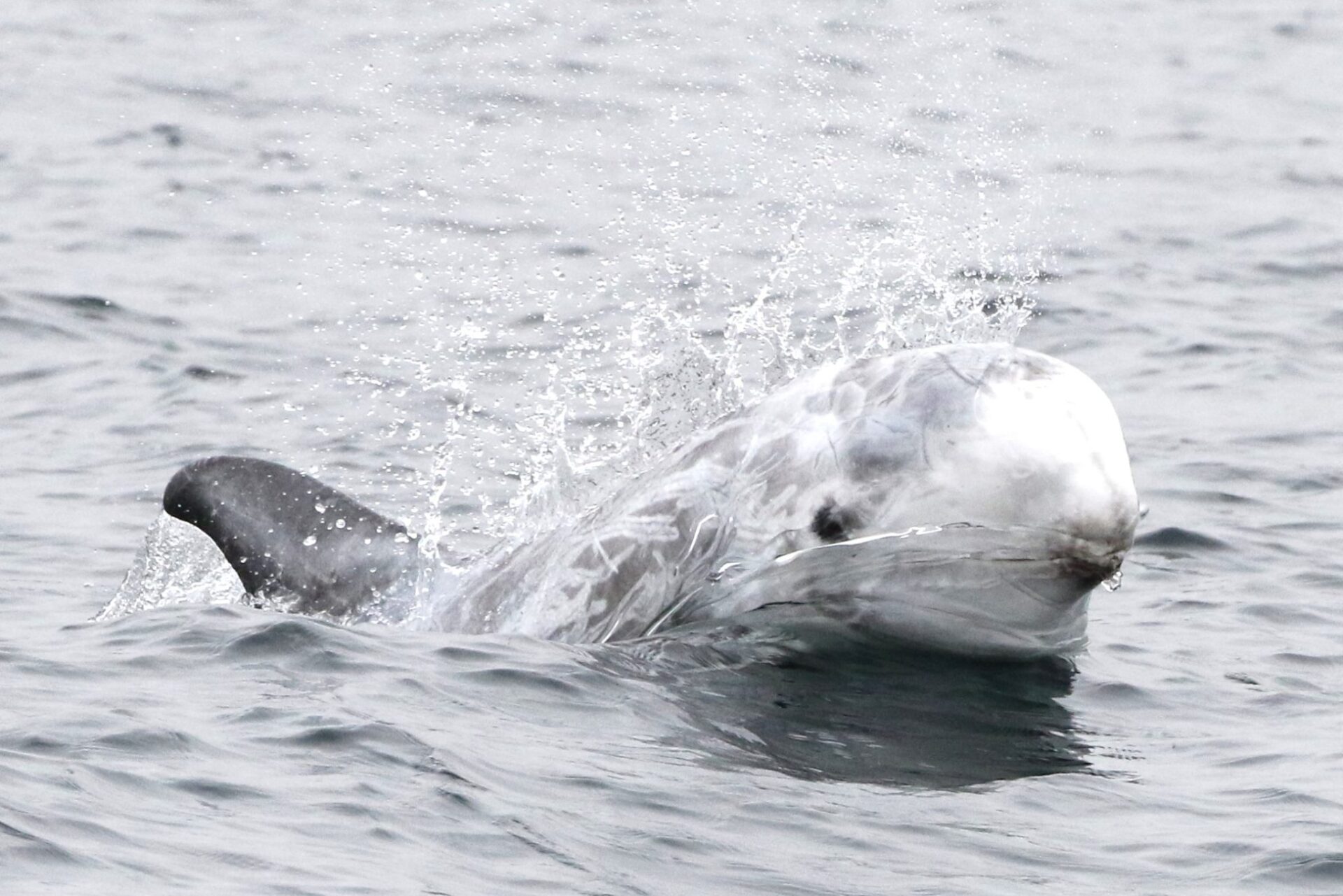
A new genetic study has found that Risso's dolphins around the British Isles form a distinct population, isolated from those in the Azores and Mediterranean - with potentially significant implications for their conservation status and management.
A new study has found that Risso’s dolphins around the British Isles form a distinct genetic population, separate from those found in the Azores, the Mediterranean, and potentially the wider North Atlantic. It’s a finding that researchers say has significant implications for how the species is managed and protected in UK waters.
Published in the Journal of the Marine Biological Association of the United Kingdom, the research is the first to map the genetic identity of Risso’s dolphins stranding around England, Scotland, and Wales at this scale.
Scientists analysed DNA from animals that came ashore between 1992 and 2016, collected through the UK Government-funded Scottish Marine Animal Strandings Scheme and the Cetacean Strandings Investigation Programme. What they found suggests that Risso’s dolphins in British waters have been isolated from neighbouring populations for a considerable period of time – long enough to develop their own distinct genetic signature.
The research team included scientists from MARA, Nova Atlantis, the Environmental Investigation Agency, Whale and Dolphin Conservation, the Zoological Society of London, and the universities of Exeter, Glasgow, Zurich, Western Australia, and Taiwan.
“The results support the notion of Risso’s dolphins in British waters having been isolated from other populations for some time,” said co-lead author Nicola Hodgins, from MARA and a Visiting Researcher at the University of Exeter. “However, we did not sample every nearby part of the Atlantic, so it’s not yet clear where the boundaries of this unit lie.”
The study found no significant genetic differences between dolphins stranding around different parts of the British Isles – suggesting the population around England, Scotland, and Wales functions as a single genetic unit. But that does not mean the animals move freely across those waters without preference.

In other news


Recent photographic identification work on Risso’s dolphins in Scottish waters found less than 3% of individual dolphins matched between the west and northern coasts, pointing to a strong attachment to particular areas within the broader population range. Combined with evidence that Risso’s dolphins tend to maintain stable group associations over their lifetimes, the picture that emerges is of a population that is both genetically cohesive and spatially faithful.
They are animals that return to the same places, with the same companions, year after year.
That fidelity to specific habitats matters because Risso’s dolphin numbers appear to be declining in some regions around the British Isles. If local groups face distinct threats in the areas they consistently use, managing the species as a single undifferentiated UK population may leave those pressures unaddressed.
“Good conservation requires habitat-specific management,” Hodgins said. “While Risso’s dolphins are currently managed as a single UK population, local populations can face different threats and use habitats in different ways. Effective protection must therefore focus on safeguarding important habitats and addressing pressures at a local scale, where conservation measures can have the greatest impact.”
The researchers suggest that the genetic distinctiveness of British Risso’s dolphins could justify recognising them as a sub-population under the IUCN’s classification system – a designation that would bring a higher level of scrutiny to their conservation status.
The Mediterranean sub-population of Risso’s dolphins is already classified as Endangered under the IUCN framework. Whether the British population warrants equivalent recognition remains an open question, but one the authors argue deserves serious consideration.
Answering this will require more data. Genetic samples from Norway, the Celtic Sea, the south-west English Channel, and the Bay of Biscay are needed to establish where the boundaries of this population actually lie.
More advanced DNA sequencing techniques could provide a finer-grained picture of connectivity between groups. And future research combining genetics with data on behaviour, movement, vocalisation, and physical appearance will be needed to build a complete understanding of how Risso’s dolphins use British waters and how best to protect them.


"*" indicates required fields
Printed editions
Current issue
Back issues



Enjoy so much more from Oceanographic Magazine by becoming a subscriber.
A range of subscription options are available.
