Offshore wind farms hold key to sustainable seaweed at scale
Danish researchers have shown that offshore wind farms can double as seaweed cultivation sites, producing high-quality food biomass without farmland or fertiliser. The technology is proven - building the supply chain is now the challenge.
Denmark’s historic expansion of offshore wind energy is opening an unexpected frontier: the cultivation of seaweed at industrial scale, grown between turbine arrays in the North Sea, harvested without farmland, fertiliser, or fresh water, and fed into food systems.
The one snag, according to researchers behind a recent study led by scientists at Aarhus University, is that those systems are not yet ready for it.
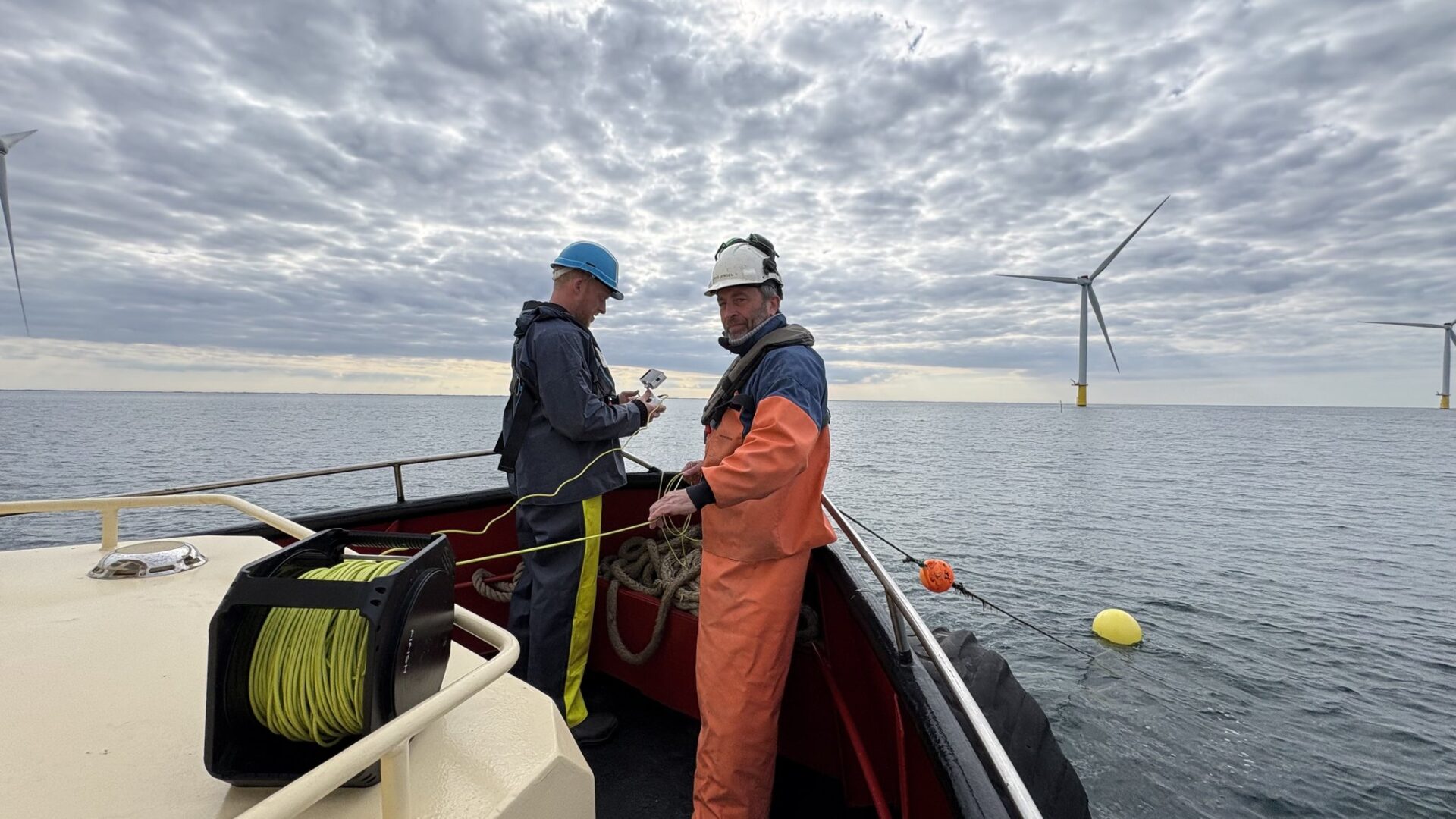
Over the past 15 years, those scientists have developed and refined methods for growing sugar kelp in Danish waters, testing what offshore conditions do to yield, quality, and the seaweed’s capacity to absorb excess nutrients from the surrounding marine environment.
The results have been consistently encouraging. Field trials show that offshore environments – with their high water exchange, relative stability, and nutrient availability – may be among the most productive cultivation settings available anywhere.
“We are seeing high yields, excellent quality and higher nutrient removal than we originally expected,” said Annette Bruhn, Senior Researcher at the Department of Ecoscience at Aarhus University. “The North Sea appears to be one of the most promising cultivation environments we have worked in.”
The concept under development is known as multi-use: the integration of seaweed cultivation into offshore wind infrastructure already designated and built for energy production. Rather than competing for additional marine space, seaweed lines are deployed between turbines, sharing service vessels, operational logistics, and existing infrastructure. The food and the energy come from the same stretch of ocean.
“We are not taking up new marine areas,” Bruhn said. “We are using areas that have already been designated for another purpose. At the same time, we can share infrastructure, service vessels and operational resources.”

In other news
The appeal of seaweed as a food crop extends well beyond where it can be grown. Unlike conventional agriculture, it requires no land, no irrigation, and no synthetic fertiliser, drawing instead on sunlight and the nutrients already present in seawater. Once harvested, the biomass is versatile: it can be eaten directly, processed into food ingredients including gelling agents, stabilisers, and antioxidants, incorporated into animal feed, or used in bio-based materials.
Danish research has also demonstrated that sugar kelp cultivation actively removes nitrogen and phosphorus from coastal waters, offering a partial complement to efforts to reduce nutrient pollution, while generating commercially valuable biomass.
It’s suggested that even modest use of the space between turbines could support high volume seaweed production, significant enough to underpin new value chains across food, feed, and biorefining. By 2030, Denmark’s offshore wind expansion will have dedicated vast new areas of the North Sea to renewable energy generation. The productive potential sitting between those turbines is, researchers argue, too significant to leave unused.
But the science, for now, is ahead of the market.
“We have the technology. We are ready to cultivate seaweed at scale. What we need now are partners who can use and market the products seaweed farmers are capable of producing,” Bruhn said.
For seaweed cultivation in offshore wind farms to become a viable industry, the research community needs food manufacturers, retailers, meal-kit companies, school and workplace canteens – the actors, Bruhn argues, that actually shape what people eat. She draws a comparison with legumes, which moved from the margins of European diets to mainstream menus over the course of roughly a decade, driven less by scientific advocacy than by decisions made by buyers, chefs, and food system intermediaries.
“Five or ten years ago, legumes were far less visible in canteens and everyday meals,” she said. “Today they have become a natural part of many diets. We would like to see the same development for seaweed.
“We know that seaweed can be cultivated. We know that we can produce large volumes of high-quality biomass,” Bruhn said. “The challenge now is to build stronger links between production, the food industry and consumers.”


"*" indicates required fields
Printed editions
Current issue
Back issues

Enjoy so much more from Oceanographic Magazine by becoming a subscriber.
A range of subscription options are available.
