Can the Ocean Act save Europe's ailing seas?
A new EEA-backed report finds only 7% of Europe's assessed seas in good health, with no regional sea meeting good overall condition, as scientists warn climate change could push marine ecosystems beyond recovery.
A major new scientific assessment has found that large parts of Europe’s seas remain under severe stress and that without urgent, coordinated action, climate change could push some marine ecosystems beyond the point of recovery.
The report, developed in collaboration with and co-funded by the European Environment Agency, assessed biodiversity across 85% of Europe’s sea area, concluding that only around 7% of the assessed area could be classified as a non-problem area.
Startlingly, it found that not a single one of Europe’s regional seas to be in good overall condition. Just 32% of assessed commercial fish and shellfish stocks in EU waters were sustainably fished and in good biological condition by 2023.
The study identifies contaminants, fishing pressure and climate change as the three greatest stressors on European seas, and projects that by 2050 climate change will have become the dominant driver of marine ecosystem change – overtaking even the chronic pressures of pollution and overfishing that have defined the past several decades.
The report’s authors argue that ocean management must shift fundamentally, moving away from the regulation of individual sectors and toward an integrated approach capable of addressing the combined effects of multiple simultaneous pressures.
Although around 14% of EU seas carry some form of protected area designation, only 1% are strictly protected – a disparity that the report identifies as one of the most significant structural failures in European marine governance. Fragmented policy frameworks, weak enforcement and delayed implementation are highlighted as the primary barriers to recovery. The window for meaningful action, the report warns, is shrinking. But it has not yet closed.

In other news

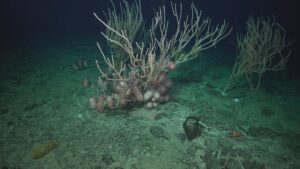




“This report is an alarm bell for Europe,” said Odran Corcoran, Policy Advisor at Oceana in Europe. “Contamination, excessive fishing pressure and climate change are pushing our seas towards ecological limits. With the Ocean Act, we have a unique opportunity to create a coherent and effective framework that strengthens the resilience of Europe’s seas and safeguards the benefits they provide, including food security. The Ocean Act must be a regulation that turns fragmented commitments into binding, enforceable action.”
The report’s release is timed to coincide with preparations for the European Commission’s forthcoming Ocean Act, expected later this year – a piece of legislation that the authors and conservation groups see as a potentially defining moment for the future of Europe’s marine environments. It identifies the Ocean Act as an opportunity to strengthen and better integrate EU marine governance, and to make ecosystem resilience a central and non-negotiable principle.
It also carries a warning – that any move toward policy simplification must not be allowed to weaken environmental ambition.
Oceana is calling on the European Commission to shape the Ocean Act as a regulation – rather than simply a directive – and to establish ocean health as an ‘overarching objective across EU policies’, one that would be ‘underpinned by binding protection and restoration targets’. The NGO is also calling for the creation of Preferential Access Areas that would prioritise local, small-scale and low-impact fishers in coastal waters – supporting the resilient fishing communities that sustainable ocean management ultimately depends on.
On fish stocks specifically, there are calls for the Common Fisheries Policy to be implemented in its entirety to help rebuild populations above healthy levels.
The report makes clear that Europe’s seas are in serious trouble while the pressures driving their decline are well understood, and the policy tools needed to address them are within reach. The Ocean Act now has the potential to provide the binding, enforceable framework to turn ‘decades of fragmented framework’ into real, positive outcomes.


"*" indicates required fields
Printed editions
Current issue
Back issues
Enjoy so much more from Oceanographic Magazine by becoming a subscriber.
A range of subscription options are available.
