Conservation win for Spain as six marine protected areas declared
The sites include some of Spain's most biologically significant areas: the seamounts of the Mallorca Channel, the pockmark fields and seamounts of the Seco de Palos, the Capbreton canyon system, the Alboran Sea banks, and Central Catalan Coast.

In a major step toward strengthening marine conservation, Spain has announced the designation of five new marine protected areas (MPAs) and one area of special importance for seabirds. The decision, made by the Ministry for the Ecological Transition and the Demographic Challenge, adds 17,000 km² of marine space to the country’s protected waters – bringing Spain closer to its goal of safeguarding 25% of its marine territory by the end of 2025.
The newly protected sites include some of the most biologically rich and ecologically significant areas in Spanish waters: the seamounts of the Mallorca Channel, the pockmark fields and seamounts of the Seco de Palos, the Capbreton canyon system, the Alboran Sea banks, and the Central Catalan Coast.
The announcement marks a milestone in Spain’s efforts to meet its commitments under the EU Biodiversity Strategy for 2030 and the international targets set at the UN Ocean Conference. Spain’s marine protection coverage now stands at 22.45%.
“It is deeply satisfying to see these high-value ecological areas finally receive protection,” said Michael Sealey, policy advisor for Oceana in Europe.
“This expansion is a critical step toward building a resilient network of marine ecosystems. But the work doesn’t end here – what’s urgently needed now is strong, science-based management to ensure destructive practices like bottom trawling are kept out of these zones.”
The designations follow years of persistent advocacy and scientific exploration by marine conservation NGO Oceana, which has conducted multiple deep-sea expeditions in the proposed sites.
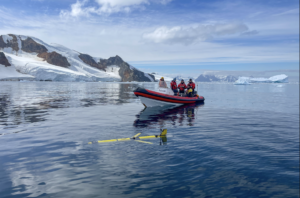
In the Mallorca Channel seamounts, Oceana deployed remotely operated vehicles (ROVs) and its research catamaran to gather high-resolution footage and biological samples, helping to map these largely unexplored habitats.
In other news


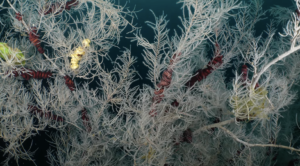
At Cabo de Palos, Oceana was the first to document deep seabeds teeming with soft corals, gorgonian forests, and even discovered a previously unknown species of giant foraminifera – a rare and important marine protist.
“These are not just any sites – they are hotspots of biodiversity, home to vulnerable species and fragile habitats,” said Ricardo Aguilar, director of expeditions at Oceana. “Our research, together with the work of the scientific community, has made it clear that these ecosystems need urgent protection.”
The six new sites form part of the LIFE INTEMARES project, a pan-European initiative focused on creating an effective, science-led network of marine protected areas across the EU. To be fully integrated into the Natura 2000 Network, the designations must now be reviewed and approved by the European Commission.
Once approved, Spain will have six years to implement comprehensive management plans for each site. Until then, precautionary measures must be enacted to prevent harmful human activities from undermining the conservation goals.
Beyond ecological benefits, the new protections are expected to support coastal communities and aid in the transition to more sustainable fisheries – a key pillar of both national and EU-level ocean governance.


"*" indicates required fields
Printed editions
Current issue
Back issues
Back Issues
Issue 43 Sir David Attenborough’s ‘Ocean’
Enjoy so much more from Oceanographic Magazine by becoming a subscriber.
A range of subscription options are available.
